
Mago III
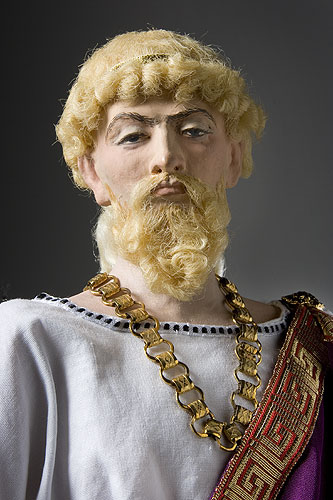
Mago III also known as Himilico Mago and sometimes known as Mago III of Carthage was a Carthaginian commander in 375–344 BC, referred to by a number of authors as the King of Carthage. Mago III after the death of his father Mago II of Carthage in the Battle of Cabala made several reforms in the army. Due to these reforms he inflicted a crushing defeat on Dionysius I of Syracuse in the Battle of Cronium. However later he became insignificant after his defeat in a coup d'etat led by Hanno I the Great also causing the downfall of the Magonids. As an act of revenge he shared the secrets of the Carthaginian Army to Dionysius I of Syracuse. He committed suicide in the Siege of Syracuse (343 BC) but instead of a proper burial his body was crucified for his act of cowardness in the Siege of Syracuse (343 BC). He was succeeded by Hanno I the Great but according to a few historians he was succeeded by Hanno III of Carthage.
Life and Etymology
Historians refer to the Carthaginian general Mago III who served in 375 BC and 344 BC. It is assumed that the same general served in these two wars against Syracuse, but the sources do not directly state this. The father of the general of 375 BC was Mago, also known as Mago II of Carthage. It is assumed that they belonged to the Magonid dynasty. However, it is known that the Magonids were ousted from power at that time by opponents led by Hanno I the Great. In 344 BC, after a series of military setbacks, Hanno I the Great was replaced by a certain Mago, whom some sources identify with Mago III.
Reign
War with Dionysius I of Syracuse
Mago III's father, Mago II, was the King of Carthage and led the troops in the war against Dionysius I of Syracuse. At the Battle of Cabala in 375 BC, the Carthaginians were routed by Dionysius, with over ten thousand soldiers killed and over five thousand captured. The Carthaginians, along with Mago II, retreated to a well-fortified but waterless hill. In a renewed battle, Mago II was killed. After his death, the Carthaginians sued for peace, but Dionysius demanded that they withdraw from all Sicilian cities and pay for the war. The Carthaginians, considering this response rude and arrogant, resorted to a ruse. Pretending to agree, they asked Dionysius for a truce for several days so they could discuss the transfer of the cities with the government. Dionysius agreed. The Carthaginians, after giving Mago II a magnificent funeral, transferred command of the army to his son, Mago III. He, using the entire truce period to drill and train the Carthaginian troops, managed to create a capable and obedient army. After the truce expired, the Battle of Cronium took place, in which Dionysius's Greeks were routed. The Greek general Leptines, who commanded one of the Syracusan wings, was killed. After his death, the Carthaginians put the Greeks to flight.
According to Diodorus Siculus, "more than fourteen thousand Sicilian Greeks were found slain." After winning the battle, the Carthaginians retreated to Panormus. The peace of 371 BC proved more advantageous for Carthage than the previous one. Dionysius I of Syracuse agreed to pay 1000 Talents. Carthage's possessions expanded to the rivers Halyk and Himera. Carthage gained control over the cities of Selinunte, Heraclea, Acragas, Himera, and Thermae.
In 368 BC, a new war broke out in Sicily between Dionysius I of Syracuse's Syracuse and Carthage. After an epidemic, Carthage weakened again. The Libyans and Sardinians revolted, and a new power struggle began. As a result of this struggle, according to scholars, the Magonids were ousted. Power passed to Hanno I the Great. Suniathon opposed him. Having lost the open struggle to Hanno I the Great, he revealed the military secrets of the Carthaginians to Dionysius I of Syracuse. Dionysius, taking advantage of the turmoil in Carthage, again tried to drive the Carthaginians out of Sicily. His troops captured Mount Eryx, taking the city of Selinunte, and besieged Lilybaeum. But the Carthaginians, "having equipped 200 ships defeated the Syracusans in the naval Battle of Eryx. All this, as well as the death of Dionysius I of Syracuse, led to the fact that by the peace of 367 the border was restored.
War with Timoleon
In 345 BC, the empire of Dionysius the Younger finally collapsed. Hicetas, who ruled in Leontini, entered into an alliance with Carthage. The Carthaginians planned to take control of the island and install Hicetas as ruler of Syracuse. Hanno was sent to aid Hicetas. The allies were able to capture Syracuse, except for the island of Ortygia, held by Dionysius I of Syracuse. But Hanno I the Great was unable to prevent the landing of Timoleon, who had been summoned by the Greeks. The Carthaginians gave Hanno another task, replacing him with a representative of another party, Mago. Timoleon succeeded in getting Dionysius to surrender the island part of Syracuse to him. Hicetas summoned the commander Mago with his entire fleet. He arrived on one hundred and fifty ships at the head of an army of fifty to thousand infantry and landed in the city.
The Greeks holding the island fortress were short of provisions and suffering from constant Carthaginian attacks. Since Timoleon was supplying the besiegers from Catana, Mago and Hicetas decided to take the city. Selecting their best warriors, they sent them to Catana. Meanwhile, the besieged commander, Neon, noticed that the besiegers were performing their duties lazily and carelessly. He attacked the besiegers, put them to flight, and captured Achradina, another part of Syracuse. Discovering large stores of grain and a rich treasury there, Neon strengthened the wall around Achradina and stationed guards everywhere. Mago and Hicetas were already approaching Catana when a messenger overtook them and reported the capture of Achradina. They hurried back.
Meanwhile, the Italian Greeks were able to take advantage of Hanno's mistake and crossed over to the island:
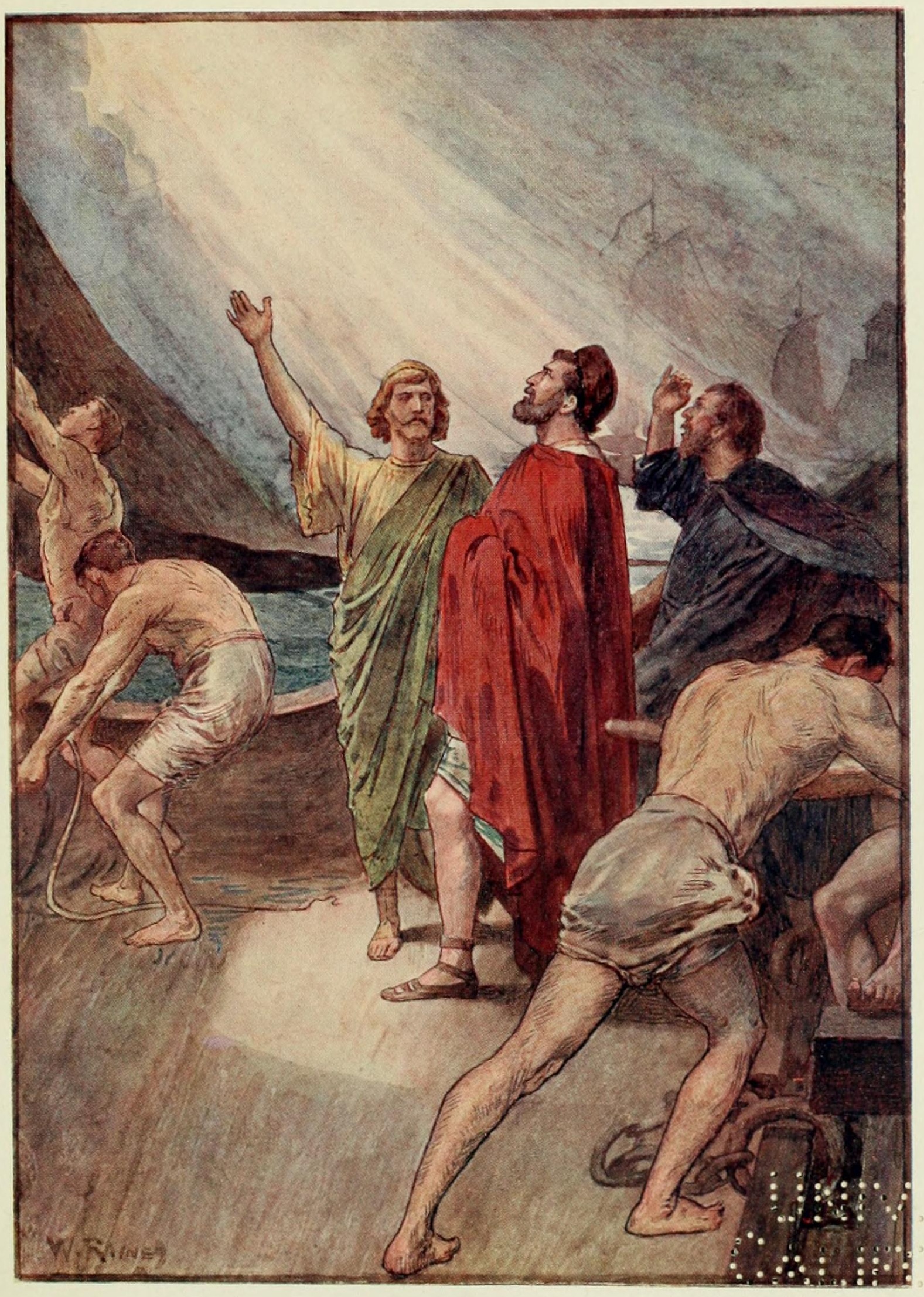
After Greek troops approached Syracuse, Sicilian Greeks also began to come to Timoleon's aid. Mago, fearing for the reliability of the Greek mercenaries besieging Syracuse, sailed to Africa against the entreaties of Hicetas. According to Plutarch, Mago committed suicide, but the Carthaginians, enraged by his unsuccessful actions in Sicily, crucified his body. After this, Timoleon was able to drive the enemy out of Syracuse.
Sources
External links
- Carthage. Regnal chronologies August 28, 2009