
Lövheim cube of emotion
Lövheim Cube of emotion is a proposed theoretical model aiming at explaining the relationship between the monoamine neurotransmitters and the emotions. In the model, the three monoamine neurotransmitters serotonin, dopamine and noradrenaline forms the axes of a coordinate system, and the eight basic emotions, labeled according to the affect theory of Silvan Tomkins, are placed in the eight corners. The origin corresponds to a situation where no signal substance at all is released. The model hence proposes a direct relation between specific combinations of the levels of the signal substances and certain basic emotions: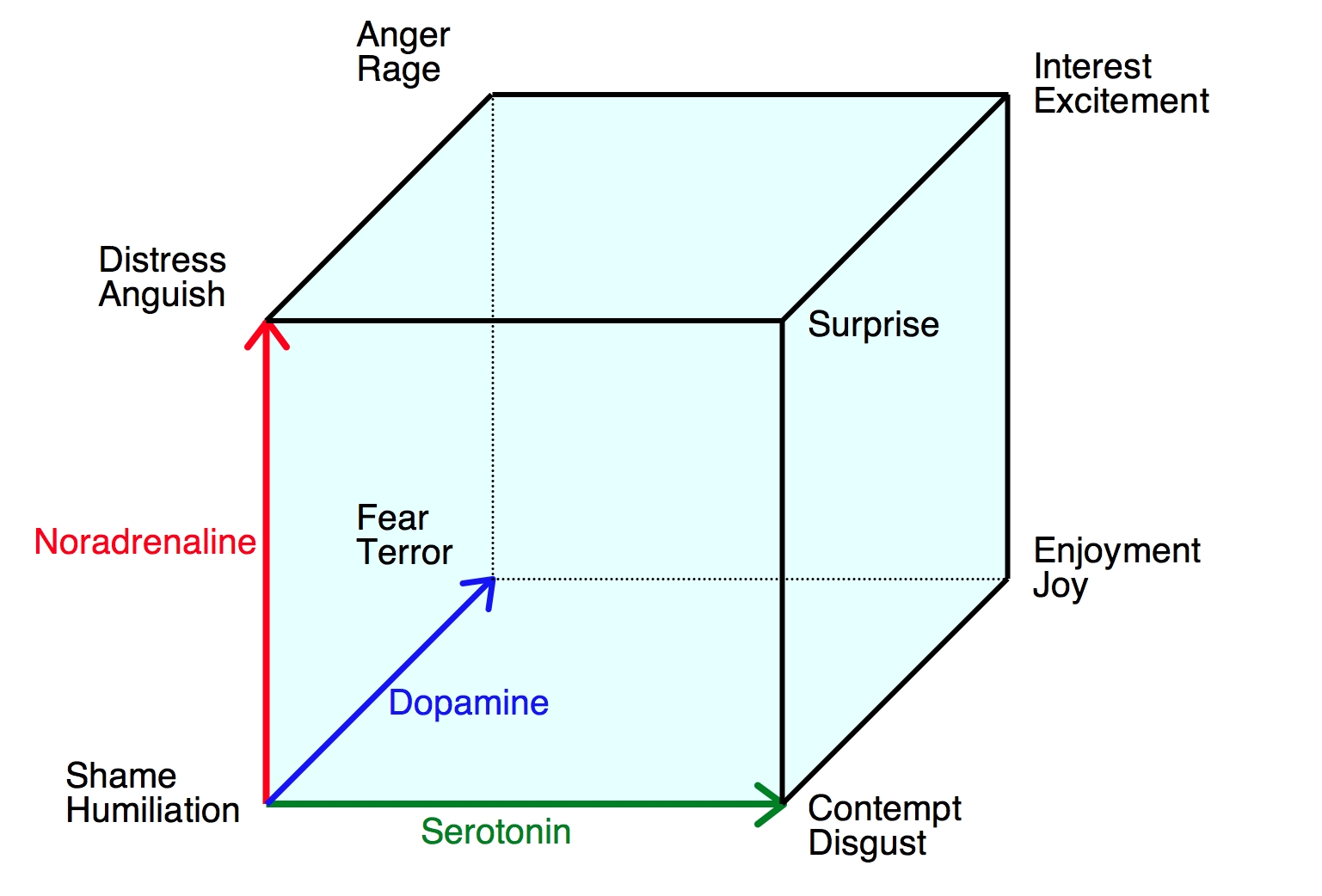
Basic emotion |
Serotonin |
Dopamine |
Noradrenaline |
Shame/humiliation |
Low |
Low |
Low |
Distress/anguish |
Low |
Low |
High |
Fear/terror |
Low |
High |
Low |
Anger/rage |
Low |
High |
High |
Contempt/disgust |
High |
Low |
Low |
Surprise |
High |
Low |
High |
Enjoyment/Joy |
High |
High |
Low |
Interest/excitement |
High |
High |
High |
Anger is for example, according to the model, produced by the combination of low serotonin, high dopamine and high noradrenaline.
Due to the direct relation to the monoamine neurotransmitters, the model might have an advantage compared to previous models of basic emotions such as, for example, Plutchik's Wheel of Emotions. Symptoms of depression might be interpreted as an emotional palette restricted to the low-serotonergic side of the Lövheim cube, where only the basic emotions shame/humiliation, distress/anguish, fear/terror and anger/rage are within reach. The core depressive symptoms of sadness and lack of interest can be interpreted as the inability to reach the basic emotions of joy and interest located on the high-serotonergic side.