
List of tourist attractions in Guntur
There are many places in and around the city of Guntur and its adjoining villages.
- City & surroundings
Guntur City has its own nice/modest downtown, midtown/city centers and uptown/residential areas. There are amusement parks, Brindavan Gardens, Manasa Sarovar located on the Eastern part of the city, is one of the man made parks located in Guntur, Haailand is an amusement park on the Guntur-Vijayawada highway.
- Krishna Barrage
Krishna Barrage (also known as Prakasam Barrage) is on the northeastern part, located around from the Guntur City on the Krishna River connecting Guntur and Krishna Districts. On the other side of the River Krishna is Vijayawada which is like a twin city to Guntur.
Ancient and archaeological
- Amaravathi, Bhattiprolu
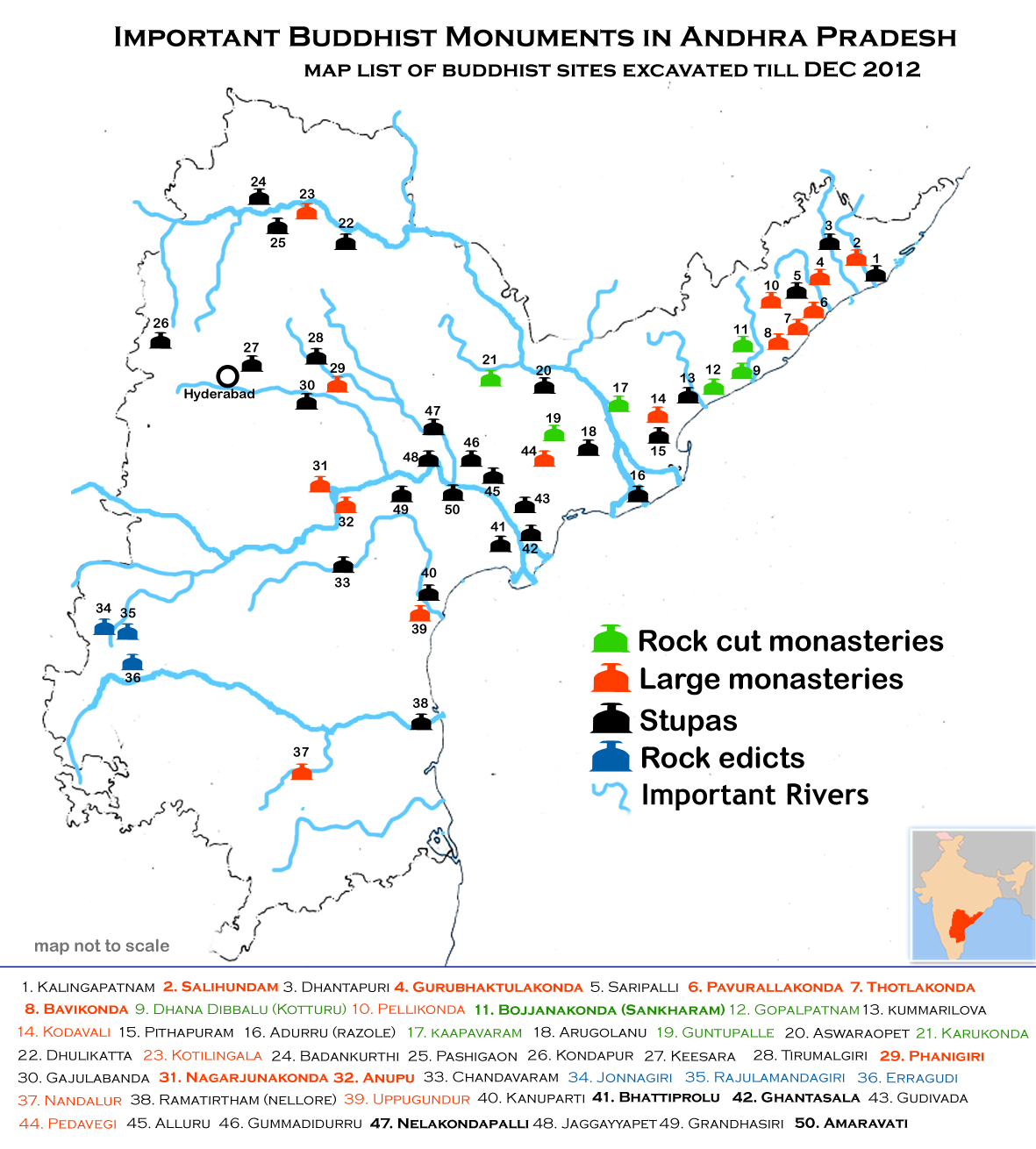
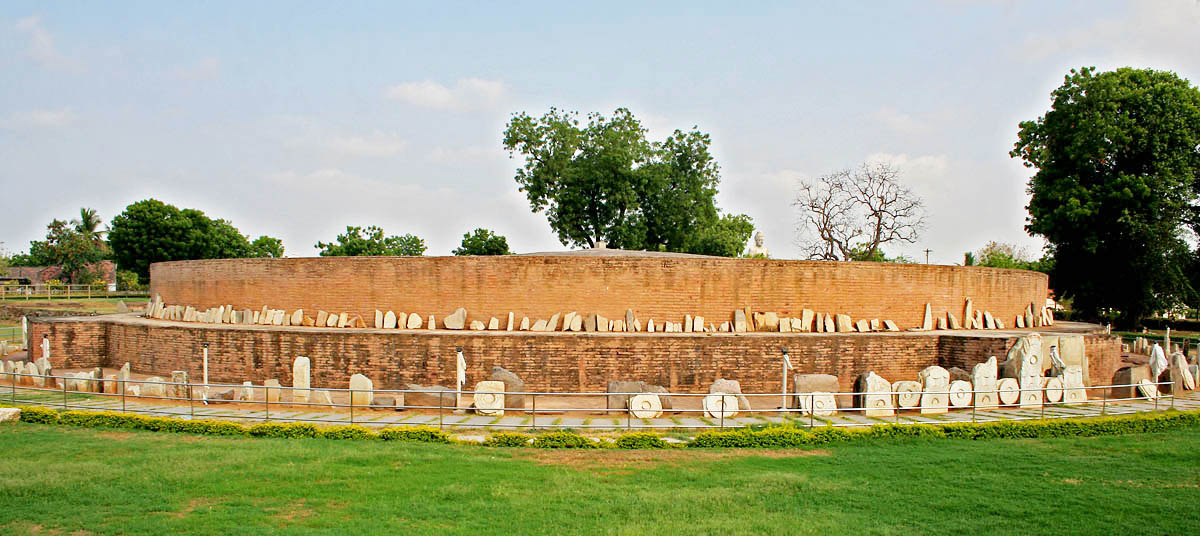 Located 16 miles northeast of Guntur City, Amaravathi is named after its famous temple of Amareswara Swamy with the swayambhu linga. Also the Mahachaitya stupa, built in the 2nd century BC in Amaravathi, is richly adorned with carvings depicting the life and teachings of the Buddha. The stupa houses a small museum with a collection of old monuments, and a pictorial depiction of the Buddha's life and teachings and terracotta antiquities. The temple walls have a number of inscriptions that throw light on the different dynasties that reigned over this place. A Recent Finding. The Museum at Guntur, has collection of various relics and antiques such as Stupa-slabs, railings, sculpture, coins of gold, silver and lead, potsherds and crystals caskets.Dharanikota is the village where the stupa is situated.Apart from temple, Amaravathi is famous for its nototrious ruler "Raja Vasireddy Venkatadri Nayudu".It is believed that this raja used to compare himself as Indra (king of Hindu gods, whose capital was also called Amaravathi).
Bhattiprolu is located 20 miles southwest of the city, formerly the Kingdom of Prati Palaputra, appears to be the earliest known kingdom in Guntur District. archaeological information gathered in the area of Bhattiprolu.
- Kondaveedu
Kondaveedu is located 17 miles from Guntur City. This historical fort was built during the reign of the Reddy kings in 14th century AD there are 21 structures in the fort. The ruins of the fort located on the hilltop offer unraveled mysteries to the tourist. A place of natural scenic beauty with natural wonders it is an ideal place for trekking. The Gopinatha temple and Kathulabave at the foot of the hillock, numerous temples, residential structures, pillared halls on the hill and the entrance gate ways on east and west sides are the attractions at kondavidu.
- Kotappakonda Trikutaparvatam, Guthikonda Caves
Kotappakonda, the temporal abode of Trikoteswara Swamy, is a village, south- west Guntur City near Narsaraopet. Its original name is Kondakavuru, but is more popularly known as Kotappakonda or Trikutaparvatam, a three-peaked hill nearby. Though surrounded by other hills, the three hills, also known by the names of Trikutachalam or Trikutadri, can be distinctly seen from a distance from any direction. The three peaks are named after the Hindu Triumvirate, Brahma, Vishnu and Maheswara. Guthikonda popularly known as Dakshina Kasi is located near Narasaraopeta. The Guthikonda Caves is open for tourist exploration as well.
- Sitanagaram
Sitanagaram is located North-East of Guntur City on the banks of river Krishna with a vast sandy beach for recreation and leisure. The Famous Someswara Swamy temple is situated here According to the legend Lord Rama wept here for Sita when she was abducted by Ravana, hence the name Sitanagaram.
- Undavalli-caves, Mangalagiri
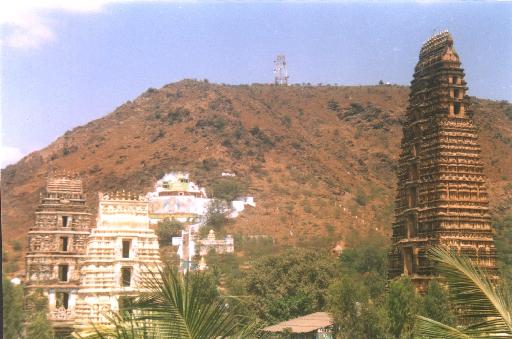 Located northeast of Guntur city, these two places are easily accessible on the Guntur-Kolkata Express Way.Managalagiri is famous for its temple of Lord Lakshmi Narasimha swamy. The hill used to be an ACTIVE volcano. It is at an altitude of 30 meters above the sea level. Latitude is 16.44 degrees north, and longitude is 80.56 degrees east. Here at the temple, jaggery water is offered to the lord by the devotees. According to the ancient scriptures, the lord is being worshiped since Satya Yuga (The first of the four yugas). In the down hill there is another temple dedicated to Lakshmi Narasimha Swamy. It is said that, Yudhishtira (Dharmaraju, the eldest of the Pandavas) installed the main deity in this temple. The temple has a very tall tower with beautiful sculpture which has 11 stairs.
- Chebrole
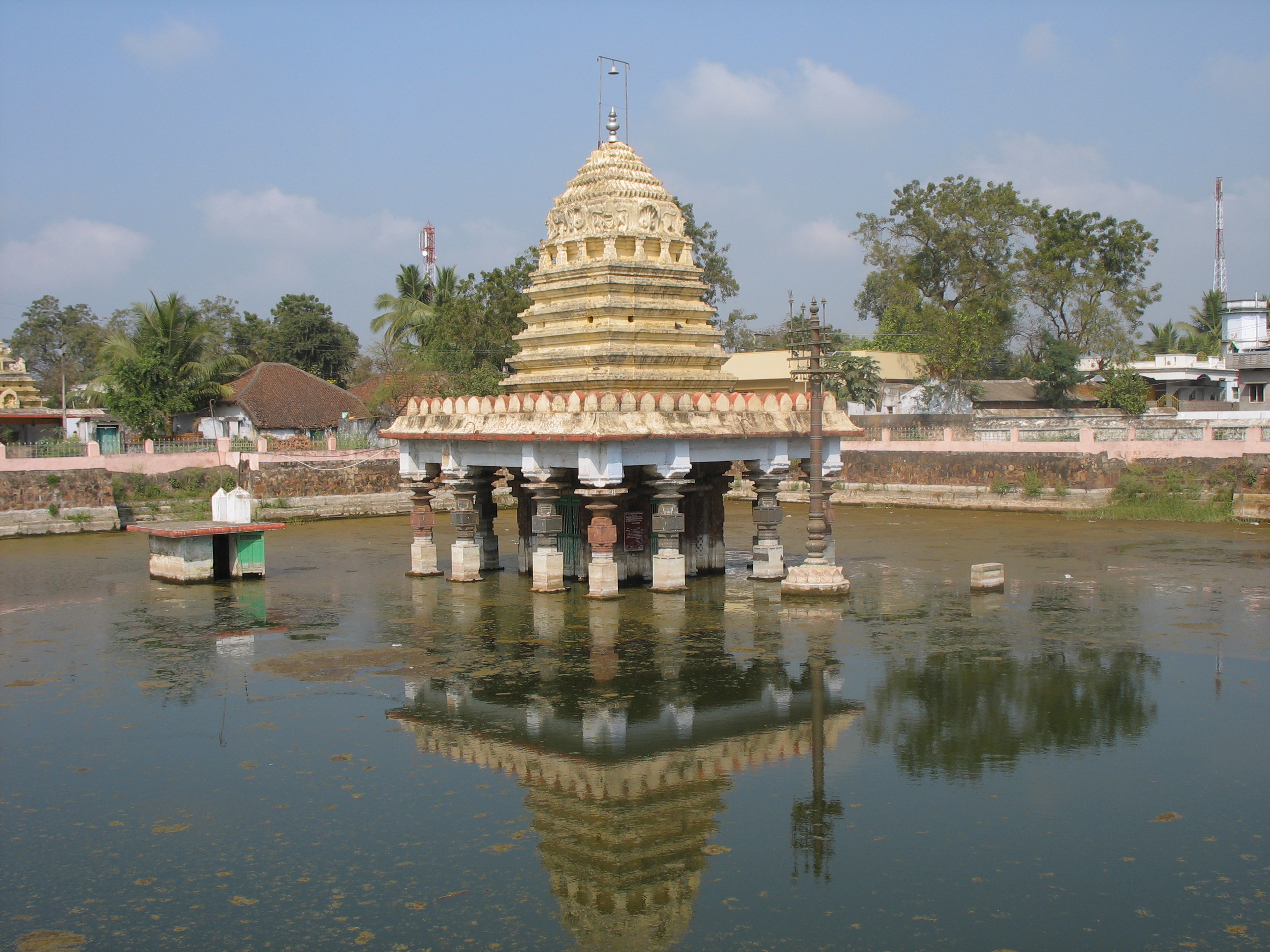 Located 10 Miles South of Guntur city, Chebrole is famous for chaturmukha Brahma and Lord Nageswara Swamy. Has a beautiful red stone Nandi. It is a major panchayat comprising three villages Chebrole, patha reddy palem and kotha reddy palem. It is a mandal headquarters. Buckingham canal passes by which is used for inland transport and irrigation. It was a regional fort for pallavas, chalukyas and kakatiyas. Its ancient name was sambhole (from which 'chebrole' is derived). There are famous Chalukya inscriptions. Chebrole is mentioned in yuddamalluni Vijayawada inscriptions. It became famous in the rule of Kakatiyas as a great general Jayapa ruled the Chebrole fort. Jayapa also wrote a famous book on Indian dance, 'Nrutyaratnavali'.
- Chejarla
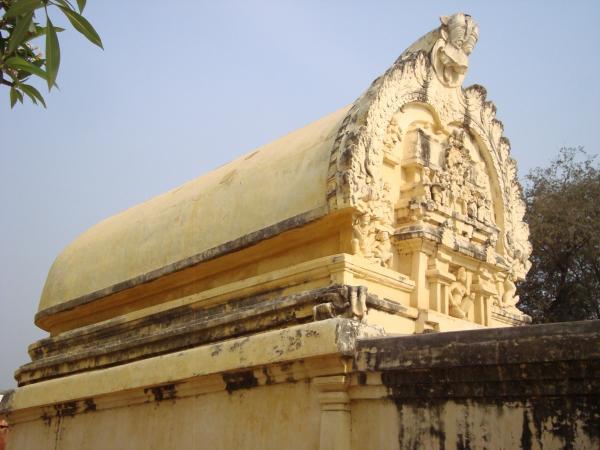 Located 35 km from Narasaraopet. Chejarla is famous for temple. This is also called as dakshina kasi.
Nature
- Uppalapadu Nature Conservation
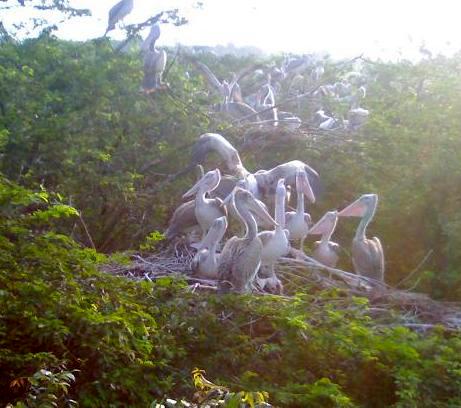 Uppalapadu is located to the southern part of the Guntur City (4Miles). The water tanks in the village are unique as they provide refuge to many species birds including endangered Spot-Billed Pelicans and Painted Storks. The bird population in these tanks used to be around 12,000 previously, however lately only about 7000 birds roost in this dwindling habitat through the year.
- Nagarjuna Sagar Dam & Ethipothala Falls
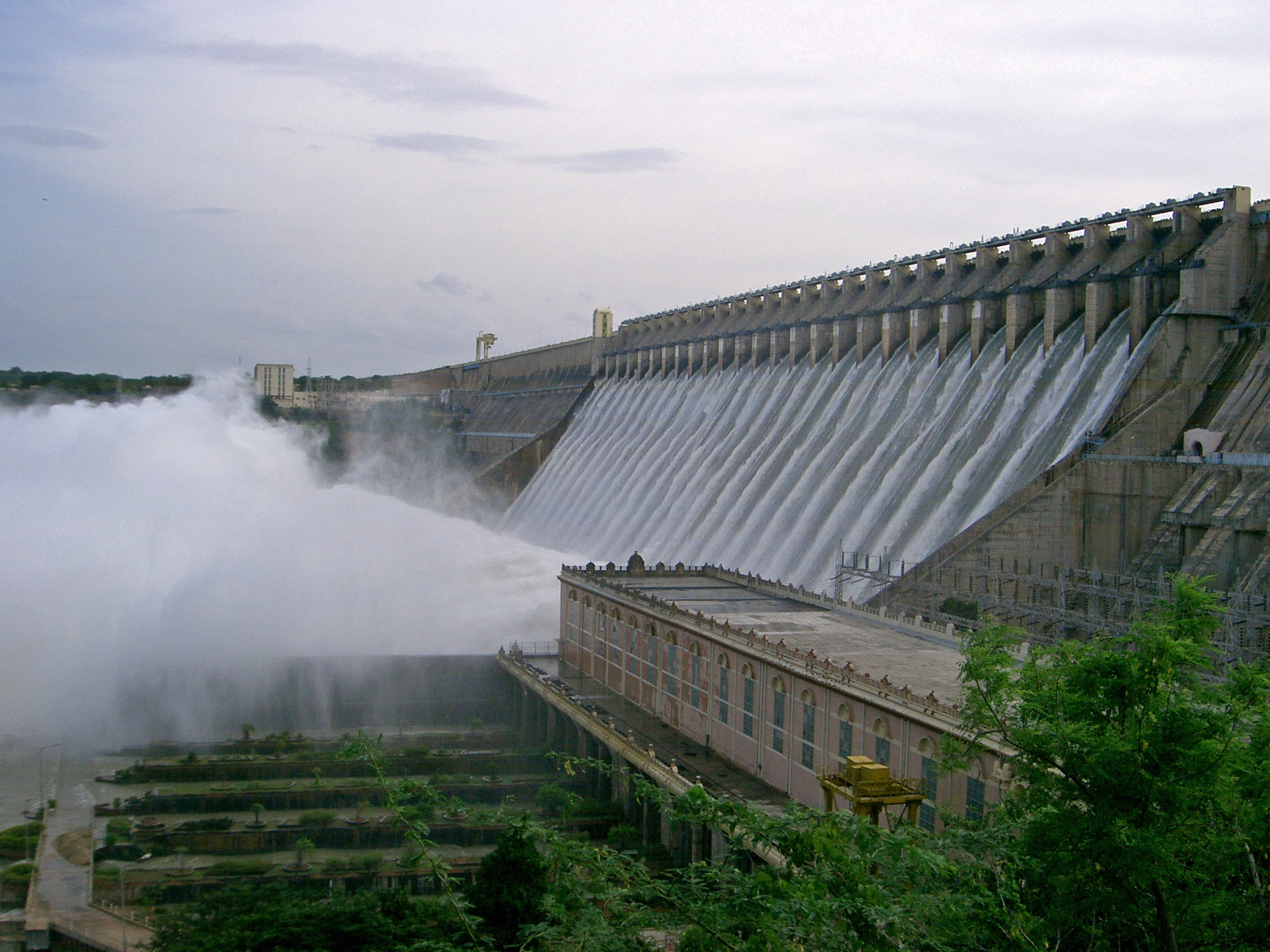 Nagarjuna Sagar, a massive irrigation project on the River Krishna, about from Guntur City, has a rich and interesting past. It was a valley in the Nallamala range of the Eastern Ghats with civilizations dating back to thousands of years. Recorded history, however, assigns the first signs to the later Satavahanas and subsequently the Ikshvakus in the third century. The Sriparvata and Vijayapuri of yore were really temples where the famous savant and Philosopher Acharya Nagarjuna preached the message of the Buddha. The Ethipothala Falls located from Nagarjunasagar, the water here is used for crocodile breeding.
Spiritual
- Viswa Nagar:Viswamandiram
Located to the South-West of the City near Chowdavaram (10 miles), easily accessible using the GNT-Chennai Express way (NH5). This is the place of Sri Viswayogi Viswamji and the Universal Integration Pillar. It is an envisioned symbol of oneness of humanity. Also located here is the VIMS/Viswayogi Institute of Medical Sciences (Mother and Child Care Hospital).
- A few of the famous temples and other shrines
- Temple of Chaturmukha Brahma Lingeswaralayam located to the center city of Guntur. It is one of rare temples of India built for Lord Brahma.
- Sri Anjaneya Swamy Temple at Ponnuru (which has large idols) and Kothapet.
- Sri Bhavanarayanaswamy temples at Bapatla and Ponnuru.
- Temple at Ramalingeswara Agraharam. It has old inscriptions dating to 1000 years ago.
- Kakani Malleswara Swamy temple at Pedda Kakani built during the era of Krishnadevaraya.
- Hinkar Tirtha (Jain Temple, Mangalagiri), VaikuntaPuram (Tenali).
- Sri Kali Gardens at Namburu.
- Sri Sringeri Math, Sampath Nagar, Guntur. Math encompasses within its complex many temples like Sri Sarada Parameswari Devasthanam, Sri Abhaya Kodanda Rama Swamyvari Devasthanam, Sri Prasannaanjaneya Swami Devasthanam, Navagraha Devalayam, Sri Adi Shankara Devasthanam and Sri Ganga Parvathi Sametha Ramalingeswara Swamyvari Temple.