
List of delisted National Register of Historic Places properties
This is an incomplete list of properties once listed on the National Register of Historic Places (NRHP) which have since been delisted. There are AbOUT 1500 such instances in total. Also included is an intended-to-become complete list of former National Historic Landmarks (NHLs) which were de-designated as NHLs, of which some were delisted while others remain listed on the NRHP. There are approximately 30 such de-designations.
Places are listed on the NRHP originally for their historical merit. They May Be important for their architecture, for their association with events and historically important persons, and for other reasons. Places of exceptional merit may further be designated National Historic Landmarks.
Delistings occur relatively rarely, usually when the historic integrity of a site has been lost by demolition, fire, vandalism, or other causes. There are about 1500 such instances in total reflected in the NRIs database.
It is also necessary for the National Park Service, which maintains the National Register, to become aware of the situation. In 2008, a large number of Mississippi properties were delisted after buildings were destroyed by Hurricane Katrina, while there was not a corresponding flurry of delistings in Louisiana, perhaps due to differences in state historical offices' budgets and priorities. There are other instances of buildings being demolished but still being listed, apparently only due to no official notice of the demolition being recognized. These include several properties at Cornell University.
Delisted properties
The locations of delisted National Register properties (at least for all showing latitude and longitude coordinates below) may be seen in a Google map by clicking on "Map of all coordinates". Delisted properties include:
Name |
Image |
date width="3%" |Dates of listing and delisting |
Location |
County or equivalent, and State |
Description |
|---|---|---|---|---|---|
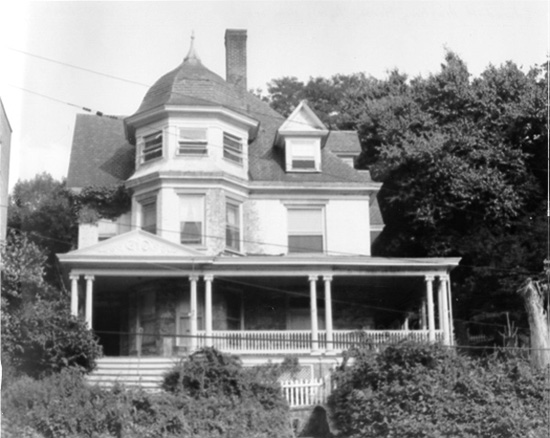
Edwin H. Armstrong House |
|
Yonkers |
Westchester County, New York |
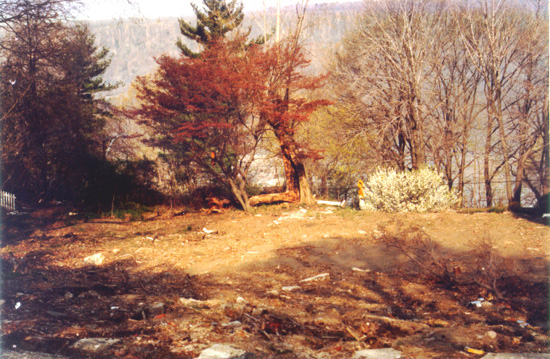
Home of scientist and FM radio inventor Edwin H. Armstrong; demolished and de-designated in 1983 |
|
Evergreen Place |
removed in 2008 |
Nashville |
Davidson County, Tennessee |
Was one of the earliest homes built in Nashville, and probably the earliest surviving building remaining in Davidson County. The original log section of the house was built circa 1785 by Reverend Thomas B. Craighead, a Presbyterian minister and the first president of Davidson Academy, a forerunner of Peabody College. The log house was expanded and covered in weatherboard and a two-story portico was added around 1832. The home was for at time the location of the Jim Reeves Museum. Although a state law protected pre-1865 dwellings in Davidson County from demolition, in 2004 the property was sold for development of a Home Depot store, and the building was demolished by its owner in 2005 in spite of a "stop work" order. |
|
Home Infirmary |
removed in 2008 |
Montgomery County, Tennessee |
No longer exists |
||
Ridley’s Landing |
removed in 2008 |
Rutherford County, Tennessee |
Home built in the early 1800s by Moses Ridley; was demolished in the late 20th century. |
||
Thomas J. Walker House |
removed in 2008 |
Knoxville |
Knox County, Tennessee |
Demolished |
|
Gambell Sites |
image pending |
1962, |
Gambell |
Nome Census Area, Alaska |
These five archeological sites established a chronology of human habitation on St. Lawrence Island, with evidence of four cultural phases of the Thule tradition, beginning approximately 2000 years before the present. Over the 20th century, the archeological value of the sites was largely destroyed due to ivory mining, and landmark designation was withdrawn. |
Sourdough Lodge |
image pending |
1978, |
Gakona |
Valdez-Cordova Census Area, Alaska |
Built of logs in 1903-05, this was one of a number of roadhouses built along the Valdez Trail. It was destroyed by fire in 1992, leading to withdrawal of its landmark status. By the time of its destruction, it was one of the oldest continuously-operating roadhouses in Alaska. |
Former NHLs de-designated and delisted from the NRHP
There are ___ known sites that were de-designated and delisted.
Landmark name |
Image |
Date declared |
Locality |
County and State |
Description |
|
|---|---|---|---|---|---|---|
1 |
Edwin H. Armstrong House |
|
Yonkers |
Westchester |
Home of scientist and FM radio inventor Edwin H. Armstrong; demolished in 1983 and subsequently de-designated |
NHL designation withdrawn, although NRHP listing kept
There are at least three sites that had their National Historic Landmark status withdrawn, while retaining NRHP listing.
Landmark name |
Image |
Date declared |
Locality |
County and State |
Description |
|---|---|---|---|---|---|
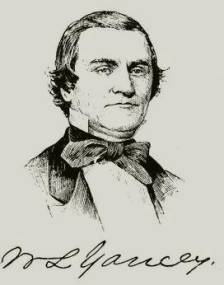
Yancey, William Lowndes, Law Office'' |
|
1973, |
Montgomery |
Montgomery County, Alabama |
As a lawyer, populist legislator, firebrand orator, and party leader, William Lowndes Yancey was an important figure in sectional politics in the leadup to the Civil War. He gained national influence as an aggressive advocate of states' rights and exacerbated sectional differences that led to the secession of the Southern states from the Union. He had his law office in this building from 1846 until his death in 1863. Through successive modernizations and restorations in the 1970s and 1980s, the building lost much of the historic integrity for which it was originally designated a landmark, leading to the withdrawal of its designation. It was, however, retained on the National Register of Historic Places. |
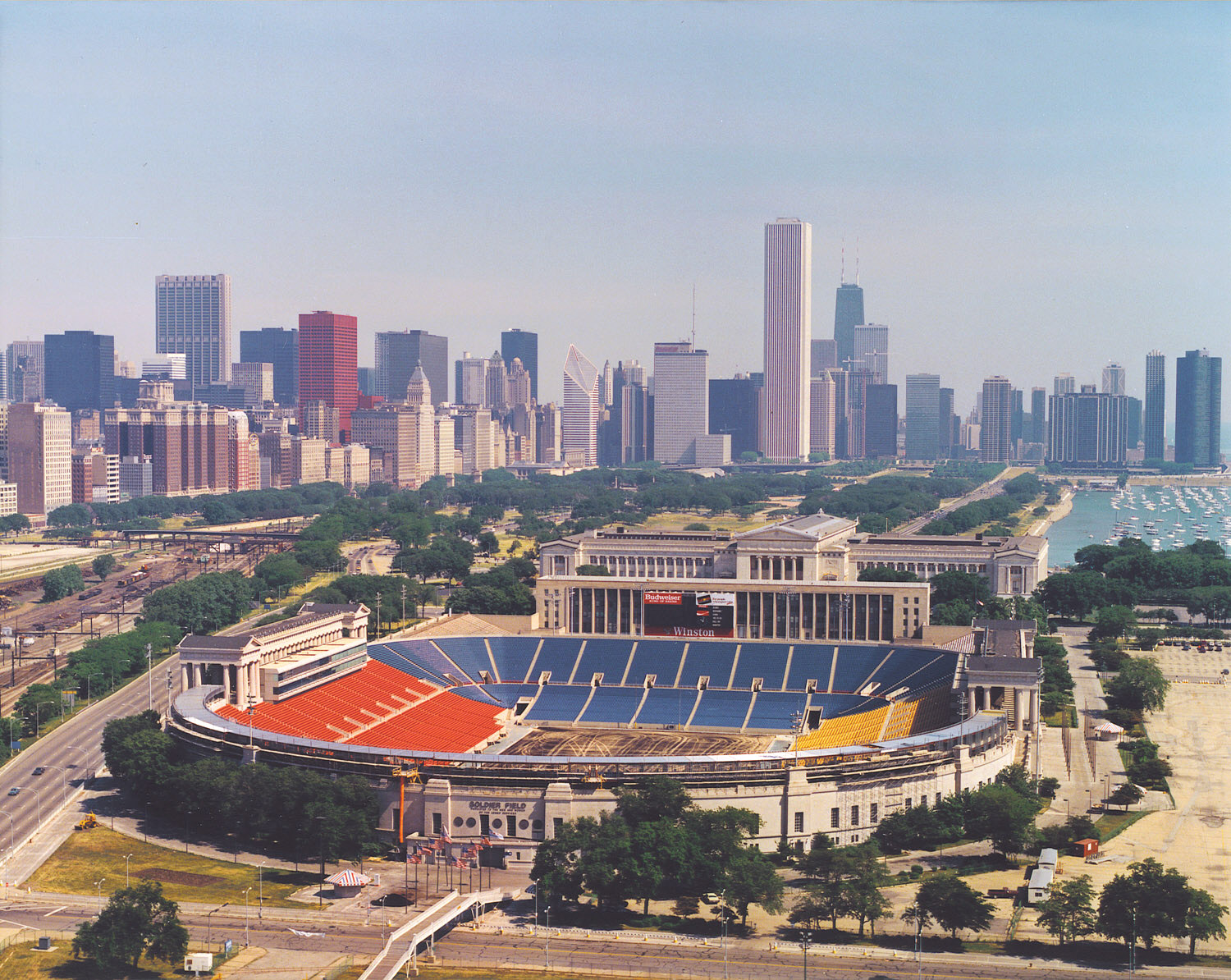
Soldier Field |
|
Chicago |
Cook County, Illinois |
||
Gambell Sites |
|||||
Pending delisting
An unusual instance of a pending delisting is:
- Florence Mills House