
Leprosy Mission of Almora
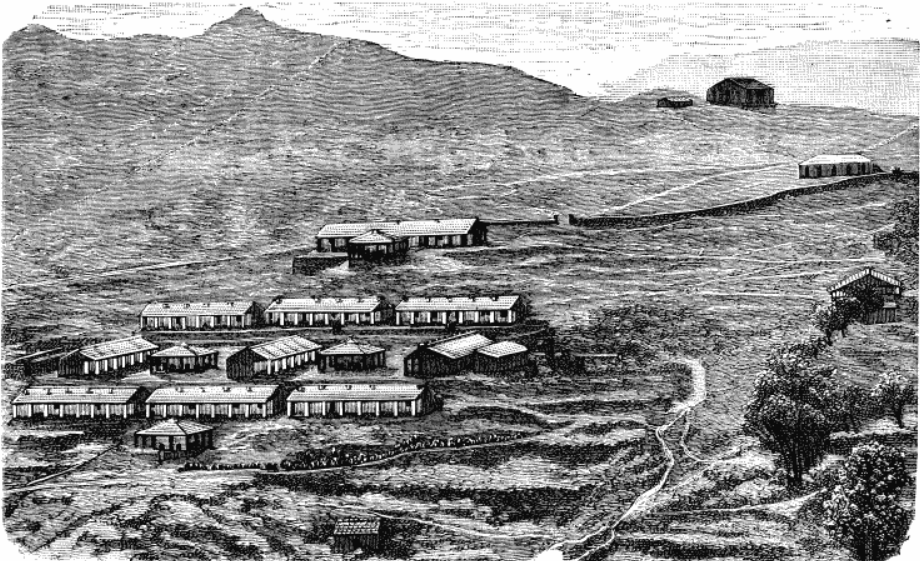 The Leprosy Mission at Almora was historically established as an institution for the treatment and care of individuals affected by leprosy in 1836 under the British colonial administration. Located in Karbala, Almora district, Uttarakhand, it began as a small asylum and has since been administered by different organizations. Over time, the institution provided leprosy-related medical care, sanitation measures, and rehabilitation services. It is currently operated by The Leprosy Mission Trust India.
History
Early establishment (1836–1851)
The institution was founded in 1836 when Sir Henry Ramsay was the Commissioner of Kumaon. At the beginning, the asylum consisted of temporary huts where patients lived in poor conditions. Ramsay, who first served in the area in 1835 and returned as a civil officer in 1840, was involved in establishing and supporting the asylum. In 1851, the facility was relocated to a permanent site and became known as the "Leprosy Ashram," later renamed the Leprosy Hospital and Home.
In 1851, management of the asylum was transferred to the London Missionary Society (LMS), with support from The Mission to Lepers, a Christian organization involved in medical missions throughout British India. The mission implemented various programs, including separating healthy children from their leprosy-affected parents and providing care for them in an orphanage. Additionally, the mission operated a women’s hospital that was overseen by a female doctor.
Following the enactment of the 1896 Lepers Act and the Leper Act No. III In 1898, the Almora asylum was designated as the regional facility for the confinement and treatment of individuals diagnosed with leprosy. The institution was administered by local medical officers, with a focus on sanitation and basic medical care. Under the provisions of the law, individuals identified as having leprosy were required to reside in the asylum, and police were authorized to detain and return those who left without permission.
Transition (1925–1989)
In 1925, the management of the Almora hospital was transferred to the Methodist Episcopal Church of America, following the gradual withdrawal of the London Missionary Society from North India. During this period, medical infrastructure at the facility remained limited. In a 1919 letter, E. M. Moffatt, then superintendent, noted that procedures such as operations, bandaging, and pain relief were not regularly carried out. A 1930 letter from J. N. Hollister, who also served as superintendent, made similar observations regarding the availability of medical services. The Methodist Church remained in charge of the institution until 1989.