
Kristijan Grđan
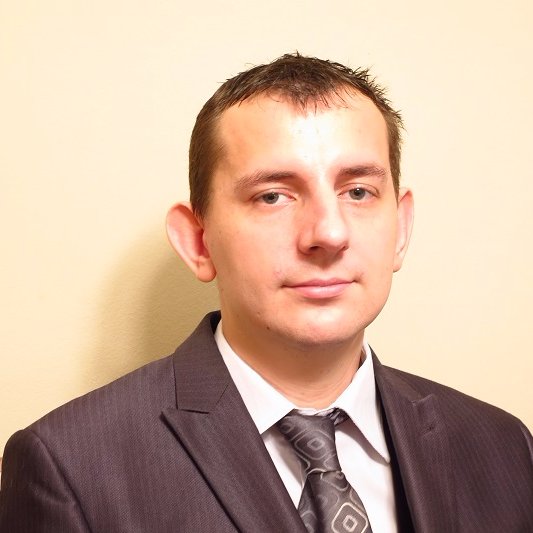 Kristijan Grđan (born November 3, 1982) is Croatian human rights activist and legal researcher in areas of anti-discrimination, LGBT social movement, rights of persons with mental health problems, HIV/AIDS, bioethics, Roma, and [...] workers. He is an author of a number of professional and scientific papers and is notable for his human rights advocacy. He is a researcher at the Department of Criminal Law, University of Rijeka Faculty of Law and individual member of Mental Health Europe. In 2016 he emigrated Croatia and currently lives in Germany with his partner.
Early life and education
Kristijan Grđan was born in Croatian capital Zagreb. He spent his childhood during Croatian War of Independence with his family in Zagreb. At early age he was diagnosed with severe spinal condition. Except primary education, he did not gain any further formal education due to ill health, poverty and unfavorable family circumstances. However, he got self-educated in medicine and law.
Activism
LGBT Rights
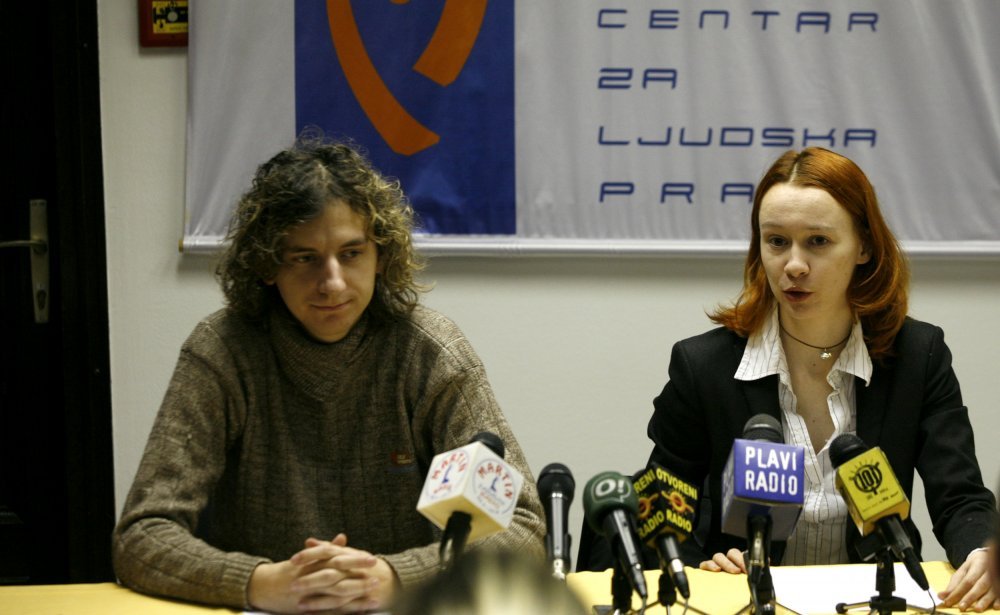 In 2003, Grđan joined Iskorak, the first association that advocated for rights of lesbians, gay and transgender people in Croatia. In the same year, he started to be involved with the legal team consisted of members of Iskorak and Lesbian Group Kontra. He made his first public appearance in 2003 when he openly criticised national educational curriculum that was discriminative against gays and lesbians. He was one of the first gay people to make public coming out in Croatia. As LGBT activist, Kristijan Grđan made many public appearances. In 2006 Grđan participated in drafting the Registered Partnership Bill that, although adopted by the Parliamentary Committee on Gender Equality, did not pass the Parliament. In the same year, Grđan participated in drafting amendments to Criminal Code with which the notion of hate crime has been implemented for the first time in Croatian legal system. In 2007 Iskorak suffered internal turmoil and divided in two associations after disputes in leadership, after Grđan assumed one of the position in leadership. He was especially active in advocating for non-discriminatory education and very critical against influence of Catholic Church in education. In 2008 he was physically attacked by two perpetrators when coming back to his office after the Pride March, when he suffered minor injuries. Except for his advocacy efforts, he was well known for providing direct support and assistance to victims of hate crimes. Grđan remained active member of Iskorak until 2014 when he left the association.
HIV and AIDS
In 2005 Grđan was contracted by UNDP Croatia to prepare analysis of legislation concerning rights of people living with HIV and AIDS in Croatia. He was an assistant to professor of law Ms. Ksenija Turković. The analysis with recommendations for normative changes was published in 2006. As of 2006 he continued working with UNDP Croatia as a National Consultant on HIV/AIDS and Human Rights and has regularly reported on status of human rights of people living with HIV/AIDS. He also made public appearances advocating for human rights of people living with HIV.
People with mental health problems
Association Shine
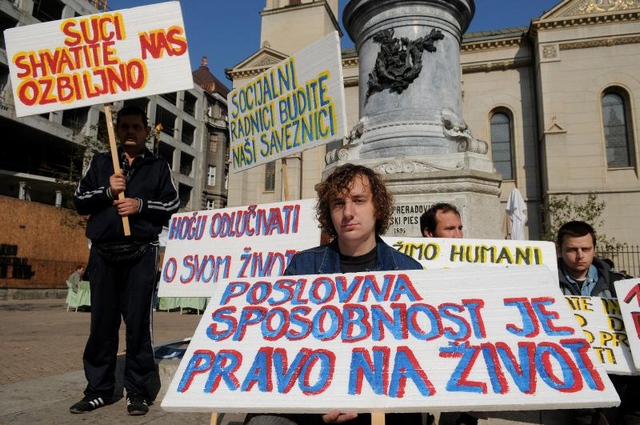
In 2004 Grđan joined the Shine, association of people with mental health problems. In 2006 he authored his first book: analysis of Croatian legislation in regards to people with mental health problems. in 2007 he organized first Mad Pride that advocated rights of persons with mental health problems and was widely covered by the media. He continued organizing the same manifestation in subsequent years, publicly raising different issues concerning rights of persons with mental health problems.
The cornerstone of Grđan's human rights advocacy for people with mental health problems concerned their right to personal autonomy through exercise of legal capacity. One of his main successes in legislating reforms in this area concerned right of persons deprived of legal capacity to vote at elections. After this success, Grđan continued his activities into advocating for more comprenhensive changes of Croatian law, often challenging case law that violated human rights of persons deprived of legal capacity. He participated in motinoring processes over execution of judgments of European Court on Human Rights in Croatia and he was also an amicus curiae in several cases brought before that Court. In 2015, he strongly criticised Croatian Constitutional Court for canceling the Family Law 2014 that brought significant changes to improve position of persons deprived of legal capacity. Further, he crizicised academic community for failing to protect persons deprived of legal capacity. 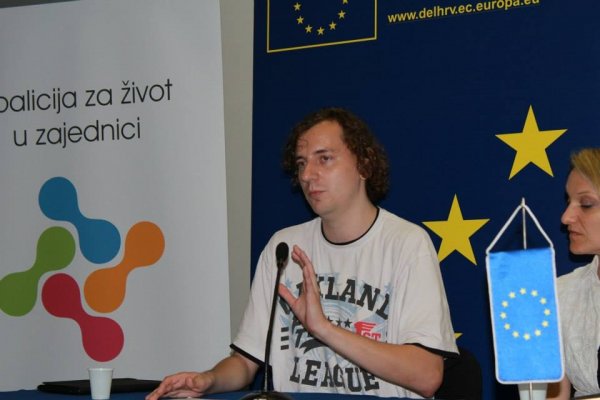 He was an active member and one of representatives of the Coalition for Community Living that he co-established in 2011. He often participated in public discussions and advocated MainStreaming of mental health in disability rights.
In 2014 Grđan was appointed a member of the Ministry of Justice Task force to draft new Mental Health Bill. As a member of the Task Force, he strongly advocated for harmonization of Croatian legislation with requirements of the UN Convention on Rights of Persons with Disabilities. Although not all of his proposals were accepted, the Croatian legislator however made some historical changes by banning non-consensual biomedical research and ECT and implementing advanced directives. Grđan supported new law in public and raised awareness on violations of human righst of people with mental health problems.
By May 2015, Grđan left the Shine. The association had shut down his program due to lack of capacities and turned to peer-support activities exclusively.
Between 2012-2015 Grđan served as Board Member of Mental Health Europe. In 2015 he was re-elected but has resigned the position after he left the Shine.
Current activities
He continued membersip in Mental Health Europe as an individual member and is currently Chair of the Committee for Mental Health and Human Rights of the same organisation.
Grđan serves as a member of the Croatian State Board for Protection of Persons with Mental Health Problems, Ministry of Justice of the Republic of Croatia, which is a regulatory body with quasi-ombuds competencies with a mandate until March 2019.
In September 2017 he participated in a public discussion about the conservative draft of Family Bill and strongly criticised introduction of plenary guardianship for adults. The draft law was also criticised by general public since it proposed narrow definition of family that would recognize only married couples with children as a family unit. The same day after it was released to public discussion, the draft law was withdrawn by the Government. The day after the draft law was withdrawn, Grđan publicly criticised the Government on his Facebook profile claiming that draft law was even worse than the Family Act 2003 and was divesting all civil rights of persons under plenary guardianship and noted that such a deprivation of rights of persons with disabilities resembles to practices from Holocaust.
Romani people
In 2015 Grđan was contracted by UNDP Croatia to prepare action plans for social inclusion of Romani people in four local communities in Croatia.
Legal Research
Since 2015 Grđan is a researcher at the Department of Criminal Law, University of Rijeka Faculty of Law in the project titled: "Legal status and real position of persons with mental health problems - interdisciplinary approach and European perspectives". In the course of the research he co-authored book "Commentary to the Act on Protecting Persons with Mental Health Problems". Also, he performed his own research concerning autonomy of participants in biomedical research in psychiatry with comparative analysis of legal approaches to this issue in five European countries. The research is under review for publication.
In 2016 he joined Advisory Committee at the project "Voices of Individuals: Collectively Exploring Self-Determination" implemented by the Centre for Disability Law & Policy of the National University of Ireland in Galway, where he maintains advisory role.
In 2017 he was a researcher in the project: "DESIrE - Demand for [...] Exploitation in Europe" led by Vrije Universitiet Brussel where he focuses on legal position of [...] workers in the Republic of Croatia.
In 2017 he co-authored legal paper on rights of Jehovah's Witnesses to surgical procedures in Republic of Croatia.
Filmography
In collaboration with film director Mr. Slaven Žimbrek, Grđan co-produced a documentary film "No Place for You at this Workplace" that deals with social prejudice against certain vulnerable groups and the discrimination against them in the workplace, seen through the personal stories of the protagonists. The documentary is divided into five thematic sections, each presenting experiences of one of the groups at risk: persons with physical disabilities and sensory impairments, persons with mental health difficulties, Roma, persons living with HIV/AIDS, and persons with same-[...] orientations. The viewers are introduced into each topic through opinions of accidental passers-by in the center of Zagreb. The documentary was presented at following film festivals:
- Days of Croatian Film (Croatia, 2007);
- DOCUMENT International Human Rights Documentary Film Festival (UK, 2007);
- United Nations Associations Film Festival (USA, 2007);
- Seoul Human Rights Film Festival (South Korea, 2008);
- EUROfEST Eastern European Film Festival (Canada, 2008);
- STEPS International Rights Protection Film Festival (Ukraine, 2008).
Journalism
In 2009 Kristijan Grđan got own column in the on-line news portal ZamirZine. He was focused to political developments in human rights, social welfare and justice system. Athought the portal was shut down in 2013, some of his articles have been cited by other news resources. In 2016 he strongly criticized feminist associations for collaborating with conservative academic structures concerning family legislation and as a guest journalist, wrote a critical review that was published and cited in several media.
Politics
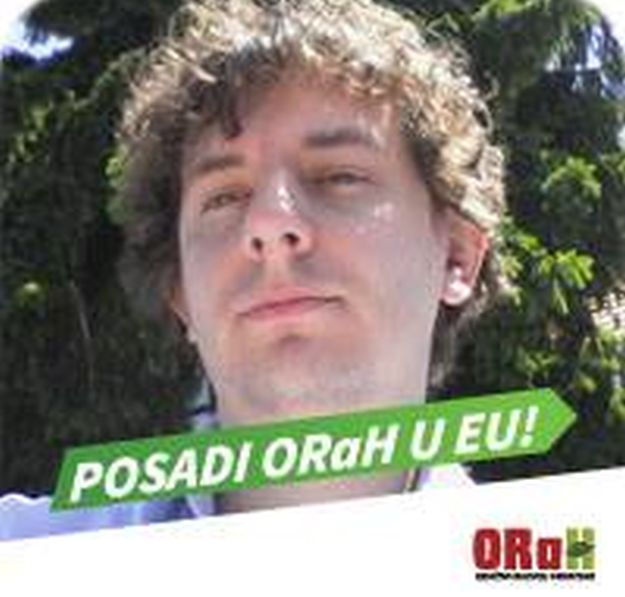 In 2013 Grđan co-founded green political party ORaH. According to pools, ORaH reached the second place in its popularity among political parties in Croatia. At the elections for European Parliament, ORaH won one place. In 2014 Grđan was elected member of General Council, the highest body of the party. During his term, Grđan developed sector policy on sustainable civil society development and supported developing sector polices in social welfare. However, in 2015 he resigned and left the party, making accusations against the leadership for not respecting democratic procedures. Although Grđan's political engagement was controversial due to lack of his formal education, his departure from the party created loss for its popularity. Three months after Grđan left the party, more members from leadership left it due to disagreements with party's politics. After the Parliamentary Elections 2015 ORaH did not pass the election threshold; subsequently ORaH's president had resigned.