
Kano (company)
Kano is a London-based computing company which makes DIY computer and coding kits, designed to allow all ages to build their own technology. Alex Klein is Kano's cofounder CEO and John Makinson, former Chairman of Penguin Random House, is its Chairman.
Kano's build-your-own-computer kits are the most crowdfunded educational technology products ever, and are now available for sale in retail outlets such as Toys "R" Us and Barnes & Noble. In 2016, The Next Web named Kano the UK's fastest growing tech startup and in 2017, Fast Company named Kano one of the top ten "most innovative companies" in consumer electronics.
Development
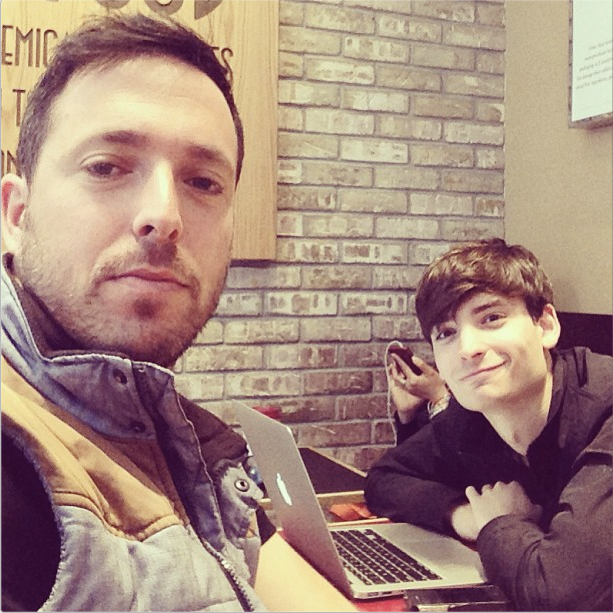 The founders of Kano are writer, designer, and entrepreneur Alex Klein, venture capitalist Saul Klein, and Israeli entrepreneur Yonatan Raz-Fridman. Alex and Saul are cousins.
In November 2012, "Alex, Yonatan, and Saul were trying to imagine what a computer for the next generation would look like". They "wanted to know if it was possible to make a computer kit that would be fun enough to hold kids' attention, but smart enough to actually teach them something". They drew inspiration from Saul's then 6-year-old son Micah, who advised that he wanted the kit to be "as simple and fun as Legos".
The founders chose Kanō Jigorō, the creator of judo, as the eponym of the company because of his renown as a dedicated teacher and democratizer of martial arts.
In January 2013, Raz-Fridman and Klein started work on the first Kano computer kit prototype, combining off-the-shelf components with graphic stories "with the goal of making the Raspberry Pi more accessible". The founders collaborated with Raspberry Pi and Codecademy, running ideation workshops with "parents, educators, and children around the world". They introduced the kits to schools in low-income areas of London, where the students responded enthusiastically.
In the development phase, "Kano made 200 kits and sold them out based on word of mouth in London schools and at some big companies... The company spent its resources making the design better, creating its own Raspberry Pi operating system, hardware add-ons, and... a plug-and-play design."
Kano also traveled to Africa for testing in South Africa, Kenya, and Sierra Leone. In Sierra Leone, Kano collaborated with the self-taught teenage engineer Kelvin Doe.
Kano partnered with the London creative consultancy MAP "to work on the industrial design and make the kit more intuitive and cohesive".
Crowdfunding and financing
 On 19 November 2013, Kano launched a month-long Kickstarter campaign to crowdfund the mass manufacture of its first computer kit for the summer of 2014, primarily through $99 pre-orders of the device. Within 18 hours, Kano had reached its goal of raising $100,000.
At the conclusion of the campaign on 19 December, Kano had raised over $1.5 million from 13,387 backers, making it at the time Kickstarter's most crowdfunded learning invention ever and third most-funded design project. Backers of the Kano Kickstarter came from over 80 countries, and included Apple co-founder Steve Wozniak and Kickstarter co-founder Yancey Strickler, who both preordered the kit.
On May 4, 2015 at the TechCrunch Disrupt New York conference, Kano co-founder Klein announced that the company had received $15 million in Series A funding, led by venture capitalist Jim Breyer, as well as British economist Jim O'Neill and the Collaborative Fund. With additional investments from British business leader Martin Sorrell, Salesforce founder Marc Benioff, venture capital firm Index Ventures, former Apple executive and Steve Jobs confidante James Higa, Atom Factory CEO Troy Carter, and angel investor Shana Fisher, Kano has to date raised $19 million.
On September 27, 2016, Kano launched its second Kickstarter campaign to fund the manufacturing and launch of its new camera, speaker, and pixel kits. These kits contain new Kano-developed single board computers, and can be coded wirelessly from any device. The goal of the company was to raise $500,000 by October 27. On October 18, 2016, Kano announced it had surpassed its $500,000 pre-sale fundraising goal ahead of schedule.
Growth and expansion
In April 2016, The Next Web named Kano the UK's fastest growing tech startup.
Its expansion coincided with the development of its software and social platform Kano World, which Wired described as a "GitHub for kids," and links the kits together. In November 2016, it surpassed 25 million lines of code shared by users, and over 100,000 shared apps, games, artworks, and songs, made with code.
In July 2016, Kano announced its expansion into retail, offering its kits for sale in Toys "R" Us and Barnes & Noble. The company also appointed John Makinson, Chairman of Penguin Random House, as the new Chairman of its Board of Directors.
Kano was part of delegation that accompanied UK Prime Minister Theresa May on an official visit to India in November 2016. Speaking at the India-UK Tech Summit on November 7, May said, we have brought "along some of our biggest, most successful companies and our brightest start-ups, from every region of the UK, in order to open up new markets for them and promote them to the wider world. One of them, Kano, is using its unique technology to teach children to code in UK schools. Just think of the impact that could have in India."
As of October 2016, Kano has a staff of 50 employees. In February 2017, Fast Company magazine named Kano the ninth-most innovative company in consumer electronics.
Product kits and software
Computer
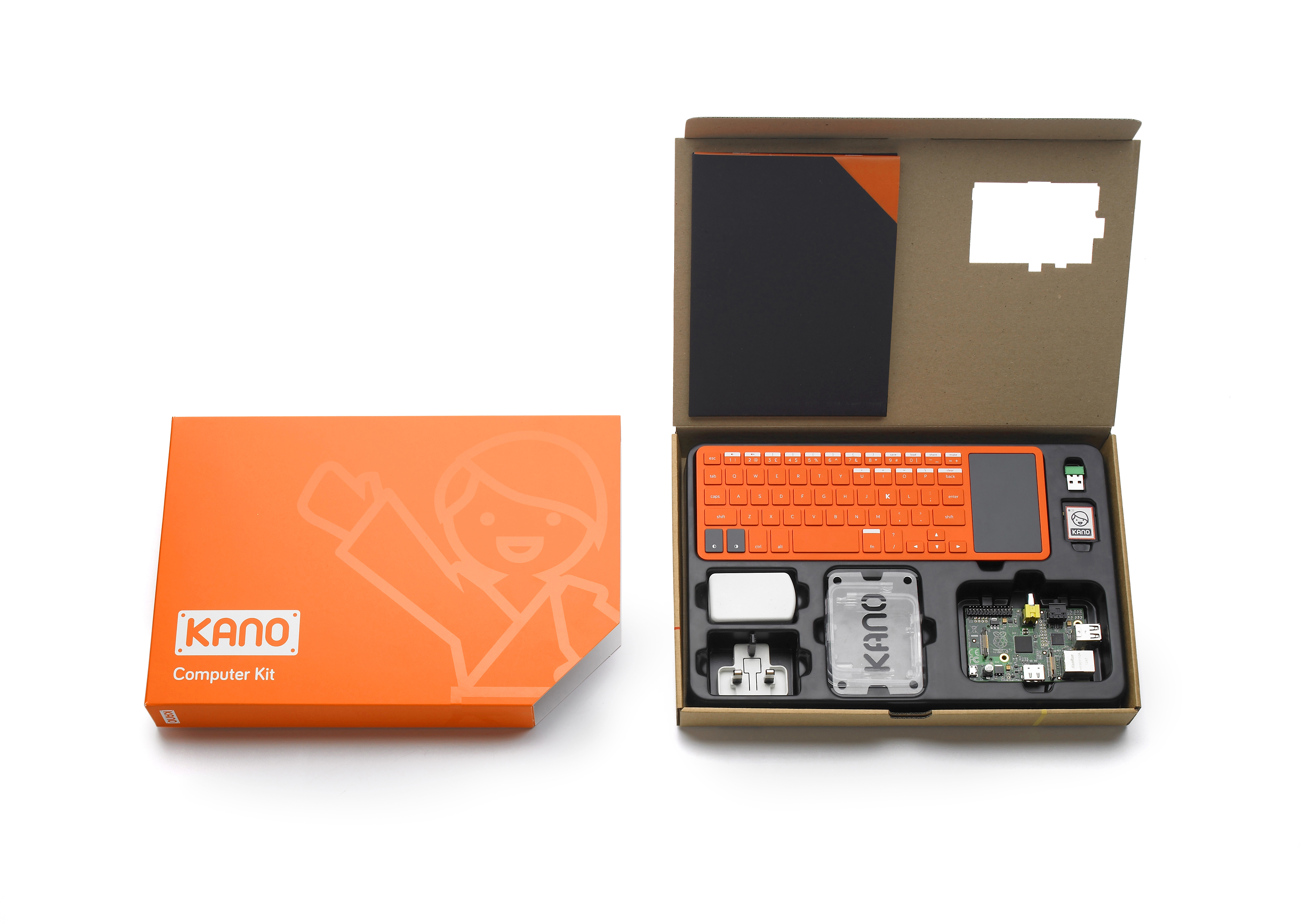 The Kano kit "includes everything required to build a computer short of a screen, including a Raspberry Pi, a case, wireless keyboard with trackpad, cables, Wi-Fi dongle, and even a speaker". The simple instructional guide shows the user how to build the computer by connecting parts together in a manner "a bit like lego". According to Metro New York, "the machine can serve many functions of a regular laptop – web browsing, correspondence – but the main appeal lies in teaching non-experts how computers work 'under the hood'".
For the kit's coding component, Kano's team developed Kano OS, a distribution of Debian GNU/Linux, as well as Kano Blocks, an open-source visual programming language that can output code in Javascript and Python among other languages. On Kano OS, users can perform activities like making music, streaming HD video, reprogramming games like Pong and Minecraft, composing music, word processing and web browsing.
In May 2015, Kano upgraded its computer kit from the Raspberry Pi 1 to the Raspberry 2 model, making it six times faster. In February 2016, Kano upgraded its kits with the Raspberry Pi 3 model, increasing performance by 50%, and also added Wi-Fi and Bluetooth capability to its devices.
More than 100,000 Kano computer kits have been sold since they started to ship in September 2014.
Screen
In 2015, Kano launched its screen kit, a build-it-yourself HD screen which can then plug into a laptop, game console, or the Kano computer kit. The kits includes a 10.1" LCD screen, with a 1200x800, 720p, 150 PPI display. Like with the computer kit, Kano designed the screen kit in collaboration with industrial design firm MAP. According to The Verge, the screen kit makes the Kano computer kit, which does not include a screen, portable, "and therefore increases its value to kids."
Pixel
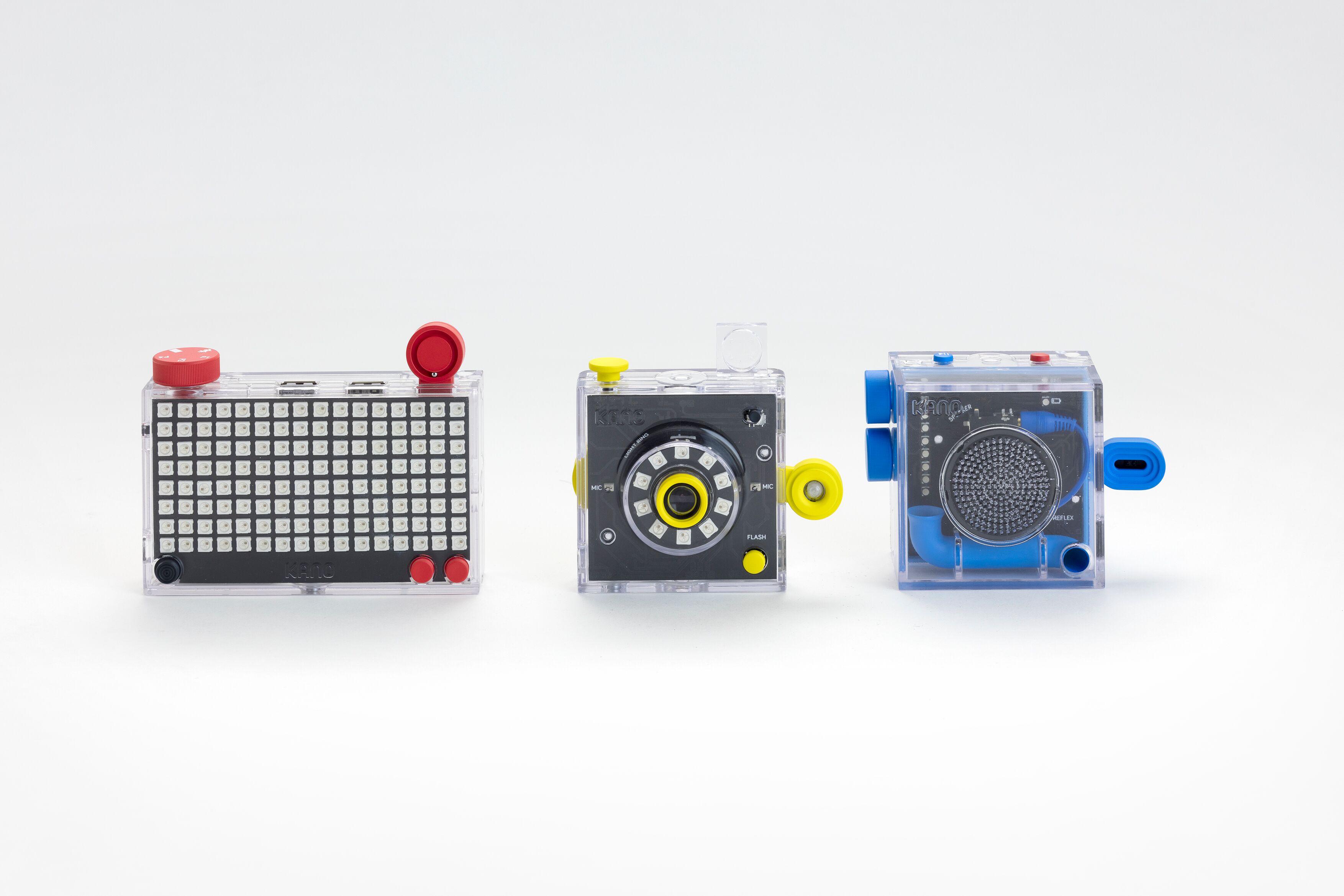 The pixel kit is a light board with a tilt sensor that can build games and create artwork in 1.7 million colors.
Camera
The camera kit is a five mega-pixel codeable camera that can design flashes and filters, as well as make images, videos, and gifs.
Speaker
The speaker kit is a programmeable smart speaker that can record, control, and synthesize sounds and electronic music.
Sensors
Kano Sensors are low-cost USB modules that sense temperature, motion, color, and tilt. They can be combined with any of the kits and Kano Code to produce different effects.
Kano Code
 Kano Code, which controls the kits, is a free coding tool that combines block-based coding, typed text, and a sharing engine that converts user creations into tutorials for others to follow. Code written by users on Kano is free and open source, and hosted on Kano World, which Wired described as a "GitHub for kids."
Reception
Wired said that Kano "merges basic computer science concepts with gorgeous, functional design, turning just about anyone into a computer maker".
Rohan Silva, a former British government adviser for technology described Kano as a major breakthrough: "It's the best computer designed with the majority of the world in mind. Past 'maker' innovations have focused on the West, but for the first time this makes tools available wherever you are born. It's a revolutionary moment for computing."
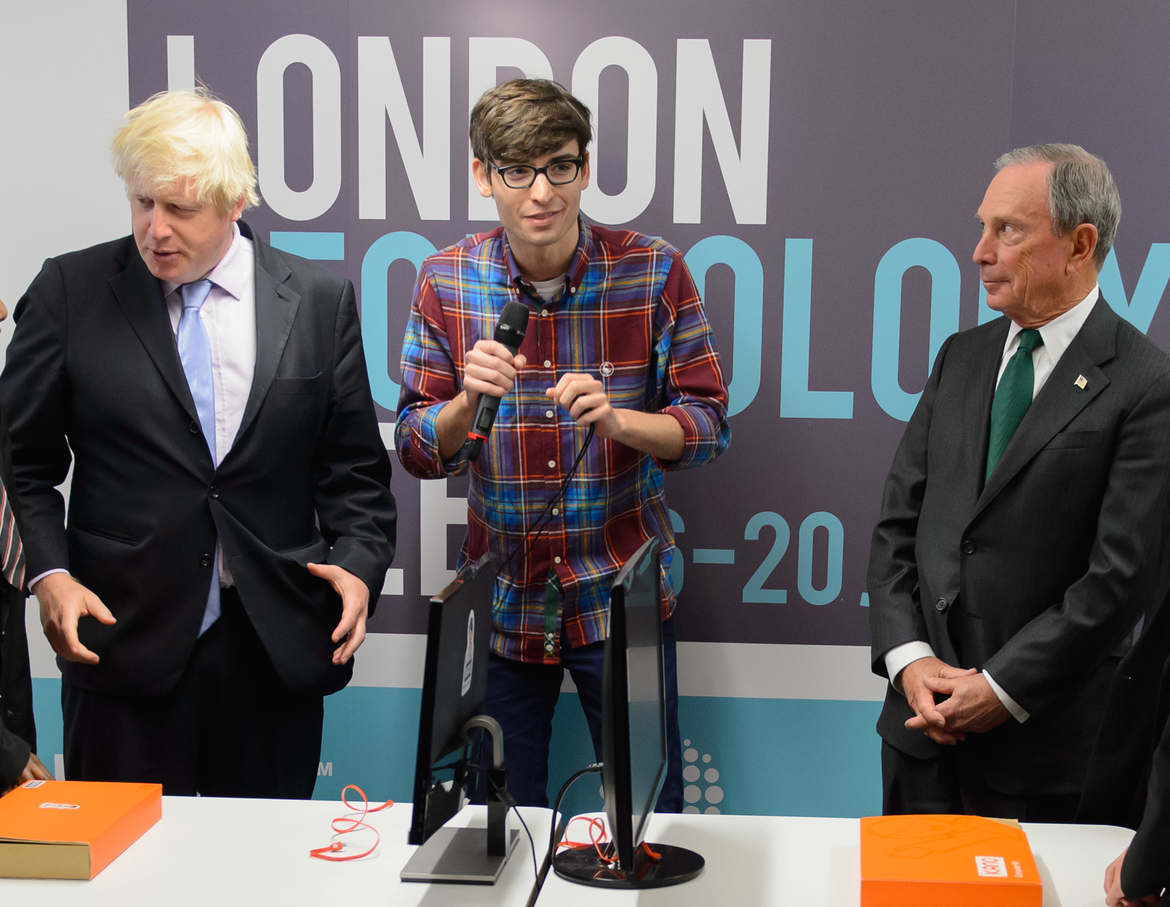
At London Tech Week in June 2014, London Mayor Boris Johnson and New York City Mayor Michael Bloomberg worked with a group of schoolchildren to see who could assemble a Kano computer the fastest.
Those that have endorsed Kano's products also include Apple co-founder Steve Wozniak, Wikipedia founder Jimmy Wales, tech investor and Shark Tank guest host Chris Sacca, tennis player Novak Djokovic, and fashion model Karlie Kloss.