
John Simon (composer)
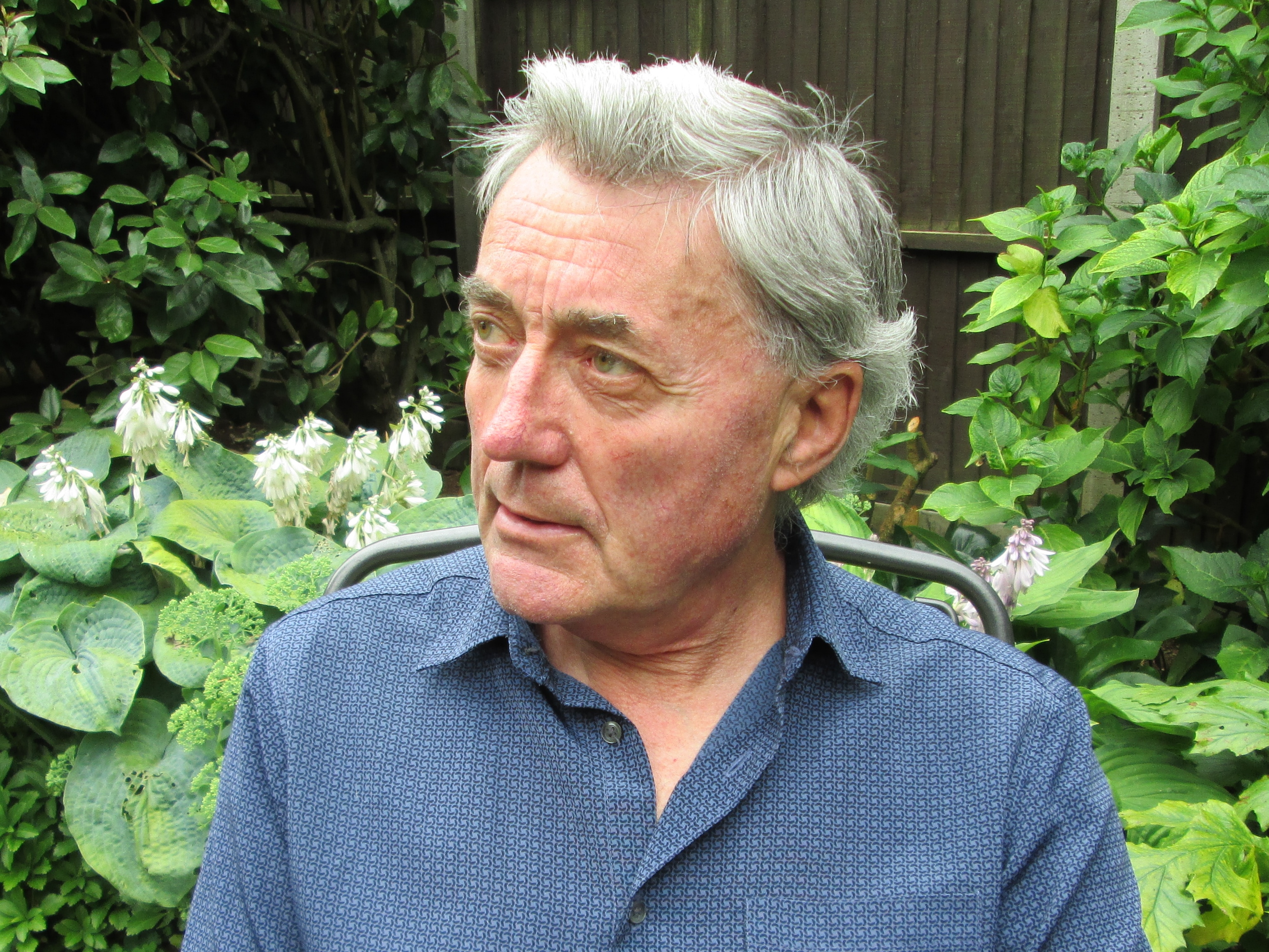 John Simon (12 March 1944 in Cape Town) is a South African born classical contemporary composer living in the United Kingdom.
He studied to be an economist at the University of Cape Town and left South Africa in 1965, as a result of apartheid, and came to London where he studied composition at Trinity College of Music and the Royal College of Music. His teachers included composers James Patten and John Lambert. He taught in the London Borough of Hillingdon for four years (1975–1979) where some of his earlier compositions received their premières. In 1979 he returned to South Africa, at the height of grand apartheid, and taught music on the strife-torn Cape Flats, while keeping up his creative work as composer. His opposition to apartheid led him to compose a series of works that were a response to the events of the time, including the death in custody of Steve Biko. These include his Threnody 1 for strings (subtitled 'Rage, rage against the dying of the light') and Threnody 2 for strings, clarinet and timpani (subtitled 'Steve Biko in Heaven'), (probably the first piece of serious music to use the current South African national anthem as a theme); Requiem for Orchestra (originally entitled 'Requiem of 1984') – a work in which the words of the Latin mass are sung by instruments rather than voices; and his pentagonal Violin Concerto, dedicated to the victims of Sharpeville. Another 'struggle' piece was the symphonic suite Children of the Sun (Los Hijos del Sol), a musical depiction of aspects of the conquest of the Incan Empire by the Spanish. All of these works make use of the opposing elements of serialism and tonality. His Requiem of 1984 was premièred in the UK by the BBC Philharmonic Orchestra, conducted by Edward Downes.
Other significant orchestral works include his two piano concertos. Piano Concerto No 1 combines serialism with tonality and was written between 1969 and 2003. Piano Concerto No 2, composed between 1977 and 1979, is a tonal work in popular contemporary style. His four-movement Symphony, written between 1993 and 1997, has as one of its unifying themes the vibrant rhythms of Africa.
He has published poetry in journals and magazines in South Africa and the United Kingdom. Not surprisingly vocal music features in his output. His most substantial vocal work is his orchestral song cycle 'Portrait of Emily', settings of five of Emily Dickinson's poems. Other poets whose words he has set include Lord Byron, Percy Bysshe Shelley, John Masefield, Wilfred Owen, Gerard Manley Hopkins and Matthew Arnold.
His chamber output consists mainly of works for solo instruments with piano. His most ambitious chamber works are his Wind Quintet of 1973 (UK Première given by the Vega Wind Quintet) and String Quartet of 2011.
His extensive output for solo piano, which he has just completed revising and editing, includes five piano sonatas and two virtuoso concert works.
His music is characterised by a predilection for melody, strong rhythm and instrumental colour. The use of counterpoint is a frequent characteristic. His music has been widely performed and broadcast in South Africa, the United Kingdom and Europe.
Between 2003 and 2005 Simon was composer-in-residence to the KwaZulu-Natal Philharmonic Orchestra in Durban and lecturer in orchestration at the University of KwaZulu-Natal's School of Music. He was charged with developing the KZNPO's New Music Initiative whose aim was to bring orchestral skills to KwaZulu-Natal-based composers and arrangers. He orchestrated the cantata Zizi Lethu (Our Hope) by KwaZulu-Natal composer Phelelani Mnomiya, written to celebrate ten years of South African democracy (2004). The work received its European première at the Barbican Centre in London where it was performed by the London Symphony Orchestra. This led to a new orchestral composition entitled Dance to Freedom. Other recent works include A Peal of Bells for D.B. Cooper for strings, tubular bells and celesta; a symphonic suite around the Tristan legend, entitled Fanfares for a Hero; and an anti-war piece called A Cry from a World Aflame for strings, trumpets and percussion.
Works
Opus 1 Salon Fantasy with Bel Canto Old Time Waltz for Piano 1965 (m/s)
Opus 2 Thirteen Preludes and a Postlude for Piano 1965/2014
Opus 3 Sea Fever (setting of John Masefield for tenor and piano) 1965
Opus 4 Aspirations and Dreams: Ballet Music for Solo Piano 1965/2014
Opus 5 The Triumph and the Lament for Piano 1965/2012
Opus 6 Piano Sonata No 1 1965/2014
Opus 7 The Pity of War (settings of 3 war poems by Wilfred Owen for tenor/soprano and piano) 1967/2002
Opus 8 Rondo in C for Piano 'ye olde curiosity shoppe' 1960–67 (m/s)
Opus 9 Five Romantic Songs (settings of Byron and Shelley for tenor and piano) 1967
Opus 10 Piano Sonata No 2 1967/2012
Opus 11 Six Aphorisms for Piano 1967/2014
Opus 12 Chanson de la Nuit for Piano 1967/2014
Opus 13 Piano Sonata No 3 1968/2011
Opus 14 Sonatina for Solo Flute 1967
Opus 14a Sonatina for Flute arranged for two Flutes 1979
Opus 15 Piano Concerto No 1 (in 3 movements 4 versions – final one completed 2003) 1969–2003
Opus 16 A Calendar of Twelve Piano Miniatures 1971/2014
Opus 17 Variations and Fugue on a Theme by Purcell for Piano 1971/2014
Opus 18 Piano Sonatina No 1 1972/2014
Opus 19 Piano Sonatina No 2 1972/2012
Opus 20 Two Nocturnes for Piano 1972/2014
Opus 21 Nocturne for a Dead Soldier for Piano 1972/2014
Opus 22 Piano Sonata No 4 1972/2010
Opus 23 Wind Quintet (for flute, oboe, clarinet, bassoon and horn) 1973
Opus 24 Piano Sonata No 5 1973/2009
Opus 25 Miniature Woodcut for Piano 1974/2004
Opus 26 Scena for Solo Flute 1974
Opus 27 Five Parody Preludes for Piano 1975/2014
Opus 28 Mad Etude/Etude Folle for Piano 1975/2004
Opus 29 Waters of the Cape for Piano 1975/2014
Opus 30 Elegy and Capriccio for Violin and Piano 1976
Opus 31 Piano Concerto No 2 (in 3 movements) 1979
Opus 32 Elegy for Oboe and Piano 1978
Opus 33 Little Suite for Orchestra (previously titled ‘Divertimento for Orchestra’ in 4 movements) 1978/2006
Opus 33a Lamentation for Seven Instruments (movement 2 of ‘Little Suite’) 1978
Opus 34 Allegro for Flute and Piano 1978
Opus 35 Noël Ahoy! (3 medieval English Christmas texts for trebles, children’s choir, piano and percussion) 1978
Opus 36 Sonata for Bassoon and Piano 1978
Opus 37 Threnody 1 for String Orchestra/String Ensemble (subtitled ‘Rage, Rage against the Dying of the Light’) 1980
Opus 38 New Azania Overture (previously titled ‘Antipodean Overture’) 1980
Opus 39 Threnody 2 for Strings, Clarinet and Timpani (subtitled ‘Steve Biko in Heaven’) 1981
Opus 40 Violin Concerto (in 5 short movements) 1981–1990
Opus 41 Dover Beach (setting of Matthew Arnold’s poem for a cappella choir) 1983/2013
Opus 42 Requiem for Orchestra (orchestral requiem in 4 movements previously titled ‘Requiem of 1984’) 1985
Opus 43 Portrait of Emily (settings of 5 Poems of Emily Dickinson for soprano and orchestra/ensemble) 1987
Opus 44 Children of the Sun (Los Hijos del Sol symphonic poem in 4 movements) 1989
Opus 45 Symphony (in 4 movements) 1997
Opus 45d Late Gothic Overture (4th movement of symphony) 1997
Opus 46 Dance to Freedom (for symphony orchestra) 2005
Opus 47 A Peal of Bells for D.B.Cooper for strings, tubular bells and celesta 2010
Opus 47a A Peal of Bells for cello and piano 2010
Opus 48 A Cry from a World Aflame for strings, trumpets and percussion 2010
Opus 49 Fanfares for a Hero (fantasy portrait for orchestra) 2011
Opus 50 Justus Quidem Tu Es, Domine (setting of G.M Hopkins for a cappella choir) 2011
Opus 51 Farewell to Music for Piano 2011
Opus 52 String Quartet 'The Scream' 2011
External links
- John Simon (Official website)
- Dictionary of African Composers
- Documentation Centre for Music (DOMUS)
- SUNDigital Collections
- NewMusicSA
- South African Music Rights Organisation (SAMRO)
- Accolade Musikverlag
- The British Music collection
Literary works