
Inorganic Chromosome Based in Silicon
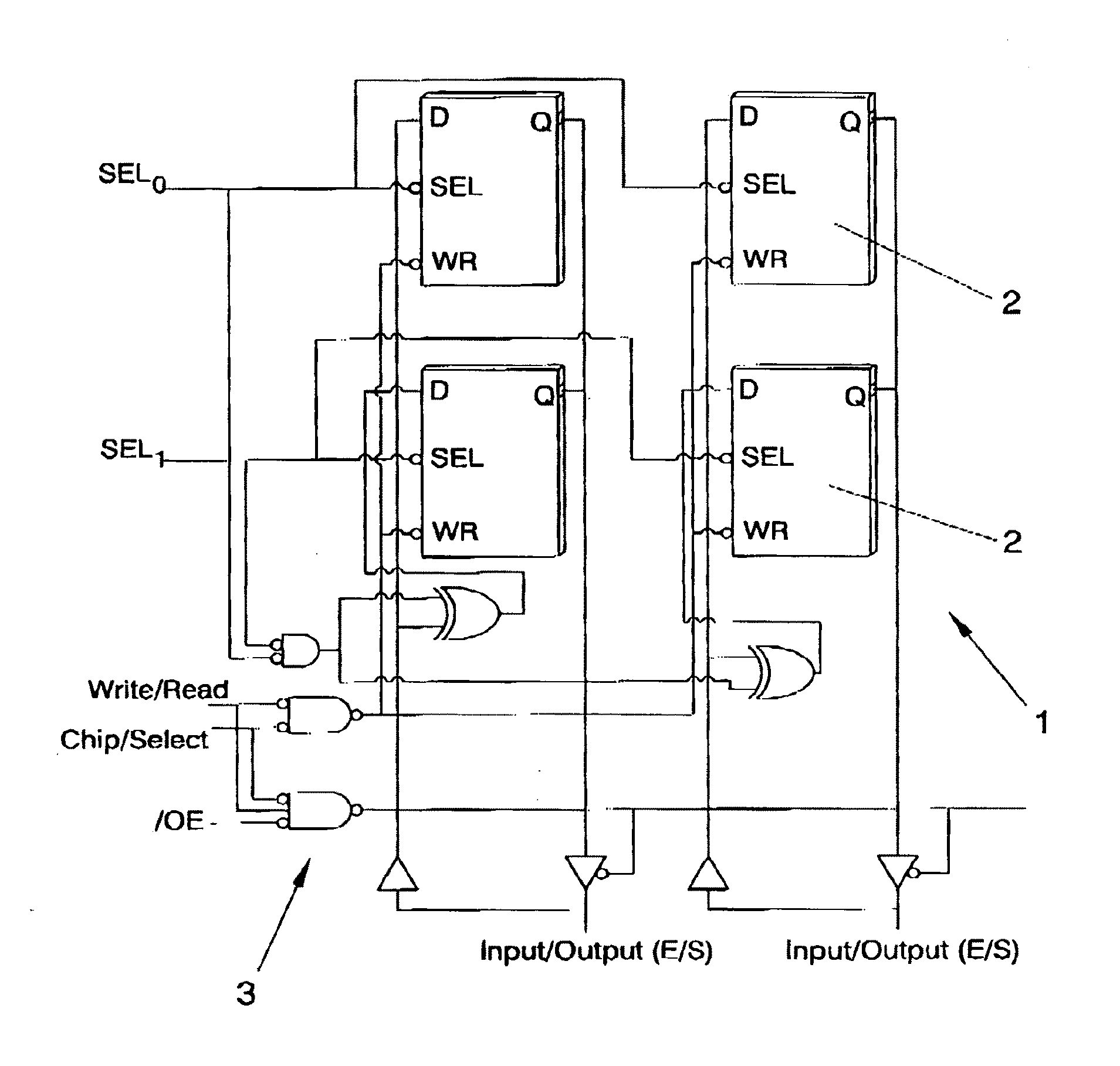

Inorganic Chromosome based in Silicon (InChroSil) is an electronic device designed for storage and analysis of DNA sequences, with the organization of the fundamental memory units resembling the linear nature of DNA stands. This device was developed using the standard technology Complementary metal–oxide–semiconductor (CMOS).
History
InChroSil and its systems were invented and patented in 2006 by three siblings, Silvia, Carlos and Jose Daniel Llopis at home with few economic resources. The first prototype was a single nucleotide pair and was the size of a paper sheet. It was later improved into an integrated circuit in a configuration commonly referred to as a hybrid integrated circuit.
Currently prototypes are being built in the clean room of Microsystems Technology Laboratories MTL of the Massachusetts Institute of Technology.Threellop Nanotechnology Inc is the owner of the patent.
Inchrosil characteristics
InChroSil permits the storage of genetic information in less space (88 percent savings), with higher performance It can store the entire structure of the DNA (principal and secondary chains), meaning InChroSil can store and represent even incomplete chains including the existent holes within the DNA chain.
This device uses non‐volatile rewritable digital memory and is also able to store non‐genetic binary information in the nucleotides in a more compact form while retaining device, hardware and software compatibility.
Adleman's experiment
Leonard Adleman's experiment computing a Hamiltonian path using DNA components, was rebuilt by the Llopis siblings with inorganic electronic components. This system was intended to be less perishable than the organic materials and chemical reactions in industrial environments.
Uses for Inchrosil
Inchrosil is used mostly for mass storage of DNA sequences, with potential uses being:
- Fingerprinting staff, with the storage of the genetic fingerprint. His invention is Dr. Alec Jeffreys at the University of Leicester in 1984.
- Genetic studies, with the tool where large sequences would be stored, which could be compared and manipulated digitally.
- Genebanks, which store large amounts of genetic information.
- Classification of species and animals.
- Tool medical studies (genetic).
See also
- Nanotechnology
- Parallel computing
- DNA profiling
External links
- Patent (WO/2009/022024) ELECTRONIC SYSTEM FOR EMULATING THE CHAIN OF THE DNA STRUCTURE OF A CHROMOSOME
- European Patent (EP2180434A1) ELECTRONIC SYSTEM FOR EMULATING THE CHAIN OF THE DNA STRUCTURE OF A CHROMOSOME
- US Patent (US2010/0268520) ELECTRONIC SYSTEM FOR EMULATING THE CHAIN OF THE DNA STRUCTURE OF A CHROMOSOME