
Impact of the 2011 Virginia earthquake
The impact of the 2011 Virginia earthquake which occurred on August 23, 2011, at 1:51 pm EDT (17:51 UTC) in the Piedmont region of the U.S. state of Virginia is notable for its rarity and its widespread effects. Tremors from the Virginia earthquake were felt as far south as Atlanta, Georgia; as far north as Quebec City, Quebec; as far west as Illinois and as far east as Fredericton, New Brunswick, with damage reported as far away as Brooklyn in New York City.
Although earthquakes in the central and eastern U.S. are much less frequent than in the western U.S., they are typically felt over a much broader region. East of the Rocky Mountains, an earthquake can be felt over an area as much as ten times larger than a similar magnitude earthquake on the west coast. Western rock is relatively young, which means it absorbs a lot of the shaking caused by earthquakes. Thus, western earthquakes result in intense shaking close to the epicenter, but fade more quickly the farther the earthquakes travel. In the eastern United States the rock is far older, and the earthquake energy can therefore spread farther and have a greater impact. A magnitude 5.5 eastern U.S. earthquake can usually be felt as far as from where it occurred, and sometimes causes damage as far away as . The relatively shallow depth of this quake contributed to its widespread effects.
United States
Soon after the earthquake, the U.S. Federal Aviation Administration ordered a ground stop along the East Coast, causing some flight delays. The Air Traffic Control tower at John F. Kennedy International Airport was evacuated. Flights were delayed at several airports, including John F. Kennedy International Airport, Newark Liberty International Airport, Ronald Reagan Washington National Airport, Dulles International Airport, and Philadelphia International Airport. At National Airport, ceiling tiles fell in one terminal, and flights were halted.
A spike in cell-phone calls immediately after the event congested the AT&T, Verizon Wireless, Sprint Nextel, T-Mobile USA, and Frontier Communications networks in the Mid-Atlantic region, causing disruptions and loss of service for up to an hour after the earthquake.
Virginia
The epicenter of the earthquake was in Louisa County, Virginia, where damage was greatest and several minor injuries occurred. The town of Mineral, located from the earthquake's epicenter, reported the collapse of two buildings, as well as minor damage to several other structures, including the collapse of the ceiling in its Town Hall. Several minor injuries were reported there, among them people reporting chest pain after the shock of the experience. Fallen chimneys and other structural damage to buildings were reported in Mineral and in Louisa, the county seat. The Gilboa Christian Church, in Cuckoo, was heavily damaged and rendered unusable. At Louisa County High School, cinderblocks fell in classrooms, and cracks were seen in walls. Six students there had minor injuries. Louisa County schools were closed on August 24 while engineers assessed damage to school buildings. The high school and Thomas Jefferson Elementary were closed for the remainder of the school year. Inspections revealed that 65 homes sustained major or severe damage and 125 homes experienced mild to moderate damage. Damage in Louisa County was estimated at $70.3 million of which $57.5 million was from damage to public school buildings and $11.5 million was from damage to residences. On August 25, county officials declared a state of local emergency in order to allow them to request state support.
The two nuclear reactors at the North Anna Nuclear Generating Station, located from the epicenter, shut down automatically when electrical power was lost. The Nuclear Regulatory Commission (NRC) sent additional inspectors to the Virginia plant after preliminary measurements suggested that the ground shook more than the two reactors were designed to handle. The damage detected so far has been minimal and the NRC said the additional inspection should not be interpreted to mean the plant is less safe. After a $21 million inspection, engineers stated that they only found comsetic damage. On November 11, 2011, the NRC gave its approval for restarting the reactors.
In Charlottesville, about from the epicenter, a gas leak closed several streets, including West Main Street. 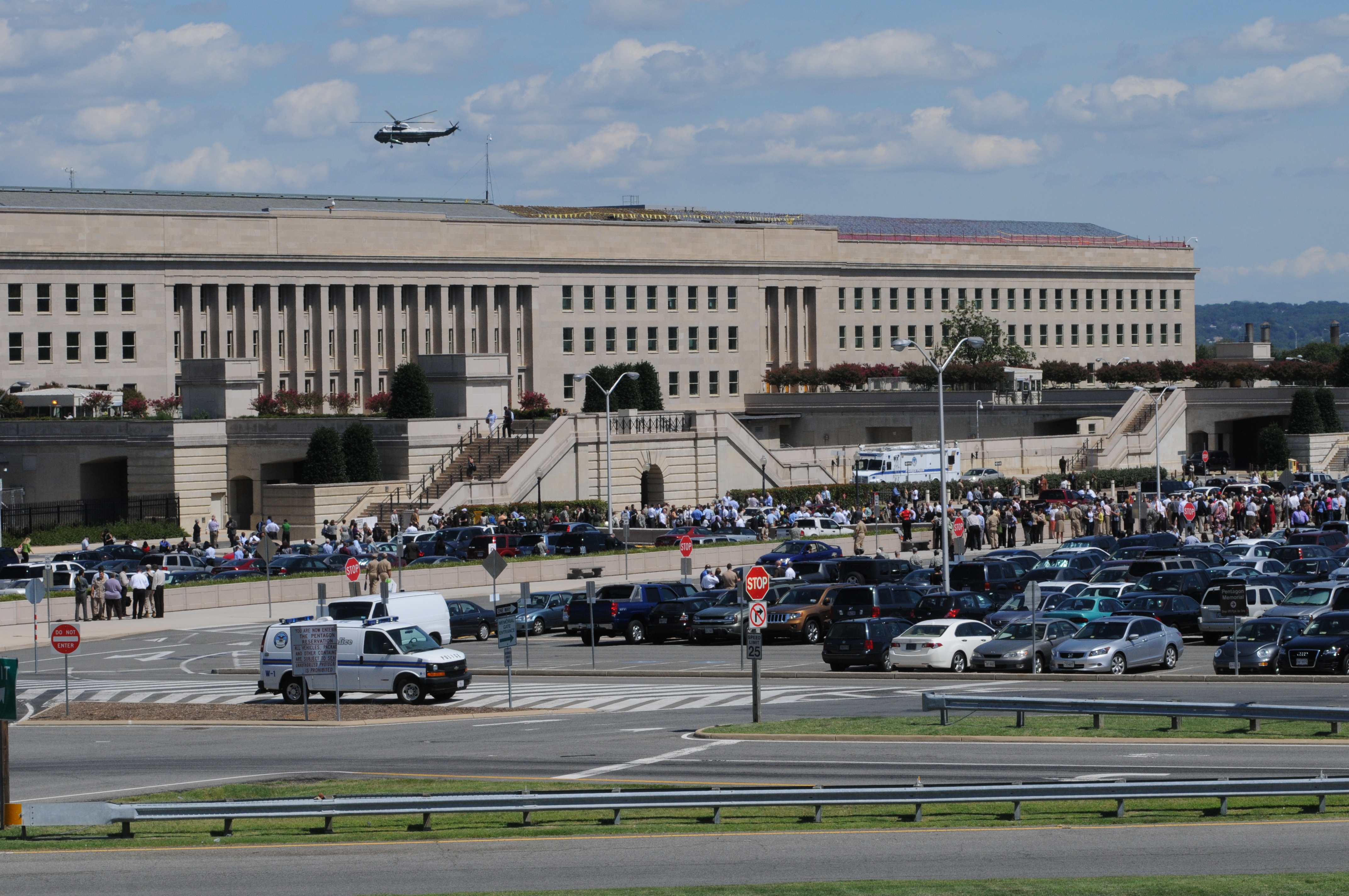
In Spotsylvania County, the August 24 opening of public schools was delayed while damage to buildings was assessed. Six patients were treated at the Spotsylvania Regional Medical Center for minor injuries resulting from the earthquake.
Several buildings in Culpeper, about from the epicenter, sustained structural damage. The brick façade of the Levy Building, built in 1848, collapsed and the building was condemned and demolished. The walls of St. Stephen's Episcopal Church, constructed in 1821, buckled and were deemed unstable by town officials. Another church, Culpeper Baptist Church, built in 1894, lost its chimney. Schools in Culpeper County delayed their scheduled August 24 opening to assess damage to buildings. Two minor earthquake injuries were reported by the Culpeper Regional Hospital.
In Fredericksburg, about from the epicenter, the Dickinson Building on the campus of Germanna Community College was deemed unusable for the rest of the semester, and classes were canceled indefinitely until alternative classrooms could be found. Also in Fredericksburg, a gas leak led to the evacuation of homes and businesses in a two-block radius.
In Arlington County, a burst pipe flooded two corridors at the Pentagon. Employees, many of whom left the building when the earthquake was felt, were alerted to the flooding by an alarm system that was installed after the September 11 attacks. Nearby Alexandria also reported structual damages though no injuries.
Washington, D.C.
 The White House, the Capitol, and various other buildings were evacuated. The afternoon rush hour was affected, as many workers left early, and the Washington Metro system's trains ran at reduced speeds while tracks and tunnels were inspected.
A National Park Service spokesperson reported that surveys revealed cracks near the top of the Washington Monument, the world's tallest stone structure, which was closed indefinitely. The quake damaged three of the four pinnacles (corner spires) on the central tower of the Washington National Cathedral, cracked some of its flying buttresses, and caused additional damage. As the cathedral's insurance policy did not cover earthquake damage, cathedral officials stated that they would need to raise millions of dollars to fully evaluate the damage and to stabilize and repair its limestone exterior.
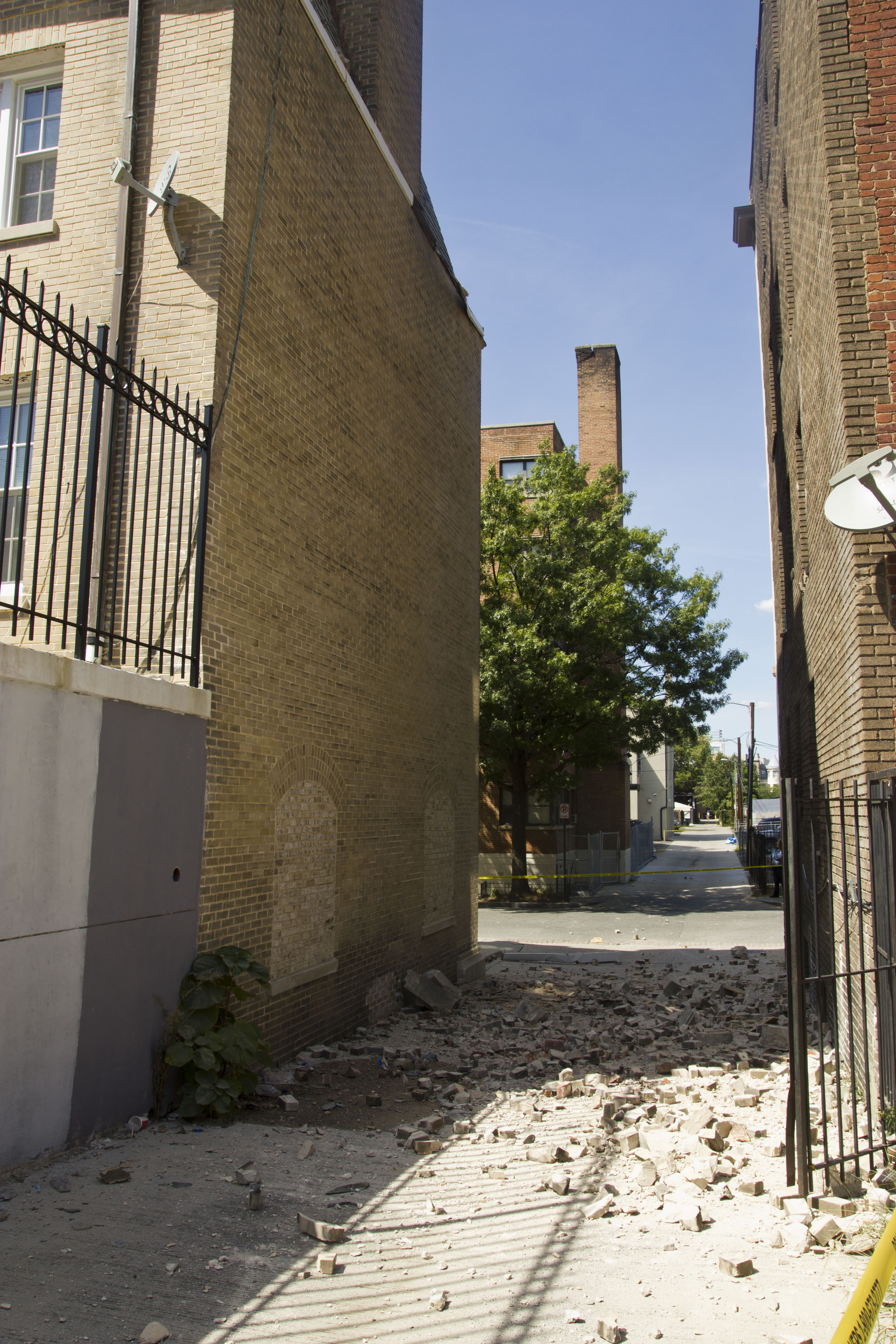
The Smithsonian Castle incurred damage to five decorative turrets, and fifty jars of preserved specimens fell from shelves at the Smithsonian's National Museum of Natural History. The Embassy of Ecuador suffered structural damage, including three collapsed chimneys and cracked internal walls. The Treasury Building suffered minor damage to exterior railings, some of which fell to the ground and caused closure of a sidewalk. Other damage reported in the District of Columbia was minor, and no injuries were reported.
Staff at the National Zoo reported that the behavior of some of the animals in the park suggested that they anticipated the quake seconds or even minutes before they felt it. The earthquake was felt at the great ape exhibits during afternoon feeding time. About three to 10 seconds before the quake, many of the apes abandoned their food and climbed to the top of a tree-like structure in the exhibit. The red-ruffed lemurs sounded an alarm call about 15 minutes before the quake, and the flock of 64 flamingos rushed about and grouped themselves together just before the quake. During the quake, some animals made sounds, some ran or dove for cover, and some stood up and stared at the walls of their enclosures. Some of the animals remained agitated for the rest of the day, while others calmed quickly.
Maryland, Delaware, and West Virginia
Maryland: In Temple Hills, residents were evacuated from two damaged apartment buildings. In Kensington, the tops of four spires on the Washington D.C. Temple of The Church of Jesus Christ of Latter-day Saints fell to the ground along with several pieces of marble from the façade. Near Brunswick, the quake caused "significant discoloration and a reduction in the quality of the water" of a spring, leading officials to warn against using the water until further notice. In the Fells Point neighborhood of Baltimore, St. Patrick Catholic Church was deemed unsafe and will be closed for weeks for repairs. In Salisbury, the City Police station endured damage above doorways and in concrete block walls, and there was also minor cracking in classroom walls at Salisbury University. In Annapolis, several buildings at the United States Naval Academy were damaged. In Suitland, eight jars of preserved fish specimens fell from shelves at a Smithsonian Institution storage facility.
Delaware: In Wilmington, blocks fell to the street from the steeple of St. Thomas the Apostle Church, and the New Castle County Courthouse was evacuated, as was the air traffic control tower of the New Castle County Airport in nearby Wilmington Manor. In Dover, fire marshals and building inspectors were called to assess structures throughout the capital city, where the city hall was evacuated. In Georgetown, numerous buildings in the county seat were evacuated while crews checked for damage; the Emergency Operations Center there reported 200 calls to 911. Delaware Department of Transportation crews were dispatched statewide to inspect interstate highways, the under-construction replacement Indian River Inlet Bridge, the Delaware Memorial Bridge on I-295, and other bridges and roads.
West Virginia: In Martinsburg, several government buildings were evacuated, and multiple citizens reported feeling their homes shaking violently enough to rattle picture frames off the walls. In Charleston, the Kanawha County Courthouse, the West Virginia State Capitol campus, and several other downtown buildings were evacuated; Kanawha County dispatchers received more than 350 calls in 45 minutes, but there were no reports of damage to buildings and infrastructure other than minor plaster cracking in the old courthouse. In Philippi, part of a chimney collapsed at the Barbour County courthouse. The West Virginia Office of Miners' Health, Safety and Training stated that West Virginia coal mines were safe following the tremors.
Pennsylvania, New Jersey, and New York
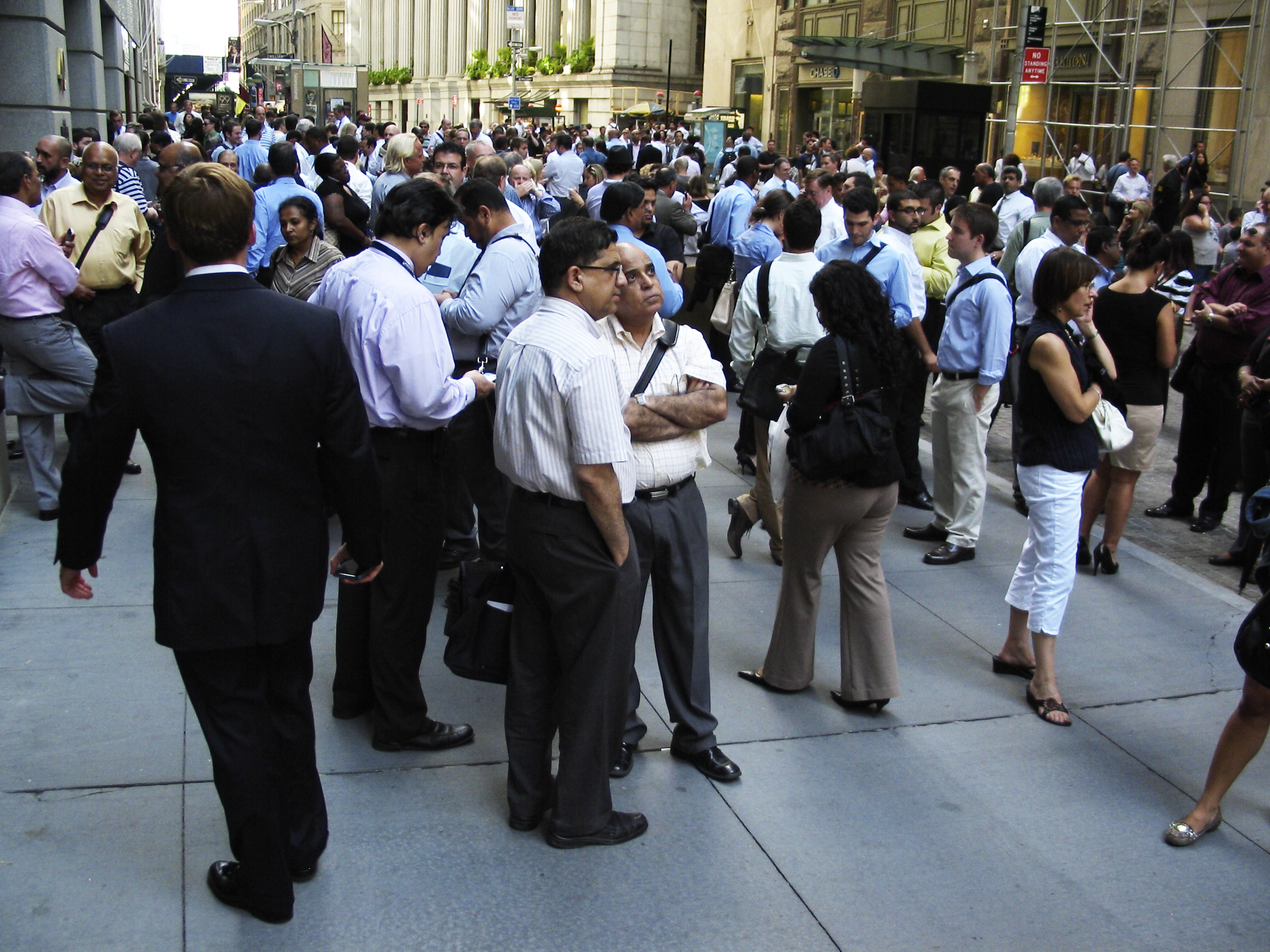 Pennsylvania: Trembling was felt in buildings in Philadelphia and Pittsburgh and across the state. In Center City Philadelphia, a window shattered on a lower floor at the Independence Blue Cross building, and the company sent its 3,000 employees home for the day. Other office buildings in Center City Philadelphia were also evacuated following the earthquake. Workers at the PPL Corporation in Allentown evacuated the building. The Three Mile Island nuclear plant south of Harrisburg continued to operate during the earthquake. The Bucks County Courthouse in Doylestown was evacuated following the earthquake. In Philadelphia, SEPTA Regional Rail trains were restricted to a speed of while tracks were inspected for damage, and PATCO Speedline trains were briefly suspended, with no damage reported. The Pennsylvania Department of Transportation conducted inspections on bridges across the state to check for possible damage. The Delaware River Port Authority reported no damage to its four bridges across the Delaware River.
New Jersey: Damage in New Jersey was minor. The state Emergency Management office reported two gas leaks in Gloucester County. In Burlington, Temple B'nai Israel's 1801 synagogue building sustained some water damage, and about 20 bricks fell off, damaging a congregant's car. In Camden, a vacant house partially collapsed, and government buildings were evacuated, with city workers given the option of returning home for the day. Due to damage done by the quake, the municipal government of Woodbury is seeking to raze the historic Colonel George Gill Green Opera House, which was built in 1880. No infrastructure damage was reported in the state.
New York: Tremors were felt to varying degrees throughout New York State. Physical damage was seen in Brooklyn. There were some disruptions, including building evacuations and delays at airports. Amtrak train service at Penn Station was also delayed.
New England
The earthquake was felt throughout much of the six New England states.
Connecticut: In New Haven, play at the 2011 New Haven Open at Yale (tennis tournament) was stopped for two hours and the main stadium was evacuated while the fire department checked it for damage. No damage or injuries were reported.
Massachusetts: In Boston, the Massachusetts Emergency Management Agency reported tremors and swaying buildings but no damage. The U.S. District Court in South Boston was evacuated and the University of Massachusetts Boston closed early.
Maine: In Maine, the earthquake was felt as far north as Augusta and Portland, but no damage was reported in the state.
Midwestern states
The earthquake was felt in the Midwestern states as far west as eastern Illinois and Wisconsin.
Ohio: In Columbus, the Huntington Center was briefly evacuated, and occupants on the upper floors of the Rhodes State Office Tower and the Vern Riffe State Office Tower reported feeling strong shaking. Evacuations also occurred in Canton and Akron. In Cleveland, the press box at Progressive Field shook during the third inning of a Cleveland Indians baseball game.
Michigan: Tremors from the earthquake were felt in Detroit, as far north as Saginaw, and as far west as communities on Lake Michigan. There were no reports of damage in the state.
Southern states
The earthquake was felt in several southern states as far from the epicenter as Alabama, but no damage was reported.
Canada
Tremors from the earthquake were also felt in eastern Canada, mostly in Southern Ontario, as well as in parts of southern Quebec and the Maritime provinces. In Ontario, a few buildings in Toronto were evacuated, and precautionary measures were taken in Sudbury and Windsor.
2011 is the second consecutive year in which an earthquake was widely felt in Southern Ontario and Quebec, the previous earthquake being the earthquake that hit Southern Ontario and Quebec in June 2010.