
Groupe Omicrone building
The Omicrone building, constructed 2011, is a bioclimatic office building in Saint-Denis, Réunion.
Background
The Omicrone Group is a company operating document management and information processing. Delivered in 2011, its headquarters incorporate a lot of bioclimatic characteristics. This building, which cost €5.8 M, has been fully thought out ot meet the characteristics of a bioclimatic building.
The Omicrone Group, a concrete building, is situated in Saint Denis, the capital city of Reunion Island. This city, located in the north of this tropical island, experiences sunny days the whole year long as well as hot temperatures (between 20°C and 32°C) both in summer and in winter. Furthermore, the Omicrone Group is located in the industrial area. Precipitations are frequent, but do not last long and are not intense except in case of cyclones which do not necessarily occur every summer.
The building, covering a net floor area of 2,602 m², is composed of two different parts: the first part and the most important for this article is the office area and the second one is the warehouse. The warehouse, which is not as large as the office area, is situated in front of the right part of the main façade.
The building was modelled by TANGRAM Architecture. The director of the Omicrone Group decided to make the building efficient in terms of consumption along with making it comfortable for all the occupants. The main aim was to associate low-energy consumption and passive design to perform this achievement. Thus, the general architecture corresponds to that of an energy-efficient building in a tropical context, including sun shading, orientation to the north, insulation and a large porosity which has been well thought out to allow for cross ventilation. Building an eco-building, adapting to the environment as much as possible, was a value that the company wanted to meet. Indeed, Reunion Island copes with an increasing energy demand and this type of construction is somehow the right way to curb this trend. Designing a bioclimatic, even a net zero building, has become a major challenge all over the world and particularly in places where the energy demand is rising or where pollution linked to energy production is becoming threatening. Obviously, to make it viable, it is also necessary to make it operate in an economic manner. Building in a green way is often considered to be expensive and not reliable in terms of comfort, however in most concrete cases comfort is reached. Mastering energy is the first step to avoiding excessive energy consumption. Moreover, a building qualified as ecological is well regarded by people in general and is, hence, a distinction of quality for companies.
Main features of a bioclimatic building
Passive design
In terms of design, the main façade of the building was oriented to the north in order to optimise lighting as well as natural ventilation. Indeed, mountain winds are far more dominant in this area than thermal breezes emanating from the north, because the mountains are to the south of the building. Moreover, Reunion Island is situated near the Tropic of Capricorn (21° S) which means that the sun is located always to the north. Finally, natural ventilation provided by mountain winds is optimised thanks to the orientation chosen since cross winds pass through the building. Obviously, a large porosity has been developed in order to take advantage of ventilation fully. 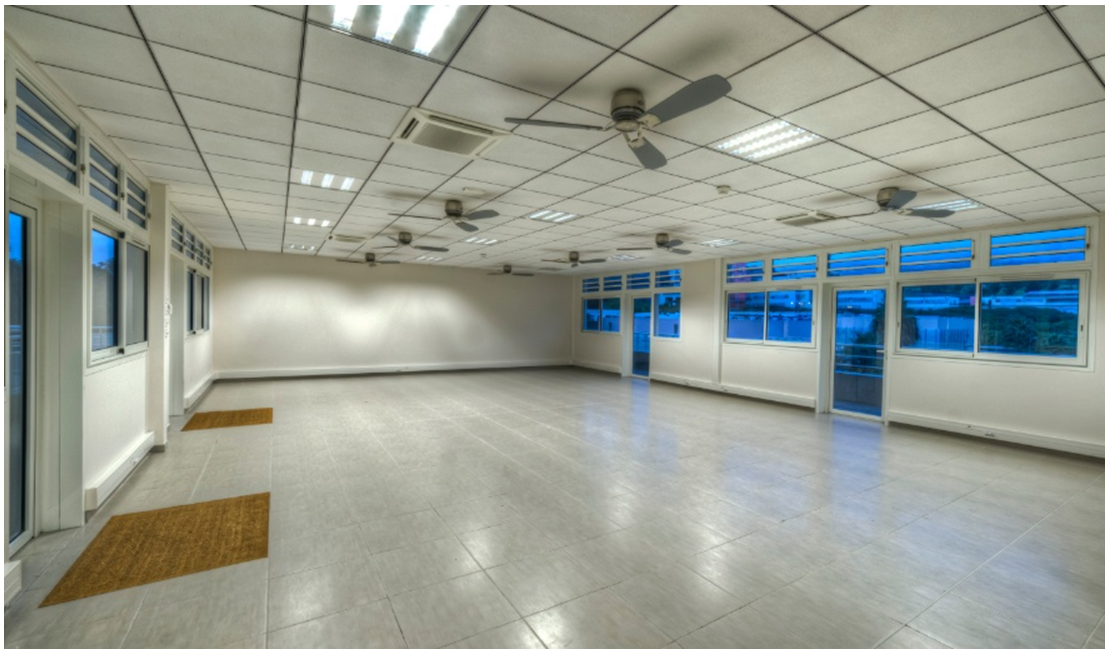
In front of the main façade, there are passageways which create a buffer space which is fully covered vertically by sun shading. This configuration prevents the sun from hitting the main façade all through the year. Thanks to this system, not only the north façade is protected from heat storage but also the occupants are protected from the glare effect due to sun radiation. Hence, it is possible to cumulate benefits from the passive design. We can also see that the West gable is covered with an aluminium cladding. Aluminium is a very reflective material consequently, it does not stock heat. This gable has no porosity in order to provide insulation from the heat of the sun. 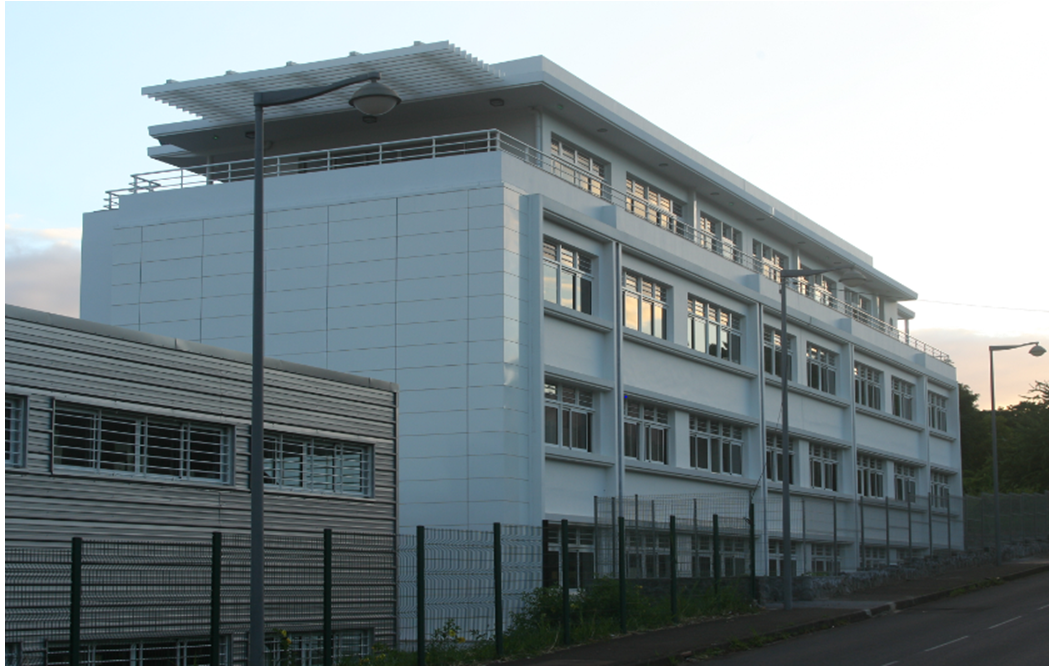
The warehouse masks a wide portion of the main façade and then blocks daylighting. However, the atrium incorporates skylights. In that way, a place which should normally be dark can actually be luminous and this is true for the three floors of the building. It is also noticeable that sun shading is disposed along skylights to PReVENT the glare effect. 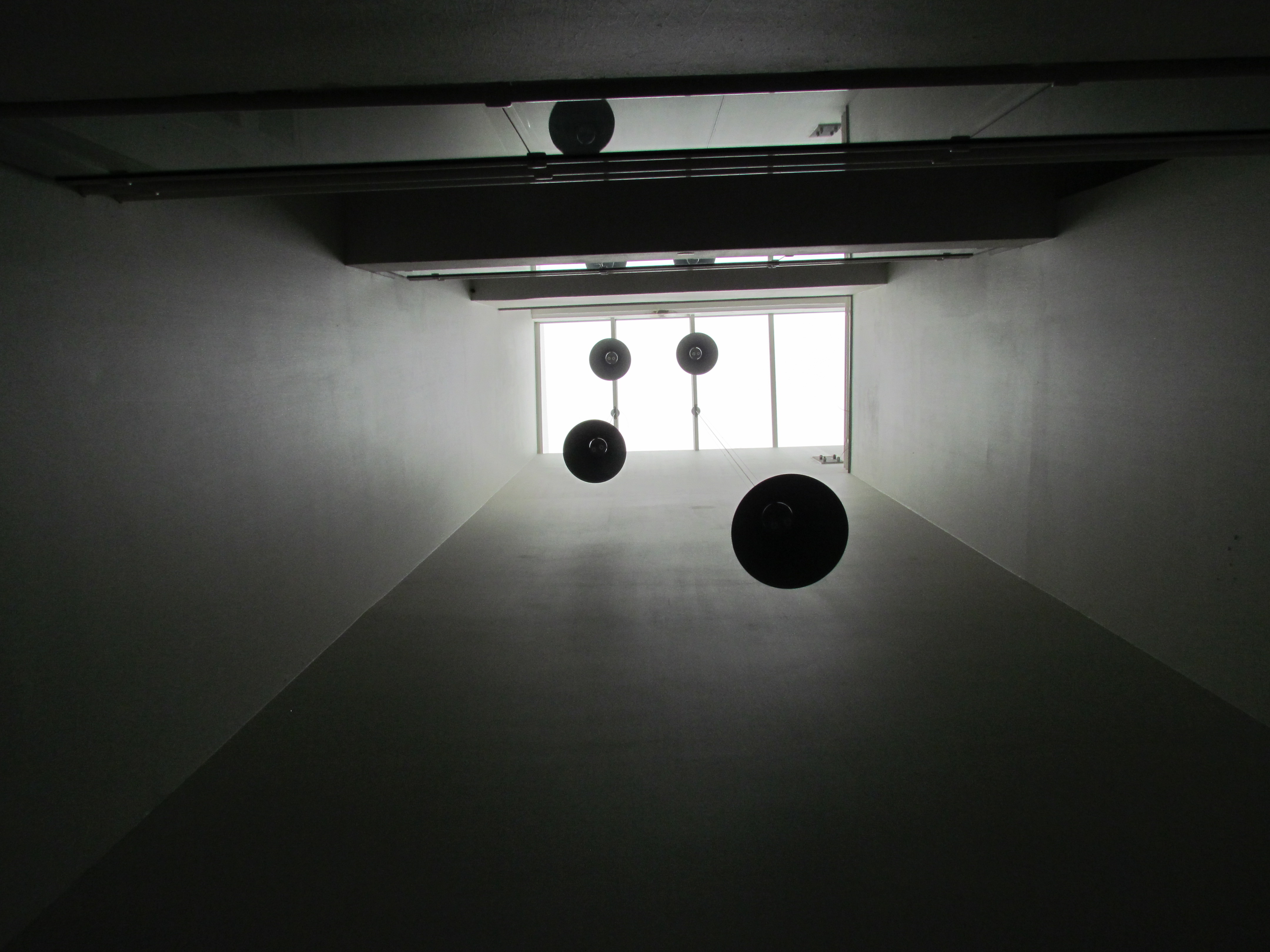
A planted patio can be found on the first floor. It is relatively small but influences the atmosphere by providing a feeling of freshness. Actually, it contributes to freshness thanks to the evapotranspiration phenomenon. This phenomenon, similar to common evaporation, extracts heat from the surroundings by the evaporation of water from the ground and the plants. 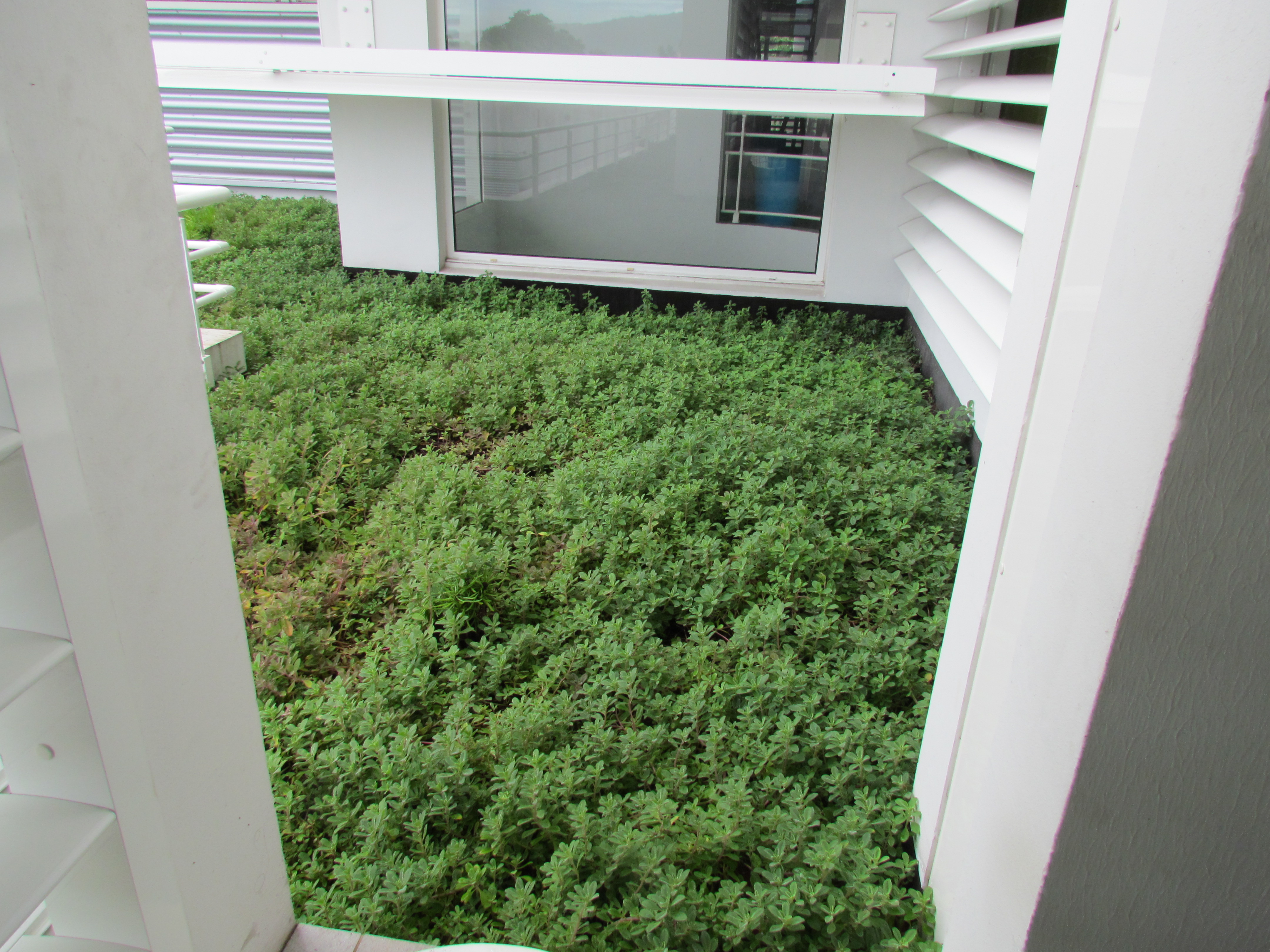
Comfort
Comfort is very important factor in a building (especially a bioclimatic building) and this comfort is well represented by Post-Occupancy Evaluation (P.O.E.). The P.O.E. of this building is currently being assessed and the results will be available shortly. Indeed, at least two years of occupancy of the building is required to carry out this survey. Nonetheless, we can notice that natural ventilation through the building allows thermal regulation of this latter. Besides, the contact between ventilation and one’s skin favours the feeling of freshness, in relation to regular hot temperatures and humidity. It is also noticeable that thermal regulation takes heat and humidity regulation into account. This means that natural ventilation enhances comfort by renewing thermal charges which could accumulate in the case of windows being closed. The Omicrone Group has also been perceived in order to optimise daylighting and thus to minimise energy consumption due to lighting. The north-south orientation fully enhances this. As the latitude of Reunion Island is 21°S, the sun is located to the north at all times except at the start of the summer. Therefore, the north façade benefits from daylighting, particularly diffuse light, since this facade is protected by sun shading. Nevertheless, the light provided is adequate to meet comfort in terms of lighting. This effect is highlighted by the porosity of the façades.
Energy consumption
A survey of electric consumption was carried out in the course of 2011. The objective was to estimate the energy consumption of the entire office settlement. This study also allows one to determine the energy consumption from the chiller. Indeed, the chiller works only from January to March. Bearing that in mind, we could assume that the difference between the mean energy consumed from January to March and the mean energy consumed during other months corresponds to the energy needed by the chiller. Thus, the energy used by the chiller is approximately 3,000 kWh/month for a total area of 1,180 m² (surface used for office activities). This signifies a mean consumption of 2.54 kWh/m²/month only for the chiller consumption. In addition, the total mean consumption per month is in the region of 8,100 kWh or 6.86 kWh/m²/month or 82.32 kWh/m²/year. An energy-saving building consumes less than 80 kWh/m²/year; therefore this building is very close to this figure. If the chiller were to removed, it would be an energy-saving building (definition from Guide AITF/EDF). The energy consumption is controlled through a Centralised Technical Management system which controls all the electronic devices within the building such as lights, ceiling fans and even the chiller. Indeed, this system allows the use of devices to process values. For instance, if the temperature inside the building exceeds 28°C, users are allowed to switch on the air conditioning. These values are also regulated by the occupancy of the different rooms. Ceiling fans, the chiller and lights do not operate after 9 p.m. since the building is not occupied. Therefore, the system allows the use of devices for both precise process values and usage schedules.
Advantages and shortcomings
The advantages linked to a bioclimatic building compared to a traditional one is that it consumes less energy and is, consequently, more ecologically friendly. The principal aim is to use the building with comfort in mind, and to take advantage of the environment as much as possible to make the building passive. Thus, the main advantage is a lower electricity bill due to the non-use of air conditioners, all year long for instance. From another point of view, it is difficult to implement the principle of a bioclimatic building because it also requires appropriate occupant behaviour. This means that everyone must be aware of how he or she should be active in a passive building, by opening windows instead of turning on the air conditioning, thinking of switching off lights and ceiling fans once a room is empty. Moreover, it is a symbol to make a building bioclimatic for firms because they inculcate respect for the environment, especially in relation to customers. Obviously, there are shortcomings linked to passive design. For instance, we can easily imagine that the opening of the windows to allow for natural ventilation, allows noise from outside to disturb people inside the building. The principal drawback, however, is that people have to be informed about how this type of building operates. This is a considerable task because people have developed habits and changing them is sometimes a real challenge. Nonetheless, with time, it is possible to make this type of behaviour totally natural.
Related sections
- Passive house
- Zero-energy building
- Green building
- Sustainable design
- Energy consumption
- Daylighting
- Natural ventilation
- Evapotranspiration
- INNOVAL
- ENERPOS
External links
- Groupe Omicrone
- Net Zero Energy Buildings
- University of Reunion Island Building M Retrofit
- http://www.cbe.berkeley.edu/
- http://architecture.mit.edu/building-technology/program/research-topics
- http://www.daylighting.com/
- Appel à projet, PREBAT REUNION
- Bâtiment Basse Consommation, Guide AITF/EDF