
Football in Lyari
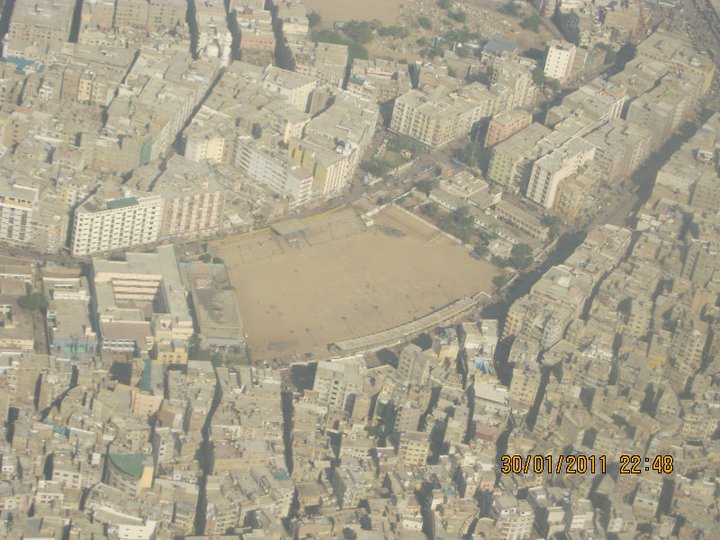
Lyari is a densely populated area of Karachi, Pakistan, and is widely regarded as the heartland of Pakistani football. Having a rich history in the field, Lyari has produced a large number of players who have represented the national team, particularly during the 1950s and 1960s. The area's passionate footballing culture has earned it the informal designation of "Mini Brazil" in domestic and international sporting discourse.
Home to approximately 1.5 million people, the locality has continued to supply Pakistani football with skilled players and a fervent supporter base despite persistent challenges, including inadequate infrastructure, political instability, and chronic underfunding, compounded by recurring governance crises within the Pakistan Football Federation (PFF).
Colonial origins and early development
The origins of football in Pakistan dates back to the mid-nineteenth century, when British soldiers introduced the game to the subcontinent during the British Raj. In Karachi, the sport spread in part through contact with sailors and port workers, and it was taken up with particular passion by the Sheedi community, people of African descent living along the Makran coast and in areas that came to form Karachi, whose connection with the game took deep cultural root in Lyari. The game became especially entrenched among Lyari's Sheedi communities, whose descendants would later dominate the Pakistani game for decades.
The golden era: 1950s and 1960s
The 1950s and 1960s are broadly described as the golden era of Pakistani football, a period in which the national team competed with credibility across Asia. Lyari was central to this success. Players drawn from the district's clubs and streets formed a significant portion of Pakistani national squads during this period.
The Baloch Eleven Football Club, fielding players from Lyari's Makrani community, toured East Pakistan (now Bangladesh) in the 1960s to participate in national championships and played in the Dhaka Football League, where they competed against leading East Pakistani clubs.
Decline and political turbulence
Following the separation of East Pakistan in 1971, Pakistani football lost access to many of the top players who had come from that region, and the sport entered a prolonged period of decline. Cricket's rising dominance in the national cultural imagination, the absence of professional club structures, and deepening administrative dysfunction within the PFF contributed to a steady fall in Pakistan's international standing. Pakistan, which had ranked among the top four sides in Asia during the 1960s, gradually slipped down the global rankings. Lyari's own football scene was severely disrupted during the late 2000s and early 2010s by intense gang warfare between rival criminal groups operating in the district, which killed many and made large gatherings unsafe. Football grounds fell into disuse, community competitions were suspended, and the social fabric of the area was seriously damaged during this period. The subsequent improvement in security conditions, following law enforcement operations, allowed football activity to resume. Local residents have described the return of football as a marker of the district's recovery, with one player recalling the shift from hearing gunshots to hearing cheering crowds.
Culture and community
Football holds a singular position in Lyari's social and cultural life. In a district defined by economic marginalisation, and a historically tense relationship with state authorities, the game has long served as a vehicle for collective pride and self-expression. Football has been widely identified by community organisations, journalists, and youth workers as a constructive force in a district that has experienced high rates of poverty and exposure to criminal networks. Local coaches and youth organisers have described the game as a means by which young men are drawn away from negative influences and channelled into communal and competitive activity.
Success on the football pitch has historically been one of the few arenas in which Lyari's residents have been able to assert a positive public identity at the city and national level. The designation "Mini Brazil", a reference to both the district's intense footballing passion and the overwhelming support for the Brazil national football team, has been used in the Pakistani and international press for decades. During each FIFA World Cup, Lyari's streets are decorated with Brazilian flags, public screenings draw large crowds, and the atmosphere in the district has been described by observers as resembling a host city. The connection between Lyari and Brazil is attributed in part to the community's African heritage, many residents are descendants of people brought to the region from East Africa centuries ago, and to a perceived visual and cultural kinship with Brazilian players.
People's Football Stadium
The People's Football Stadium is a football stadium located in Lyari, owned by the Karachi Metropolitan Corporation (KMC). With a capacity of 25,000 spectators and an upgradable capacity of 40,000, it is one of the largest football stadiums in Pakistan. The stadium has hosted the 2000–01 Asian Cup Winners' Cup, 2002 AFC Youth Championship qualification matches, a 2006 FIFA World Cup qualification match against Kyrgyzstan, and the 2005 SAARC Gold Cup. After years of inactivity stemming from the PFF's suspension by FIFA and Karachi's security situation, the stadium was considered as a potential venue for the 2026 FIFA World Cup qualification in October 2023 but was ultimately deemed unfit for failing to meet FIFA standards The construction of the stadium in the mid-1990s controversially required the demolition of four existing football training pitches in Lyari, leaving more than twenty local clubs without a playing field and disrupting football activity in the district at the time.
Kakri Ground
Kakri Ground – formally known as Maulana Muhammad Ali Jauhar Park – is one of the oldest sports ground in the district and is spread over 5.5 acres of land. The ground has served as a training and competition venue for generations of Lyari footballers and has produced many of the district's most celebrated players. In addition to football, the ground has served as a venue for public and political gatherings; the wedding reception of Benazir Bhutto and Asif Ali Zardari was held there in 1987. The ground underwent a major renovation beginning in early 2022 under the Karachi Neighbourhood Improvement Project, a joint venture between the Government of Sindh and the World Bank. The renovated facility includes a football turf imported from the United Kingdom and installed to FIFA specifications, a boxing arena, a karate area, gymnasium, and other sports facilities. The stands can accommodate an estimated 6,000 to 7,000 spectators. Local residents and football organisers have raised concerns that membership requirements for using the facility could limit access for the community clubs that previously relied on the ground.
Local clubs and challenges
Beyond the two main venues, most football activity in Lyari takes place on informal surfaces. Many grounds lack proper turf, while frequent power outages have also disrupted night football in the district. The absence of government or private funding for local clubs means that most operate on minimal resources, relying on community contributions and unable to afford professional coaching or systematic player development programmes.
Lyari hosts a large number of football clubs, operating at varying levels of formality. Many function as neighbourhood organisations drawing members from defined geographic areas within the district and are sustained by community participation rather than formal funding. Lyari falls under Karachi's District Football Association-South, which administers nearly 100 registered active football clubs, the majority of them from Lyari.
Baghdad Sports, a club based in the Baghdadi neighbourhood of Lyari has historically produced several international players such as Abdullah Rahi, Qadir Bakhsh, Ali Nawaz Baloch, Saleem Arab and Ghulam Abbas Baloch. JAFA Soccer Academy, founded in 2006 by former footballer Javed Arab, produced 35 male and nine female international players as of 2024.
Women's football
Women's football in Lyari has grown incrementally, with clubs including Lyari United Football Club and Jaffa Football Club emerging as organisations providing structured competition for female players. Players from these clubs have participated in the National Women Championship, with Lyari hosting tournament rounds at the KMC football stadium. Players from the Jaffa Football Club have also participated in Asian Football Confederation qualifying rounds.
According to Mahira Ahmed Miyanji, founder of the Woman is a Nation organisation, her group's Lyari Kicks programme has used football to teach leadership, negotiation, and conflict resolution skills to many girls in the community.
Recognition
Lyari has produced many of Pakistan's most celebrated footballers, particularly from the 1950s through the 1970s. These include Abdul Ghafoor, nicknamed the "Pakistani Pelé" and "Black Pearl of Pakistan", Muhammad Umer, Turab Ali, Ali Nawaz Baloch, Maula Bakhsh, Murad Bakhsh, Qadir Bakhsh, Abdul Jabbar, Hussain [...], Abdullah Rahi, Yousuf Sr., Yousuf Jr., Ghulam Sarwar Sr., Muhammad Tariq Hussain, among others.
Lyari's football culture has attracted the attention of several international football figures. In 2014, a team from Lyari qualified for the semi-finals of the World Street Football Cup, an international informal football competition, bringing brief international recognition to the district's footballing talent. In 2017, a delegation of former international players including Ronaldinho, Nicolas Anelka, Ryan Giggs, Robert Pirès, David James, George Boateng, and Luis Boa Morte visited Karachi and encountered Lyari's football scene.
In January 2022, former England and Liverpool striker Michael Owen visited Lyari as part of his visit to Pakistan, in his role as official ambassador of the Pakistan Football League (PFL) for Global Soccer Ventures (GSV). Owen described the area as a "hotbed of talent for football." During the same visit, Owen laid the foundation stone for Pakistan's first football stadium built to international (UEFA) standards at NED University in Karachi.
See also
- Football in Pakistan
- Lyari
- People's Football Stadium
- Abdul Ghafoor (footballer)