
Flore et Zéphire
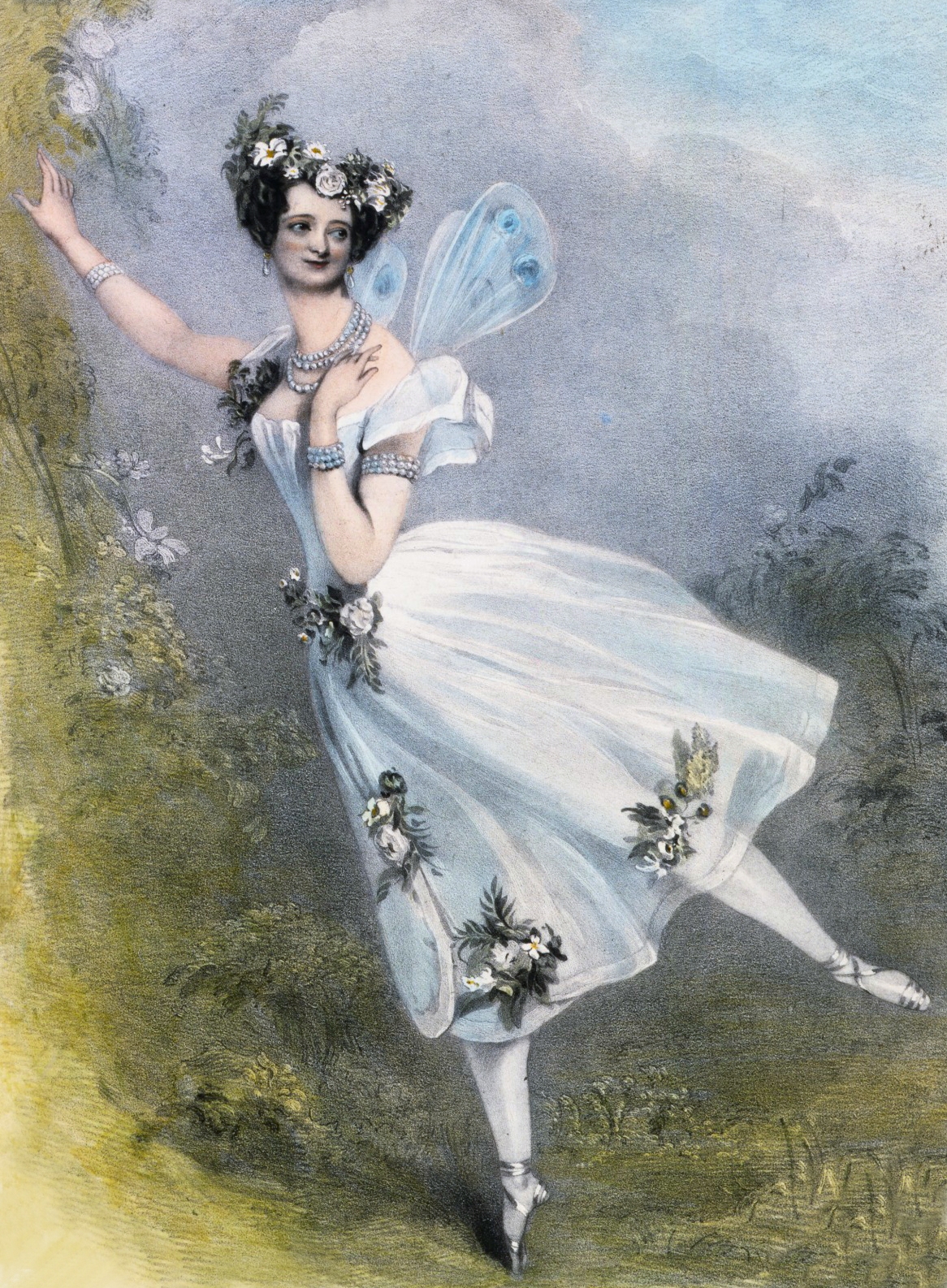
Flore et Zéphire is a one-act ballet choreographed by Charles-Louis Didelot (1767–1836) that premiered in London at the King's Theatre, Haymarket, on 7 July 1796. The ballet tells the story of Zephyr, the fickle west wind, and his love Flora, a nymph of flowers and springtime. The ballet was originally composed in 1795 for performance in Lyon, France, and was revised in 1796 prior to its London premiere. Flore et Zéphire used "flying machines" to send dancers soaring above the stage on nearly invisible wires, in order to enhance the presentation of Flora and Zephyr as spirits of the air. The ballet is credited with the introduction of dancing en pointe to the stage.
Background
In 1795, Charles-Louis Didelot created the ballet La Métamorphose for Lyon, and, in 1796, he revised the work as Flore et Zéphire. On 7 July 1796, the ballet premiered in London at the King's Theatre, ultimately ushering in a new and important—but brief—era in ballet subsequently known as the Pre-Romantic.
Pre-Romanticism in ballet belonged largely to the Anacreontic genre, which emphasized light-hearted treatment of Classical subjects, rather than the restrained formality of Classicism. Anacreontism had become popular at the end of the eighteenth century when the taste for Greek and Roman antiquarianism had run its course at the court of Louis XIV. As a whole, Pre-Romantic ballet coincided with the birth of the Romantic movement in Europe at the end of the eighteenth century.
Production details
Flore et Zéphire starred Didelot as Zephyr, his wife Collinet as Flora, and Hilligsberg as Cupid at the London premiere with music by Cesare Bossi and stage machinery by the engineer Liparotti. The machinery used counterweighted wires to balance, support, and fly individual dancers. London audiences gasped as ballerinas balanced on demi-pointe (half toes) then took a few steps sur les pointes just before rising in the air and circling the stage for several minutes. Critics delivered dire warnings regarding the machines and ballerinas demanded higher wages for being sent into the air, but the delighted Diderot continued to experiment with the appartatus and sent flocks of ballerinas soaring aloft.
The most significant artistic and historical contribution made to ballet by Flore et Zéphire however was dancing sur les pointes (on the toes). Speculation suggests this unusual feat was accomplished by the ballerina momentarily posing on the tip of her toe as the flying machine took her weight for suspended flight. Maria Danilova, Geneviève Gosselin and Fanny Bias all performed Flore and were noted for dancing sur les pointes.
Subsequent history
Flore et Zéphire became Didelot's most enduring work and was revived in a variety of versions for fifty years. In 1799, the ballet's success across Europe prompted the Russian court to extend an invitation to Didelot to become the director of the czar's several imperial theaters—an invitation Didelot accepted.
In 1808, he retitled the ballet Zéphire et Flore, for a St. Petersburg production starring Louis Duport, a well-known French danseur. In 1830, Marie Taglioni made her London debut as Flore, and, in 1834, the ballet became a star vehicle for the ballerina and Jules Perrot.
References
- Notes
- Footnotes
- Bibliography