
Flora of the Indian epic period
Flora of The INDIAN epic period can be a tool to study the antiquity of Indian epics as these do not record time scales of the incidences mentioned in these. The flora of an area or of time period, refers to all plant life occurring in an area or time period, especially the naturally occurring or indigenous plant life. The Indian epics discuss AbOUT the flora and fauna, the geography and forestry of the region.
The ancient Sanskrit epics, the Ramayana and Mahabharata, also termed Itihāsa (History) or Mahākāvya ("Great Compositions"), refer to forest and plant life at various places. The language of these texts is the "Epic Sanskrit". The importance of forests in Indian epics can be understood from the fact that each epic devotes one book to the forests. In Mahabharata it is the Aranyaka Parva (also Vana Parva, Aranya Parva) (The Book of the Forest) which mentions about the period of twelve years spent by Pandavas in exile in the forest (aranya). The divisions of Ramayana into Kandas (Books) also includes one Kanda known as Aranya Kanda – Book of the Forest. In Ramayana Kishkindha Kanda – Book of Kishkindha also discusses the geography and forestry of the region.
Man and environment
The evolution of life on earth in geological ages indicates that man evolved only a million years ago when he lived in dense forests along with other denizens. Palaeo-botanists have examined the fossils of plants found in rocks of various ages and deduced what kind of vegetation grew in those particular geological periods. Thus Dr. Birbal Sahni concluded from the fossils found in inter-trappean rocks that at that time estuarine conditions prevailed in India, and the flora belonged to the genera of plants found in London clay. These plants must have migrated to India by way of the Tethys Sea which stretched along the northern edge of the Gondwana land before the uplift of the Himalayas. It has also been proved that Kashmir and Rajasthan once had a tropical forest, which later receded as a result of glaciation and the upthrust of the Himalayas. Prior to this upheaval, the Ganges drained northwards into the Sindhu. By this time man had already been evolved.
The ancient and prehistoric man has lived in symbiosis with the environment. In the neolithic age, primitive man lived in dense forests, on trees or in natural caves, and subsisted on leaves, fruits, and roots of plants. He used fire for keeping off the dangerous animals of the forest.
In Geological Ages: palaeo-botanical evidence testifies to the fact that there were dense forests in India in the Permian period, 250 million years ago. A fossilized trunk of a tree found in the Raniganj coal-field is nearly 30 m long and 75 cm in diameter at the butt-end and 35 cm at the top-end. It has been named by Dr. Birbal Sahni as Dadoxylon, an extinct genus of plants. Fossil wood is found in several places in Madhya Pradesh and in the Siwalik hills along the Himalayas.
Man was evolved in the beginning of Pleistocene Age, only about a million years ago. At this time India had thick forests except in Rajasthan and parts of Punjab which lay buried under a swamp, the remnant of the receding Tethys Sea.
In Historical Times: Man progressed rapidly in historical times, and began to live in organized societies, constructed shelters using wood bark, etc. and soon took to farming and domestication of animals. Archaeological evidence shows that the Rajasthan swamps existed till as late as 4000 BC, when Mohenjodaro culture flourished in the outskirts of Lothal in Gujarat. In these marshes grew stout reeds which were used by Chalcolithic people to cover dead bodies. The adjoining forest contained rhinoceroses and crocodiles of which we find replicas on the seals. At this time trees must have been felled by axes of flint and bronze, as iron had not yet been used. After the disappearance of this civilization-the reasons for which are still not known-the Aryans started coming into India, from 2000 BC. They introduced the use of iron for making axes, javelins, ploughs, etc.
There is evidence that at this period a Dravidian civilization of a high order flourished in the country, with its roots in the far south, which apparently lived in consonance with the thick extensive forest and its wildlife. The Aryans were primarily pastoral people. To construct shelters for themselves and for their domesticated animals they cleared the forests wherever they went. But even so, being worshippers of Nature, they preferred for their abodes, and even for their educational centres, sylvan surroundings and inspiring landscape. It is in such setting that the Vedas, the Upanishads and the Aranyakas were composed which sing the glory of the Creator and lay down recepts of conduct for man to live righteously. 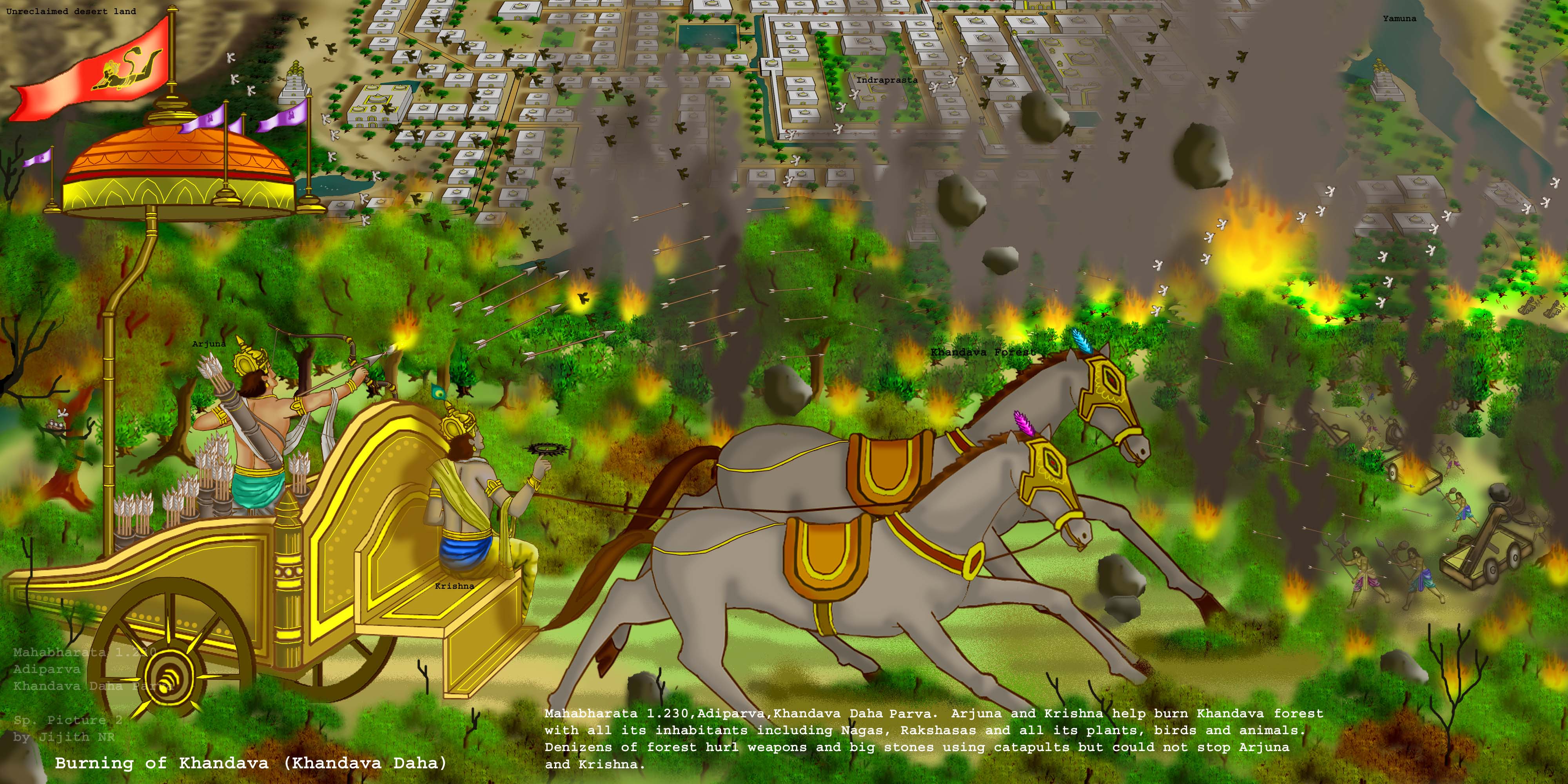
Human population at this period was very small, and forests were still plentiful. When the great epic Ramayana was written there were still dense forests in Naimisharanya, Chitrakoot, Dandakaranya, and Panchavati which abounded in wildlife. But by the time the Mahabharata was compiled, onslaughts had been made on forests and we read of the burning of the Khandava Vana. To arrest such vandalism, which was adversely affecting the life of the people, some wise ancestor of ours must have declared [...] of trees a sin and planting and protecting them an act of piety. Several useful species of plants were thus saved from extinction, such as the Banyan, the Pipal, the Bel, etc. Even then some disappeared in course of time from particular areas, such as the Kadam, the Ashok, and the Bamboos from Vrindavan.
The chronicles of Chinese pilgrims mention dense Indian forests in birthplace of Lord Krishna. Records relating to the invasion of Alexander the great in 326 BC mention the existence of almost impenetrable forests along the Indus. Later, in Kautilya's times protection of forests, planting Of new species of trees, and preservation of wildlife were considered desirable, and a special officer was appointed for the purpose. By the time of Emperor Ashoka, heavy inroads had already been made into the forests and their absence begun to be feft. Therefore, as his rock edicts record, this far-sighted monarch ordered that useful trees be planted along the roads and on camping grounds. He also encouraged the cultivation of exotic medicinal plants.
Shershah Suri planted trees along the Delhi-Patna Highway. The Mughals were not forest-minded as such, but they created exquisite gardens. Emperor Jahangir introduced the famous Chinar tree in the valley of Kashmir which has now become synonymous with Kashmir. The Mughals also maintained large Shikargahs for hunting. The Ain-e-Akbari records that elephants roamed in the forests as far west as Mhow near Indore. But a century later Aurangzeb found only scrub forests near Burhanpur. The Marathas and the Gonds planted mangoes and other useful trees along their marching routes and halting places, some of which are still surviving.
The remains of extinct creatures discovered in the upper layers of the Sivaliks range and in other parts of India give us a glimpse of the wonderful wealth of animal life that flourished here in the tertiary period. Mastodons and great herds of elephants of many species trumpeted and tramped through the swamps and reedy forests of this region. With them lived hippopotamuses, rhinoceroses of various species, and a colossal four-horned ruminants, the Sivatherium. The one-horned rhinoceros, as born out by the seals of the Harappan culture, was once found as far west as Rajasthan.
The rich heritage of wildlife came down to us through the ages mainly because of the deep-rooted Indian tradition of compassion for all life in general. Moreover, animals have been closely associated with our folklore and legends. Kautilya's Arthashastra, written in the 3rd century BC refers to definite administrative arrangements for preservation of wildlife. Special areas, called Abhayaranyas, were set aside for their protection. Emperor Ashoka introduced game laws, ordained the preservation of forests, and prohibited [...] of animals.
Carbon dating
Carbon dating method can be used to determine the age of living trees in the past. This technique will give age of a tree when it became dead wood. It has become thus possible from specimens of wood, charcoal, etc., found in excavations by archaeologists to fix period when a particular prehistoric culture flourished. The Indian cultures have been dated as under:
Place of excavation |
Carbon-dating finding |
|---|---|
Atnur (South India) |
2300 BC Neolithic culture |
Eran & Navadatoli (Madhya Pradesh) |
2300 BC-1400 BC Central Indian culture |
Kalibangan (Rajasthan) and Lothal (Gujarat) |
2100 BC Harappan culture |
Ahar (Rajasthan) |
1800 BC-1300 BC Banas culture |
Newasa and Chandoli (Maharashtra) |
1300 BC-1100 BC Chalkolithic culture |
Vedic culture
India was one of the foremost developed countries in ancient times. Learned persons of vedic culture were quite aware regarding unimaginable obligation of plants for the very sustenance of animal life. Though not scientifically proved at that time, they knew that the air we breath remains pleasant by surrounding plants. There are a number of verses in ancient literature depicting this generosity of vegetable kingdom. They have also realised that there is no conduct of life where the plant kingdom does not make its contribution like food, fuel, shelter, fiber, fodder and medicine. No wonder that many such plants species have been revered as God.
Medicinal plants
The ancient scholars in Sanskrit language studied the plants mainly for medicinal purposes. From time immemorial many medicinal plants are well known in this country. Use of herbal medicine can be traced to the remote past. One of the oldest treaties in the world is Rigveda (4500 BC-1000 BC) where healing properties of some herbs are mentioned in the form of sonnets, which were often recited in religious rituals. Later on a special faculty was developed known as Ayurveda, mostly dealing with human philosophy of health including utilization of medicinal plants for restoring normal physical fitness. 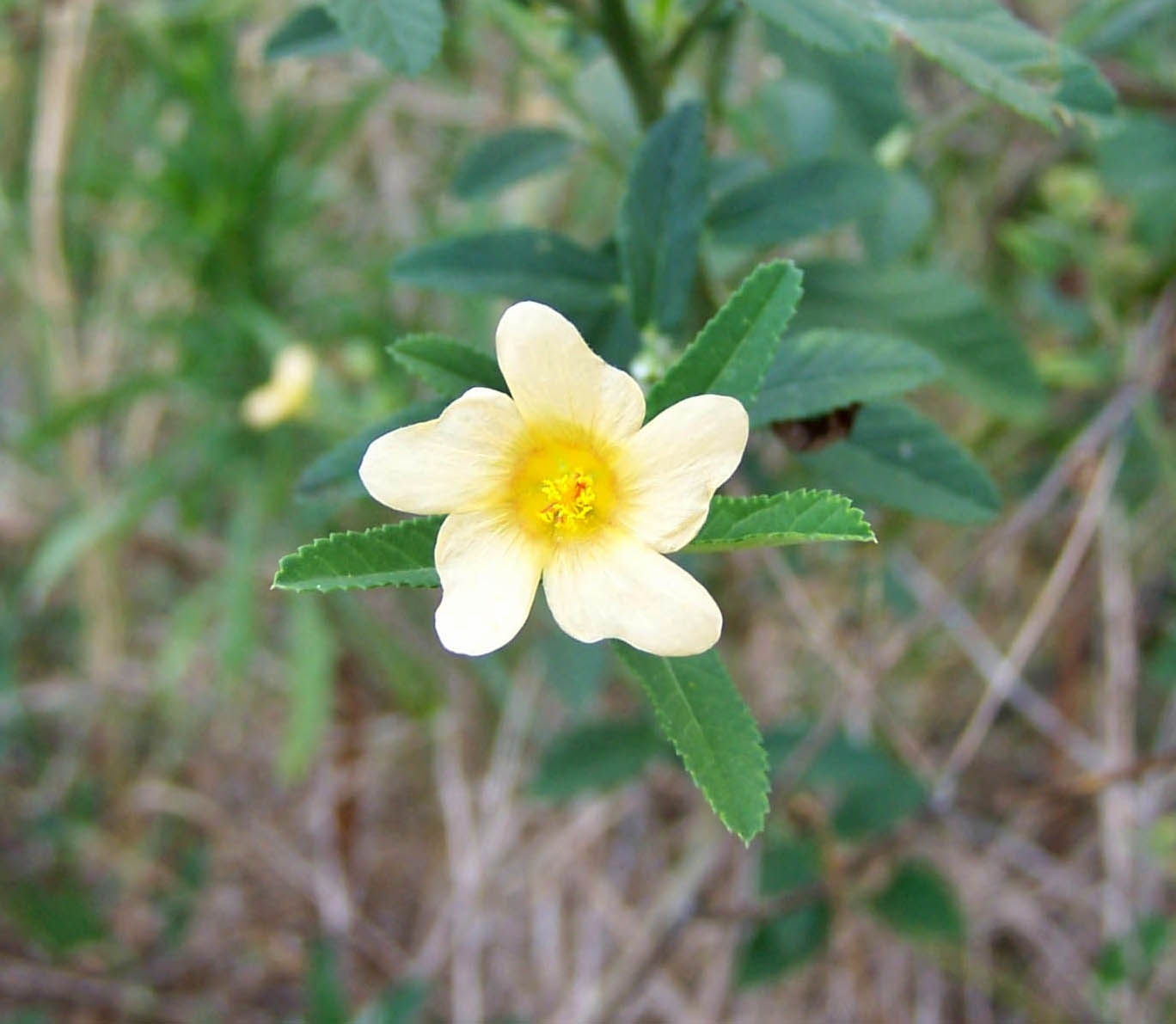 Interestingly enough there used to be regular rapport between sages of various communities interested in miraculous effects of herbal medicine. There are records in ancient scripts regarding periodic conferences, seminars and also workshops in selected areas where exchange of knowledge was often manifested. Even it was mentioned that women scholars like Maitrai, Gargi contributed some knowledge about medicinal plants and their maintenance. During the glorious days of Buddha philosophy (600 BC- 400 AD) there was friendly mingling of therapeutic values of plants, through religious norms were different. Scholars practicing medicine were quite familiar with wild medicinal plants growing in jungles.
The further advancement of this process was materialization of Susruta Samhita and Charaka Samhita (1000 BC) which incorporates comprehensive chapters on the therapeutic use of various plant species. These treaties deal with about 700 drugs, some of these are not indigenous to Indian subcontinent. The invaluable knowledge of medicine was composed in lyrical sutras (Sonnets) which often reveal valuable information in few words.
Later on number of new plant species were added to the then known pharmacopoeia of indigenous medicinal plants. Attempts were also made to identify the required medicinal plant species by observing their exomorphic characters. For example plant species like Bala (Sida acuta Burm.); Atibala (Sida rhombifolia Linn.); Nagabala (Sida spinosa Linn.) and Bhubala (Sida veronicaefolia Lam.) were named and grouped together under one class. In modern classification all these belong to Hibiscus (Malvaceae) family. Indeed Indian scholars do have realised the importance of correct identity of plants and that the knowledge of diagnostic external morphological characters are essential requirements for that purpose. But they could not imagine the use of Binomial system of nomenclature of the plants and thereby fixing absolute identity of the concerned plant material. Instead of that they have started giving various names to the same plant species by considering broad features like shape, color of flowers, smell, taste, along with local names based on plant profile and mythological folklores in various regional languages. For example Krisna Tulsi (Ocimum sanctum L.) have 52 different names in various Indian dialects. Such trend of thinking became prelude to more confusion while undertaking any research project on indigenous Indian plants.
Puranic literature
Puranic cosmography divides our earth into seven concentric islands. They are separated by the seven encircling seas. Seven intermediate oceans consist of salt-water, sugarcane juice, wine, ghee, curd, milk and water respectively., All these dvipas are named after trees/plants in Sanskrit. The seven dvipas are: 1.Jambu (जम्बुद्वीप) - Continent Jambudvipa named after Jambū (जंबू) trees, Syzygium cumini (Indian Blackberry), is also known as Sudarshanadvipa, forms the innermost concentric island in the above scheme. The fruits of the Jambu tree are said to be as large as elephants and when they become rotten and fall upon the crest of the mountains, a river of juice is formed from their expressed juice. The river so formed is called Jambunadi (Jambu river) and flows through Jambudvipa, whose inhabitants drink its waters. Insular continent Jambudvipa is said to comprise nine varsas (zones) and eight significant mountains. The insular continent Jambudvipa forms the innermost concentric island in the scheme of continents. Jambudvipa includes nine countries (varṣa) and nine mountains. The land of Illa-vrta lies at the center of Jambudivipa at whose center is located Mount Meru.
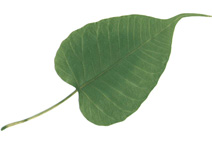 2.Plaksha (प्लक्षद्वीप) - Plaksa is a possible Sanskrit term for the sacred fig of which botanical name is Ficus religiosa. According to Macdonell and Keith (1912), it rather denotes the wavy-leaved Fig tree (Ficus infectoria). The continent Plaksha is said to be along the western border of Jambudvipa. Vishnu Purana says that the Plaksha continent encircles Jambudvipa. In Hindu texts, the Plaksa tree is associated with the source of the Sarasvati River. The Skanda Purana states that the Sarasvati originates from the water pot of Brahma and flows from Plaksa on the Himalayas. According to Vamana Purana 32.1-4, the Sarasvati was rising from the Plaksa tree (Pipal tree). Plaksa Pra-sravana denotes the place where the Sarasvati appears. In the Rigveda Sutras, Plaksa Pra-sravana refers to the source of the Sarasvati.
3.Salmalidvipa (शाल्मलीद्वीप) - The continent derives its name from Śalmalī (शाल्मली) tree in sanskrit with Botanical name Bombax ceiba, commonly known as cotton tree or tree cotton. This tropical tree has a straight tall trunk and its leaves are deciduous in winter. Red flowers with 5 petals appear in the spring before the new foliage. Salmalidvipa is mentioned in Puranas as parvata touching the Ikshurasoda samudra.
4.Kushadvipa (कुशद्वीप) - The continent derives its name from Kusha (कुश) grass, which has Botanical name Desmostachya bipinnata. The author of Vayu Purana uses the name Kumuda-dvipa for Kusha-dvipa (Vayu I.48.34-36). 'Kumuda' is also a Puranic name of a mountain forming the northern buttress of the Mount Meru (i.e. Pamirs). In anterior Epic Age, Kumuda was the name given to high table-land of the Tartary located to north of the Himalaya range from which the Aryan race may have originally pushed their way southwards into Indian peninsula and preserved the name in their traditions as a relic of old mountain worship. Thus, the Kumuda-dvipa lay close north to the Pamirs. Lying in the Transoxiana (in Saka-dvipa), this Komuda or Kumuda-dvipa of the Puranic texts is often identified as the ancient Kamboja land which corresponds to the Parama Kamboja referred to in the Sabha Parava of Mahabharata.
5.Kraunchadvipa (क्रौंचद्वीप) - The continent derives its name from Sanskrit word Krauncha (क्रौंच) used for Curlew-heron. Krauncha-Vyuha (क्रौंच व्युह) has been mentioned in Mahabharata war as a military formation on a pattern supposed to resemble a heron. In the Krauncha island, there is a mountain called Maha-krauncha that is a mine of all kinds of gems. Mahabharata mentions Kinnaras and Vidyadharas living in Krauncha mountain (in Himachal Pradesh ) in the Himalayas (9,16).
6.Shakadvipa (शाकद्वीप) - The continent derives its name from Shāka (शाक) tree, Botanical name Tectona grandis, a tall deciduous tree with rounded crown. Surrounded by the sea of whey is Shakdvipa with an extent of thirty-two lakh Yojans. It has a huge tree of Shaka, hence its name. With a sweet fragrance of this tree, the whole island emits a pleasant scent. The ruler of this island, Medhatithi was also a son of Priyvrata. He too had seven sons- Purojav, Manojav, Pawamana, Dhumranik, Chitraref, Bahurup and Vishwdhar. They were made the rulers of the seven divisions of the island. People of the island use Pranayama to weaken their Rajoguna and Tamoguna, and worship Hari (Vishnu) in Vayu (form) through meditation. Visnu Purana: "Shakdvipa located inside Chira sea and Shakdwipis are friends" Mahabharata 6.604 = Bhagavad Gita 5.20.3-42: "In Shakdvipa, caste system is same as Jambudvipa. There was four caste in Shakdvipa 1. Maga 2. Mushus 3. Manus 4 Mandaka"
7.Pushkaradvipa (पुष्करद्वीप) - The continent derives its name from plant named Pushkara (पुष्कर), Botanical name Nelumbo nucifera, a handsome aquatic herb, Native to Greater India and commonly cultivated in water gardens, the lotus is the national flower of India and Vietnam. It is Native of China, Japan also. Grown throughout warmer parts of India. Pushkaradvipa may probably refer to Pushkar, a town in the state of Rajasthan in India. Hindus believe that the gods released a swan with a lotus in its beak and let it fall on earth where Brahma would perform a grand yagna. The place where the lotus fell was called Pushkar.
Origin of Saka
According to Hukum Singh Pawar (Pauria) Some writers think that Saka (Scythian) is a Sanskrit word which means Sagwan or Teak (Tectona grandis), generally grown in monsoon region, the shape of which and that of its river deltas was like that of teak leaf., and the people popularly known as Sakas used to be the inhabitants of this land. S. M. Ali identifies Shakadvipa with land mass in the south-east of Meru which falls climatically in the monsoon region and teak is its distinctive tree in its natural and artificial vegetation. The Sapta Sindhu, original home of Aryans, in the south of Meru, we find that the country fulfills all the requisites of Shakadvipa, viz, teak leaf shape of the country or the area abundant in teak vegetation, as well as that of the deltas of Sarasvati and Indus river. The Mahabharata's reading, alluded to above, that there was Sakala-dvipa, the name of which is attributed to the Sakas, in the Sapta Sindhu, evidently carries much weight. There is every possibility that the people of Sapta Sindhu, as a whole, might have besides their eponymous and ethnoyms, been known as Sakas also.
Flora of Ramayana epic
The Indian epic Ramayana discusses the Flora and fauna of the places visited by Rama. Ramayana in Bala Kanda Sarga 24 mentions the crossing over of the River Ganges, sage Vishvamitra sails Rama and Laxmana through its confluence with River Sarayu, which flows at their capital Ayodhya. The sage leads them to a deadly forest on the other bank of River Ganges and narrates about the provinces Malada and Karusha. Here shlokas 12-18 mention about the forest trees and plants of the region.
Aranya Kanda Sarga 11 mentions the Stories of Sages Mandakarani and Agastya. It depicts the propitious nature of Agastya’s hermitage. Here shlokas 46, 49, 74-76 mention many trees and plants. Aranya Kanda Sarga 15 mentions about Panchavati situated on Godavari River in Nasik district in Maharashtra. Here shlokas 12-18 mention the biodiversity of the area around Pampa Lake. Aranya Kanda Sarga 73 writes how Kabandha extols Pampa Lake and details Rama about the course to be adopted to proceed to Mt. Rishyamuka to befriend Sugreeva. He details about Matanga hermitage where shlokas 2-5 describe a large number of trees.
Ramayan-Kishkindha Kanda Sarga 1 gives a description of Pampa Lake and writes about many forest trees in shlokas 73-83. In Kishkindha Kanda Sarga 40, Sugreeva orders vanara-s to search east under the leadership of Vinata, a mighty vanara. Here Sugreeva commissioning Vinata explains the topography and geography of Eastern side of the Jambudvipa, where trees have been mentioned in shlokas 39, 53 and 56. In Kishkindha Kanda Sarga 42, Sugreeva sends troops to west side to search for Sita. Describing the various provinces like Surashtra, Balhika and Chandrachitra (Mathura), Western Ocean, River Sindhu and magnificent mountains that are situated at the northwest of India, cities like Murachi, Jatapura, Avanti and Angalepa and also the ocean down south to it, namely the present Arabian Sea and almost up to Persian provinces, he orders vanara troops to return within one month's time. Here shlokas 7, 8, 11, 12, 13,46 mention forest trees. In Kishkindha Kanda Sarga 43, Sugreeva sends troops to north in search of Sita. He gives an account of the snowy regions and provinces of northern side and asks them to search in the places of Yavana, Kuru, and Daradas etc., civilisations. Sugreeva specially informs them about a divine province called Uttara Kuru and a heavenly mountain called Mt. Soma on which Brahma, Vishnu and Shiva make sojourn for its sacredness. Here shlokas 13, 17 and 37 describe the forest trees.
The identification of these species may prove to be great tool in identifying those places and writing of history. We produce here the names of plants and trees in Sanskrit language, their botanical names, local Hindi or English names and Sargas (Chapters) in which forests and tree species have been mentioned.
List of Plants A-L in Ramayana
Sanskrit name of plant (Devanagari) |
Botanical name |
Indian names |
Indian epic |
Sarga |
Shloka |
Location in epics |
Habit |
Present Habitat |
|---|---|---|---|---|---|---|---|---|
Agnimukha (अग्निमुख) |
Semecarpus anacardium |
Hindi:Bhilawa, Bhela, Bhallaataka English:Marking nut, Oriental cashee |
Ramayan |
Aranya Kanda Sarga 73 |
3.73.5 |
Matanga hermitage |
Found in the outer Himalayas, Common in dry or moist deciduous forests |
|
Ankola (अन्कोल) |
Alangium salvifolium |
Ankola |
Ramayan |
Kishkindha Kanda Sarga 1 |
4.1.80 |
Pampa Lake |
Tall thorny tree |
Found in India, Western Africa, Madagascar, Southern Asia, Philippines and tropical Australia, and the Pacific Islands |
Arjuna (अर्जुन) |
Terminalia arjuna |
Indian:Arjuna, Arjunasaadaddaa, Sanmadat, Vellamarda, Sadaru, Kahu, Shardul |
Ramayan |
Kishkindha Kanda Sarga 1 |
4.1.81 |
Pampa Lake |
Indigenous in Africa and Indo-Malaysia region. Cultivated all over India |
|
Ashoka (अशोक) |
Saraca asoca |
Ashoka |
Ramayan |
Kishkindha Kanda Sarga 1 |
4.1.79 |
Pampa Lake |
Cultivated ingargens throughout India |
|
Ashoka (अशोक) |
Saraca asoca |
Banjuldruma |
Ramayan |
''Aranya Kanda Sarga 11 |
3.11.74 |
Agastya’s hermitage |
||
Ashoka (अशोक) |
Saraca indica |
Ashoka |
Ramayan |
Aranya Kanda Sarga 15 |
3.15.17 |
Panchavati |
||
Ashoka (अशोक) |
Saraca asoca |
Ashoka |
Ramayan |
Aranya Kanda Sarga 73 |
3.73.4 |
Matanga hermitage |
||
Ashoka (अशोक) |
Saraca asoca |
Ashoka |
Ramayan |
Aranya Kanda Sarga 73 |
3.73.5 |
Matanga hermitage |
||
Ashvakarna (अश्वकर्ण) |
Vateria indica |
Hindi:Dhupa, Ralla English:Indian Copal, White dammar, Piney varnish |
Ramayan |
Bala Kanda Sarga 24 |
1.24.15 |
Malada and Karusha provinces |
Western India, chiefly in evergreen forests, but also occasionally along rivers in deciduous forests |
|
Ashwakarna (अश्वकर्ण) |
Vateria indica |
Ramayan |
Aranya Kanda Sarga 15 |
3.15.18 |
Panchavati |
|||
Aśvattha (अश्वत्थ) |
Ficus religiosa |
Pipal, Pimpalla, Bodhi |
Ramayan |
Aranya Kanda Sarga 73 |
3.73.3 |
Matanga hermitage |
Sub-Himalayan forests, Bengal, Madhya Pradesh. Planted elsewhere |
|
Badari (बदरी) |
Zizyphus mauritiana |
Indian: Ber, Bora |
Ramayan |
Bala Kanda Sarga 24 |
1.24.16 |
Malada and Karusha |
Common in hotter parts of India, cultivated in gardens or found wild in waste places |
|
Banjula (वञ्जुल) |
Saraca asoca |
Ashoka |
Ramayan |
Kishkindha Kanda Sarga 1 |
4.1.78 |
Pampa Lake |
||
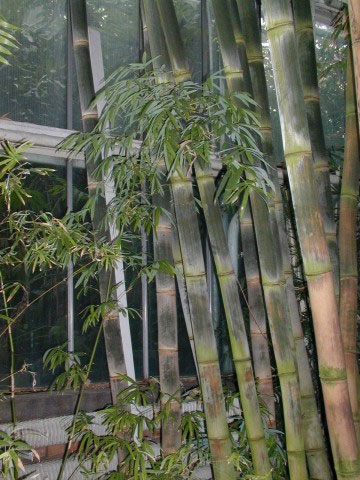
Bansha (बांस) |
Dendrocalamus strictus |
Bamboo, bansalochana |
Ramayan |
Aranya Kanda Sarga 15 |
3.15.21 |
Panchavati |
|
Found from the Indian subcontinent throughout Southeast Asia |
Bilva (बिल्वा) |
Aegle marmelos |
Hindi:Bel, English Bael fruit tree |
Ramayan |
Kishkindha Kanda Sarga 1 |
4.1.78 |
Pampa Lake |
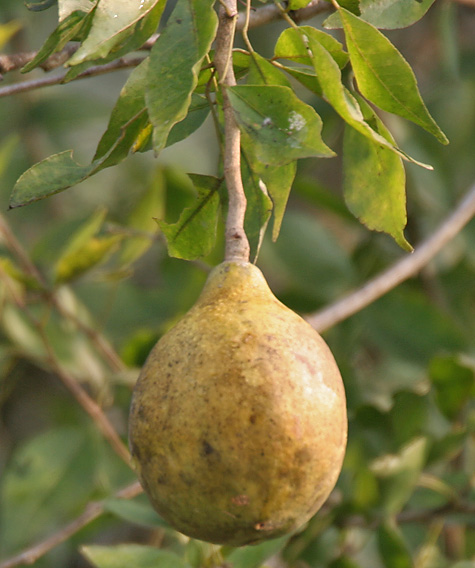
|
Indigenous to dry forests on hills and plains of central and southern India, southern Nepal, Sri Lanka, Myanmar, Pakistan, Bangladesh, Nepal, Vietnam, Laos, Cambodia and Thailand. It is cultivated throughout India, as well as in Sri Lanka, northern Malay Peninsula, Java and in the Philippines. |
Bilva (बिल्वा) |
Aegle marmelos |
Bel |
Ramayan |
Aranya Kanda Sarga 11 |
3.11.74 |
Agastya’s hermitage |
||
Bilva (बिल्वा) |
Aegle marmelos |
Bel |
Ramayan |
Aranya Kanda Sarga 11 |
3.11.74 |
Agastya’s hermitage |
||
Bilva (बिल्वा) |
Aegle marmelos |
Bel |
Ramayan |
Bala Kanda Sarga 24 |
1.24.15 |
Malada and Karusha |
||
Champaka (चम्पक) |
''Michelia champaca |
Champa |
Ramayan |
Kishkindha Kanda Sarga 1 |
4.1.78 |
Pampa Lake |
Native to South Asia and Southeast Asia. |
|
Champaka (चम्पक) |
''Michelia champaca |
- |
Ramayan |
Aranya Kanda Sarga 15 |
3.15.17 |
Panchavati |
||
Chandana (चंदन) |
Santalum album |
Indian:Chandana, English:Sandalwood |
Ramayan |
Kishkindha Kanda Sarga 1 |
4.1.82 |
Pampa Lake |
Occurring in semi-arid areas from India to the South Pacific and the northern coast of Australia. Originally endemic to eastern Indonesia, northern Australia and tropical areas of the Indian peninsula. It is now indigenous to deciduous, dry forests of China, India, Hawaii, Sri Lanka, Indonesia, the Philippines and Northwestern Australia, although the extent of human dispersal to these regions is not known. |
|
Chandana (चंदन) |
Santalum album |
Sandalwood |
Ramayan |
Aranya Kanda Sarga 15 |
3.15.18 |
Panchavati |
||
Chūta (चूत) |
Mangifera indica |
Mango |
Ramayan |
Kishkindha Kanda Sarga 1 |
4.1.80 |
Pampa Lake |
A common tree all over India cultivated for its delicious fruits |
|
Chūta (चूत) |
Mangifera indica |
Indian: Aam, Aamba, Aamra, Amb English:Mango |
Ramayan |
Aranya Kanda Sarga 15 |
3.15.17 |
Panchavati |
||
Chūta (चूत) |
''Mangifera indica |
Mango |
Ramayan |
Aranya Kanda Sarga 73 |
3.73.3 |
Matanga hermitage |
||
Devadaru (देवदारु) |
Cedrus deodara |
Deodar trees |
Ramayan |
Kishkindha Kanda Sarga 43 |
4-43-13 |
Himalayas |
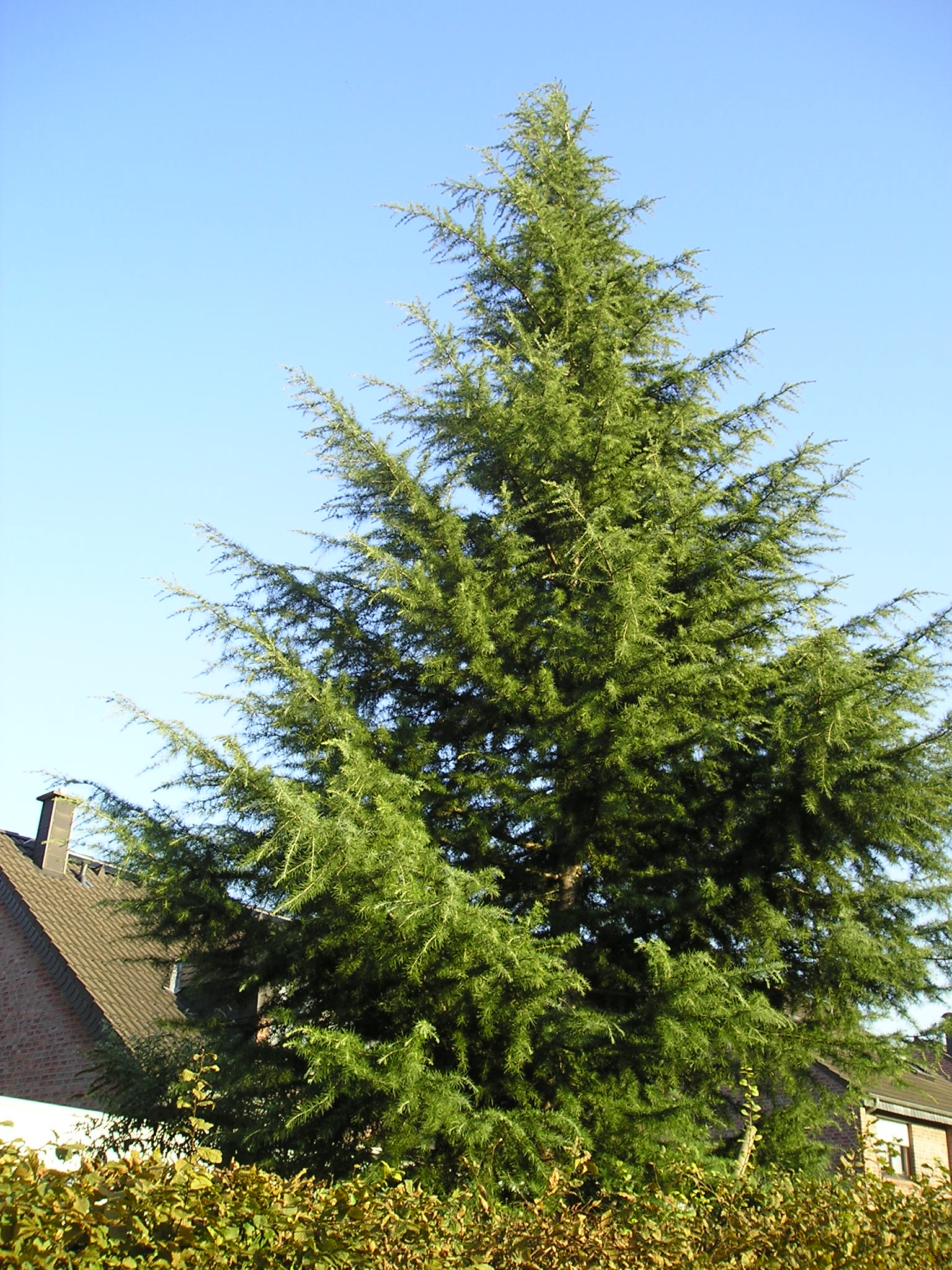
|
Native to the western Himalayas in eastern Afghanistan, northern Pakistan, north-central India (Himachal Pradesh, Uttarakhand and Kashmir), southwesternmost Tibet and western Nepal. |
Devasakha (देवसख) |
''- |
- |
Ramayan |
Kishkindha Kanda Sarga 43 |
4-43-17 |
Himalayas |
||
Dhanva (धन्व) |
Mimusops elengi |
Bakulla |
Ramayan |
Aranya Kanda Sarga 73 |
3.73.4 |
Matanga hermitage |
Found in tropical forests in South Asia, South east Asia & Northern Australia. In India found throughout in wet, damp and marshy areas |
|
Dhava (धव) |
Anogeissus latifolia |
Hindi: Dhavda, Bakli , Dhau , Dhawa, Dhawra, Dhaora English: Axlewood, Thai:Takhian-nu, Vietnamese:Raam |
Ramayan |
Kishkindha Kanda Sarga 1 |
4.1.81 |
Pampa Lake |
A small to medium-sized tree |
Native to the India, Nepal, Myanmar, and Sri Lanka |
Dhava (धव) |
''Anogeissus latifolia |
Dhawada |
Ramayan |
Aranya Kanda Sarga 15 |
3.15.18 |
Panchavati |
||
Dhava (धव) |
''Anogeissus latifolia |
Dhawada |
Ramayan |
Bala Kanda Sarga 24 |
1.24.15 |
Malada and Karusha |
||
Hintāla (हिन्ताल) |
Cycas circinalis |
Hindi:Jangli madan mast ka phool, Malayalam: Eentu, Eentinpana |
Ramayan |
Kishkindha Kanda Sarga 1 |
4.1.83 |
Pampa Lake |
Growing naturally throughout south India |
|
Jambū (जंबू) |
''Syzygium cumini |
Indian:Jāmun, Jambul, English:Jambolan, Black Plum |
Ramayan |
Aranya Kanda Sarga 73 |
3.73.3 |
Matanga hermitage |
Throughout India |
|
Kadamba (कदंब) |
'''Anthocephalus cadamba |
Kadamba |
Ramayan |
Aranya Kanda Sarga 73 |
3.73.4 |
Matanga hermitage |
Native to South and Southeast Asia |
|
Karavira (करवीर) |
Nerium indicum |
Kannhera |
Ramayan |
Aranya Kanda Sarga 73 |
3.73.4 |
Matanga hermitage |
It is native to a broad area from Morocco and Portugal eastward through the Mediterranean region and southern Asia to Yunnan in southern parts of China. |
|
Karnikara (कर्णिकार) |
Cassia fistula |
Hindi: Amaltas English:Golden Shower, Indian laburnum, Drumstick tree |
Ramayana |
Kishkindha Kanda Sarga 1 |
4.1.73 |
Pampa Lake |
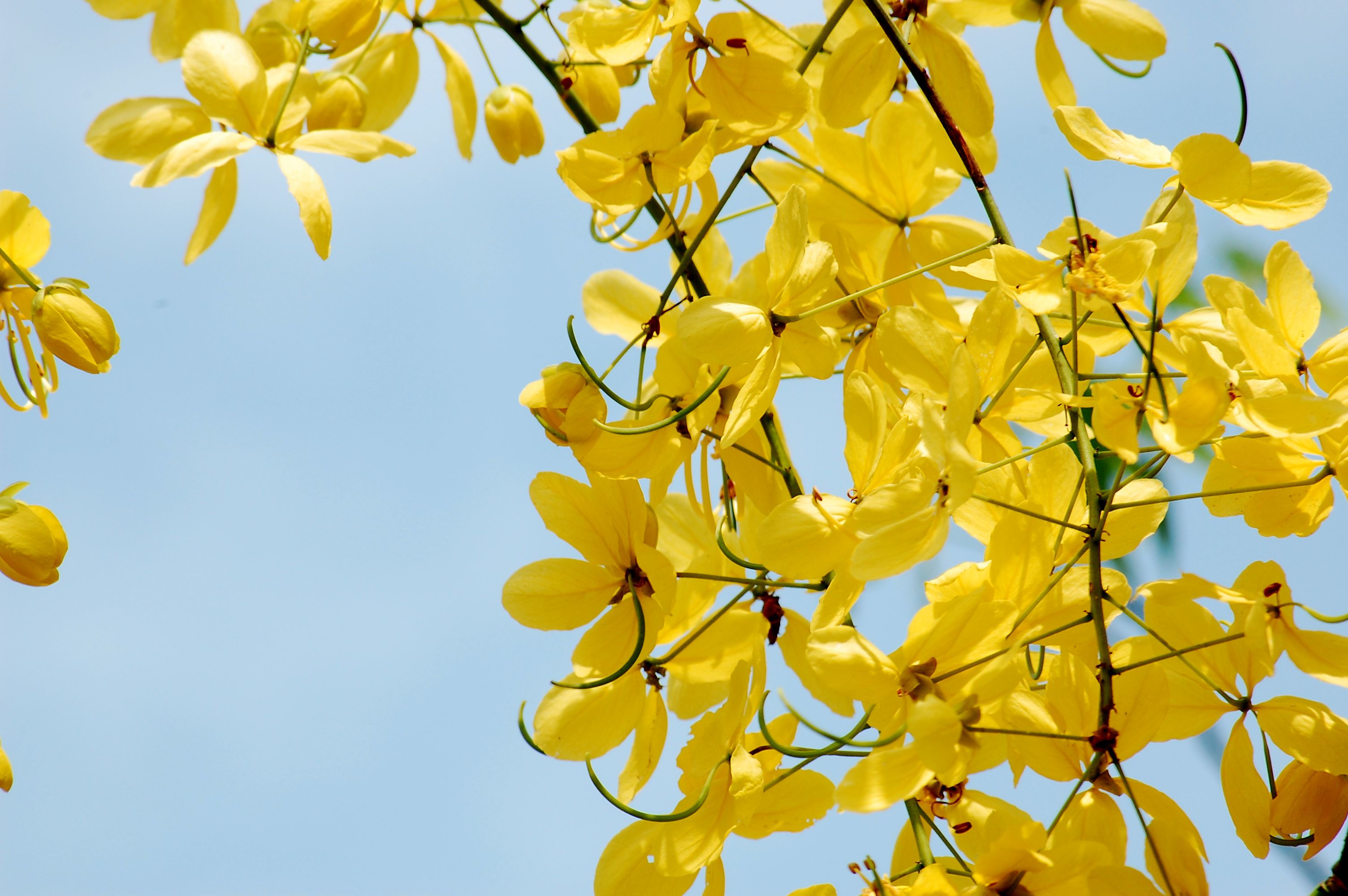
|
Native to southern Asia, from southern Pakistan east through India to Myanmar and south to Sri Lanka. |
Karnikāra (कर्णिकार) |
Cassia fistula |
Amaltas |
Ramayan |
Kishkindha Kanda Sarga 40 |
4-40-56 |
Udaya Mountain |
||
Karnikāra (कर्णिकार) |
Cassia fistula |
Amaltas |
Ramayan |
Aranya Kanda Sarga 73 |
3.73.3 |
Matanga hermitage |
||
Kāsha (काश) |
Saccharum spontaneum |
Kans grass |
Ramayan |
Aranya Kanda Sarga 15 |
3.15.22 |
Panchavati |
Native to south Asia. |
|
Ketaka (केतक) |
Pandanus tectorius |
- |
Ramayan |
Kishkindha Kanda Sarga 1 |
4.1.81 |
Pampa Lake |
Occurring from near Port Macquarie in New South Wales to northern Queensland, Australia and Indonesia east through the islands of the tropical Pacific Ocean to Hawaii |
|
Ketaka (केतक) |
Pandanus tectorius |
- |
Ramayan |
Kishkindha Kanda Sarga 42 |
4.42.7 & 4.42.11 |
Surashtra, Bahlika and Chandrachitra provinces |
- |
- |
Ketaka (केतक) |
Pandanus tectorius |
- |
Ramayan |
Kishkindha Kanda Sarga 42 |
4.42.11 |
Cities Murachi, Jatapura, Avanti and Angalepa |
- |
- |
Ketakī (केतकी) |
Pandanus tectorius |
Kewada |
Ramayan |
Kishkindha Kanda Sarga 1 |
4.1.77 |
Pampa Lake |
- |
- |
Ketakī (केतकी) |
Pandanus tectorius |
Kewda |
Ramayan |
Aranya Kanda Sarga 15 |
3.15.17 |
Panchavati |
Seacoast of Indian Peninsula, Port Macquarie in New South Wales to northern Queensland, Australia and Indonesia east through the islands of the tropical Pacific Ocean to Hawaii |
|
Khadira (खदिर) |
Acacia catechu |
Hindi: Khair, Khadira English: Cutch, Catechu, Cachou, Black Cutch |
Ramayan |
Aranya Kanda Sarga 15 |
3.15.18 |
Panchavati |
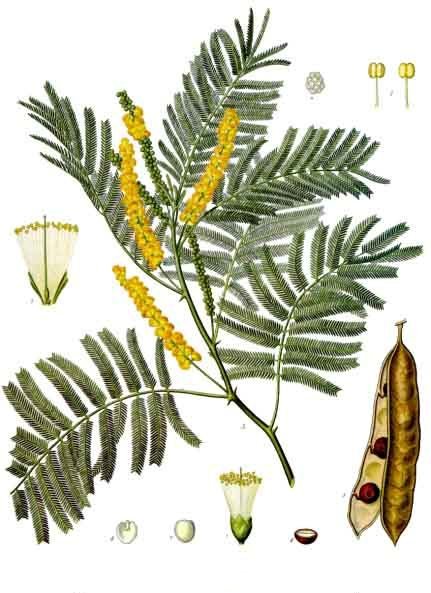
|
It is found in Asia, China, North Africa, Naturalized in all drier parts of India. |
Kharjūra (खर्जूर) |
Phoenix dactylifera |
Hindi:खजूर, Pindakhajur, English:Date Palm |
Ramayan |
Aranya Kanda Sarga 15 |
3.15.16 |
Panchavati |
Originated somewhere in the desert oases of northern Africa, and perhaps also southwest Asia. Cultivated in many parts of India. |
|
Kichaka Venu (कीचक वेणू) |
Bambusa arundinacea |
English:Spiny bamboo, Hindi:Kaantaa baans (काँटा बांस) |
Mahabharata |
Kishkindha Kanda Sarga 43 |
4.43.37 |
Where River Sailoda flows |
Wild throughout India especially in hill forests. |
|
Kimshuka (किंशुक) |
Butea monosperma |
Indian: Palas, Dhak, Khakara, Kakracha English:Flame of the Forest, [...] tree, Parrot Tree |
Ramayana |
Kishkindha Kanda Sarga 1 |
4.1.75 |
Pampa Lake |
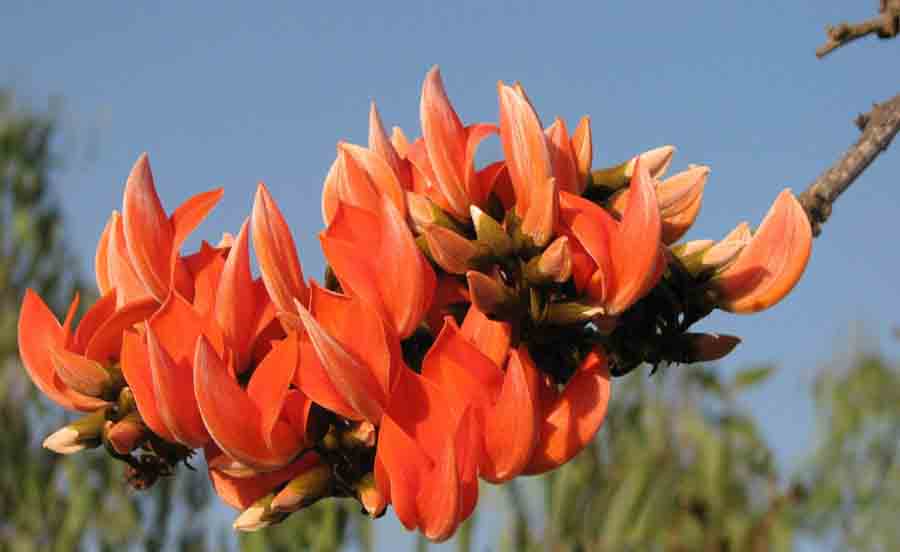
|
Native to tropical southern Asia, from Pakistan, India, Bangladesh, Nepal, Sri Lanka, Myanmar, Thailand, Laos, Cambodia, Vietnam, Malaysia, and western Indonesia. Common Throughout India |
Kinshuka (किंशुक) |
Butea monosperma |
Palas |
Ramayan |
Kishkindha Kanda Sarga 1 |
4.1.82 |
Pampa Lake |
||
Kinshuka (किंशुक) |
''Butea monosperma |
Palas |
Ramayan |
Aranya Kanda Sarga 15 |
3.15.18 |
Panchavati |
||
Kovidāra (कोविदार) |
''Bauhinia variegata |
Kachanār |
Ramayan |
Kishkindha Kanda Sarga 1 |
4.1.80 |
Pampa Lake |
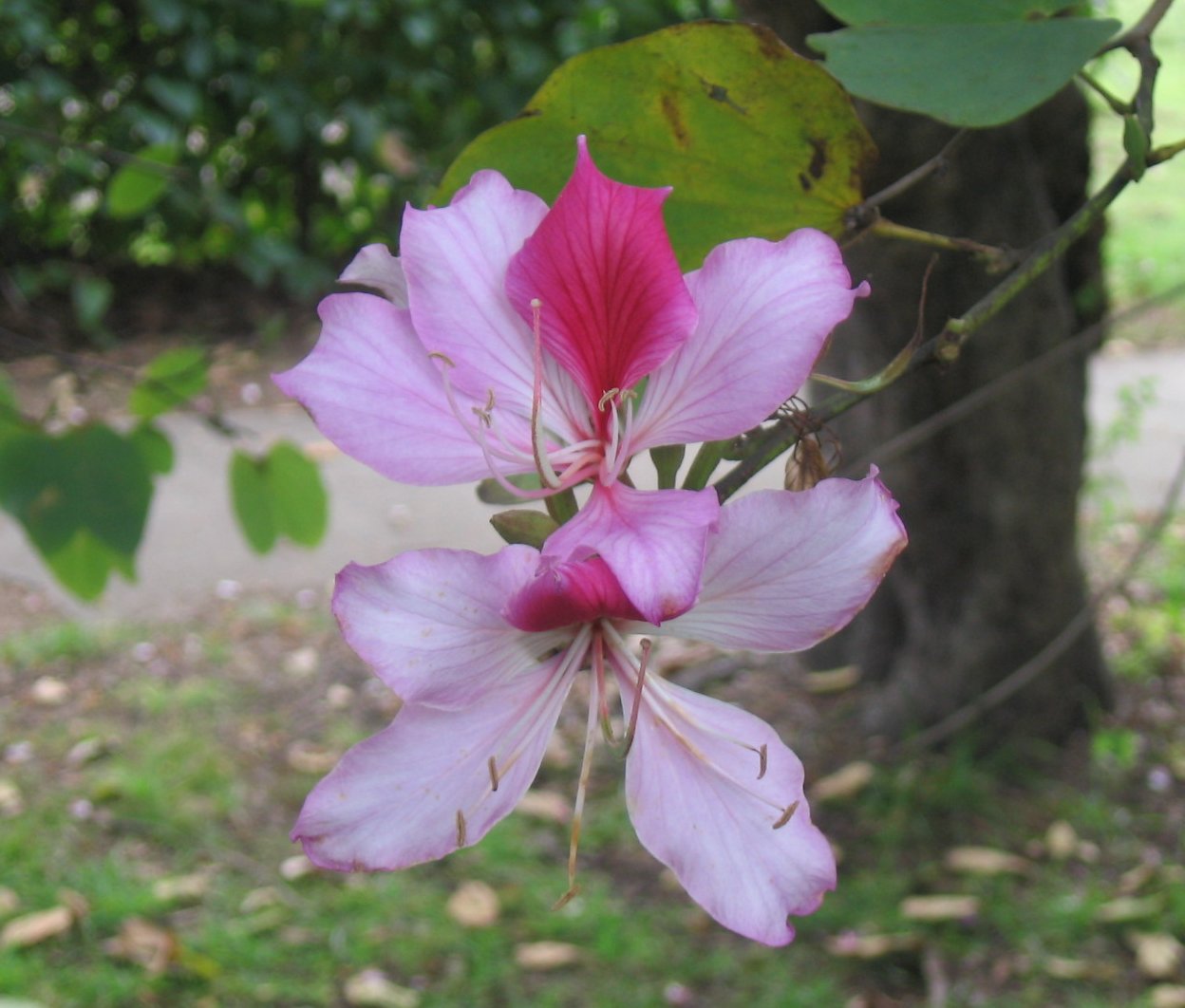
|
Dry forests in India |
Kukubha (ककुभ) |
Terminalia arjuna |
Arjuna |
Ramayan |
Bala Kanda Sarga 24 |
1.24.15 |
Malada and Karusha |
Indigenous in Africa and Indo-Malaysia region. Cultivated all over India |
|
Kurantaka (कुरण्टक) |
Barleria prionitis |
Hindi:Vajradanti, Koraanti-piwali, Katsareya |
Ramayan |
Kishkindha Kanda Sarga 1 |
4.1.80 |
Pampa Lake |
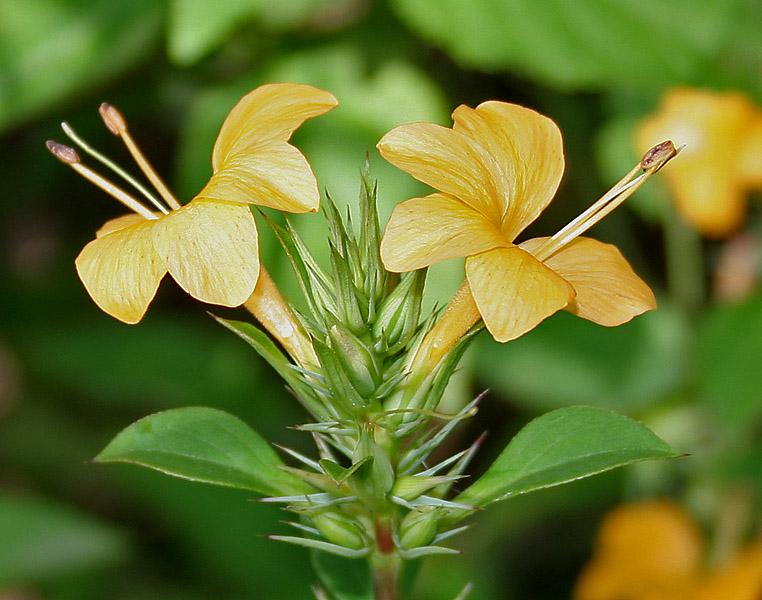
|
Occurs throuout the hotter parts of India. A common undershrub occasionally found wild but generally cultivated for hedge or ornamental purpose |
Kurvaka (कुरवक) |
Lawsonia inermis |
Hindi:Mehandi, Mendee English:Henna, Hina, Egyptian privet |
Ramayan |
Kishkindha Kanda Sarga 1 |
4.1.82 |
Pampa Lake |
It is native to tropical and subtropical regions of Africa, southern Asia, and northern Australasia in semi-arid zones. Cultivated and naturalized all over India for its leaves |
|
Kusha (कुश) |
Desmostachya bipinnata |
Darbha, Kusha |
Ramayan |
Aranya Kanda Sarga 15 |
3.15.22 |
Panchavati |
A tall tufted perennial grass |
Throughout India in hot and dry places |
Kūṭaśālmalī (कूटशाल्मली) |
Ceiba pentandra |
Kapok tree |
Ramayan |
Kishkindha Kanda Sarga 40 |
4.40.39 |
Eastern side of the Jambudvipa |
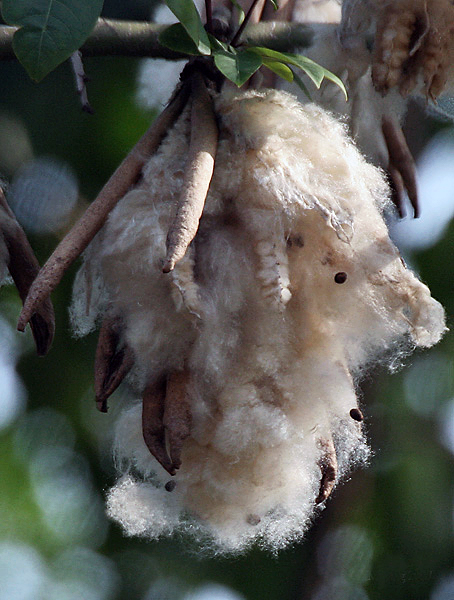
|
Native to Mexico, Central America and the Caribbean, northern South America, and (as the variety C. pentandra var. guineensis) to tropical west Africa. |
Lakuch (लकुच) |
Artocarpus hirsutus |
Hindi: Vadahar, English:Wild jack, Malayalam :Ayani, Aanjili |
Ramayan |
Aranya Kanda Sarga 15 |
3.15.18 |
Panchavati |
An evergreen tall tree |
In evergreen forests of Western Ghats, also cultivated for timber |
Lodhra (लोध्र) |
Symplocos racemosa |
Indian:Lodhra, Lodh, English:Lodhra tree, Cinchona |
Ramayan |
Kishkindha Kanda Sarga 1 |
4.1.79 |
Pampa Lake |
A middle sized evergreen tree or shrub |
China, South Asia, Throughout N.E.India, Occasionally in Konkan along river sides and hill slopes |
Lodhra (लोध्र) |
Symplocos racemosa |
Indian:Lodhra, Lodh, English:Lodhra tree, Cinchona |
Ramayan |
Kishkindha Kanda Sarga 43 |
4.43.13 |
Himalayas |
A middle sized evergreen tree or shrub |
China, South Asia, Throughout N.E.India, Occasionally in Konkan along river sides and hill slopes |
List of Plants M-Z in Ramayana
Sanskrit name of plant (Devanagari) |
Botanical name |
Indian names |
Indian epic |
Sarga |
Shloka |
Location in epics |
Habit |
Present Habitat |
|---|---|---|---|---|---|---|---|---|
Mādhavi (माधवी) |
Gaertnera racemosa |
Indian:Vāsantī, Madhumalati, Haladvel, Madahavilataa |
Ramayan |
Kishkindha Kanda Sarga 1 |
4.1.77 |
Pampa Lake |
A large handsome evergreen climbing shrub |
Found throughout the warmer parts of Maharashtra, Konkan, Karnataka, and other parts of India |
Madhuka (मधूका) |
Madhuca indica |
Mahuwa, Oriya: Mahuli (ମହୁଲି) |
Ramayan |
Aranya Kanda Sarga 11 |
3.11.74 |
Agastya’s hermitage |
Found largely in the central and north Indian plains and forests, forests of western India, and Konkan |
|
Madhūka (मधूका) |
Madhuca indica |
Mahuwa |
Ramayan |
Kishkindha Kanda Sarga 1 |
4.1.78 |
Pampa Lake |
||
Mālatī (मालती) |
Jasminum sambac |
Common names include Arabian Jasmine, Full (فل) (Arabic),Jaai/( ଜାଇ) (Oriya), Bel/Beli (Bengali), Mogra (Hindi and Marathi), Mallikā (Sanskrit), Kampupot, Melati (Malay and Indonesian Language), Sampaguita (Filipino), Mallepuvvu (Telugu), Mallikaipu (Tamil), dundu Mallige (Kannada) and Kaliyan (Urdu). |
Ramayana |
Kishkindha Kanda Sarga 1 |
4.1.76 |
Pampa Lake |
Native to southeast and southern Asia, in Indonesia, the Philippines, India, Myanmar and Sri Lanka. |
|
Malati (मालती) |
Jasminum grandiflorum |
Indian: Chameli, Jati, English:Common Jasmine, Spanish Jasmine |
Ramayana |
Kishkindha Kanda Sarga 1 |
4.1.76 |
Pampa Lake |
Native of N.H. Himalayas, wildly grown throughout India |
|
Mallikā (मल्लिका) |
Jasminum grandiflorum |
Chameli |
Ramayana |
Kishkindha Kanda Sarga 1 |
4.1.76 |
Pampa Lake |
a scandent or sub-erect woody perennial shrub |
Cultivated as an ornamental shrub throughout India |
Muchukunda (मुचुकुंद) |
Pterospermum suberifolium |
Indian:Muchukunda, Muchakunda |
Ramayan |
Kishkindha Kanda Sarga 1 |
4.1.81 |
Pampa Lake |
A small to medium size tree |
Found in forests of Karnataka and Tamil Nadu |
Nāga (नाग) |
Mesua ferrea |
Indian:Nāgachampa, Naagakeshara, Naagachaafaa, English:Mesua, Ceylon ironwood, Indian rose chestnut, Cobra's saffron or locally, Penaga Lilin, Na (Sinhalese) or Nahar/Nahor |
Ramayan |
Kishkindha Kanda Sarga 1 |
4.1.78 |
Pampa Lake |
It is native to tropical Sri Lanka but also cultivated in southern Nepal, Indochina, and the Malay Peninsula. Found in Assam, eastern Himalayas, West Bengal, eastern and Western Ghats. |
|
Nāga (नाग) |
Mesua ferrea |
Nāgachampa |
Ramayan |
Kishkindha Kanda Sarga 1 |
4.1.83 |
Pampa Lake |
||
Nāga (नाग) |
Mesua ferrea |
Nāgachampa |
Ramayan |
Aranya Kanda Sarga 73 |
3.73.4 |
Matanga hermitage |
||
Naktamāla (नक्तमाल) |
''Pongamia pinnata |
Indian:Karanja, kiramal, Kidamar, English: Indian beech, Pongamia oil tree |
Ramayan |
Kishkindha Kanda Sarga 1 |
4.1.82 |
Pampa Lake |
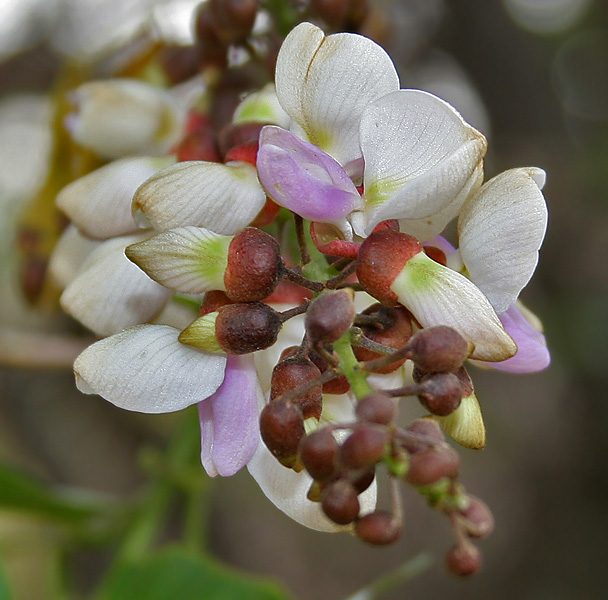
|
Originated in India and is found throughout Asia. native of western ghats. Found all over India on banks of rivers and streams |
Naktamāla (नक्तमाल) |
Pongamia pinnata |
Karanj |
Ramayan |
Aranya Kanda Sarga 73 |
3.73.4 |
Matanga hermitage |
||
Nārikela (नारिकेल) |
Cocos nucifera |
Coconut Palm |
Ramayan |
Kishkindha Kanda Sarga 42 |
4.42.11 |
Cities Murachi, Jatapura, Avanti and Angalepa |
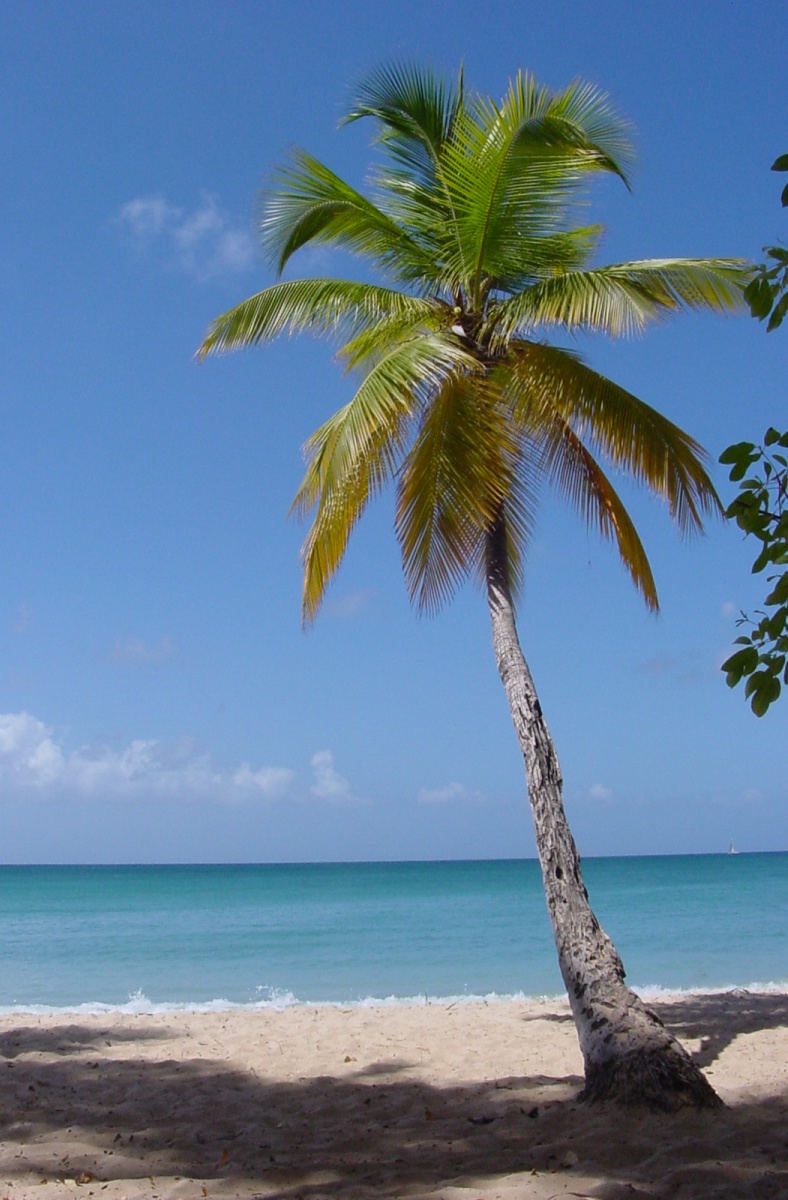
|
Throughout the tropics |
Nīla (नील) |
Ficus bengalensis |
Plaksha, Bengal fig, Indian fig, East Indian fig, Indian Banyan or simply Banyan, also borh, nyagrodha and wad or Vad/Vat |
Ramayan |
Kishkindha Kanda Sarga 1 |
4.1.79 |
Pampa Lake |
Endemic to Bangladesh, India and Sri Lanka. Found in Sub-Himalayas tract abd western peninsula, planted elsewhere. |
|
Nīla (नील) |
Ficus bengalensis |
Banyan |
Ramayan |
Aranya Kanda Sarga 73 |
3.73.4 |
Matanga hermitage |
||
Nīpa (नीप) |
Barringtonia racemosa |
Indian:Samudraphalla, sadphali, Nivar, English:Small Indian Oak |
Ramayan |
Aranya Kanda Sarga 15 |
3.15.18 |
Panchavati |
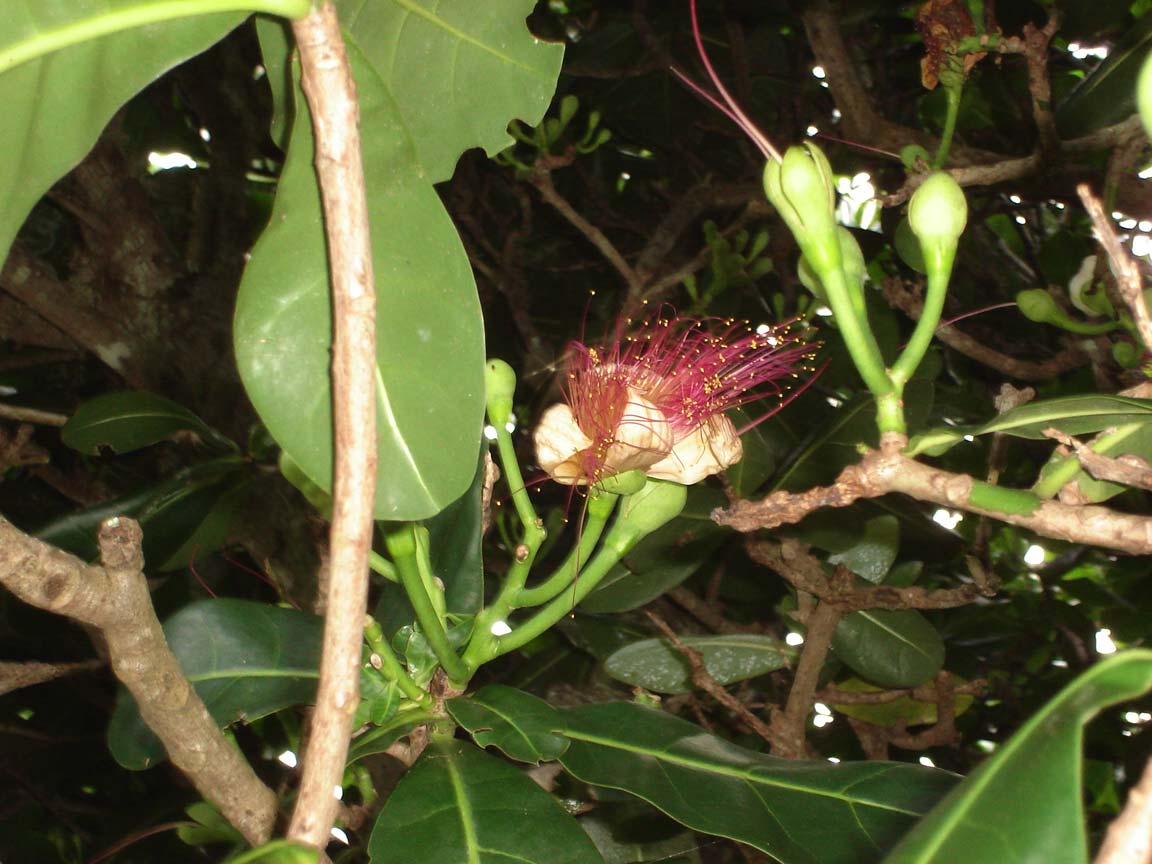
|
Western sea coast of India |
Nyagrodha (न्यग्रोध) |
''Ficus bengalensis |
Banyan |
Ramayan |
Aranya Kanda Sarga 73 |
3.73.3 |
Matanga hermitage |
||
Padma (पद्म) |
Nelumbo nucifera |
Hindi:Kamal, English:Indian lotus, sacred lotus, bean of India, or simply lotus |
Ramayana |
Kishkindha Kanda Sarga 1 |
4.1.76 |
Pampa Lake |
Native of China, Japan, and India. Grown throughout warmer parts of India |
|
Padmaka (पद्मक) |
Prunus cerasoides |
Himalayan wild cherry |
Ramayan |
Kishkindha Kanda Sarga 1 |
4.1.79 |
Pampa Lake |
Found in East Asia.Its range extends in the Himalayas from Himachal Pradesh in India to southwest China and Burma. |
|
Padmaka (पद्मक) |
Prunus cerasoides |
Himalayan wild cherry |
Ramayan |
Kishkindha Kanda Sarga 43 |
4.43.13 |
Himalayas |
Found in East Asia.Its range extends in the Himalayas from Himachal Pradesh in India to southwest China and Burma. |
|
Panasa (पनस) |
''Artocarpus heterophyllus |
Indian:Hindi: Kat-hal (कटहल), Oriya: Panasa(ପଣସ), Phannasa, English: Jack-fruit |
Ramayan |
Aranya Kanda Sarga 11 |
3.11.74 |
Agastya’s hermitage |
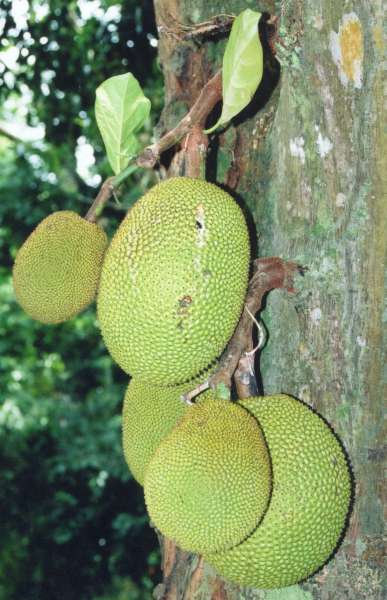
|
Native to parts of South and Southeast Asia. Indigenous to India, grows wild in Western Ghats. |
Panasa (पनस) |
''Artocarpus heterophyllus |
Jackfruit |
Ramayan |
Aranya Kanda Sarga 15 |
3.15.16 |
Panchavati |
||
Panasa (पनस) |
''Artocarpus heterophyllus |
Jackfruit |
Ramayan |
Aranya Kanda Sarga 73 |
3.73.3 |
Matanga hermitage |
||
Paribhadraka (परिभद्रक) |
Erythrina indica |
Indian:Pāngārā, Dadap, Mandar, Ferrud, Panara, English:Tiger's Claw, Indian Coral Tree and Sunshine Tree |
Ramayan |
Aranya Kanda Sarga 73 |
3.73.5 |
Matanga hermitage |
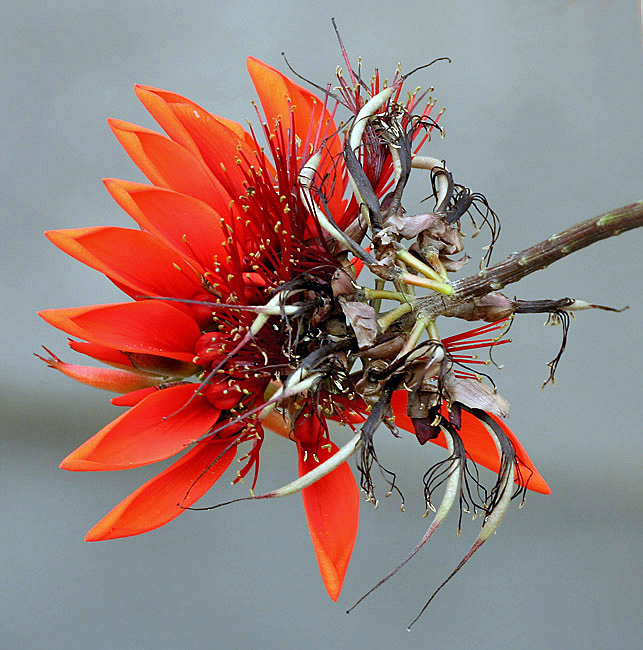
|
Wild in deciduous forests throughout India. Native to the tropical and subtropical regions of eastern Africa, southern Asia, northern Australia, and the islands of the Indian Ocean and the western Pacific Ocean east to Fiji. |
Pāribhadraka (पारिभद्रक) |
Erythrina indica |
Pāngārā |
Ramayan |
Kishkindha Kanda Sarga 1 |
4.1.80 |
Pampa Lake |
||
Parnasa (पर्णास) |
Ocimum sanctum |
Tulasī (तुलसी) in Sanskrit,(तुलसी) in Nepali, (ତୁଳସୀ/Tul`asi) in Oriya, (তুলসী) in Bengali, (तुळस) in Marathi, (तुलसी) in Hindi, tulasi (తులసి) in Telugu, (തുളസി) in Malayalam, (துளசி) in Tamil, (ತುಳಸಿ) in Kannada, Maduruthala in Sinhalese |
Ramayan |
Aranya Kanda Sarga 15 |
3.15.18 |
Panchavati |
Tulsi is native throughout the Old World tropics and widespread as a cultivated plant and an escaped [...].cultivated throughout India. |
|
Pāṭalā (पाटला) |
Stereospermum chelonoides |
Indian :Padhala, Adakapari, Padari, Paral, Kirsel, Koosga, Tuatuka, English:Trumpet flower, Yellow snake tree, Malayalam : Patiri, Poopatiri |
Ramayan |
Kishkindha Kanda Sarga 1 |
4.1.80 |
Pampa Lake |
A large deciduous tree |
Throughout India, growing in deciduous forests. Konkan on slopes of hills, in moist deciduous or evergreen forests |
Pāṭalā (पाटला) |
''Stereospermum chelonoides |
Padari |
Ramayan |
Aranya Kanda Sarga 15 |
3.15.18 |
Panchavati |
||
Pāṭalā (पाटला) |
''Stereospermum chelonoides |
Padari |
Ramayan |
Bala Kanda Sarga 24 |
1.24.15 |
Malada and Karusha |
||
Pippali (पिप्पली) |
Piper longum |
Indian:Pimpalli, Pipal, Pipli, Piplamul, English:Indian long peppere, Javanese, Indian or Indonesian Long Pepper |
Ramayan |
Aranya Kanda Sarga 11 |
3.11.74 |
Agastya’s hermitage |
Hotter parts of India |
|
Plaksha (प्लक्ष) |
Ficus religiosa |
Hindi: Pakar, Malayalam : Ithi, English: Sacred fig, Fig tree |
Ramayan |
Aranya Kanda Sarga 73 |
3.73.3 |
Matanga hermitage |
Native to India, Nepal, Sri Lanka, southwest China and Indochina east to Vietnam. |
|
Priyāla (प्रियाल) |
Buchanania lanzan |
Hindi: Chironji (चिरौन्जी), Oriya-Westren- Chanhar(ଚାଂହାର), Piyal, Achar, Marathi: चारोळी, English:Almondi tree |
Ramayan |
Aranya Kanda Sarga 73 |
3.73.3 |
Matanga hermitage |
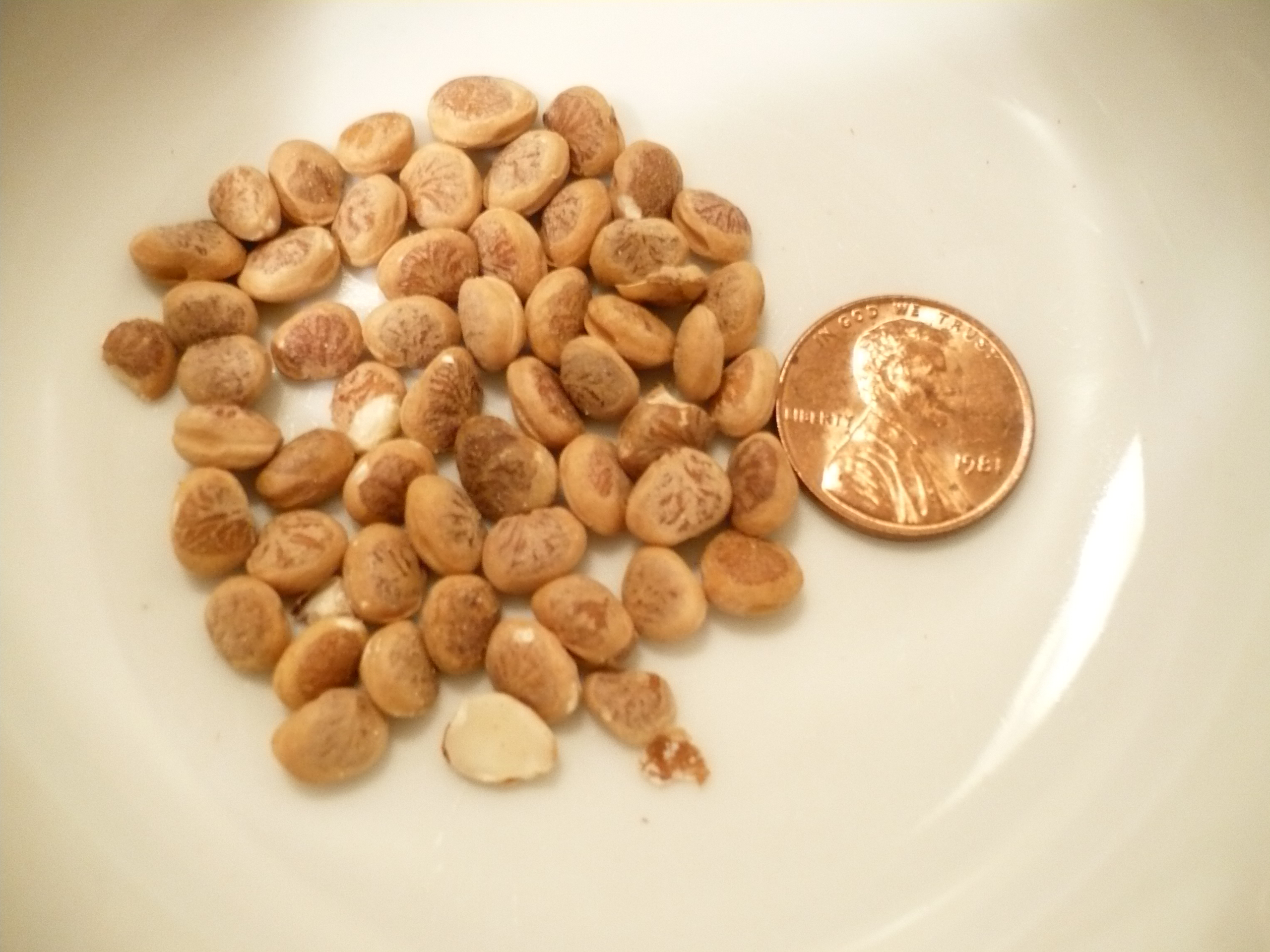
|
Common throughout India in dry or moist deciduous forests or in semi evergreen forests |
Punnāga (पुन्नाग) |
Calophyllum inophyllum |
Indian:Undi, Undala, Unang, Surangi, Surpunka, Sultan champa, English: Alexandrian Laurel, Tamil:Pinnai |
Ramayan |
Aranya Kanda Sarga 15 |
3.15.16 |
Panchavati |
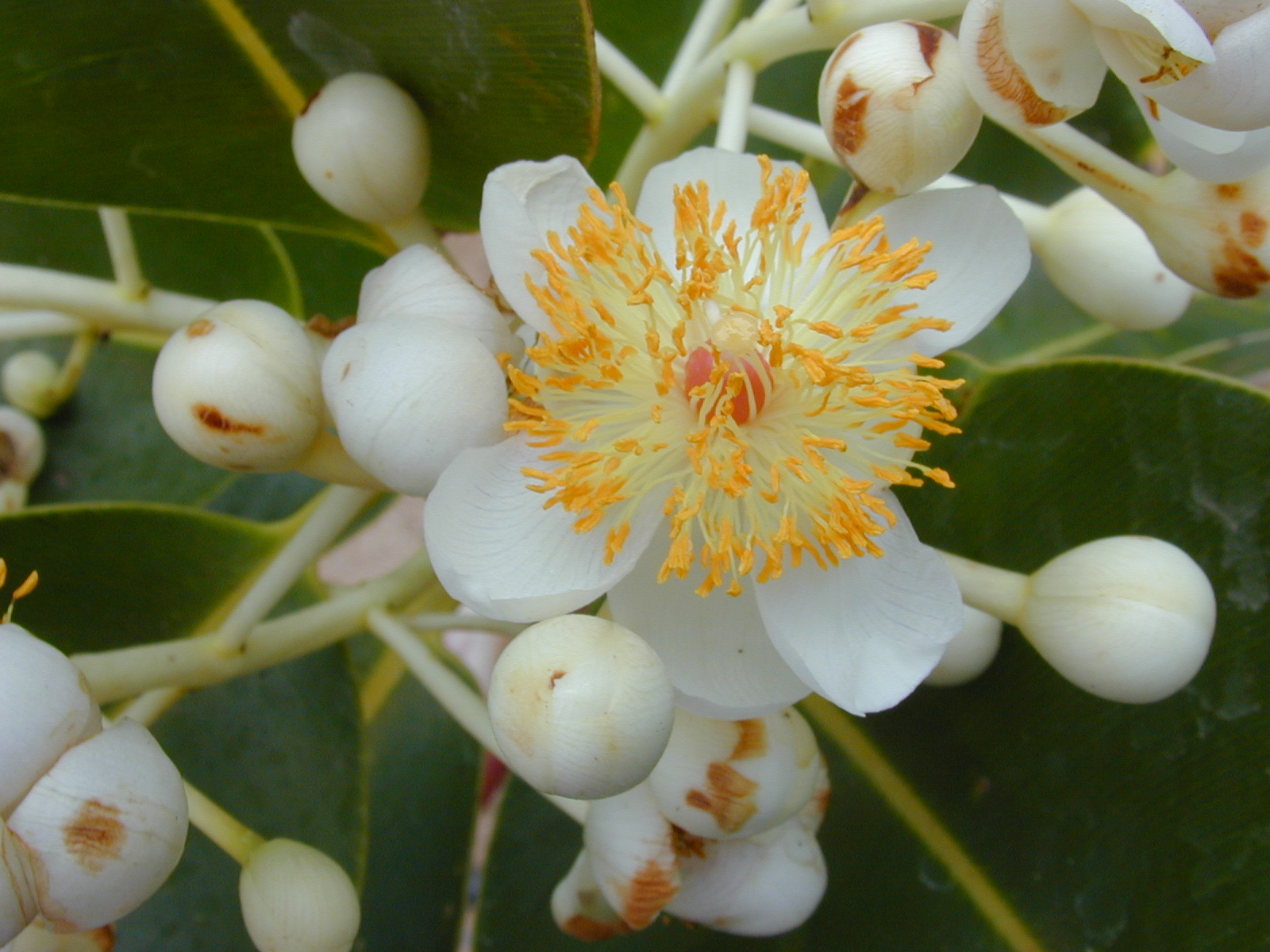
|
It is native from East Africa, southern coastal India to Malesia and Australia. Coastal regions and littoral forest of India and grown as an ornamental tree. |
Punnāga (पुन्नाग) |
Calophyllum inophyllum |
- |
Ramayan |
Kishkindha Kanda Sarga 42 |
4.42.7 |
Surashtra, Bahlika and Chandrachitra provinces |
- |
- |
Pūrnaka (पूर्णक) |
NA |
NA |
Ramayan |
Kishkindha Kanda Sarga 1 |
4.1.80 |
Pampa Lake |
||
Raktā रक्ता |
Rubia cordifolia |
Indian Madder |
Ramayan |
Kishkindha Kanda Sarga 1 |
4.1.82 |
Pampa Lake |
Throughout India in hilly districts, Konkan |
|
Sāla (साल) |
Vateria indica |
Hindi:Dhupa, Ralla English:Indian Copal, White dammar, Piney varnish, Kannada: ಧೂಪದ ಮರ |
Ramayan |
Aranya Kanda Sarga 11 |
3.11.74 |
Agastya’s hermitage |
Western India, chiefly in evergreen forests, but also occasionally along rivers in deciduous forests |
|
Sala (साल) |
Vateria indica |
- |
Ramayan |
Aranya Kanda Sarga 15 |
3.15.16 |
Panchavati |
||
Sala (साल) |
Vateria indica |
- |
Ramayan |
Kishkindha Kanda Sarga 40 |
4.40.56 |
Udaya Mountain |
||
Śalmalī (शाल्मली) |
''Bombax ceiba |
Indian:Semal (सेमल), Shaalmali, kaantisenbal, huttian, laala-saanwar, Kate-sawar, Nurma, Deokapaas, Shimal, Savari, Shembal English:cotton tree or tree cotton |
Ramayan |
Kishkindha Kanda Sarga 1 |
4.1.82 |
Pampa Lake |
Throughout hotter parts of India. The tree is widely planted in Malay, Indonesia, south China, Hong Kong and Taiwan. |
|
Shami (शमी) |
''Prosopis cineraria |
Ghaf (United Arab Emirates), Khejri, Jant/Janti, Sangri (Rajasthan), jand (Punjabi), kandi (Sind), Banni (Kannada), Vanni (Tamil), sami, sumri (Gujarat). |
Ramayan |
Aranya Kanda Sarga 15 |
3.15.18 |
Panchavati |
Occurs in the dry and arid regions of India. It is one of the chief indigenous trees of the plains of the Punjab, Western Rajasthan, Gujarat, Bundelkhand, Delhi, Agra, dry parts of Central and Southern India, Maharashtra (near Nasik), Andhra Pradesh, Karnataka (south of Godavari). Occurs in Pakistan, Afghanistan and Iran. |
|
Shamī (शमी) |
''Prosopis cineraria |
Khejdi |
Ramayan |
Aranya Kanda Sarga 15 |
3.15.22 |
Panchavati |
||
Sanjīvanī (संजीवनी) |
''Selaginella bryopteris |
Sanjīvanī |
Ramayan |
Yuddha Kanda Sarga 89 |
6.89.16 |
Mt. Dronagiri (Himalayas) |
Grows on the hills of tropical areas, particularly the Arawali mountain terrains from east to west in India. |
|
Śimśupa (शिंशुप) |
''Dalbergia latifolia |
sanskrit:Simsipa, Sinsipa, Krishnasara, Gurusara, Krishnasimsapa, English : Rose wood, Indian rose wood, Black wood Hindi : Shisham, Sitsal, Malayalam : Eeti, Kariveeti, Veeti |
Ramayan |
Kishkindha Kanda Sarga 1 |
4.1.81 |
Pampa Lake |
A large sized tree |
Growing naturally in wet deciduous forests of Himachal Pradesh, Madhya Pradesh and Kerala, in India. |
Sindhuvara (सिन्धुवार) |
Vitex negundo |
English: Five-leaved chaste tree, Hindi: Nirgundi, Nirguddi, Sambhalu, Shivari, Nisida, Nigudi |
Ramayan |
Kishkindha Kanda Sarga 1 |
4.1.77 |
Pampa Lake |
Throughout India in warmer zones |
|
Śiriśa (शिरीष) |
Albizzia lebbeck |
Indian:Siras, Shirisha, Kala-siris, Chichola, Chichwa |
Ramayan |
Kishkindha Kanda Sarga 1 |
4.1.81 |
Pampa Lake |
A large, erect, unarmed deciduous, spreading tree |
A road-side tree common throughout India |
Supuṣpī (सुपुष्पी) |
''Clitoria ternatea |
English: Butterfly pea, blue pea vine, mussel-shell climber, pigeon wings, Aparājitā(ଅପରାଜିତା) in Oriya, Bengali/ Hindi:Aparājitā, Malayalam:Sankhupushpam, ശംഖുപുഷ്പം, Marathi:Gokarna, Sanskrit:Aparajita, saukarnika, ardrakarni, girikarnika, supuspi, mohanasini, vishadoshaghni, Tamil:Sangu pu |
Ramayan |
Kishkindha Kanda Sarga 1 |
4.1.77 |
Pampa Lake |
A common garden plant;also occurs among hedges all over India. Native to tropical equatorial Asia, but has been introduced to Africa, Australia and the New World. |
|
Surakta (सुरक्त) |
Pterocarpus santalinus |
English:Red sandalwood, Red Sanders, Indian: Rakta chandana, Laal chandan |
Ramayan |
Aranya Kanda Sarga 73 |
3.73.5 |
Matanga hermitage |
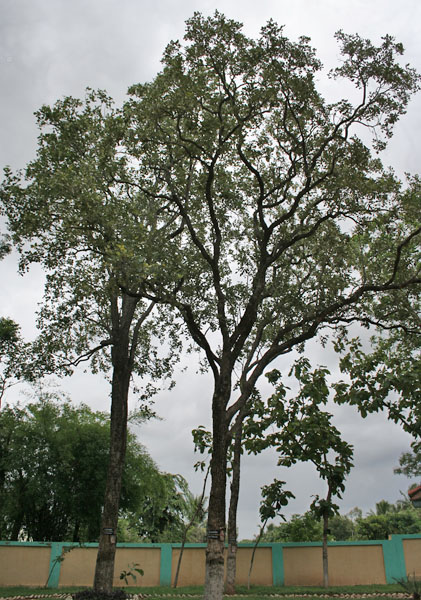
|
It is mainly found in south India particularly in Kadapa and Chittoor on the Tamil Nadu and Andhra Pradesh border and neighbouring areas of Karnataka, Tamil Nadu and Maharashtra. |
Syandana (स्यंदन) |
Lagerstroemia speciosa |
English: Queen crape, Myrtle, Pride of India, Indian: Taaman, Jarul, Mota-bondara |
Ramayan |
Kishkindha Kanda Sarga 1 |
4.1.82 |
Pampa Lake |
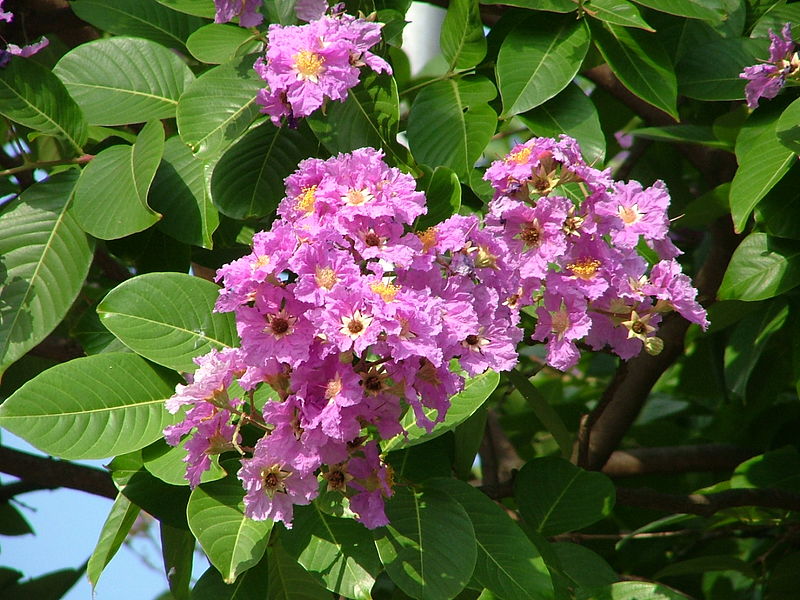
|
It is grown in South East Asia, India and the Philippines. It is also widely cultivated as an ornamental plant in tropical and subtropical areas. In India found in Western and Eastern Ghats; Assam; Chittagong, Chota Nagpur. |
Syandana (स्यंदन) |
Lagerstroemia speciosa |
Ramayan |
Aranya Kanda Sarga 15 |
3.15.18 |
Panchavati |
|||
Tāla (ताल) |
Borassus flabellifer |
English: Asian palmyra palm, Toddy palm, Sugar palm, Cambodian palm, Palmyra, Ice-apple, Indian: Taad (ताड), Tala ( ତାଳ) (Oriya), Tari (Hindi), Tal (Bengali), Nungu (Tamil), Thaati/Munjalu (Telugu), Munjal (Urdu), Tnaot (Khmer), Lontar(Indonesian), Akadiru (East Timorese), Tao (Divehi), Tadfali (Gujarati), Targula (Konkani) . |
Ramayan |
Aranya Kanda Sarga 15 |
3.15.16 |
Panchavati |
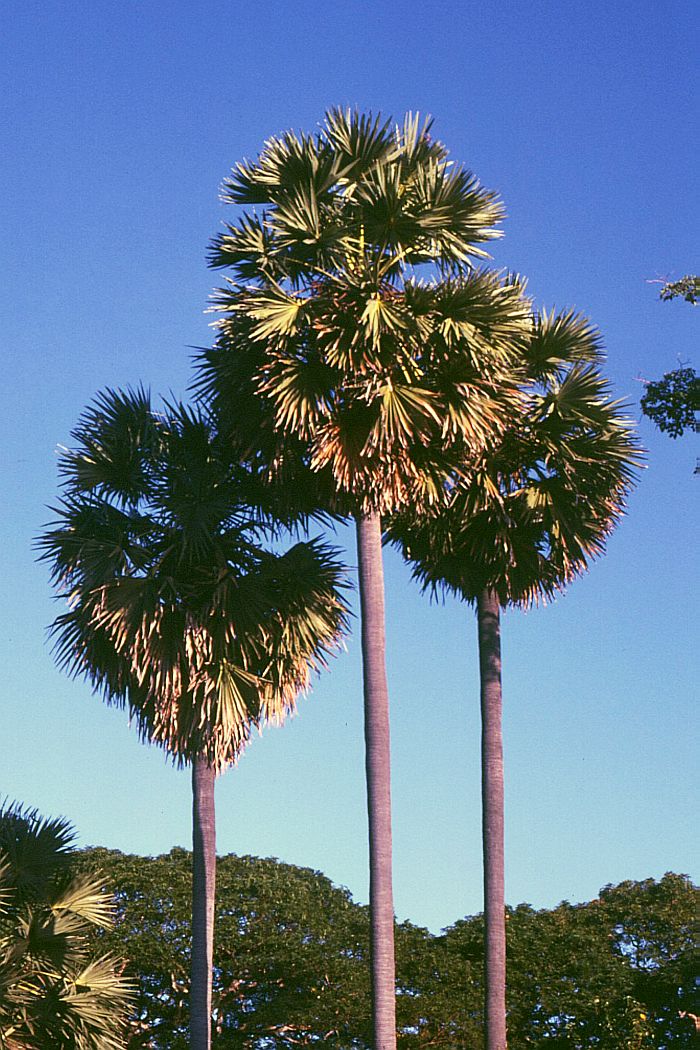
|
Grows all over the country. It is also common in Thailand, especially in the northeast or Isaan province. |
Tāla (ताल) |
Borassus flabellifer |
Ramayan |
Kishkindha Kanda Sarga 40 |
4.40.53/56 |
Udaya Mountain |
- |
- |
|
Tāla (ताल) |
Borassus flabellifer |
Ramayan |
Kishkindha Kanda Sarga 42 |
4.42.46 |
Between Mt. Meru and Mt. Astaadri |
- |
- |
|
Tamāla (तमाल) |
''Garcinia hanburyi |
Indian:Tamal, English:Gambojia, Gamboge, Indian Gamboge tree |
Ramayan |
Aranya Kanda Sarga 15 |
3.15.16 |
Panchavati |
A small or middle sized evergreen tree |
Siam, Cochin, China, In the evergreen forests of Assam and Khasi hills |
Tamāla (तमाल) |
Garcinia hanburyi |
- |
Ramayan |
Kishkindha Kanda Sarga 40 |
4-40-56 |
Udaya Mountain |
- |
|
Tamāla (तमाल) |
Garcinia hanburyi |
- |
Ramayan |
Kishkindha Kanda Sarga 42 |
4.42.11 |
Cities Murachi, Jatapura, Avanti and Angalepa |
- |
- |
Tilaka (तिलक) |
Cinnamomum iners |
English :cassia bark, Cinnamum, Hindi :Daalachini, Tejpat, Tamaal saala |
Ramayan |
Kishkindha Kanda Sarga 1 |
4.1.78 |
Pampa Lake |
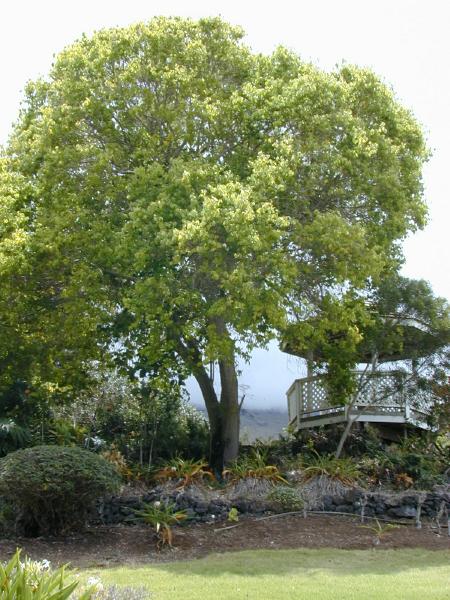
|
Cultivated in India, Found in Burma and China. |
Tilaka (तिलक) |
Cinnamomum iners |
- |
Ramayan |
Kishkindha Kanda Sarga 1 |
4.1.83 |
Pampa Lake |
||
Tilaka (तिलक) |
Cinnamomum iners |
- |
Ramayan |
Aranya Kanda Sarga 15 |
3.15.17 |
Panchavati |
||
Tilaka (तिलक) |
Cinnamomum iners |
- |
Ramayan |
Aranya Kanda Sarga 73 |
3.73.4 |
Matanga hermitage |
||
Tinduka (तिन्दुक) |
''Diospyros melanoxylon |
English:Indian persimon, Indian: Tendu, Gabh, Tedu, Tembhurnnee, Tenddu, Timburi, Oriya: Kendu (କେନ୍ଦୁ) |
Ramayan |
Aranya Kanda Sarga 11 |
4.11.74 |
Agastya’s hermitage |
A middle sized evergreen tree |
Throughout India. |
Tinduka (तिन्दुक) |
''Diospyros melanoxylon |
Tendu |
Ramayan |
Bala Kanda Sarga 24 |
1.24.15 |
Malada and Karusha |
||
Tinduka (तिन्दुक) |
''Diospyros melanoxylon |
Tendu |
Ramayan |
Aranya Kanda Sarga 73 |
3.73.3 |
Matanga hermitage |
||
Tiniśa (तिनिश) |
Lagerstroemia speciosa |
English: Queen crape, Myrtle, Pride of India, Indian: Taaman, Jarul, Mota-bondara |
Ramayan |
Aranya Kanda Sarga 15 |
3.15.16 |
Panchavati |
|
It is grown in South East Asia, India and the Philippines. It is also widely cultivated as an ornamental plant in tropical and subtropical areas. In India found in Western and Eastern Ghats; Assam; Chittagong, Chota Nagpur. |
Tinisha (तिनिश) |
''Lagerstroemia speciosa |
- |
Ramayan |
Kishkindha Kanda Sarga 1 |
4.1.82 |
Pampa Lake |
|- Tinisha (तिनिश) |
|
Uddālaka (उद्दालक) |
Cordia myxa |
Indian:Lasora, Bhokara, Shelvant, English: Assyrian plum, Sebeston plum, Large sebestan |
Ramayan |
Kishkindha Kanda Sarga 1 |
4.1.81 |
Pampa Lake |
A medium-sized broad-leaved deciduous tree |
In the Indian subcontinent, it is seen coming up naturally and growing abundantly from Myanmar in the East to Afghanistan in the West |
Uddālaka (उद्दालक) |
Cordia myxa |
- |
Ramayan |
Kishkindha Kanda Sarga 42 |
4.42.7 |
Surashtra, Bahlika and Chandrachitra provinces |
- |
- |
Vakula (वकुल) |
Mimusops elengi |
Indian:Vakula, Bakulla, Maulsari, Ovalli |
Ramayan |
Kishkindha Kanda Sarga 1 |
4.1.78 |
Pampa Lake |
Found in tropical forests in South Asia, South east Asia & Northern Australia. In India found throughout in wet, damp and marshy areas |
|
Vakula (वकुल) |
Mimusops elengi |
- |
Ramayan |
Kishkindha Kanda Sarga 42 |
4.42.7 |
Surashtra, Bahlika and Chandrachitra provinces |
- |
- |
Vāsantī (वासन्ती |
''Hiptage benghalensis |
Indian:Vāsantī, Madhumalati, Haladvel, Madahavilataai |
Ramayan |
Kishkindha Kanda Sarga 1 |
4.1.77 |
Pampa Lake |
A large handsome evergreen climbing shrub |
Found throughout the warmer parts of Maharashtra, Konkan, Karnataka, and other parts of India |
Flora of Mahabharata epic
Legend of the Shami Tree
There is a little-known legend associated with Vijayadashami festival, one associated with the Mahabharata. For reasons impossible to delineate here, the Pandavas underwent a period of exile, being 12 years of dwelling in the forest followed by a year of exile incognito. Disguise being indispensable during the latter period, the Pandavas found it necessary to lay aside, for the length of that year, the many divine and distinctive weapons that they possessed such as Arjuna's Gandiva. These they secreted in a 'Shami' tree (Prosopis cineraria) in the vicinity of their chosen place of incognito residence. It is said that the Shami tree chosen by the Pandavas stood inside a cremation ground. It was chosen to render detection that much less likely. The Pandavas wrapped their weapons in a white cloth and concealed this on that shami tree, making the weapons look like a dead body. Mahabharata Book IV Virata Parva Chapter 5 mentions that on the southerns bank of River Yamuna in Viratanagara hides his bow Gandiva in Shami tree. That Shami tree was in the midst of an out-of-the way forest abounding in beasts and snakes, and was in the vicinity of a dreary cemetery. At the end of a year, they returned to the spot, found their weaponry intact, and worshipped in thanksgiving both the Shami tree and the Goddess Durga, presiding deity of strength and victory. Meanwhile, the Kauravas had invaded that area, suspecting the residence of the Pandavas there. Upon finishing their devotions, the Pandavas made straight to battle, and won the contest comprehensively. The day that all these events occurred on has since been known as "Vijayadashami", where "Vijaya" is the Sanskrit word for "Victory". The fact of the comprehensive success of the Pandavas in their endeavour has been extrapolated to the everyday ventures of the common man today. Even to this day, people exchange Shami leaves and wish each other victory in their own ventures and efforts.
Kuru- Jangla region
The historian K R Qanungo mentions incidence from Mahabharata that there is a town named Sakala and river named Apaga where section of the Bahikas, known as the Jartikas, dwell. He mentions about a Bahika who had to sojourn for a time in Kuru-jungal country sang the following song about the women of his country. He also mentions here three important tree species also:
- "Though a Bahika, I am at present an exile in Kuru-jangal country; that tall and fair-complexioned wife of mine, dressed in her fine blanket certainly remembers me when she retires to rest. Oh! when shall I go back to my country crossing again the Satadru (the Sutlej) and Iravati and see beautiful females of fair complexion, wearing stout bangles, dressed in blanket and skins, eye-sides coloured with dye of Manshila, forehead, cheek and chin painted wit collyrium (tatooing ?). When shall we eat under the pleasant shade of Shami (Prosopis cineraria), Peelu (Salvadora oleoides) and Karir (Capparis decidua), loaves and balls of fried barley powder with waterless churned curd (kunjik), and gathering strength, take away the clothes of the wayfarers and beat them?"
List of Plants A-L in Mahabharata
Sanskrit name of plant (Devanagari) |
Botanical name |
Indian names |
Indian epic |
Parvaa |
Shloka |
Location in epics |
Habit |
Present Habitat |
|---|---|---|---|---|---|---|---|---|
Amrataka आम्रातक |
Spondias pinnata |
English:Bile tree, Wild Mango, Hindi:Aambaada, Jungli Aam |
Mahabharata |
Shalya Parva |
IX.36.59 |
Sarasvati River |
A middle sized deciduous glabrous tree below 15 m. |
Common tree all over in wild as well as in cultivation |
Arimeda अरिमेद |
Acacia farnesiana |
Hindi:Devabaabhulla, Gandha babul, Kankar, Vilayati kikar, English:Needle Bush |
Mahabharata |
Drona Parva |
VII.153.24 |
Kurukshetra war |
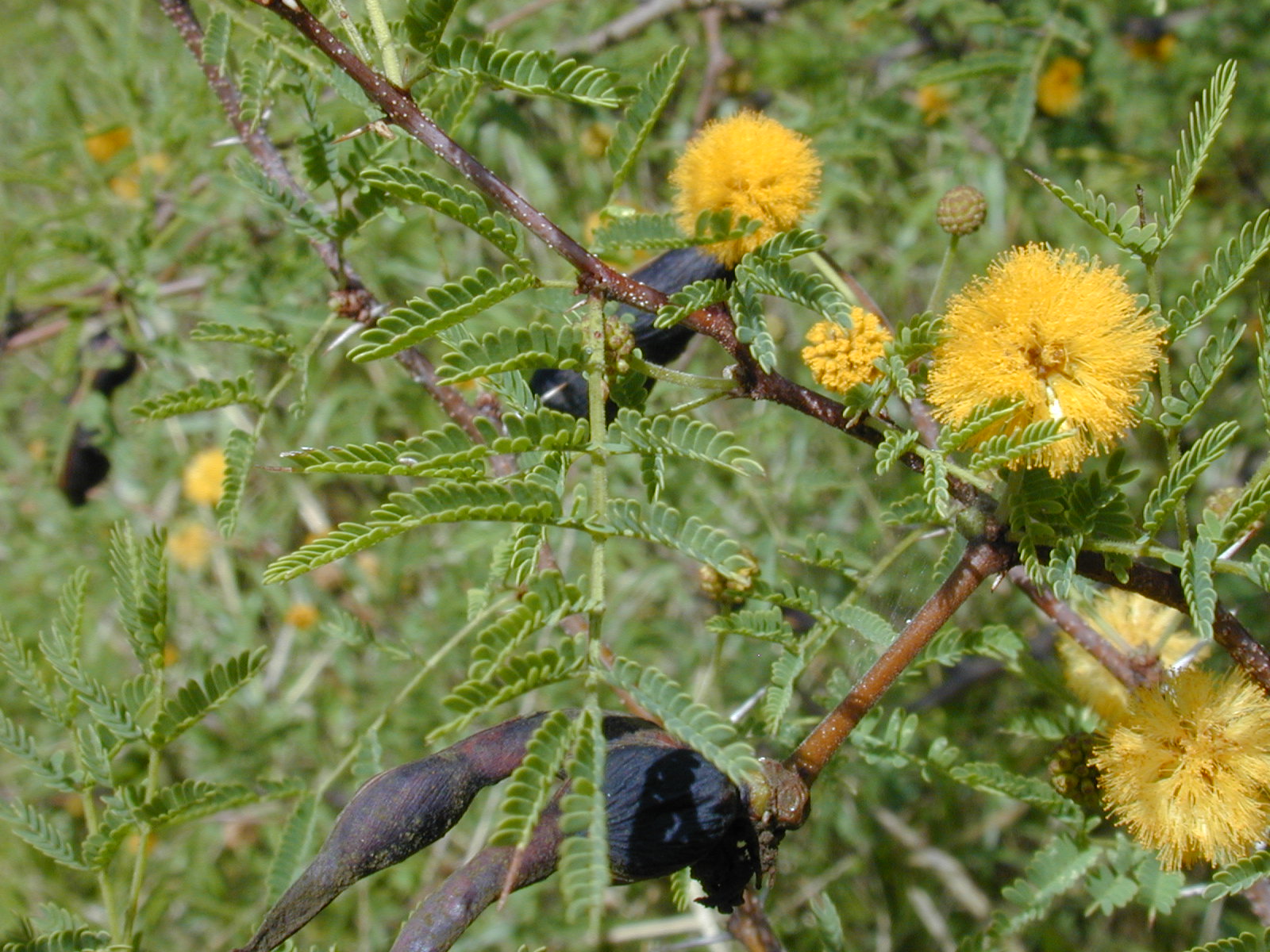
|
Native to Mexico and Central America, the species has a pantropical distribution incorporating Northern Australia and Southern Asia. Grown throughout India, often planted in gardens |
Ashtapadika आष्टापदिक |
''Vallaris dichotoma |
Padika, Bhardravalli, Bhadramunja |
Mahabharata |
Anusasana Parva |
XIII.54.6 |
King Kusika country on the banks of the Ganges belonging to the Gandharvas |
||
Asoka अशोक |
Saraca asoca |
Ashoka |
Mahabharata |
Anusasana Parva |
XIII.54.4 |
King Kusika country |
Cultivated ingargens throughout India |
|
Aswattha अश्वत्थ |
Ficus religiosa |
Pipal, Pimpalla, Bodhi |
Mahabharata |
Shalya Parva |
IX.3.58, XIII.4.27 |
Sarasvati River |
Sub-Himalayan forests, Bengal, Madhya Pradesh. Planted elsewhere |
|
Atimukta अतिमुक्तक |
Hiptage benghalensis |
Hindi:Madhumalati, Madhumaalati, Vāsantī, Haladvel, Madahavilataa |
Mahabharata |
Shalya Parva |
IX.36.60 |
Sarasvati River |
A large handsome evergreen climbing shrub |
Found throughout the warmer parts of Maharashtra, Konkan, Karnataka, and other parts of India |
Atimukta |
Hiptage benghalensis |
- |
Mahabharata |
Anusasana Parva |
XIII.54.4 |
King Kusika country |
- |
- |
Badari बदरी |
''Zizyphus mauritiana |
Indian: Ber, Bora |
Mahabharata |
Vana Parva |
III.174.23 |
Dvaita Forest, Kurukshetra Sarasvati River |
Common in hotter parts of India, cultivated in gardens or found wild in waste places |
|
Badari बदरी |
Zizyphus mauritiana |
Indian: Ber, Bora |
Mahabharata |
Drona Parva |
VII.153.24 |
Kurukshetra war |
- |
- |
Badari बदरी |
Zizyphus mauritiana |
Indian: Ber, Bora |
Mahabharata |
Shalya Parva |
IX.36.58 |
Sarasvati River |
- |
- |
Bhavya भव्य |
''Dillenia indica |
Sanskrit:Bhava, Bhavya, Bhavishya, Bhavan, Vaktrashodhan, Pichchilbeeja English:Sandpaper tree Hindi: Malayalam: Kudapunna, Pattipunna, Neitekku, Bengali:chalta, Assamese:outenga |
Mahabharata |
Anusasana Parva |
XIII.54.5 |
King Kusika country |
Throughout India growing wild, Native to southeastern Asia, from India, Bangladesh and Sri Lanka east to southwestern China (Yunnan) and Vietnam, and south through Thailand to Malaysia and Indonesia |
|
Bilva बिल्वा |
Aegle marmelos |
Bel |
Mahabharata |
Vana Parva |
III.174.23 |
Dvaita Forest, Kurukshetra Sarasvati River |
|
Indigenous central and southern India, Nepal, Sri Lanka, Myanmar, Pakistan, Bangladesh, Vietnam, Laos, Cambodia and Thailand. It is cultivated throughout India, Sri Lanka, Malay Peninsula, Java and Philippines. |
Bilwa |
Aegle marmelos |
- |
Mahabharata |
Shalya Parva |
IX.3.59 |
Sarasvati River |
- |
- |
Champaka चम्पक |
''Michelia champaca |
Champa |
Mahabharata |
Anusasana Parva |
XIII.54.5 |
King Kusika country |
Native to South Asia and Southeast Asia. |
|
Champaka चम्पक |
''Michelia champaca |
- |
Mahabharata |
Drona Parva |
VII.153.24 |
Kurukshetra war |
- |
- |
Dhava धव |
Anogeissus latifolia |
Hindi: Dhavda, Bakli , Dhau , Dhawa, Dhawra, Dhaora English: Axlewood, Thai:Takhian-nu, Vietnamese:Raam |
Mahabharata |
Anusasana Parva |
XIII.54.4 |
King Kusika country |
A small to medium-sized tree |
Native to the India, Nepal, Myanmar, and Sri Lanka |
Inguda इङ्गुद |
''Balanites roxburghii |
English:Desert date, Indian:Hinganbet, Ingudi, Hingoli, Hingun |
Mahabharata |
Shalya Parva |
IX.36.58 |
Sarasvati River |
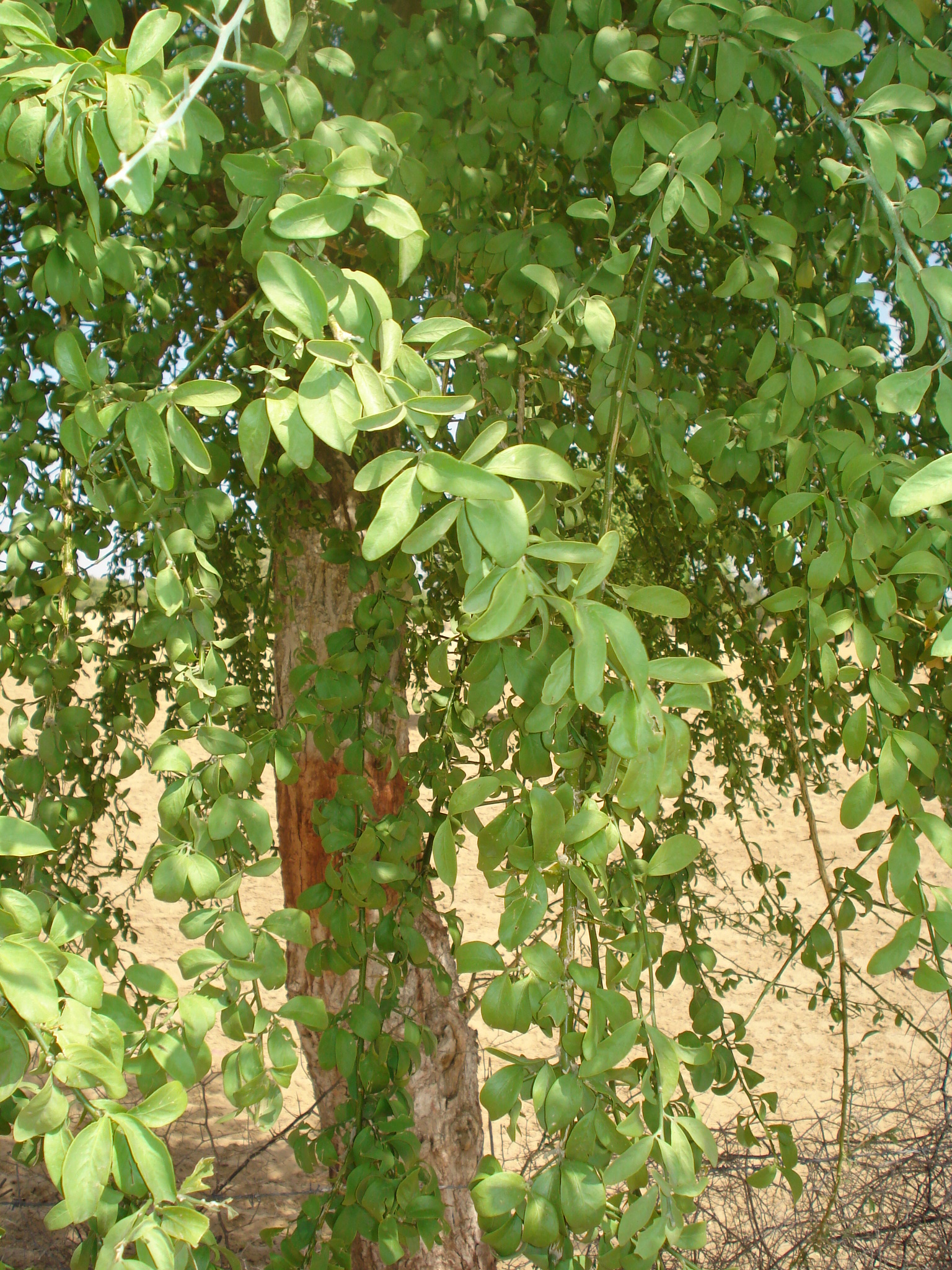
|
Common in open sandy plains of Indian peninsula, western Rajasthan, west Bengal, Maharashtra and drier parts of India |
Inguda इङ्गुद |
''Balanites roxburghii |
- |
Mahabharata |
Vana Parva |
III.174.23 |
Dvaita Forest, Kurukshetra Sarasvati River |
- |
- |
Ingudi इङ्गुद |
''Balanites roxburghii |
- |
Mahabharata |
Drona Parva |
VII.153.24 |
Kurukshetra war |
- |
- |
Karira करीर |
Capparis decidua |
kerda, kair, karir, kirir, karril |
Mahabharata |
Shalya Parva |
IX.36.58 |
Sarasvati River |
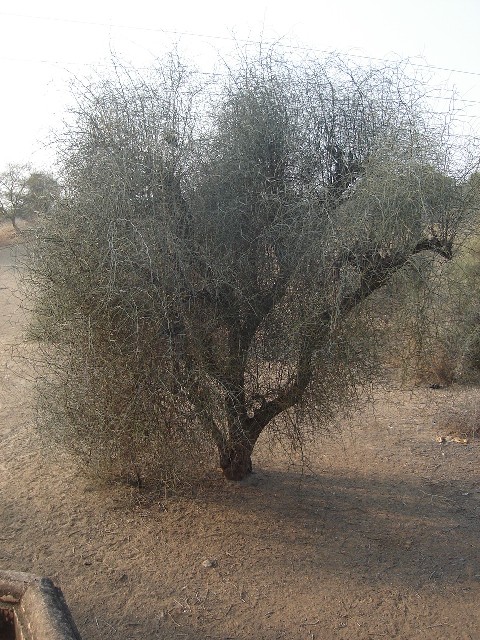
|
arid regions in Africa, Middle East and southern Asia, including the Thar desert. |
Karira करीर |
Capparis decidua |
- |
Mahabharata |
Vana Parva |
III.174.23 |
Dvaita Forest, Kurukshetra Sarasvati River |
- |
- |
Karira करीर |
Capparis decidua |
- |
Mahabharata |
Drona Parva |
VII.153.24 |
-Kurukshetra war- |
||
Karira करीर |
Capparis decidua |
- |
Mahabharata |
Karna Parva |
VIII.30.24 |
Kuru-Jangal country |
- |
- |
Karnikara कर्णिकार |
Cassia fistula |
Hindi: Amaltas English:Golden Shower, Indian laburnum, Drumstick tree |
Mahabharata |
Anusasana Parva |
XIII.54.5 |
King Kusika country |
|
Native to southern Asia, from southern Pakistan east through India to Myanmar and south to Sri Lanka. |
Kashanda कषण्ड |
NA |
NA |
Mahabharata |
Shalya Parva |
IX.36.60 |
Sarasvati River |
||
Kashmarya काश्मर्य |
Berberis vulgaris |
English:European barberry, Indian:Kashmal |
Mahabharata |
Shalya Parva |
IX.36.58 |
Sarasvati River |
Native to central and southern Europe, northwest Africa and western Asia; it is also naturalised in northern Europe, and North America. |
|
Ketaka केतक |
Pandanus tectorius |
Indian: Kewada, Ktetaki, Keura, Gagandhul |
Mahabharata |
Anusasana Parva |
XIII.54.4 |
King Kusika country |
Seacoast of Indian Peninsula |
|
Khadira खदिर |
Acacia catechu |
Hindi: Khair, Khadira English: Cutch, Catechu, Cachou, Black Cutch |
Mahabharata |
Vana Parva |
III.174.23 |
Dvaita Forest, Kurukshetra Sarasvati River |
|
It is found in Asia, China, North Africa, Naturalized in all drier parts of India. |
Kovidāra कोविदार |
''Bauhinia variegata |
Kachanār |
Mahabharata |
Drona Parva |
VII.153.24 |
Kurukshetra war |
|
Dry forests in India |
Kunda |
Jasminum pubescens |
NA |
Mahabharat |
List of Plants M-Z in Mahabharata
Sanskrit name of plant (Devanagari) |
Botanical name |
Indian names |
Indian epic |
Parva |
Shloka |
Location in epics |
Habit |
Present Habitat |
|---|---|---|---|---|---|---|---|---|
Nyagrodha (न्यग्रोध) |
Ficus bengalensis |
|Plaksha, Bengal fig, Indian fig, East Indian fig, Indian Banyan or simply Banyan, also borh, nyagrodha and wad or Vad/Vat |
Mahabharata |
Drona Parva |
VII.153.24 |
Kurukshetra war |
Endemic to Bangladesh, India and Sri Lanka. Found in Sub-Himalayas tract abd western peninsula, planted elsewhere. |
|
Palasa |
Butea monosperma |
Indian: Palas, Dhak, Khakara, Kakracha English:Flame of the Forest, [...] tree, Parrot Tree |
Mahabharata |
Shalya Parva |
IX.36.58 |
Sarasvati River |
|
Native to tropical southern Asia, from Pakistan, India, Bangladesh, Nepal, Sri Lanka, Myanmar, Thailand, Laos, Cambodia, Vietnam, Malaysia, and western Indonesia. Common Throughout India |
Panasa पनस |
Artocarpus heterophyllus |
Indian: Kat-hal (कटहल), Phannasa, English: Jack-fruit |
Mahabharata |
Shalya Parva |
IX.36.58 |
Sarasvati River |
|
Native to parts of South and Southeast Asia. Indigenous to India, grows wild in Western Ghats. |
Panasa पनस |
- |
- |
Mahabharata |
Anusasana Parva |
XIII.54.5 |
King Kusika country |
- |
- |
Parijata पारिजात |
Nyctanthes arbortristis |
Indian:Paarijaat, Praajakt, Harsinghar, Seoli, Khurasli, English:Indian mourner, Night jasmine, Coral jasmine |
Mahabharata |
Shalya Parva |
IX.36.60 |
Sarasvati River |
Native to India, southern Asia from northern Pakistan and Nepal to Thailand |
|
Parushaka परूषक |
NA |
NA |
Mahabharata |
Shalya Parva |
IX.36.59 |
Sarasvati River |
||
Pilu पीलु |
Salvadora oleoides |
Indian:Vann, Punjabi:ون/ਵਣ, Hindi:जाल/पीलू Sindhi:Jar |
Mahabharata |
Shalya Parva |
IX.36.59 |
Sarasvati River |
Found in India and Pakistan. |
|
Pilu पीलु |
Salvadora oleoides |
- |
Mahabharata |
Sabha Parva |
II.47.4 |
Kamboja country |
- |
- |
Pilu पीलु |
Salvadora oleoides |
- |
Mahabharata |
Vana Parva |
III.174.23 |
Dvaita Forest, Kurukshetra Sarasvati River |
- |
- |
Pilu पीलु |
Salvadora oleoides |
- |
Mahabharata |
Drona Parva |
VII.153.24 |
Kurukshetra war |
||
Pilu पीलु |
Salvadora oleoides |
- |
Mahabharata |
Karna Parva |
VIII.30.24 |
Kuru-jangal country |
||
Plaksha |
Ficus religiosa |
Pipal, Pimpalla, Bodhi |
Mahabharata |
Shalya Parva |
IX.36.58 |
Sarasvati River |
||
Plaksha पलक्ष |
Ficus religiosa |
- |
Mahabharata |
Vana Parva |
III.174.23 |
Dvaita Forest, Kurukshetra, Sarasvati River |
||
Plaksha पलक्ष |
Ficus religiosa |
- |
Mahabharata |
Drona Parva |
VII.153.24 |
Kurukshetra war |
||
Rohitaka रौहीतक |
''Tecomella undulata |
Rohida, Desert teak |
Mahabharata |
Vana Parva |
III.174.23, III. 241.67) |
Dvaita Forest, Kurukshetra, Sarasvati River |
|
Restricted to the drier parts of the Arabia, southern Pakistan and northwest India up to an elevation of 1200 metres. In Pakistan it is found in Baluchistan and Sindh. In India, it occurs naturally in Maharashtra, Gujarat, Rajasthan, Punjab and Haryana. |
Rohitaka रॊहीतक |
''Tecomella undulata |
Rohida, Desert teak |
Mahabharata |
Sabha Parva |
II.29.4 |
West of Khandavaprastha |
- |
- |
Rohitaka रॊहीतक |
''Tecomella undulata |
Rohida, Desert teak |
Mahabharata |
Udyoga Parva |
II.29.4 |
The region called Kuru-Jangala, and the forest of Rohitaka |
- |
- |
Sahakaras |
Mangifera indica |
English:Mango, Indian: Aamba, Aamra, Aam, Amb |
Mahabharata |
Anusasana Parva |
XIII.54.4 |
King Kusika country |
A common tree all over India cultivated for its delicious fruits |
|
Sanuha सनुह |
NA |
NA |
Mahabharata |
Vana Parva |
III.174.23 |
Dvaita Forest, Kurukshetra, Sarasvati River |
||
Shami शमी |
Prosopis cineraria |
Ghaf (United Arab Emirates), Khejri, Jant/Janti, Sangri (Rajasthan), jand (Punjabi), kandi (Sind), Banni (Kannada), Vanni (Tamil), sami, sumri (Gujarat). |
Mahabharata |
Sabha Parva |
II.47.4 |
Kamboja country |
Occurs in the dry and arid regions of India. It is one of the chief indigenous trees of the plains of the Punjab, Western Rajasthan, Gujarat, Bundelkhand, Delhi, Agra, dry parts of Central and Southern India, Maharashtra (near Nasik), Andhra Pradesh, Karnataka (south of Godavari). Occurs in Pakistan, Afghanistan and Iran. |
|
Shami शमी |
Prosopis cineraria |
Khejadi |
Mahabharata |
Virata Parva |
IV.5.12 |
River Yamuna in Viratanagara |
- |
|
Shami शमी |
Prosopis cineraria |
Khejadi |
Mahabharata |
Drona Parva |
VII.153.24 |
Kurukshetra war |
- |
|
Shami शमी |
''Prosopis cineraria |
NA |
Mahabharata |
Karna Parva |
VIII.30.24 |
Kuru-jangal country |
- |
|
Shami शमी |
Prosopis cineraria |
NA |
Mahabharata |
Shalya Parva |
IX:46.12 |
Sarasvati River |
- |
|
Shami शमी |
Prosopis cineraria |
NA |
Mahabharata |
Shalya Parva |
IX:46.16 |
Sarasvati River |
- |
|
Shami शमी |
''Prosopis cineraria |
NA |
Mahabharata |
Shalya Parva |
IX:46.18 |
Sarasvati River |
- |
|
Shirisha शिरीष |
''Albizzia lebbeck |
English:Lebbeck, Lebbek Tree, Flea Tree, Frywood, Koko and Woman's tongues Tree. Indian:Siras, Shirisha, Kala-siris, Chichola, Chichwa |
Mahabharata |
Vana Parva |
III.174.23 |
Dvaita Forest, Kurukshetra, Sarasvati River |
A road-side tree common throughout India, native to tropical southern Asia, and widely cultivated and naturalised in other tropical and subtropical regions. |
|
Shyama शयाम |
Salvadora persica |
Sanskrit: Pilu, angāhavā, sītasahā, śyāma, Indian:Khaankann, mirajollee, khakhin, miraj, jhak, pilva, kharjal, rhakhan, thorapilu, English:Arak, toothbrush tree |
Mahabharata |
Anusasana Parva |
XIII.54.6 |
King Kusika country |
Konkan, Maharashtra, drier parts of India including Punjab and Rajasthan |
|
Tilaka तिलक |
Vitex altissima |
English :Tall chaste tree, Hindi : Tilakapushpa |
Mahabharata |
Anusasana Parva |
XIII.54.5 |
King Kusika country |
A large tree grows up to 40 meters in height |
Throughout south India, in evergreen and deciduous forests. |
Uddalakas उद्दालक |
Cordia myxa |
Indian:Lasora, Bhokara, Shelvant, English: Assyrian plum, Sebeston plum, Large sebestan |
Mahabharata |
Anusasana Parva |
XIII.54.4 |
King Kusika country |
A medium-sized broad-leaved deciduous tree |
In the Indian subcontinent, it is seen coming up naturally and growing abundantly from Myanmar in the East to Afghanistan in the West |
Vamsa |
Dendrocalamus species |
Bamboo |
Mahabharata |
Virata Parva |
IV.57.? |
Kurukshetra war |
||
Vamsa |
Dendrocalamus species |
Bamboo |
Mahabharata |
Virata Parva |
VII.34.? |
Kurukshetra war |
||
Vanjula वञ्जुल |
Saraca asoca |
Ashoka |
Mahabharata |
Anusasana Parva |
XIII.54.5 |
King Kusika country |
Cultivated ingargens throughout India |
|
Varanapushpa वारणपुष्प |
''Calophyllum inophyllum |
Sanskrit:Punnāga (पुन्नाग), Indian:Undi, Undala, Unang, Surangi, Surpunka, Sultan champa, English: Alexandrian Laurel, Tamil:Pinnai |
Mahabharata |
Anusasana Parva |
XIII.54.6 |
King Kusika country |
|
It is native from East Africa, southern coastal India to Malesia and Australia. Coastal regions and littoral forest of India and grown as an ornamental tree. |
vaṭa (वट) |
Ficus bengalensis |
|Plaksha, Bengal fig, Indian fig, East Indian fig, Indian Banyan or simply Banyan, also borh, nyagrodha and wad or Vad/Vat |
Mahabharata |
Vana Parva |
III.1.39, III.13.74 |
Pramanakoti on the banks of Ganges, to the north of Hastinapura |
Endemic to Bangladesh, India and Sri Lanka. Found in Sub-Himalayas tract abd western peninsula, planted elsewhere. |
|
Venu वेणू |
Bambusa arundinacea |
English:Spiny bamboo, Hindi:Kaantaa baans (काँटा बांस) |
Mahabharata |
Anusasana Parva |
XIII.109.47 |
A graceful spinous perennial erect herb |
Wild throughout India especially in hill forests. |
|
Venu (Kichaka) कीचक वेणू |
Bambusa arundinacea |
English:Spiny bamboo, Hindi:Kaantaa baans (काँटा बांस) |
Mahabharata |
Sabha Parva |
II.48.2 |
Where River Sailoda flows between the mountains of Meru and Mandara |
Wild throughout India especially in hill forests. |
|
Vetas वेतस |
Calamus rotang |
Rattan Palm |
Mahabharata |
Vana Parva |
III.174.23 |
Dvaita Forest, Kurukshetra, Sarasvati River |
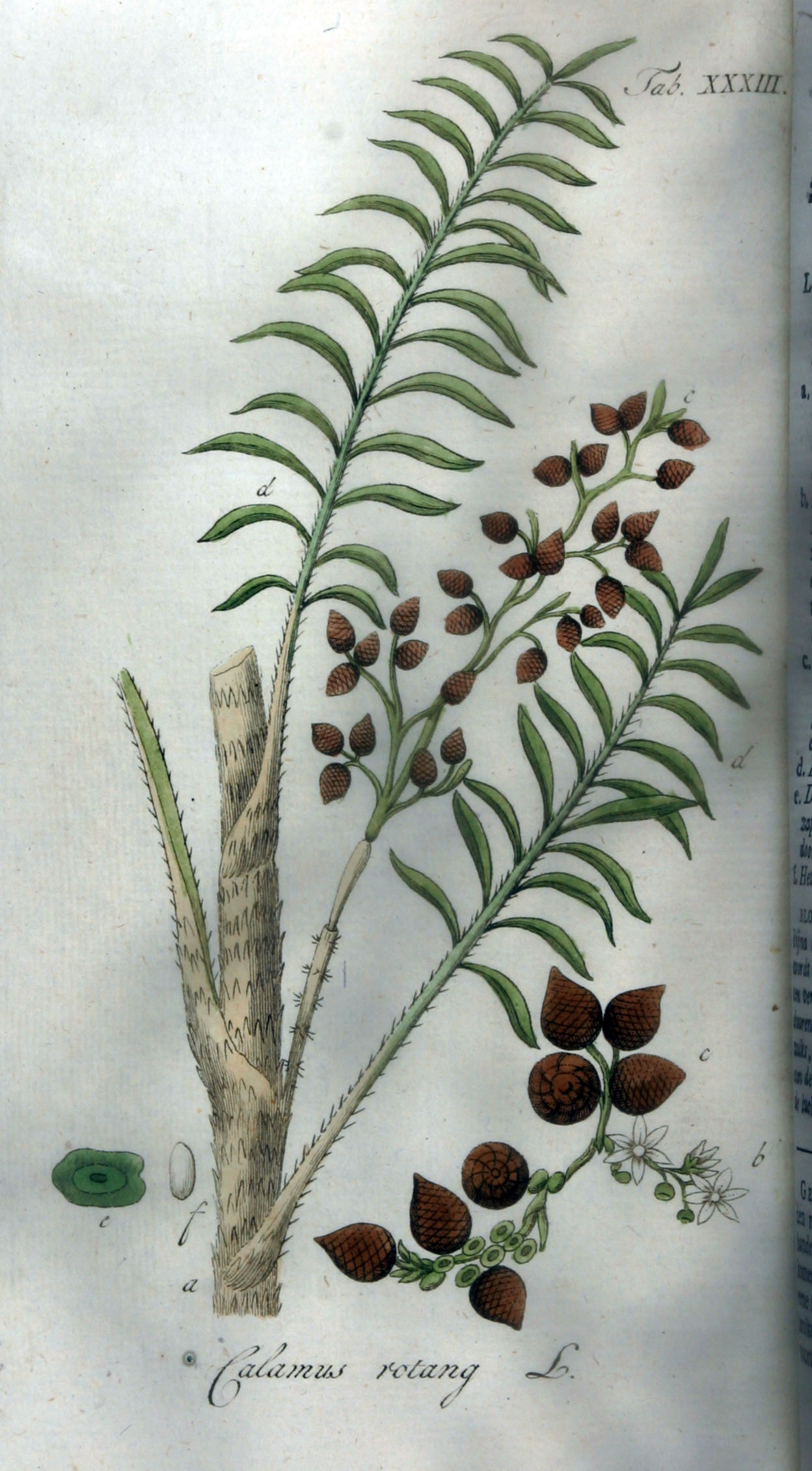
|
Found in Southwest Asia. |
Vibhitaka विभीतक |
Terminalia bellirica |
English:[...], Myrobalan, Belliric myrobalan, Hindi: Baheraa (बहेड़ा), Behaddaa, Bibheeta, |
Mahabharata |
Shalya Parva |
IX.36.58 |
Sarasvati River |
Common on plains and lower hills throughout the forests of India. Common in Southeast Asia, where it is also grown as an avenue tree. |
See also
- List of Indian timber trees
- Flora of Madhya Pradesh
External links
te:భారతీయ ఇతిహాస కాలం నాటి వృక్ష జాతులు