
First book of the Spanish Philippines
In territories under the control of the Spanish Crown, books could not be printed except by royal licence. In 1556 a royal cedula prohibited the printing or sale of books concerning the Indies without a special licence. In 1584 King Philip II of Spain gave instructions to the Real Audiencia in Manila, "when any grammar or dictionary of the language of the Indies be made it shall not be published or printed or used unless it has first been examined by the Bishop and seen by the Real Audiencia."
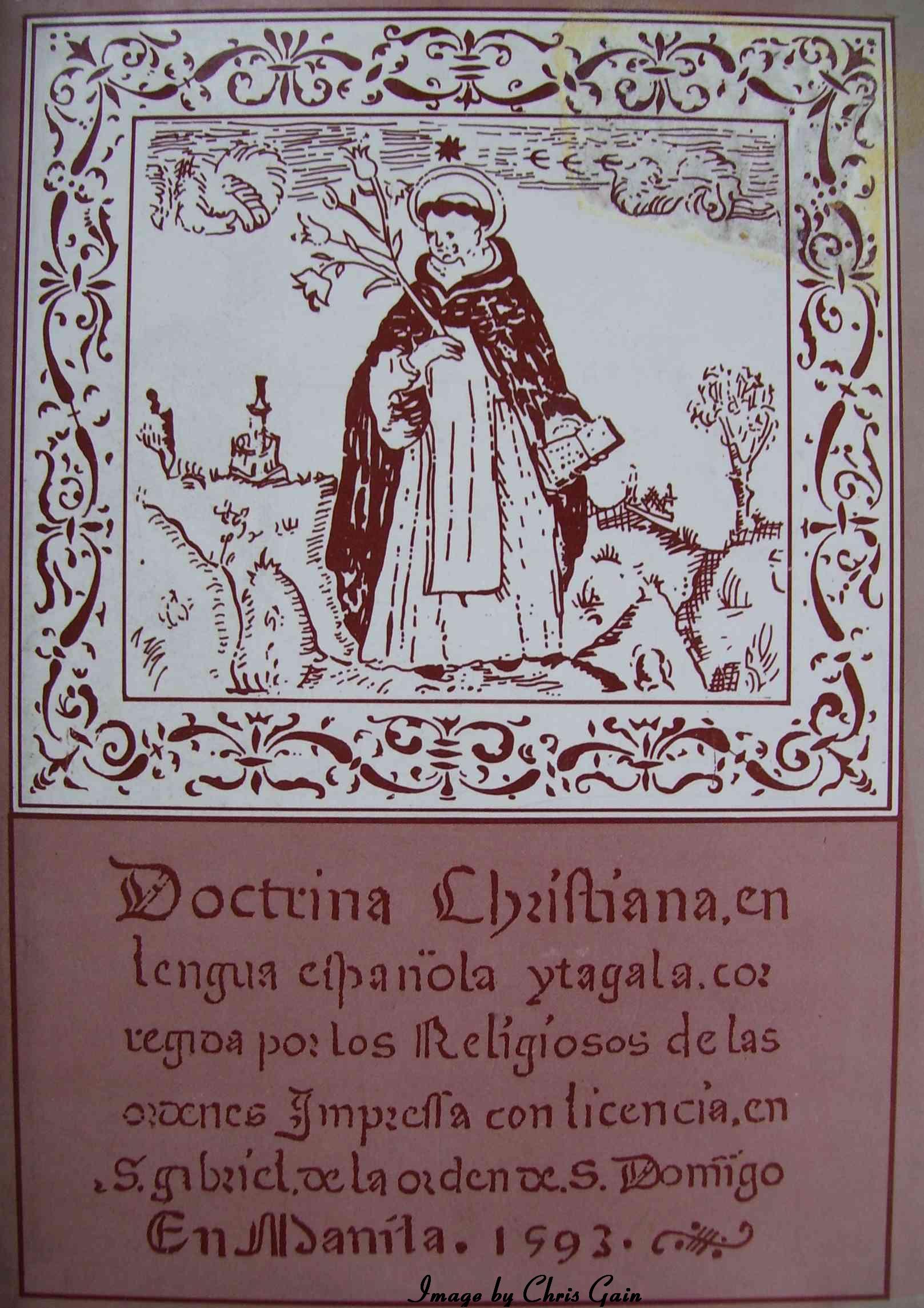
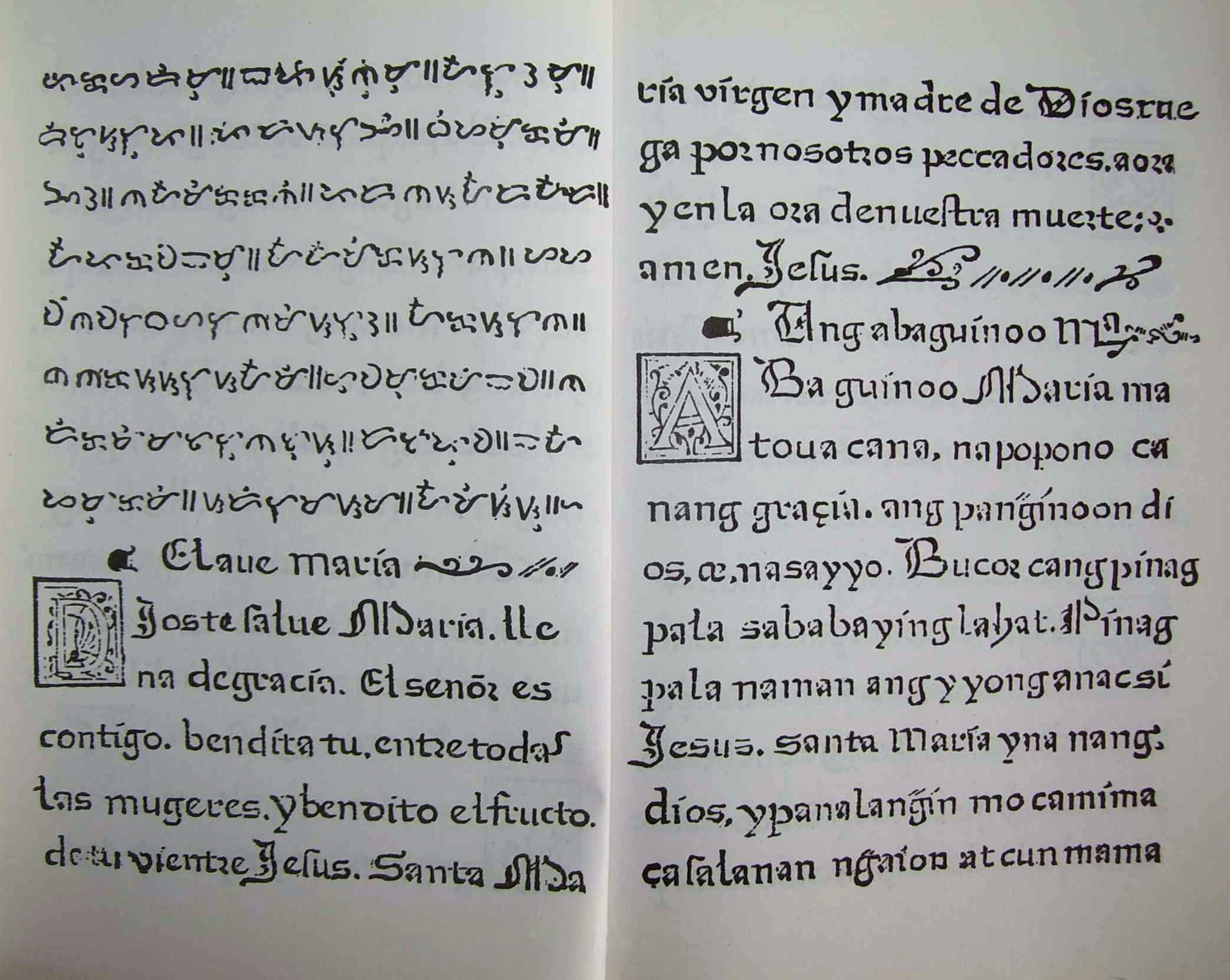
Gómez Pérez Dasmariñas, Governor and Captain-General of the Spanish Philippines, wrote to King Philip on 20 June 1593 saying, "Sire, in the name of Your Majesty, I have for this once, because of the existing great need, granted a license for the printing of the Doctrinas Christianas, herewith enclosed - one in the Tagalog language, wBenavides and Cobo - had already prepared a simple catechism in Chinese characters." "Such was the urgent need of the Dominicans for a catechism to convert the Chinese of the Parian outside the walled city of Intramuros, numbering several thousands, that it was printed from wooden blocks (the xylographic method of printing) and distributed among prospective Christians.
The first book known to be printed by the Spanish in the Philippines was thus a Chinese language catechism using the Chinese method of printing, and printed by the non-Christian Chinese printer Keng Yong in Manila, who was paid by the Spanish Dominicans for the work. The Spanish historian Carlos Sanz believes that this catechism, Doctrina Christiana en letra y lengua China, compuesta por los madres ministros de los Sangleyes, de la Orden de Sancto Domingo. Con licencia, por Keng Young, China, en el Parian de Manila was printed between 1590 and 1592.
The Chinese method of preparing block prints "was used in Manila by the early printers." "The wooden block" was "probably made of batikuling or a similar wood." "The Chinese printer usually held in his right hand two brushes at the opposite extremities of the same handle; with one he inked the face of the characters and, the paper being then laid on the block, he ran the dry brush over it so as to take the impression. This was done with such speed that one man could finish a couple of thousand copies in a day."
The implication is that Keng Yong was an established printer in the Chinese quarter, and that the Chinese had been printing in Manila for some time using the traditional Chinese wooden block method, perhaps since before the ascendancy of the Spanish in Manila. Since the first known book printed under Spanish (church) authority was Keng Yong's printing probably between 1590 and 1592, the suggestion that the Spanish introduced printing to the Philippines has no basis in historical fact.
Images
Bibliography
- National Historical Institute (1991), Doctrina Christiana : The First Book Printed in the Philippines : Manila, 1593 Manila, Philippines, National Historical Institute. ISBN 971-538-013-1