
Filming of James Bond in the 1960s
Dr. No is set in London, England, Kingston, Jamaica and Crab Key, a fictional island off Jamaica. Filming began on location in Jamaica on 16 January 1962. The Primary scenes there were the exterior shots of Crab Key and Kingston, where an un-credited Syd Cain acted as art director and also designed the Dragon Tank. They shot a few yards from Fleming's Goldeneye estate, and the author would regularly visit the filming with friends. Location filming was largely in Oracabessa, with additional scenes on the Palisadoes strip and Port Royal in St Andrew. On 21 February, production left Jamaica with footage still unfilmed due to a change of weather. Five days later, filming began at Pinewood Studios, Buckinghamshire, England with sets designed by Ken Adam, which included Dr. No's base, the ventilation duct and the interior of the British Secret Service headquarters. The studio would later be used on the majority of later BOND films. Adam's initial budget for the entire film was just £14,500 (£ in ), but the producers were convinced to give him an extra £6,000 out of their own finances. After 58 days of filming, principal photography wrapped on 30 March 1962. The scene where a tarantula walks over Bond was initially shot by pinning a bed to the wall and placing Sean Connery over it, with a protective glass between him and the spider. Director Young did not like the final results, so the scenes were interlaced with new footage featuring the tarantula over stuntman Bob Simmons. Simmons, who was uncredited for the film, described the scene as the most frightening stunt he had ever performed. The book features a scene where Honey is tortured by being tied to the ground along with crabs, but since the crabs were sent frozen from the Caribbean, they did not move much during filming, so the scene was altered to have Honey slowly drowning. Simmons also served as the film's fight choreographer, employing a rough fighting style. The noted violence of Dr. No, which also included Bond shooting Dent in cold blood, caused producers to make adaptations in order to get an "A" rating – allowing minors to enter accompanied by an adult – from the British Board of Film Classification.
When he is about to have dinner with Dr. No, Bond is amazed to see Goya's Portrait of the Duke of Wellington. The painting had been stolen from the National Gallery by a 60 year-old amateur thief in London just before filming began. Ken Adam had contacted the National Gallery in London to obtain a slide of the picture, painting the copy over the course of the weekend, prior to filming commencing on the Monday.
Editor Peter R. Hunt used an innovative editing technique, with extensive use of quick cuts, and employing fast motion and exaggerated sound effects on the action scenes. Hunt said his intention was to "move fast and push it along the whole time, while giving it a certain style", and added that the fast pacing would help audiences not notice any writing problems. As title artist Maurice Binder was creating the credits, he had an idea for the introduction that would appear in all subsequent Bond films, the James Bond gun barrel sequence. It was filmed in sepia by putting a pinhole camera inside an actual .38 calibre gun barrel, with Bob Simmons playing Bond. Binder also designed a highly stylised main title sequence, a theme that has been repeated in the subsequent Eon-produced Bond films. Binder's budget for the title sequence was £2,000 (£ in ).
From Russia with Love
Most of the film was set in Istanbul, Turkey. Locations included the Basilica Cistern, Hagia Sophia, and the Sirkeci Station which also was used for the Belgrade and Zagreb railway stations. The MI6 office in London, SPECTRE Island, the Venice hotel and the interior scenes of the Orient Express were filmed at Pinewood Studios with some footage of the train. In the film, the train journey was set in Eastern Europe. The journey and the truck ride were shot in Argyll, Scotland and Switzerland. The end scenes for the film were shot in Venice. However, to qualify for the British film funding of the time, at least 70% of the film had to have been filmed in Great Britain or the Commonwealth. The gypsy camp was also to be filmed in an actual camp in Topkapi, but was actually shot in a replica of it in Pinewood. The scene with rats (after the theft of the Lektor) was shot in Spain, as Britain did not allow filming with wild rats, and filming white rats painted in cocoa didn't work. Principal photography began on 1 April 1963, and wrapped on 23 August.
Director Terence Young's eye for realism was evident throughout production. For the opening chess match, Kronsteen wins the game with a re-enactment of Boris Spassky's victory over David Bronstein in 1960. Production Designer Syd Cain built up the "chess pawn" motif in his $150,000 set for the brief sequence. A noteworthy gadget featured was the attaché case issued by the Q-Branch. It had a tear gas bomb that detonated if it was improperly opened, a folding AR-7 sniper rifle with twenty rounds of ammunition, a throwing knife, and 50 gold sovereigns. A boxer at Cambridge, Young choreographed the fight between Grant and Bond along with stunt co-ordinator Peter Perkins. The scene took three weeks to film and was violent enough to worry some on the production. Yet Robert Shaw and Connery did most of the stunts themselves.
After the unexpected loss of Armendáriz, production proceeded, experiencing complications from rewriting by Richard Maibaum during filming. Editor Peter Hunt set about editing the film while key elements were still to be filmed, helping to restructure the opening scenes. Hunt and Young conceived of moving the training exercise on a Bond double to preface the main title, a signature feature that has been an enduring hallmark of every Bond film since. The briefing with Blofeld was rewritten, and back projection was used to re-film Lotte Lenya's lines.
Behind schedule and over budget, the production crew struggled to complete production in time for the already-announced premiere date that October. On 6 July 1963, while scouting locations in Argyll, Scotland for that day's filming of the climactic boat chase, Terence Young's helicopter crashed into the water with Art Director Michael White and a cameraman aboard. The craft sank into 40–50 feet (12–15 m) of water , but all escaped with minor injuries. Despite the calamity, Young was behind the camera for the full day's work. A few days later, Bianchi's driver fell asleep during the commute to a 6 am shoot and crashed the car; the actress' face was bruised, and Bianchi's scenes had to be delayed two weeks while these facial contusions healed.
The helicopter and boat chase scenes were not in the original novel, but were added to create an action climax. The former was inspired by Hitchcock's North by Northwest, and the latter by a previous Young/Broccoli/Maibaum collaboration, The Red Beret. These two scenes would be shot in Istanbul, but were moved to Scotland; the speed boats could not run fast enough due to the many waves in the sea, and a rented boat filled with cameras ended up sinking in the Bosphorus. A helicopter was also hard to get—the special effects crew nearly got arrested trying to get one at a local air base. The helicopter chase was filmed with a radio controlled miniature helicopter. The sounds of the boat chase were replaced in post-production since the boats were not loud enough, and the explosion, shot in Pinewood, got out of control, burning Walter Gotell's eyelids, and seriously injuring three stuntmen.
Photographer David Hurn was commissioned by the producers of the James Bond films to shoot a series of stills with Sean Connery and the actresses of the film. When the theatrical property Walther PPK pistol didn't arrive, Hurn volunteered the use of his own Walther LP-53 air pistol. Though the photographs of the "James Bond is Back" posters of the US release airbrushed out the long barrel of the pistol, film poster artist Renato Fratini used the long barrelled pistol for his drawings of Connery on the British posters.
For the opening credits, Maurice Binder had disagreements with the producers and did not want to return. Designer Robert Brownjohn stepped into his place, and projected the credits on female dancers, inspired by constructivist artist László Moholy-Nagy projecting light on to clouds in the 1920s. Brownjohn's work started the tradition of scantily clad women on the Bond's title sequences.
Goldfinger
Principal photography on Goldfinger commenced on in Miami, Florida, at the Fontainebleau Hotel; the crew was small, consisting only of Hamilton, Broccoli, Adam and cinematographer Ted Moore. Sean Connery never travelled to Florida to film Goldfinger because he was filming Marnie elsewhere in the US. Miami also served as location to the scenes involving Felix's pursuit of Oddjob. After five days in Florida, production moved to England. The primary location was Pinewood Studios, home to among other sets, a recreation of the Fontainebleau, the South American city of the pre-title sequence, and both Goldfinger's estate and factory. Three places near the studio were used, Black Park for the car chase involving Bond's Aston Martin and Goldfinger's henchmen inside the factory complex, RAF Northolt for the American airports, and Stoke Park Club for the golf club scene. London Southend Airport was used for the scene where Goldfinger flies to Switzerland. Ian Fleming visited the set of Goldfinger in he died a few months later in shortly before the film's release. The second unit filmed in Kentucky, and these shots were edited into scenes filmed at Pinewood. Principal photography then moved to Switzerland, with the car chase being filmed at the small curves roads near Realp, the exterior of the Pilatus Aircraft factory in Stans serving as Goldfinger's factory, and Tilly Masterson's attempt to snipe Goldfinger being shot in the Furka pass. Filming wrapped on at Andermatt, after nineteen weeks of shooting. Just three weeks prior to the film's release, Hamilton and a small team, which included Broccoli's stepson and future producer Michael G. Wilson as assistant director, went for last minute shoots in Kentucky. Extra people were hired for post-production issues such as dubbing so the film could be finished in time.
Broccoli earned permission to film in the Fort Knox area with the help of his friend, Lt. Colonel Charles Russhon. To shoot [...] Galore's Flying Circus gassing the soldiers, the pilots were only allowed to fly above Hamilton recalled this was "hopeless", and they flew at about "and the military went absolutely ape". The scenes of people fainting involved the same set of soldiers moving to different locations. For security reasons, the filmmakers were not allowed to film inside the United States Bullion Depository, although exterior photography was permitted. All sets for the interiors of the building were designed and built from scratch at Pinewood Studios. The filmmakers had no clue as to what the interior of the depository looked like, so Ken Adam's imagination provided the idea of gold stacked upon gold behind iron bars. Saltzman disliked the design's resemblance to a prison, but Hamilton liked it enough that it was built. The comptroller of Fort Knox later sent a letter to Adam and the production team, complimenting them on their imaginative depiction of the vault. United Artists even had irate letters from people wondering "how could a British Film Unit be allowed inside Fort Knox?" Adam recalled, "In the end I was pleased that I wasn't allowed into Fort Knox, because it allowed me to do whatever I wanted." Another element which was original was the atomic device, to which Hamilton requested the special effects crew to get inventive instead of realistic. Technician Bert Luxford described the end result as looking like an "engineering work", with a spinning engine, a chronometer and other decorative pieces.
Thunderball
Guy Hamilton was invited to direct, but considered himself worn out and "creatively drained" after the production of Goldfinger. Terence Young, director of the first two Bond films, returned to the series. Coincidentally, when Saltzman invited him to direct Dr. No, Young expressed interest in directing adaptations of Dr. No, From Russia With Love and Thunderball. Years later, Young said Thunderball was filmed "at the right time", considering that if it was the first film in the series the short budget — Dr. No cost only $1 million – wouldn't have good results. Thunderball was the final James Bond film directed by Young.
Filming commenced on 16 February 1965, with principal photography of the opening scene in Paris. Filming then moved to the Château d'Anet, near Dreux, France for the fight in pre-credit sequence. Much of the film was shot in the Bahamas; Thunderball is widely known for its extensive underwater action scenes which are played out through much of the latter half of the film. Filming was shot at Pinewood Studios, Buckinghamshire, Silverstone racing circuit for the chase involving Count Lippe, Fiona Volpe and James Bond's Aston Martin DB5 before moving to Nassau, and Paradise Island in The Bahamas (where most of the footage was shot), and Miami. Huntington Hartford gave permission to shoot footage on his Paradise Island and is thanked at the end of the movie.
On arriving in Nassau McClory searched for possible locations to shoot many of the key sequences of the film and used the home of a local millionaire couple, the Sullivans, for Largo's estate. Part of the SPECTRE underwater assault was also shot on the coastal grounds of another millionaires' home on the island. The most difficult sequences to film were the underwater action scenes and the first to be shot underwater was at a depth of 50 feet to shoot the scene where SPECTRE divers remove the atomic bombs from the sunken Vulcan bomber. Peter Lamont had previously visited a Royal Air Force bomber station carrying a concealed camera which he used to get close-up shots of the secretive missiles and those appearing in the film were not actually present. Most of the underwater scenes had to be done at lower tides due to the sharks in the Bahamian sea.
Connery's life was in danger in the sequence with the sharks in Largo's pool and one which he had been in fear of when he read the script. He insisted that Ken Adam build a special Plexiglas partition inside the pool but, despite this, it was not a fixed structure and one of the sharks managed to pass through it. Connery had to abandon the pool immediately, seconds away from attack. Another dangerous situation occurred when special effects coordinator John Stears brought in a supposed dead shark carcass to be towed around the pool. The shark, however, was not dead and revived at one point. Due to the dangers on the set, stuntman Bill Cummings demanded an extra fee £250 to double for Largo's sidekick Quist as he was dropped into the pool of sharks.
The climactic underwater battle was shot at Clifton Pier and was choreographed by Hollywood expert Ricou Browning, who had worked on many films previously such as Creature From the Black Lagoon in 1954. He was responsible for the staging of the cave sequence and the battle scenes beneath the Disco Volante and called in his specialist team of divers who posed as those engaged in the onslaught. Voit provided much of the underwater gear in exchange for product placement and film tie-in merchandise. Lamar Boren, an underwater photographer, was brought in to shoot all of the sequences. United States Air Force Lieutenant-Colonel Charles Russhon, who had already helped alliance Eon productions with the local authorities in Turkey for From Russia With Love 1963 and at Fort Knox for Goldfinger 1964, stood by and was able to supply the experimental rocket fuel used to destroy the Disco Volante. Russhon, using his position, was also able to gain access to the United States Navy's Fulton surface-to-air recovery system, used to lift Bond and Domino from the water at the end of the film. Filming ceased in May 1965 and the final scene shot was the physical fight on the bridge of the Disco Volante.
While in Nassau, during the final shooting days, special effects supervisor John Stears was supplied experimental rocket fuel to use in exploding Largo's yacht, the Disco Volante. Ignoring the true power of the volatile liquid, Stears doused the entire yacht with it, took cover, and then detonated the boat. The resultant massive explosion shattered windows along Bay Street in Nassau roughly 30 miles away. Stears went on to win an Academy Award for his work on Thunderball.
As the filming neared its conclusion, Connery had become increasingly agitated with press intrusion and was distracted with difficulties in his marriage of 32 months to actress Diane Cilento. Connery refused to speak to journalists and photographers who followed him in Nassau stating his frustration with the harassment that came with the role; "I find that fame tends to turn one from an actor and a human being into a piece of merchandise, a public institution. Well, I don't intend to undergo that metamorphosis." In the end he only gave a single interview to Playboy as filming was wrapped up, and even turned down a substantial fee to appear in a promotional TV special made by Wolper Productions for NBC The Incredible World of James Bond. According to editor Peter R. Hunt, Thunderball's release was delayed for three months, from September until December 1965, after he met Arnold Picker of United Artists, and convinced him it would be impossible to edit the film to a high enough standard without the extra time.
You Only Live Twice
 Filming of You Only Live Twice lasted from July 1966 to March 1967. The film was shot primarily in Japan. Himeji Castle in Hyōgo was depicted as Tanaka's ninja training camp. His private transportation hub was filmed at the Tokyo Metro's Nakano-shimbashi Station. As of 2011, many of the fixtures in the station are unchanged from the time of filming. The Hotel New Otani, Tokyo served as the outside for Osato Chemicals and the hotel's gardens were used for scenes of the ninja training. Bōnotsu in Kagoshima served as the fishing village, the Kobe harbour was used for the dock fight and Mount Shinmoe-dake in Kyūshū was used for the exteriors of SPECTRE's headquarters. Large crowds were present in Japan to see the shooting. A Japanese fan began following Sean Connery with a camera, and the police were called several times to prevent invasions during shooting.
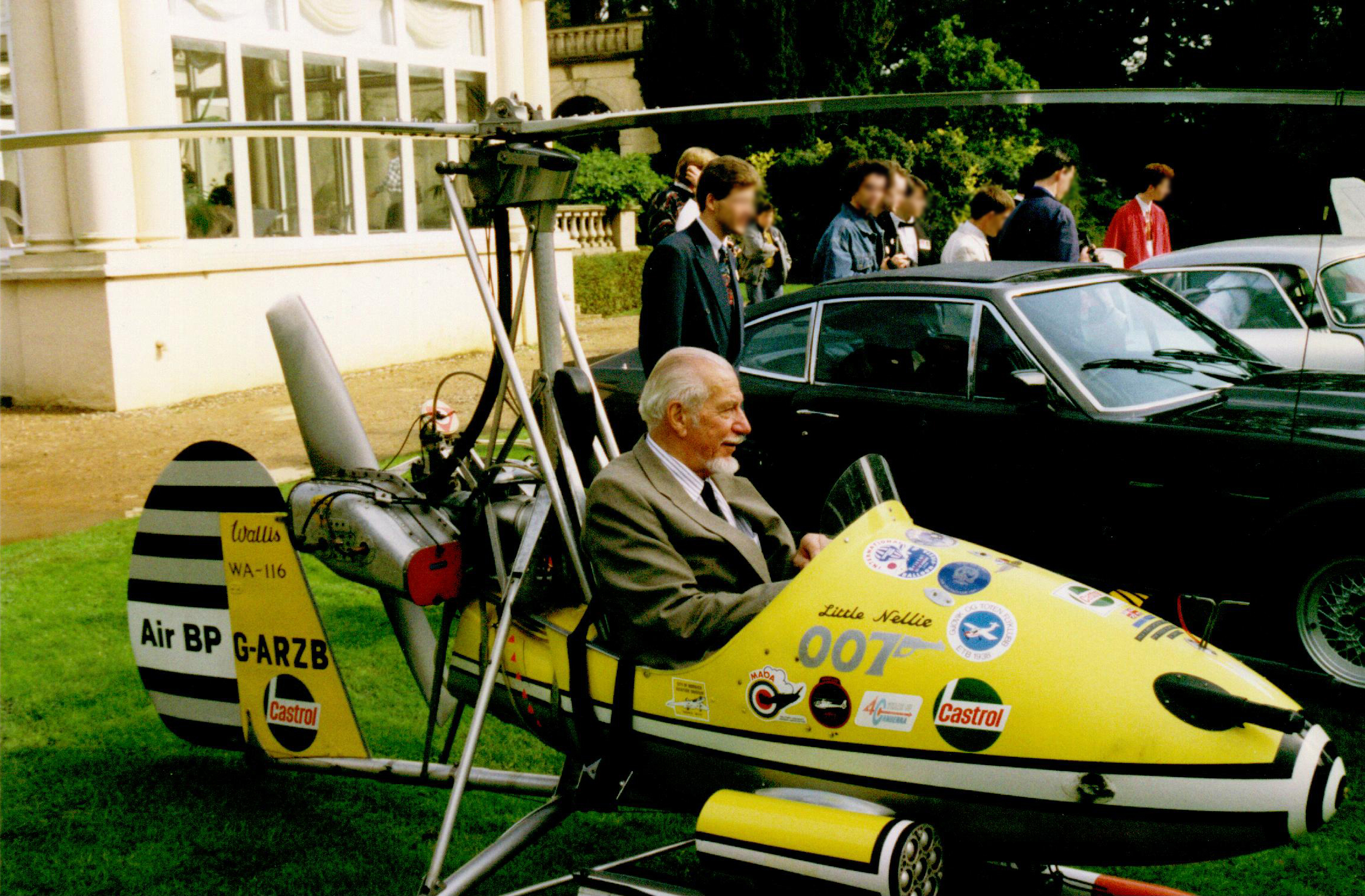
The heavily armed autogyro "Little Nellie" was included after Ken Adam heard a radio interview with its inventor, RAF Wing Commander Ken Wallis. Wallis piloted his invention, which was equipped with various mock-up armaments by John Stears' special effects team, during production. "Nellie's" battle with helicopters proved to be difficult to film. The scenes were initially shot in Miyazaki, first with takes of the gyrocopter, with more than 85 take-offs, 5 hours of flight and Wallis nearly crashing onto the camera several times. A scene filming the helicopters from above created a major downdraft and cameraman John Jordan's foot was severed by the craft's rotor. The concluding shots involved explosions, which the Japanese government did not allow in a national park. So, the crew moved to Torremolinos, Spain, which was found to resemble the Japanese landscape.
The sets of SPECTRE's volcano base were constructed at a lot inside Pinewood Studios, with a cost of $1 million and including operative heliport and monorail. The tall set could be seen from away, and attracted many people from the region. Other locations outside Japan included the ship HMS Tenby in Gibraltar for the sea burial, Hong Kong for the scene where Bond fakes his death, and Norway for the Soviet radar station.
Sean Connery's then wife Diane Cilento did the swimming scenes for at least five Japanese actresses, including Mie Hama. Martial arts expert Donn F. Draeger provided martial arts training, and also doubled for Connery. Lewis Gilbert's regular editor, Thelma Connell, was originally hired to edit the film. However, after her initial, almost three-hour cut received a terrible response from test audiences, Peter R. Hunt was asked to re-edit the film. Hunt's cut proved a much greater success, and he was awarded the director's chair on the next film as a result.
On Her Majesty's Secret Service
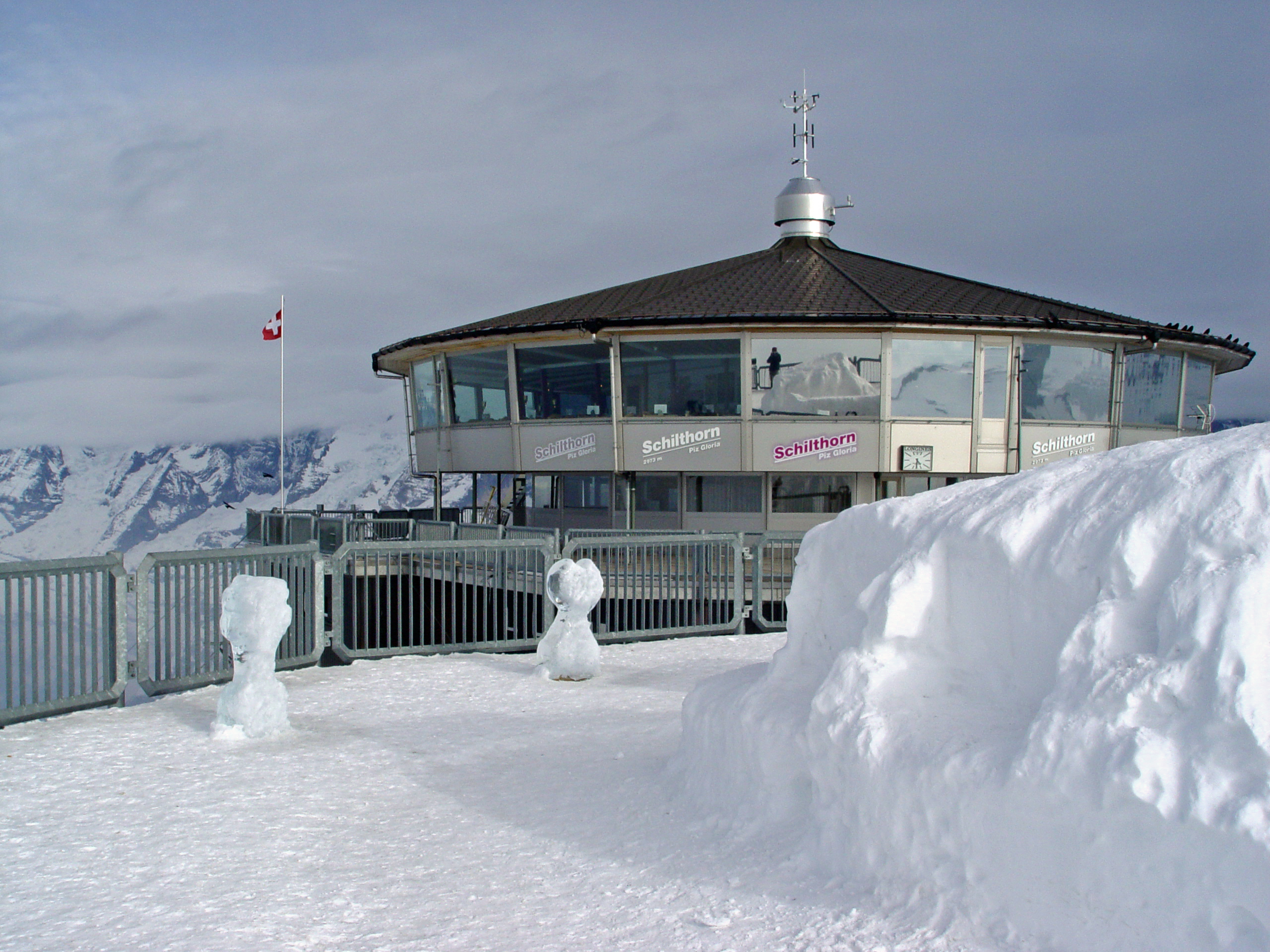 Principal photography began in the Canton of Bern, Switzerland, on 21 October 1968, with the first scene shot being an aerial view of Bond climbing the stairs of Blofeld's mountain retreat to meet the girls. The scenes were shot atop the now famous revolving restaurant Piz Gloria, located atop the Schilthorn near the village of Mürren. The location was found by production manager Hubert Fröhlich after three weeks of location scouting in France and Switzerland. The restaurant was still under construction, but the producers found the location interesting, and had to finance providing electricity and the aerial lift to make filming there possible. Various chase scenes in the Alps were shot at Lauterbrunnen and Saas-Fee, while the Christmas celebrations were filmed in Grindelwald, and some scenes were shot on location in Bern. Production was hampered by weak snowfall which was unfavourable to the skiing action scenes. The producers even considered moving to another location in Switzerland, but it was taken by the production of Downhill Racer. The Swiss filming ended up running 56 days over schedule. In March 1969, production moved to England, with London's Pinewood Studios being used for interior shooting, and M's house being shot in Marlow, Buckinghamshire. In April, the filmmakers went to Portugal, where principal photography wrapped in May. The pre-credit coastal and hotel scenes were filmed at Hotel Estoril Palacio in Estoril and Guincho Beach, Cascais, while Lisbon was used for the reunion of Bond and Tracy, and the ending employed a mountain road in the Arrábida National Park near Setúbal. Harry Saltzman wanted the Portuguese scenes to be in France, but after searching there, Peter Hunt considered that not only were the locations not photogenic, but were already "overexposed".
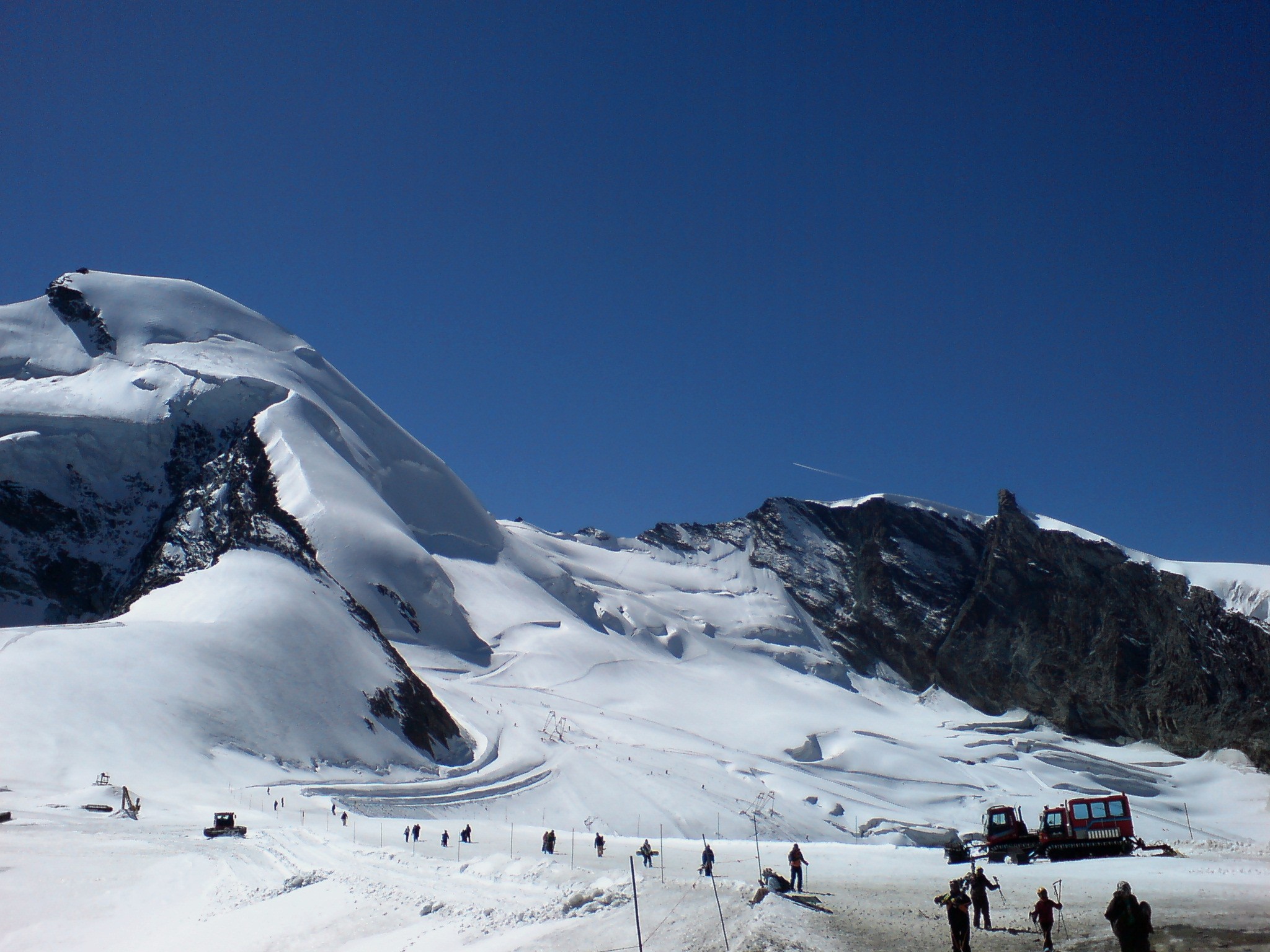 While the first unit shot at Piz Gloria, the second unit, led by John Glen, started filming the ski chases. The downhill skiing involved professional skiers, and various camera tricks. Some cameras were handheld, with the operators holding them as they were going downhill with the stuntmen, and others were aerial, with cameramen Johnny Jordan – which had previously worked in the helicopter battle of You Only Live Twice — developing a system where he was dangled by a parachute harness rig at high, allowing scenes to be shot from any angle. The bobsledding chase was also filmed with the help of Swiss Olympic athletes, and was rewritten to incorporate the accidents the stuntmen suffered during shooting, such as the scene where Bond falls from the sled. Blofeld getting snared at a tree was done at the studio with Savalas himself, after the attempt of doing on location with the stuntman came out wrong. Glen was also the editor of the film, employing a style similar to the one used by Hunt in the previous Bond films, with fast motion in the action scenes and exaggerated sound effects.
The avalanche scenes were due to be filmed in co-operation with the Swiss army who annually used explosions to prevent snow build-up and causing avalanches, but the area chosen naturally avalanched just before filming. The final result was a combination between a man-made avalanche in an isolated Swiss place shot by the second unit, stock footage, and images created by the special effects crew with salt. The stuntmen were filmed later, added by optical effects. For the scene where Bond and Tracy crash into a car race while being pursued, an ice rink was constructed over an unused aeroplane track, with water and snow sprayed on it constantly. Lazenby and Rigg did most of the driving due to the high number of close-ups.
For the cinematography, Hunt aimed for a "simple, but glamorous like the 1950s Hollywood films I grew up with", as well as something realistic, "where the sets don't look like sets". Cinematographer Michael Reed added he had difficulties with lighting, as every set built for the film had a ceiling, preventing spotlights from being hung from above. While shooting, Hunt wanted "the most interesting framings possible", but that could also look well after being cropped for television.
Lazenby said he experienced difficulties during shooting, not receiving any coaching despite his lack of acting experience, and with director Hunt never addressing him directly, only through his assistant. Lazenby also declared that Hunt also asked the rest of the crew to keep a distance from him, as "Peter thought the more I was alone, the better I would be as James Bond." Allegedly, there also were personality conflicts with Rigg, who was already an established star. However, according to director Hunt, these rumours are untrue and there were no such difficulties—or else they were minor—and may have started with Rigg joking to Lazenby before filming a love scene "Hey George, I'm having garlic for lunch. I hope you are!" Hunt also declared that he usually had long talks with Lazenby before and during shooting, for instance, to shoot Tracy's death scene, Hunt brought Lazenby to the set at 8 o'clock in the morning and made him rehearse all day long, "and I broke him down until he was absolutely exhausted, and by the time we shot it at five o'clock, he was exhausted, and that's how I got the performance." Hunt said that if Lazenby had remained in the role, he would also have directed the successor film, Diamonds Are Forever and that his original intentions were concluding the film with Bond and Tracy driving off following their wedding, saving Tracy's [...] for the pre-credit sequence of Diamonds Are Forever. The idea was discarded after Lazenby quit the role.
On Her Majesty's Secret Service was the longest Bond film until Casino Royale was released in 2006. Despite that, two scenes were deleted from the final print: Irma Bunt spying on Bond as he buys a wedding ring for Tracy, and a chase over London rooftops and into the Royal Mail underground rail system after Bond's conversation with Sir Hilary Bray is being overheard.