
Etiquette concerning social groups of people in North America
Etiquette concerning social groups of people in North America:
Topics of Etiquette in Canada
The following issues are of special concern to the people of Canada:
Aboriginal people
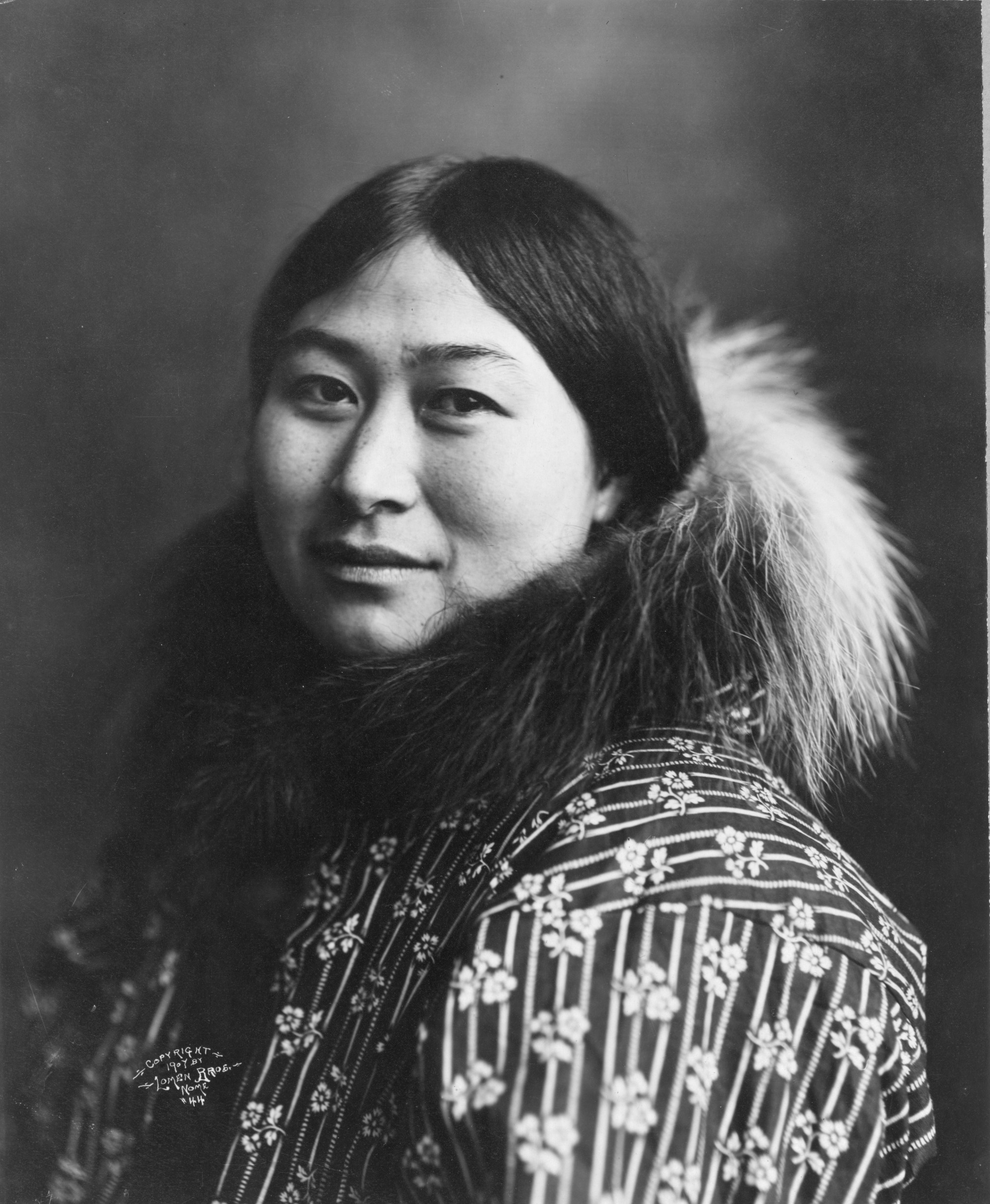
- There are three distinct groups of Aboriginal peoples in Canada: First Nations people (often referred to by specific tribe names), Inuit and Métis. These are official classifications in Canada and care should be taken to distinguish between them. Native Americans, or the less popular word 'Indians', are used to describe aboriginals in the lower 48 United States. Aboriginal Hawaiians are simply called Hawaiian, aboriginal Alaskans are usually called Native Alaskans, or the name of their specific tribe; Aleut, Eskimo, Alutiiq, etc.
- Etiquette demands respect for the lifestyles of Aboriginal people. Although traditional spiritual, cultural, and lifestyle practices thrive in Canadian aboriginal communities, these have evolved and incorporate modern elements, from snowmobiles and state-of-the-art fishing boats to websites through which First Nations groups celebrate their heritage. What's more, 42% of aboriginal people in the Canadian province of Ontario, for example, have post-secondary education, and 78% live off-reserve; the most common occupation for Aboriginal people in Canada as a whole is in sales/service, followed closely by business/finance/administration and transportation/equipment operation. This presents a very different picture from the stereotypes seen around the world in movies and literature featuring Aboriginal peoples of North America.As a result, expecting an Aboriginal person to be "just like in the movies" may make one seem ignorant or rude to aboriginal and non-aboriginal people alike.
- Respect for aboriginal culture is especially important in such situations as a First Nation's pow wow. For example, it is extremely rude to touch a dancer's regalia or to take a photograph of a dancer without asking for and clearly receiving permission. It is also taboo to bring alcohol or narcotics to a pow-wow.
Protocol, Behavior and Celebration
- Interruptions are seen as quite rude among First Nations cultures in general. Particular respect should be paid to elders (people who are older or people well-respected in the community). When they speak on an issue, it is unacceptable to interrupt or speak until they say they have finished or until they invite others to speak or ask questions.
- Speakers of the Yupik languages self-identify as "Eskimo" but the majority of the Native population in the Canadian Arctic and Greenland prefer to be called "Inuit" (or "Inuvialuit"), and most find the term "Eskimo" highly offensive.
- The term "Eskimo" is sometimes used in other contexts, such as by sports teams like the Abitibi Eskimos or the Edmonton Eskimos. Be aware that they use these names to the chagrin of some Inuit and people who advocate political correctness. Treat this sensitive issue accordingly.
Francophone relations
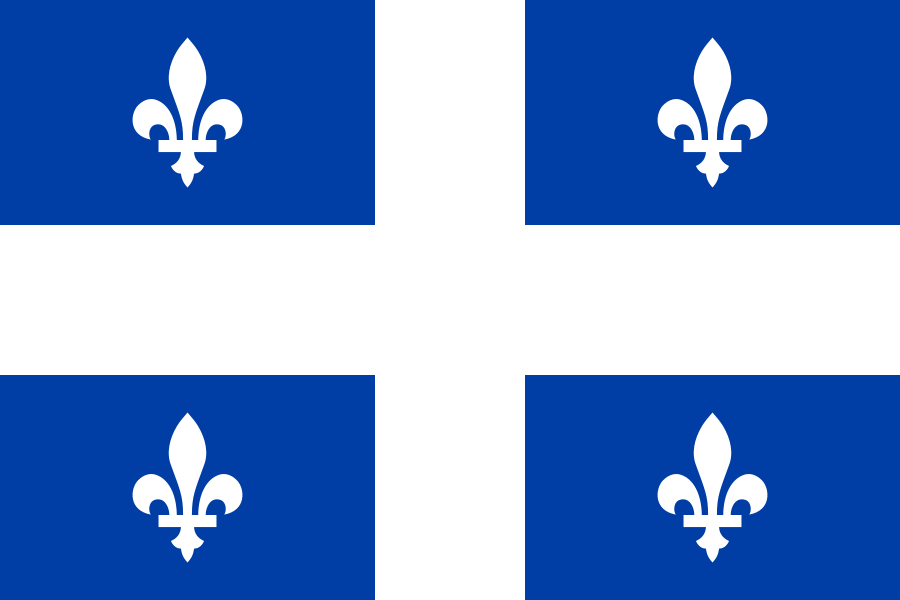
- Expecting an English-speaking Canadian to know French well, or vice versa, can create awkward situations. However, it is more common for Francophone Canadians to be fluently bilingual than Anglophone Canadians (in the western regions of Montreal, or outside of Québec).
- While both English and French are official languages, English is more widely used in areas outside of Quebec.
- When initiating a discussion, it is polite to at least attempt to use the native language of one's interlocutor. However, if one does not speak that language, it is good form to inform the other person of that fact and asking if they speak one's own. Learning a few phrases such as "Excuse me, but I do not speak English. Do you speak French?", or conversely, "Pardon. Je ne parle pas français. Parlez-vous anglais?" can go a long way in demonstrating sincerity.
- In areas which are primarily French-speaking, when being served (in restaurants, hotels, etc.) it is considered rude to automatically expect service in English, even in urban areas such as Montreal. Do not expect English to be known by people in suburbs and smaller towns (although in some cases, it will be). A polite demeanor, including excusing one's self when asking for assistance in English, is much-appreciated and will facilitate social interaction.
- Non-Canadians are not advised to initiate discussion on Anglophone-Francophone relations. Avoid faux pas by respecting it as one would a private matter. Offering even well-intentioned commentary about issues such as Quebec separatism risks offending Anglophone and Francophone Canadians alike.
Politics
Although many Canadians are fiercely proud of their country, they tend to shun nationalist rhetoric and patriotic fervor as not being appropriate for public display. For example, Canadians generally do not post Canadian flags on front porches, bumper stickers and so on nearly as much as those from the United States. Canadians do celebrate a patriotic holiday called Canada Day.
Canada Flag
It is considered a great dishonor to allow a Canadian flag to touch the ground. It is also considered disrespectful to mark or alter a Canadian flag. Wearing apparel featuring the flag is generally accepted. A Canadian flag that is unfit for display (such as a ripped flag) is not to be flown and is to be destroyed in a dignified manner.
Topics of Etiquette in the United States
These etiquette topics are of particular concern to those in the United States.
Language etiquette in the U.S.
- The United States has no declared official language. English is spoken by the vast majority of US citizens but is not universal. The United States is a nation with many immigrants and citizens who were once citizens of other lands with non-English languages, or who have ancestors who come from other nations where English was not the predominant tongue. In large neighborhoods of some cities, such as New York, Los Angeles, or Miami, and in certain commercial establishments, English is simply not spoken by the majority of people. Visitors should be prepared to converse in another language or to be patient with people who have varying abilities in English.
- It is never appropriate to criticize the accent or lack of proficiency of a non-native speaker of English. One should always be encouraging and respectful of others' attempts to communicate in a language that is not their own, without being patronizing.
- There are different regional and cultural dialects of English in the United States, such as Bostonian, Southern, New York, and urban. Some of these can be quite hard for others to understand, especially for non-native English speakers, or those from other English speaking nations. There is no one correct manner of speaking English (opposite to the way that there is an objectively accepted manner of writing Standard American English.)
- Correcting pronunciation or finishing another's sentence is inappropriate, unless requested. Asking for clarification or repetition of what was being said is acceptable; however, except in very important conversations, excessive or repeated requests for clarification should be avoided--seek alternative methods to communicate or resolve an interaction with someone.
Racial Relations
The United States has gained a diverse population through waves of immigration from all over the world, including large influxes of people from Europe, Africa, Latin America, and Asia. Some of the current population is descended partly from the native peoples of North America, and small populations of completely indigenous people still remain. As when encountering any person, it is impolite to assume anything about someone in the United States based on his race, including but not limited to: language skills, citizenship, nationality or national origin, family history, education, economic status, social abilities, behavior, beliefs, personal habits, etc.
African Americans
- The subject of race relations, both past and present, in the United States is especially sensitive in regards to African-American people.
- The terms "Black" and "African American" are used somewhat interchangeably, though the distinction is more nuanced, the latter perceived as more politically correct or formal. The terms "Negro" and "Colored" are archaic, and impolite in modern speech, but are retained in the names of the National Association for the Advancement of Colored People and the United Negro College Fund.
- Although the word "[...]" is heard in a variety of music and movies originating in the US, it is considered extremely vulgar and offensive in polite company. Even when discussing the controversy around use of the word, it is impolite to actually say it aloud. Substituting the phrase "The N-word" is considered less impolite.
Asian Americans
- The term Asian Americans can describe Americans of Indian, Polynesian, Iranian and Siberian Russian descent, as well as those of East Asian descent.
- The term "Oriental" to describe Pacific Rim peoples has become archaic.
- Do not assume an Asian person is from a particular region or country, or make comments about ethno-physical traits.
Indigenous People
- The term Native American is usually used to describe people descended exclusively or primarily from the indigenous inhabitants of the land. The term "American Indian" is often seen as politically incorrect, but is preferred by some tribal groups and individuals as it is the only description of an ethnic group which uses "American" as an adjective rather than a noun, and comes first in the description.
- "Indian American" should never be used to describe the indigenous people, as this term refers to people of Asian Indian descent. The term "Indian" by itself should not be used as it is arbitrary, and was often used throughout American history to refer to the native people disparagingly.
- The indigenous people of Alaska, often thought of as Eskimos, are more appropriately referred to as "Alaska Natives" unless a more specific term is known, such as "Aleut."
Latinos/Hispanics
- "Latino" (which is both a noun and an adjective), and the feminine "Latina" refer to people of Latin American descent. "Hispanic" is a commonly used synonym, and while not insulting, is falling into less favor. These terms refer essentially to people whose ancestry is traced to people both from the old world (Europe and/or Africa) and Latin America. It includes dissimilar people such as blonde-haired Argentinians of partial German descent, Afro-Brazilians who physically resemble inhabitants of West Africa, and American natives who may speak only English. People of pure indigenous Latin American ancestry, and people of strictly European (Spanish and/or Portuguese) descent may or may not identify as Latino.
- Many people's racial identity is completely separate and distinct from Latino identity. For example, a person may identify as both white and Latino, or both black and Latino, etc. Others identify racially as Latino. Anyone's self-identity is recognized by etiquette, regardless of various government agencies' classifications.
- "Latin" should not be used as an anglicized form of "Latino" as it refers to people of Southern European lands which once used the Latin language. "Spanish" or "Spanish speakers" should not be used to refer to Latinos, as the terms are not mutually inclusive. "Chicano" is a somewhat unwelcome and archaic term for "Mexican."
- As Puerto Rico is a territory of the US, the phrase "Puerto Rican immigrant" is inappropriate, as it is equivalent to saying, "Californian immigrant."
US Flag
Allowing the flag to touch the ground or, worse still, stepping on it, is contrary to United States Flag Code. Wearing the flag, even as intimate apparel, though common, is also prohibited by the flag code. Worn flags should be respectully disposed of.
"Yankees"
- Although "Yankee" is synonymous with "American" in many foreign countries, within the US this term is not used self-referentially and has specific meanings depending upon the context, and may be perceived as offensive. Foreigners should avoid addressing United States citizens as such, and should use the term "American."
- In the Southern United States, "Yankee" refers to inhabitants of the northern United States, primarily New England, the mid-west, and the middle-Atlantic states. It generally refers to perceived differences in culture, and usually has a less than positive connotation. "Let's show our new Yankee in-laws some Southern hospitality" is likely to offend the mother-in-law. A Southerner can quite offensively be referred to as a "Yankee." In polite conversation, it is best for all involved to avoid using the term to refer to individuals from any part of the US.
See Also
- Political correctness
- Racism
- Discrimination
- Prejudice
- Bigotry
- Tolerance
- Sensitivity training
- Multiculturalism
- Diversity
- Hate speech