
Enrique Bermúdez de la Paz
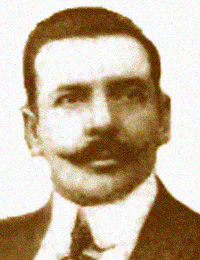
Enrique Bermúdez de la Paz (5 May 1878 – 13 January 1953) was a Chilean politician who served as a minister.
He served as mayor, deputy, and minister of state during the administrations of presidents Juan Luis Sanfuentes and Carlos Ibáñez del Campo. He was also active in diplomacy, serving as ambassador of Chile to Central America, Mexico, Argentina, and Spain.
Early life
He was born in the Chilean commune of Los Andes on 5 May 1878, the son of Juan A. Bermúdez and María Luisa de la Paz. He completed his primary and secondary education at the Liceo de Valparaíso. He continued his higher education at the Curso Fiscal de Leyes in Concepción, qualifying as a lawyer on 5 July 1892 with the thesis Procedencia de la Acción Ejecutiva con un Título Ejecutivo en contra del Tercer Poseedor de la Finca Hipotecada.
From 1898 to 1899, he worked at the Liceo de Valparaíso as a teacher and inspector. In 1907, he received several decorations from European countries, including the insignia of the French Legion of Honour, appointment as a knight of the Order of Isabella the Catholic, the Grand Plaque of the Spanish Red Cross, and the Grand Cross of the Order of the Republic of Spain.
He married Adelaida Garcés Rodenas.
Political career
Bermúdez was a member of the Liberal Party (PL). In 1906, President Germán Riesco appointed him mayor of Valparaíso. During his tenure, he was responsible for addressing the aftermath of the earthquake of 16 August 1906 and the reconstruction needs of the city. He remained in office until 1909, during the administration of President Pedro Montt.
Following his work in the aftermath of the earthquake, he stood as a candidate for the Chamber of Deputies representing Valparaíso and Casablanca, and was elected for the 1909–1912 legislative term. He was subsequently re-elected as deputy for the same constituency for three consecutive terms: 1912–1915, 1915–1918, and 1918–1921. During his parliamentary career, he served on the War and Navy Commission. During his fourth term, he served as first vice president of the Chamber of Deputies from 3 June to 22 October 1918.
As a member of the lower house, he advocated for the reconstruction of Valparaíso, particularly the Almendral district. Together with other deputies representing the area, he supported legislation intended to advance the reconstruction project. His parliamentary activities also included initiatives concerning the city's sanitation, port infrastructure, drinking-water supply, charitable services, the monument to General Manuel Blanco Encalada, and loans for the Municipality of Valparaíso.
On 25 November 1918, President Juan Luis Sanfuentes appointed him Minister of War and Navy, a position he held until 22 September 1919. On that date, he became Minister of the Interior, serving until 8 November of the same year. On 26 March of the following year, he returned to the cabinet as Minister of Justice and Public Instruction. He left the ministry on 12 June 1920, and was subsequently appointed minister plenipotentiary of Chile to Mexico. He remained in the diplomatic post during the administration of President Arturo Alessandri, the periods of the Chilean government juntas, and the administration of President Carlos Ibáñez del Campo, which began in 1927. Ibáñez del Campo subsequently appointed him Chilean minister plenipotentiary to Central America, where he served until 1928, after which he briefly served as Chilean ambassador to Argentina.
On 30 August 1929, Ibáñez del Campo again appointed him Minister of the Interior, a position he held until 25 February 1930. While heading the ministry, he was tasked by the president with negotiating the composition of the so-called Thermal Congress, the name given to the Chilean legislature that sat from 1930 to 1932.
After leaving the government, Ibáñez del Campo appointed him Chilean ambassador to Spain. He remained in the post until 1933, when he retired from public life.
Among his other activities, he was a member of the Junta de Beneficencia. He died in Santiago on 13 January 1953, aged 74.