
Endemic Species in Slovakia
The term endemic as a part of biology was put in use in 1855 by A. De Candolle. Word endemic is derived from Greek word éndemos. It means local, native or in this place living. Endemism (from Greek) means in botany, zoology, palaeontology and in geography: ״birthplace״ and spread of herbs and animals, living or extinct, limited on one certain place or region (sometime country, island, mountainous range...). From definition positively arise that endemism is geographical and evolutional phenomenon. An amount of endemic species in flora depend on: isolation, segmentation and time. Development and genesis of endemic species (taxons) depend on climate as well. Slow climatic changes help with development of endemics (from time to time new taxons creation too) but quick changes can destroy them. Occurrence of endemic species is bound on particular natural space, which is identical with birthplace. It means that same endemic species we can find on places with same environment. Area of occurrence of endemic species is limited on small places or on one exact place. One can not speak about endemic species when these plants are planted or trailed into some area by human. There is one special category of endemic which are not really endemic but relicts because they do not appear on original place but in refugium (isolated suitable place). These are remains from past. T Term subendemic is comprehend as endemic taxon which appears (grow) only on one certain place, however it can touch nearby location or grow there.
2. Categorization
In terms of time we can divide endemic taxons into the two big groups.
A) Endemics which are evolutionary older than Quaternary period are called – paleoendemics. These species are in progressive phase (on the top of life) or in regressive phase (more than 78% of them), very often before extinct. Sometime we can find name endemics regressive relict (= paleoendemics). There aren’t any known relations species (which are noted).
B) Endemics which are evolutionary younger than Quaternary period are called – neoendemics. These species are in progressive phase (almost all of them). Sometime we can find name endemics progressive (= neoendemics). Neoendemics have a lot of very close relations species.
Some subgroups of neo and paleo endemics
1. Schizoendemics – they are result of very slow progressive differentiation (gradual speciation).
2. Patroendemics – they are older than more native species and area of occurrence is smaller (e.g. – Kostrava Tatranská (Patroendemic) and Kostrava Ametystová).
3. Apoendemics – they are result of abrupt speciation and they have very similar cousin (e.g. – Lyžičník Poľský and Lyžičník Pyrenejský)
4. Kryptoendemics – they are morphologically undistinguished from the others but different amount of chromosomes distinguish them.
5. Pseudoendemics – this is the special group. Species which are called pseudoendemics were found once on one place or plants about we haven’t got enough information.
According to size of area: A) Stenoendemics – occur on local area (small) B) Euryendemics – occur on bigger area
3. Division of endemics in Slovakia
In term of location of SR, it is divided into 4 basic parts: Karpatské, Západo Karpatské, Panónske and Alpské endemics. There are a lot of next divisions (hundreds of them) according to mountains, hills, basins....
4. Examples
In SR there is no exact number of endemics taxons, firstly because of different dates and secondly still some of them are not discovered yet.
A) Tatry
(Západné, Výsoké and Belianske) Horec Ľadový – Gentiana frigida Haenke It’s unique because it grows very sporadic, e.g: Tatry. It grows in half shadow and snow covered places, especially on noncalcite stones in Alpin level. It blooms from July to September.
Basic information:
Danger: Leaves of plant are poisonous if ingested
Sun Exposure: Shadow / half sun
Bloom Color: White-dark gree-yellow
Bloom Time: Late spring
Foliage: Evergreen, glossy-textured
Leaves: Comparatively long, green
Large: disproportional
B) Slovenský raj
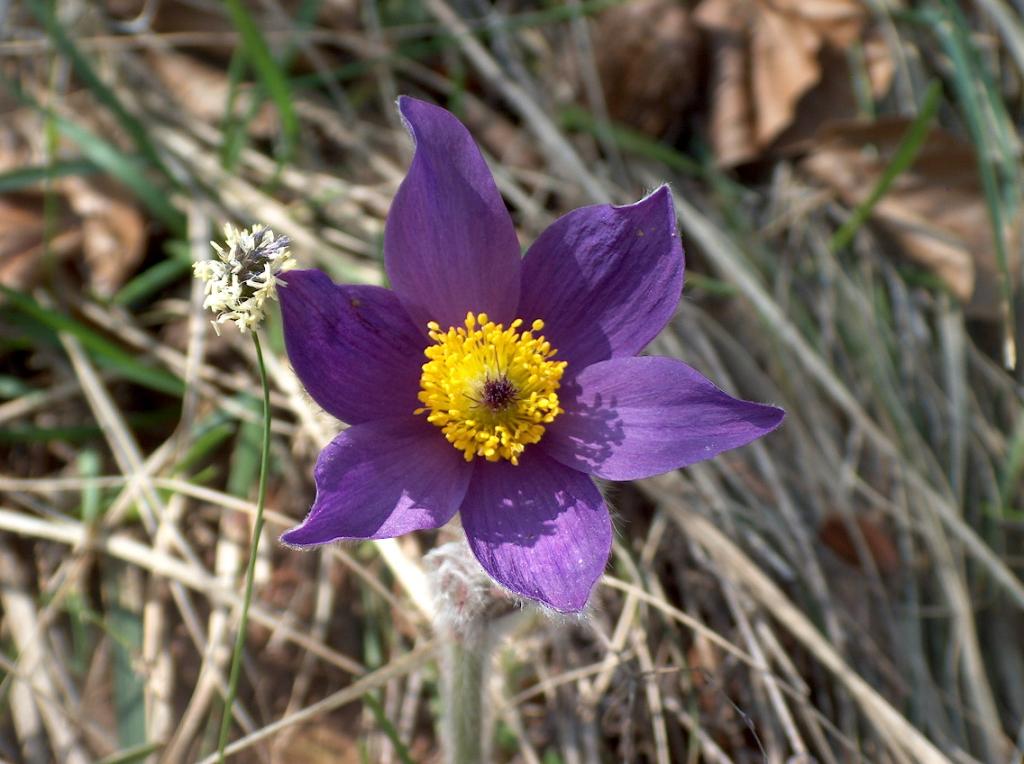 Poniklec Slovenský – Pulsatilla slavica G.Reuss It formed into today’s form probably during the end of Pleistocene and the beginning of Holocene. It grows on grassy meadowlands. We can find it from hilly area to mountain ridge. It’s Slovak endemic taxon but is known case when occurred in Poland.
Basic information:
Danger: No poison
Sun Exposure: Full Sun
Bloom Color: Purple, deep purple
Bloom Time: Summer / late summer
Leaves: Comparatively short, thin, very light green
Large: disproportional
C) Muránska planina
Lykovec Muránsky – Daphne arbuscula Čelak It’s paleoendemic taxon. It survived glacial periods on highly located stones. It’s located on: ridges, terraces and so on, from 590 to 1300 meters above sea level.
Basic information:
Danger: All parts of plant are poisonous if ingested
Sun Exposure: Full and half Sun
Bloom Color: Pink, light pink if lack of sun
Bloom Time: Early summer
Foliage: Delicate and dark or black
Leaves: Thick, very fresh green Large: up to 60cm
D) Súľovské skaly
Soldanelka Karpatská – Soldanella carpatica Vierh. Soldanelka probably evolved during Pleistocene period. This taxon grows in Súlovské skaly (lowest location 400m.n.m.) and we can find it in Tatry (highest location 2650m.n.m) as well. The biggest colonies were found above the forests.
Basic information:
Danger: No poison
Sun Exposure: Full Sun
Bloom Color: Violet, pale blue
Bloom Time: Late winter/early spring
Foliage: Evergreen
Leaves: Very small, light green
Large: from 30 to 40cm