
El Caballero Carmelo
El Caballero Carmelo (The Knight Carmelo) is a short story by the Peruvian writer Abraham Valdelomar. Published on November 13, 1913, in the newspaper La Nación, it is widely regarded by literary critics as Valdelomar's masterpiece and a seminal text in modern Peruvian literature.
Written during the author's diplomatic residency in Rome, the narrative marks the inception of the criollismo movement in Peruvian fiction. It signaled a thematic shift from the aristocratic settings of Lima to the provincial coastal environment of Pisco. The story later served as the title piece for Valdelomar's 1918 short story collection.
Publication history
In 1913, Valdelomar served as Second Secretary to the Peruvian Legation in Italy during the administration of Guillermo Billinghurst. While in Rome, he submitted the story via mail to a literary contest organized by the Lima-based newspaper La Nación. To ensure the impartiality of the jury, which included the historian Carlos Wiesse Portocarrero, Valdelomar utilized the pseudonym "Paracas".
The story was awarded first prize, consisting of 100 soles, and appeared in print on November 13, 1913. Its publication established Valdelomar as a central figure of his literary generation, introducing a prose style that integrated autobiographical memory with regionalist aesthetics.
Plot summary
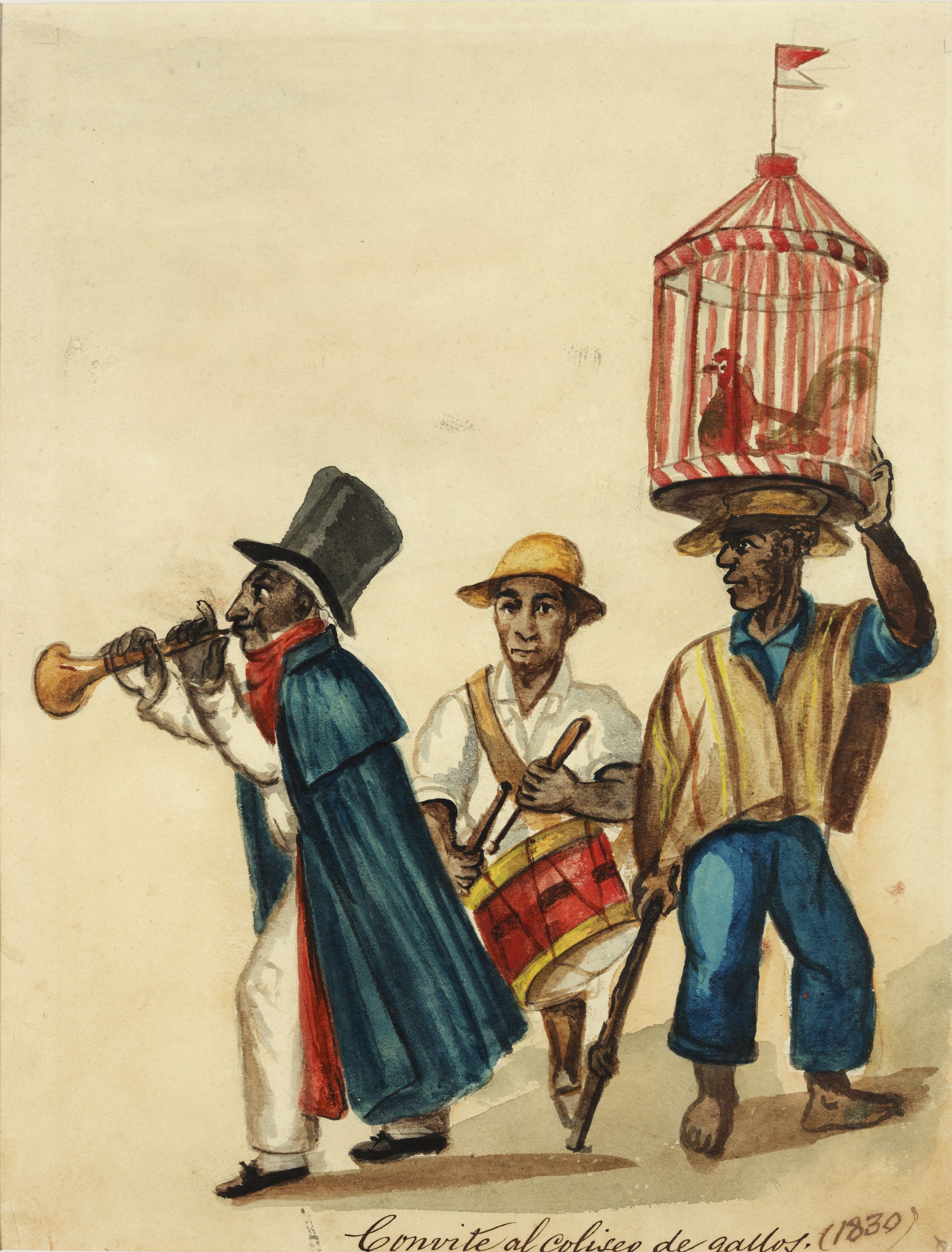 The narrative is presented in the first person by an adult narrator recalling his childhood in the port town of Pisco. The account begins with the return of Roberto, the older brother, who arrives after a prolonged absence. Among the gifts he presents to the family is "Carmelo," a fighting [...] (gamecock) noted for its distinguished bearing and "aristocratic" temperament.
Carmelo is integrated into the household dynamics, living domestically for three years. The family's routine is interrupted when the father's honor is challenged by neighbors boasting of a younger, undefeated rooster named "Ajiseco." Despite Carmelo's advanced age, a match is arranged for Peruvian Independence Day (July 28) in the adjacent village of San Andrés.
The household reacts with dismay to the decision. On the day of the event, the narrator and his siblings observe the spectacle with trepidation. In the ring, the youthful Ajiseco initially dominates the combat, inflicting severe injuries on the older bird. However, Carmelo recovers and, in a final exertion of strength, delivers a decisive blow that incapacitates his opponent.
Although victorious, Carmelo sustains mortal wounds. He is transported back to the family home, where he survives for two days under the care of the children before dying at sunset. The narrative concludes with a scene of the family dining in silence, an event that symbolizes the end of the narrator's childhood innocence.
Themes and style
Literary analysis of El Caballero Carmelo often focuses on its elegiac tone and the reconstruction of provincial life. Valdelomar departs from the satirical approach of earlier costumbrista authors, opting instead for a respectful and nostalgic depiction of rural customs.
- **Heroism and Decay:** The protagonist, Carmelo, embodies values of nobility and resilience while facing inevitable physical decline.
- **Memory and Childhood:** The text functions as a memoir, idealizing the domestic environment of Pisco as a "lost paradise" juxtaposed against the harsh reality of the adult world.