
Early entrance at Shimer College
 Early entrance at Shimer College is a program at Shimer College in which high school students go to college early. Early entrants at Shimer are admitted after completing at least two years of high school, but before receiving a high school diploma or GED. Begun with the conversion of Shimer to a Great Books curriculum in 1950, this program is the longest-running college early entrance program in the United States. Early entrance at Shimer has been administered at different times under the names of Early Entrant Program and Early Entrance Program.
Early entrants, who have historically made up AbOUT 20% of the student body, participate in the discussion-based Great Books curriculum as equals with other students. Although for many years early entrants were governed by the same open admissions policy as other Shimer applicants, currently they must show that they are in the top 25% according to at least one quantitative metric. As of 2008, early entrants accounted for 16% of Shimer College enrollment.
Academics
See also: Shimer College#Academics 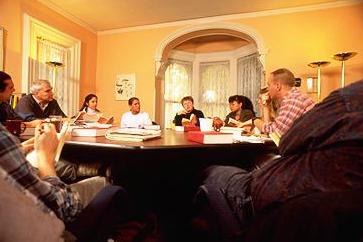 Early entrants participate in the same courses, and are graded on the same scale, as all other Shimer students. All Shimer students go through a four-year core curriculum of Great Books discussion classes. No classes have more than 12 students. In addition, students take electives and tutorials, which are available both from Shimer faculty and from the three schools with which Shimer has an articulation agreement: Illinois Institute of Technology, Vandercook College of Music, and Harold Washington College.
Early entrants also have equal access to the specialized curricular offerings of the college. These include the biennial study abroad program at Oxford University and a 6-year combined BA-juris doctor program offered in cooperation with Chicago-Kent College of Law.
History
See also: History of Shimer College 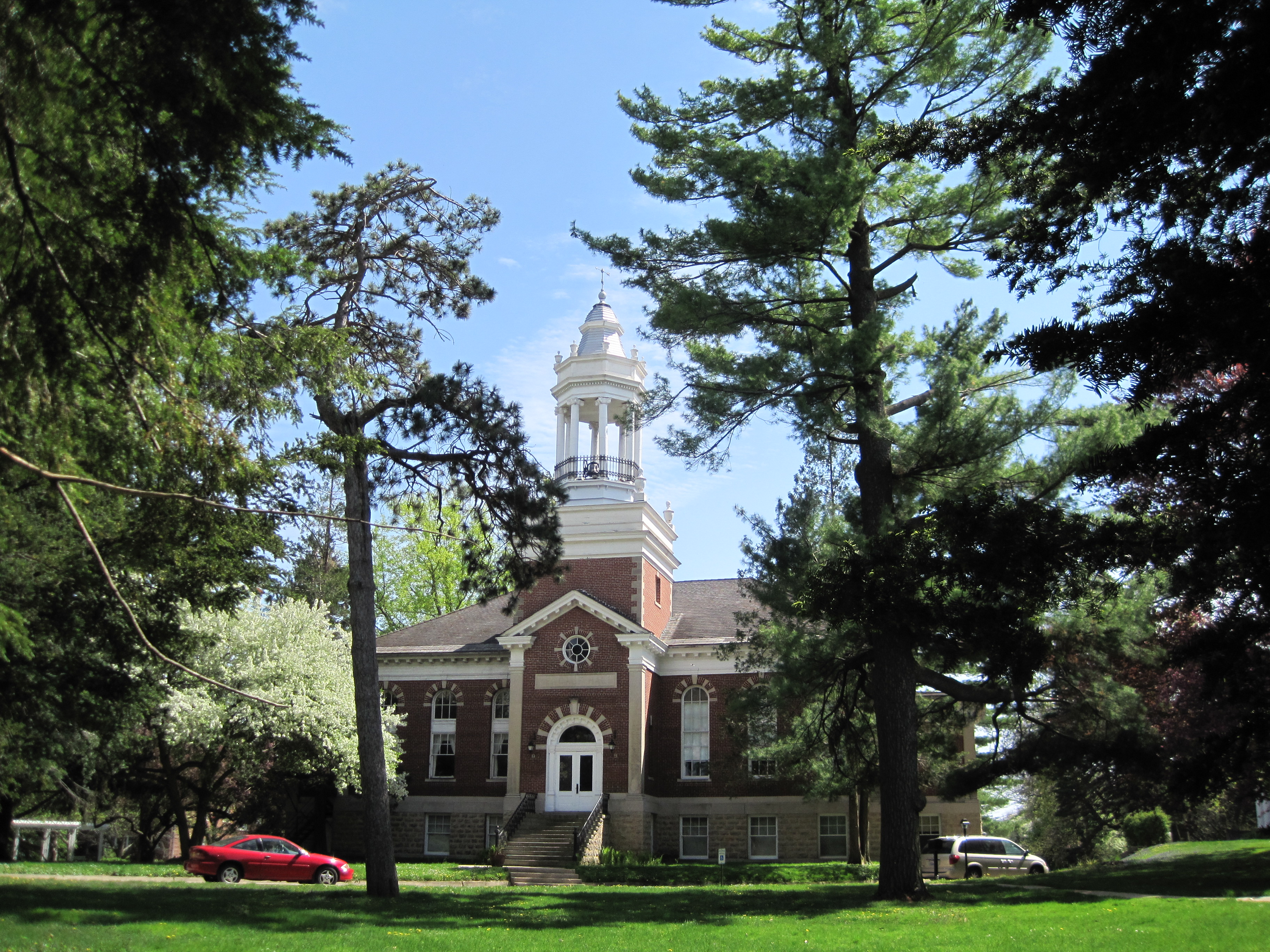 In 1950, Shimer College adapted the Great Books academic program of the College of the University of Chicago, a program developed under the leadership of Robert Maynard Hutchins in the 1930s and 1940s. Shimer was then located in the small rural town of Mount Carroll, Illinois. In introducing the Hutchins program at Shimer, it was hoped that parents of early entrants would be more willing to send their children to Mount Carroll than to the Hyde Park neighborhood in Chicago.
In the decades prior to 1950, Shimer had been a women's four-year junior college, catering to students from 11th grade through the second year of college. As a result, unlike other schools which introduced early entrance in the 1950s, Shimer had a faculty and administration who were used to dealing with students of high school age.
In 1952, Shimer was one of twelve colleges provided by the Ford Foundation with scholarship funding for early entrants. This funding allowed enrollment and revenues to increase, and during the mid-1950s early entrants receiving Ford Foundation scholarships accounted for more than 80% of the student body. The expiration of the grant in 1956 nearly forced Shimer to close its doors.
Although full scholarships for early entrants were never again the norm, Shimer has continued to offer a modest scholarship bearing Hutchins' name to all admitted early entrants. Funding to support early entrance has also been provided at times by the Carnegie and SURDNA Foundations.
Entrance requirements
As of 2010, applicants for early entrance must place in at least the top quartile in at least one of four metrics: SAT, ACT, GPA, or class rank. For most of its history, however, the early entrance program at Shimer had no fixed entrance requirements. This was in accordance with the guiding philosophy of the Hutchins program, where students self-selected and worked at their own pace.
The 1978 Shimer catalog stated:
- Because each applicant is considered individually, no rigid standards are imposed on the program. Instead, the college prefers to read the application of any student who is intrigued with the idea of starting college at the end of his or her sophomore or junior year of high school, or after a period of absence from an academic environment. Shimer considers a student's sincere interest and desire to be one of the major contributing factors to his or her success.
This open-door policy contrasted with programs developed elsewhere, in the 1970s and 1980s, which targeted only the "gifted" or "exceptionally gifted".
Alumni
See also: List of Shimer College people
Graduates and former students of Shimer College who enrolled through early entrance include:
- Peter Cooley, 1962, poet
- Steve Heller, 1971, programmer and author
- Robert Keohane, 1961, international relations theorist
- Kenneth Knabb, 1965, writer and translator
- Laurie Spiegel, 1967, electronic composer
- Sydney Spiesel, 1961, pediatrician and clinical professor
- Elizabeth Vandiver, 1976, professor of classics
- Catherine Yronwode, 1965, writer and editor
See also
- College early entrance program
- Robert Maynard Hutchins
- Shimer College
External links