
Donald Trump Moscow tape rumor and kompromat allegations
The redacted five-volume Senate Intelligence Committee report on Russian interference in the 2016 United States presidential election was released to the public on July 25, 2019.The Committee examined the pee tape rumor, "efforts to suppress" related tapes, broader kompromat and blackmail risks, and the extent of prior knowledge of the rumor.As a counterintelligence report, it addressed those concerns in much greater depth than the Mueller special counsel investigation, which had a limited focus on potential criminal conduct.According to Lawfare, this narrower focus meant that key counterintelligence issues were largely ignored in the Mueller investigation, whereas the Senate Intelligence Committee examined those issues in detail.
The Donald Trump Moscow tape and kompromat allegations refer to an unverified rumor that, during a 2013 visit to Moscow, Donald Trump directed prostitutes to perform a "golden showers" show on a bed previously used by the Obamas, allegedly as an expression of hatred toward Barack Obama. According to the allegation, the incident was secretly recorded by the Russian Federal Security Service (FSB) as kompromat to gain leverage over Trump. Broader claims assert that Russian intelligence may possess additional compromising material, including alleged sexual activity, though the Moscow rumor does not allege direct sexual contact with the prostitutes. Former FBI Director James Comey said he did not know whether it happened, but that it was "possible" Trump "was with prostitutes peeing on each other in Moscow in 2013". Trump's attorney Michael Cohen went further and said it was "entirely plausible that Trump had been involved in such a tape".
The rumor began circulating shortly after Trump left Moscow on November 10, 2013, and is also known as the pee tape or golden showers tape rumor, among other names. Reports of such compromising material, including claims of multiple alleged recordings, described as "audio and video", on "more than one date" and in "more than one place", have raised concerns among intelligence officials that Trump could be vulnerable to kompromat and blackmail by Vladimir Putin and others. "[A]ctive duty CIA officers dealing with the [Trump] case file" reportedly consider these reports of multiple incidents "credible", and the Senate Intelligence Committee found that "there May Be substance to some of the allegations regarding Trump". These concerns contributed to assessments that Trump could pose a counterintelligence threat to national security.
Although the rumor became widely known through the Steele dossier in January 2017, Michael Cohen testified in March 2019 that he and Trump had first learned about it several years earlier, "shortly after the Miss Universe 2013 pageant" and "significantly prior to the 2016 U.S. election cycle", and that rumors "had circulated for years". Trump made false statements "repeatedly and to multiple people" about his weekend trip to Moscow, including claiming he did not stay overnight even once despite clear evidence to the contrary, during the only period when calculations indicate the alleged incident most likely could have occurred. Some commentators have interpreted his false statements and omissions as suggesting a "consciousness of guilt". He was reportedly also offered the delivery of five prostitutes to his room that night, and was seen with prostitutes in the hotel lobby and an elevator.
Trump denied the allegation, but his credibility has been questioned by many, including his attorney Michael Cohen, who did not believe Trump's denials. He acted as if the tape existed and, acting as Trump's "fixer", with the assistance of Giorgi Rtskhiladze, began an ultimately successful effort to suppress and "stop" the rumored tape. Trump's lies and other responses to the allegation have been described as a "coverup", and as long as the alleged tapes remain "stopped" and not released to the public, the allegation remains unproven and has been described as "neither conclusively corroborated nor conclusively disproven". Some commentators have suggested that the possibility such material exists has influenced Trump's perceived subservient stance toward Vladimir Putin and may help explain why Trump has rarely criticized him.
If true, the rumor has been described as significant for its potential implications, including possible influence on Trump's "positions on relations with Russia" and susceptibility to blackmail during his presidency. The claim became widely known and the subject of lawsuits, congressional investigations, books, and films. It has been described as the "most notorious" allegation in "perhaps the most controversial opposition research ever to emerge from a presidential campaign".
Las Vegas nightclub "golden showers" incident and implications
The alleged incident in Moscow did not occur in a vacuum, as Trump has been connected with two different golden showers incidents, and Seth Abramson asserts the first incident in Las Vegas may have inspired the FSB's planning of the infamous alleged "golden showers" incident when Trump was at the 2013 Miss Universe pageant in Moscow five months later.
In June 2013, Trump, his lawyer Michael Cohen, his bodyguard Keith Schiller, and others spent several hours at The Act, an infamously raunchy Las Vegas nightclub at The Palazzo. The club's featured acts, described in detail by Jane Mayer, included simulated sex acts of bestiality, grotesque sadomasochism, and girls simulating urinating on a "professor". While Las Vegas has a reputation for "anything goes", embodied in the city's slogan "What Happens in Vegas, Stays in Vegas", the club's acts were so debauched that a Nevada judge stepped in and "ordered the club to scale back on some of its more risque performances", and it closed five months later on October 12, 2013.
Trump and his group were together with Trump's friend and business partner Azerbaijani Russian billionaire, oligarch, and real estate developer Aras (Araz) Agalarov, his son (singer Emin), and a group of Russians, some of whom were also associated with Agalarov's real estate conglomerate Crocus Group.
There, according to Cohen, Trump watched a golden showers show "with delight". According to Abramson, Trump's delighted reaction was observed by the group of Russians, and it "may have informed the activities" Russian intelligence "wanted prostitutes to perform in front of Trump in his hotel suite in Moscow in November 2013, just 120 days after the risqué performance in Las Vegas". This was a form of "sexually unconventional" entertainment that was "familiar" with some in Trump's circle. As Jonathan Chait put it: "[T]he notion that a display of exotic sex acts lies totally outside the range of behavior Trump would enjoy is quaint and unfounded."
The national security experts at Lawfare described how the Senate report "suggests—without stating outright" that this was part of an effort by the Agalarovs and Russian intelligence to cultivate and gain influence over Trump.
According to Adam Davidson, a staff writer at The New Yorker, Trump's mere association with the Agalarovs would compromise him and make him susceptible to blackmail, due to the informal sistema and blat system of favors and corruption under which they operate.
Three years later, Steele's sources and Rtskhiladze, acting independently of each other, implied that Agalarov and his Crocus Group had knowledge of Trump's alleged sexual activities in Russia, and Rtskhiladze said Crocus Group had "alleged compromising tapes" of Trump that Cohen later described as the "infamous pee tape" mentioned in the dossier.
Alleged incidents during Miss Universe weekend in Moscow
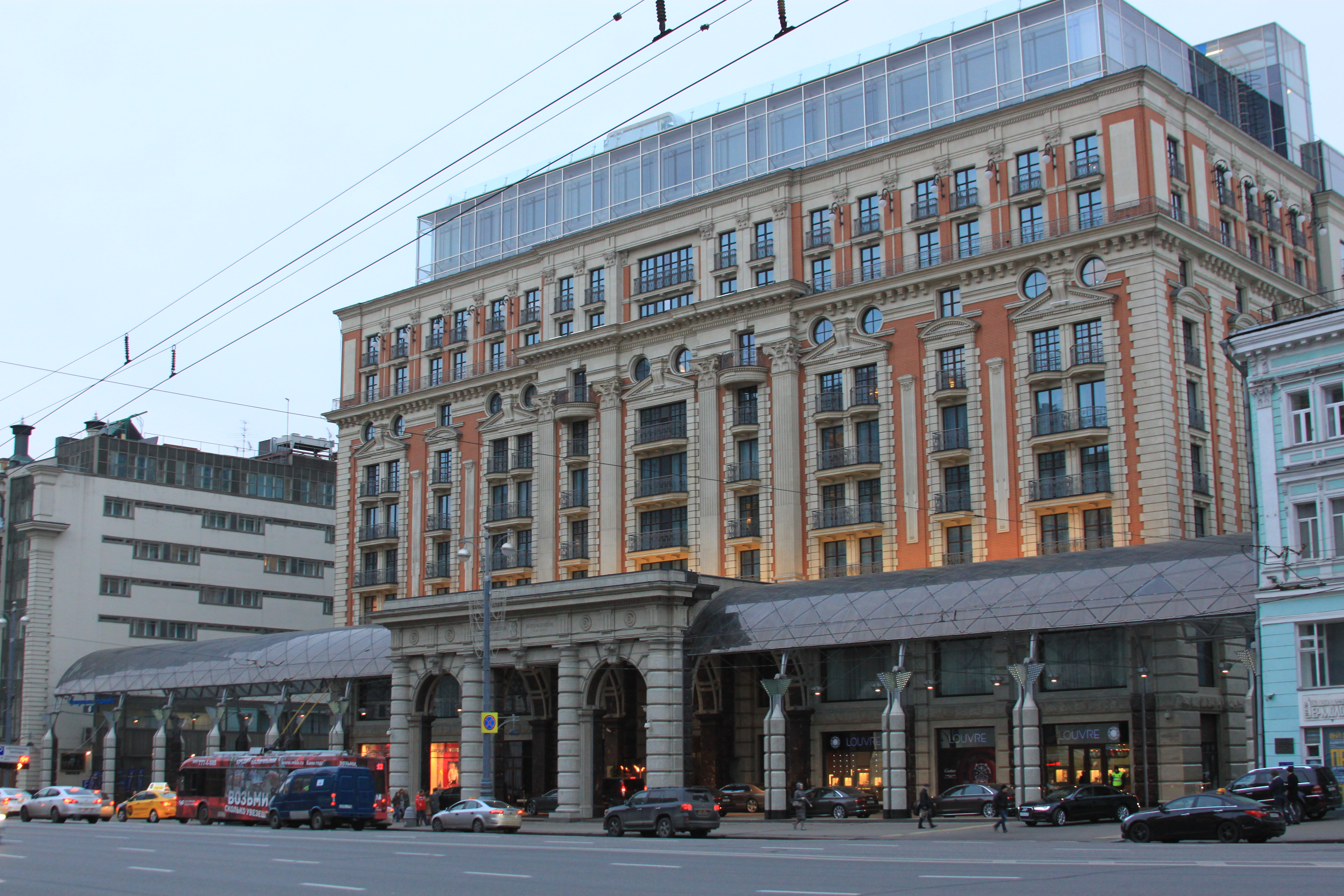
In 2013, while Trump was married to Melania, he was in Moscow without her for two days and nights ("36-hour"s) during the weekend of November 8-10. Allegedly, the golden showers incident most likely occurred early Saturday morning, November 9, and witnesses have described some other documented and public incidents that weekend that could possibly be used as kompromat against him.
Trump arrived in Moscow early Friday morning, November 8, and checked into the presidential suite at the Ritz-Carlton Hotel where the Obamas had stayed during their July 2009 visit to Moscow. The Agalarovs had reserved the presidential suite for Trump to stay in at the hotel, an 11-floor, 334-room, 5-star luxury hotel that was rated a "high counterintelligence risk environment", with Russian agents on staff, surveillance of rooms, and "a large number of prostitutes, likely with at least the tacit approval of Russian authorities".
Before arriving, Trump had written to Putin that "he looked forward to seeing 'beautiful' women during his trip". He was there not only to attend the 2013 Miss Universe pageant on Saturday evening, November 9, but also to network with powerful Russians in Moscow. Trump had a very busy schedule and was constantly surrounded by bodyguards and people in what was described as "a 36-hour whirlwind of meetings and public events".
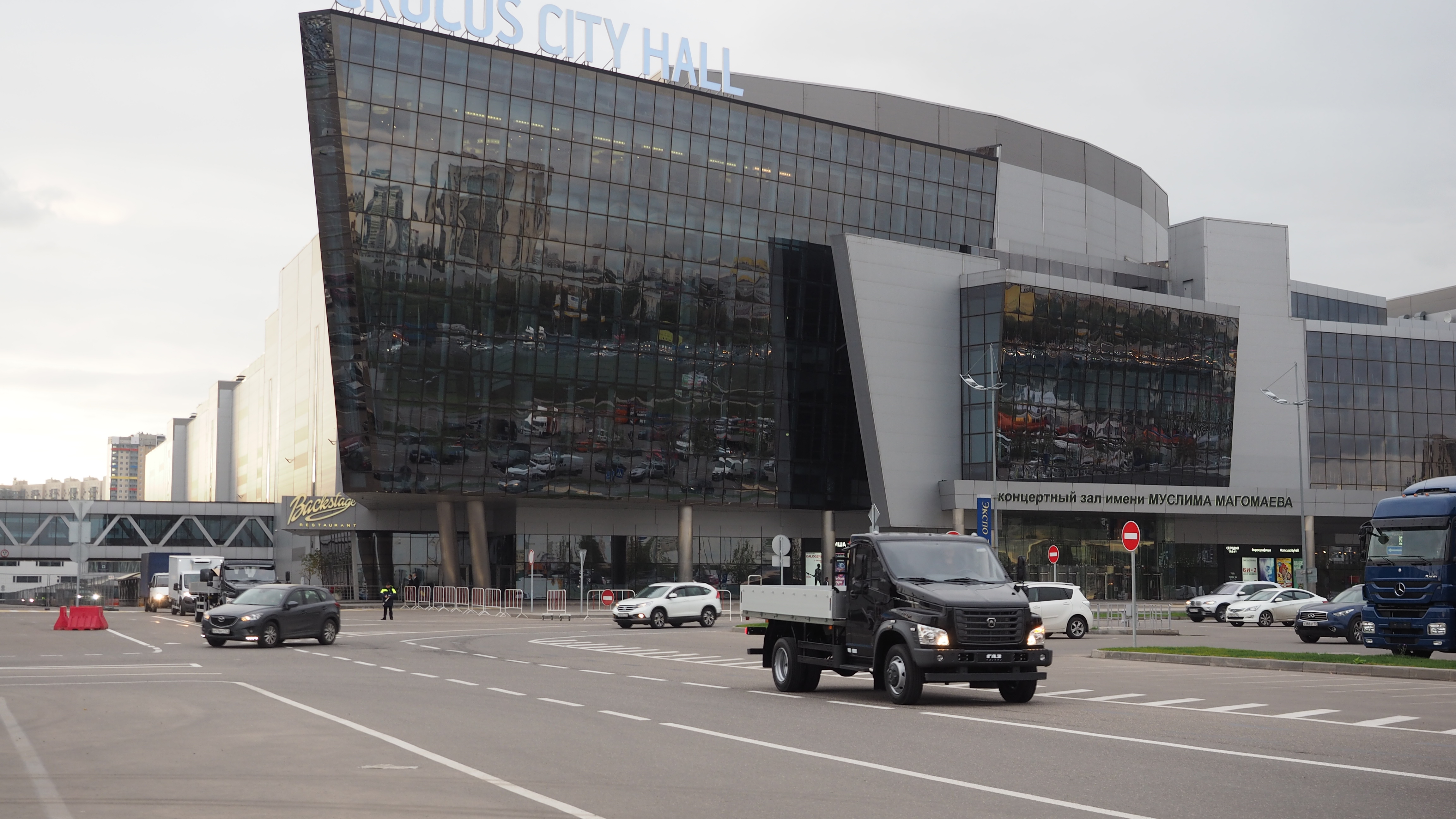
The pageant was hosted by Agalarov's real estate conglomerate Crocus Group and held at Crocus City Hall, the site of the later Crocus City Hall terrorist attack in 2024. The Agalarovs and their Crocus Group controlled much that happened around Trump that weekend, including reserving the luxurious $18,000-a-night Presidential Suite at the Ritz-Carlton Hotel for Trump, designating his "security guard", described by one source as a "ring of his bodyguards", and providing his translator.
According to Lawfare, the Senate report also "suggests-without stating outright" that Aras Agalarov and his Crocus Group had been involved with and supported Russian intelligence efforts to compromise and gain influence over Trump.
Events leading to a "five-hour window" of time
After arriving early Friday morning, November 8, Trump had a busy day ahead of him. Seth Abramson wrote that Trump arrived in Moscow with two business partners, Alex Sapir and Rotem Rosen, and he immediately began conducting meetings with bankers and others who might aid his Trump Tower Moscow project.
The day included going to a theater in Crocus City Hall to inspect contestants, where, according to his contractual and usual practice at Miss Universe pageants, he could "overrule the selection of judges and pick the contestants he wanted among the finalists". This was usually done in a specially-equipped room set up for him backstage: "He required unscented soap and hand towels—rolled, not folded." Miss Universe staffers explained how Trump would frequently "toss out finalists", especially those he deemed "too ethnic or too dark-skinned" and "replace them with others he preferred". On occasion, Trump allegedly "would reject a woman 'who had snubbed his advances'".
Keith Schiller later alleged that after a planning meeting for the next day's pageant, someone offered to send five prostitutes to Trump's hotel room later that same night. Manu Raju wrote that "Multiple sources said the offer... came from a Russian who was accompanying Emin Agalarov", but former Trump campaign aide Sam Nunberg said he was told that the offer actually came from Emin Agalarov, a claim denied by Agalarov. Abramson wrote that Emin Agalarov, Artem Klyushin, or a third person, made that offer.
The night before the pageant, when the prostitutes should appear at his room, was the only time he was provably in Moscow for the full night, and calculations indicate it was also the only time the alleged golden showers incident most likely could have occurred, as the next night was excluded because Trump attended the Miss Universe pageant, went to an after-party, and then was driven directly to the airport without going back to his hotel.
Martin Longman, writing for Washington Monthly, wrote:
Following Aras Agalarov's 58th birthday party that evening, Schiller took Trump back to his room at around 1:30 a.m., early Saturday morning, November 9. For Trump, that Moscow Time was like 5:30 p.m. in New York, a time when he would normally be wide awake. Schiller later claimed he told Trump about the offer of prostitutes, that they laughed off the offer, and that "the liason never occurred", but his honesty has been questioned.
The dossier does not mention the exact time of the alleged incident, but several writers have analyzed all of Trump's activities and, drawing on a detailed hour-by-hour timeline prepared by Bloomberg News and additional information from flight logs, social media posts, his bodyguard Keith Schiller, and music publicist Rob Goldstone, concluded that if the alleged incident happened, it most likely occurred after he returned to his hotel room that night.
Goldstone described this period as "a five-hour window that Trump was afforded to sleep early Saturday morning". Martin Longman agreed with Goldstone about the timing: "Even if [Trump] had gone straight to bed the night before, he probably would have gotten no more than four or five hours of sleep." Trump had also agreed to appear in a music video shoot for Emin Agalarov the next morning, "but it had to be early — between 7:45 and 8:10 in the morning".
The alleged "golden showers" incident
Schiller was later questioned about what happened after Trump arrived at his room, but he was unable to provide an alibi for Trump because he "eventually left Trump's hotel room door and could not say for sure what happened during the remainder of the night".
Analysts said this left "open the possibility that the encounter may have occurred after Schiller left", and the Senate Committee's investigators found that "Several items on the hotel room bill may indicate additional social activity following the birthday party."
According to Rolling Stone reporter Reid Forgrave, Igor Danchenko said that "Trump was with some powerful Russian oligarchs, who brought the sex workers" to what a Russian oligarch described as "a party" in Trump's room.
There, Trump allegedly told "a number of prostitutes to perform a 'golden showers' (urination) show in front of him" in order to defile the bed used by the Obamas, which was described as an act of disrespect toward the sitting President. The dossier reports that the Russians considered this to be "perverted sexual acts", and that the alleged actions were "arranged/monitored" and secretly recorded by the FSB, purportedly for use as kompromat to blackmail and exert influence over Trump. It also asserts that they are "able to blackmail him if they so wished", that they are prepared to use this kompromat against him, and that he "should bear [this] in mind in his dealings with them".
Interpretations and reactions
Forgrave reported that Igor Danchenko characterized the alleged incident as resembling a "stupid college prank" but said it symbolized what he saw as a "strange" and "perverted" closeness between Donald Trump and "important politically-exposed individuals in Russia".
Michael Cohen said that with Trump "anything was possible. I didn't believe it and have said so publicly, but I also could not definitely rule out the possibility it was true, nor did I particularly care-unless someone could prove it." He also wrote that "The tape was supposedly taken... as a way to ritualistically taunt them, if peeing on a bed can be said to constitute a ritual."
John Sipher, a former American intelligence officer and foreign policy, intelligence, and national security expert, has pointed out that nothing indicates that Trump did anything other than instruct and watch the prostitutes. Unlike what some sources have alleged, the rumor and dossier do not indicate he was involved in any direct sexual contact with the prostitutes, nor that they urinated on him.
Sipher further said that Trump didn't just seek "to denigrate" and "shame" Obama because he hated him, but that Trump's approach to anything "Obama" is to obliterate it, an ancient practice called "damnatio memoriae".
Several writers have attributed this hatred of Obama to Trump's racism, resentment, and desire for personal revenge after Obama roasted Trump at the 2011 White House Correspondents' Dinner. David Remnick, the editor-in-chief of The New Yorker, was sitting a few tables away. He said "Trump appeared to be 'steaming.' He was not having a good time.... He was being treated as piñata by the president of the United States, and I think he felt humiliated."
Description of rumor
Christopher Steele's description of the "hotel anecdote" is the only known published description of the rumor, and all later descriptions derive from it. He wrote that he got the information from seven Russian sources, and Roger Sollenberger wrote that the "pee-pee tape" rumor is the dossier allegation with the "most sources attached to it, all of them independent":
Media reports often refer to the rumor as the pee tape, golden showers tape, piss tape, pee pee tape, or Moscow tape.
When Cohen and Rtskhiladze first read the dossier's description of the rumored incident in January 2017, they immediately recognized that the tape they had been trying to find and suppress, and which Rtskhiladze said he had "stopped", was "one and the same" as "the infamous pee tape" described in the dossier.
Ashley Feinberg, journalist for Slate magazine, has described the "unproved" verification status of the salacious rumor. Referring to allegations in the Steele dossier, she wrote: "A number of the claims have since proved true, thanks to the Mueller report; others have not. The most salacious of the allegations... falls into the unproved category."
Feinberg has investigated the "pee tape" rumor, the hotel's presidential suite, and an extremely realistic "Piss Tape" video now hosted at the Internet Archive. The Senate report does mention that "Piss Tape" video of the purported incident:
The following is the dossier's detailed account of the , along with its anonymized description of four of Danchenko's seven for the information, presented in full context. (Color coding has been added.)
Other potentially compromising incidents that weekend
Trump was also involved in other incidents that weekend that could have provided more kompromat:
- Witnesses said they observed him in the Ritz-Carlton lobby with a group of prostitutes and heard him loudly defending them from hotel security, who were trying to prevent the women from going up to Trump's room without signing in. The confrontation was later reported by an editor at The Guardian.
- He was also videotaped in a Ritz-Carlton elevator "involved with several women" described as "hostesses". Two Marriott International (the parent company of the Ritz-Carlton) executives later discussed the video and what to do with it.
- David Geovanis, a Moscow-based Russian American businessman, intimated he could blackmail Trump: "Mr. Geovanis said that he showed Mr. Trump around Moscow during the Miss Universe pageant in 2013. He did not get into specifics, but intimated that there was partying and that Mr. Trump should be nice to him in light of the information he had."
- On Trump's final night in Moscow, the beauty pageant was followed by an after-party, which he arrived at shortly after 12:30 a.m. on November 10. At the party, he separately accosted and propositioned two young women in a conspicuously public and physical manner, but without success.
- According to a May 2016 interview with Hungarian celebrity Kata Sarka, president of Miss World Hungary, she was with her husband Péter Hajdú at the after-party when Trump "reached out of the ring of his bodyguards, grabbed her arm, pulled her into his own circle", and propositioned her. He invited her to his room and gave her his business card, private telephone number, and hotel room number. She turned him down. Seth Abramson cited this opportunity for kompromat collection, disclosed before the dossier was written, as evidence that Trump was lying about being discreet in Moscow, that he was publicly careless, and that his deceptive denials showed his "consciousness of guilt".
- Trump also accosted another young woman, a 26-year-old aspiring Armenian actress, Edita Shaumyan. He tried to get her to come to his hotel room, but she rejected his advances. Instead, "Shaumyan took selfies with him. (She later produced five photos and a video of her with Trump that night.) But nothing further happened. Trump later had somebody give Shaumyan his business card with his phone number on it. She never called."
- Then, after the party, he was driven directly to the airport without going back to his hotel.
Security risks associated with Crocus Group
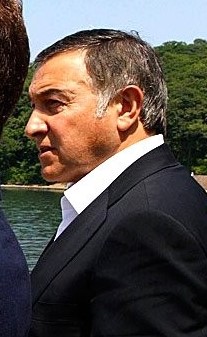
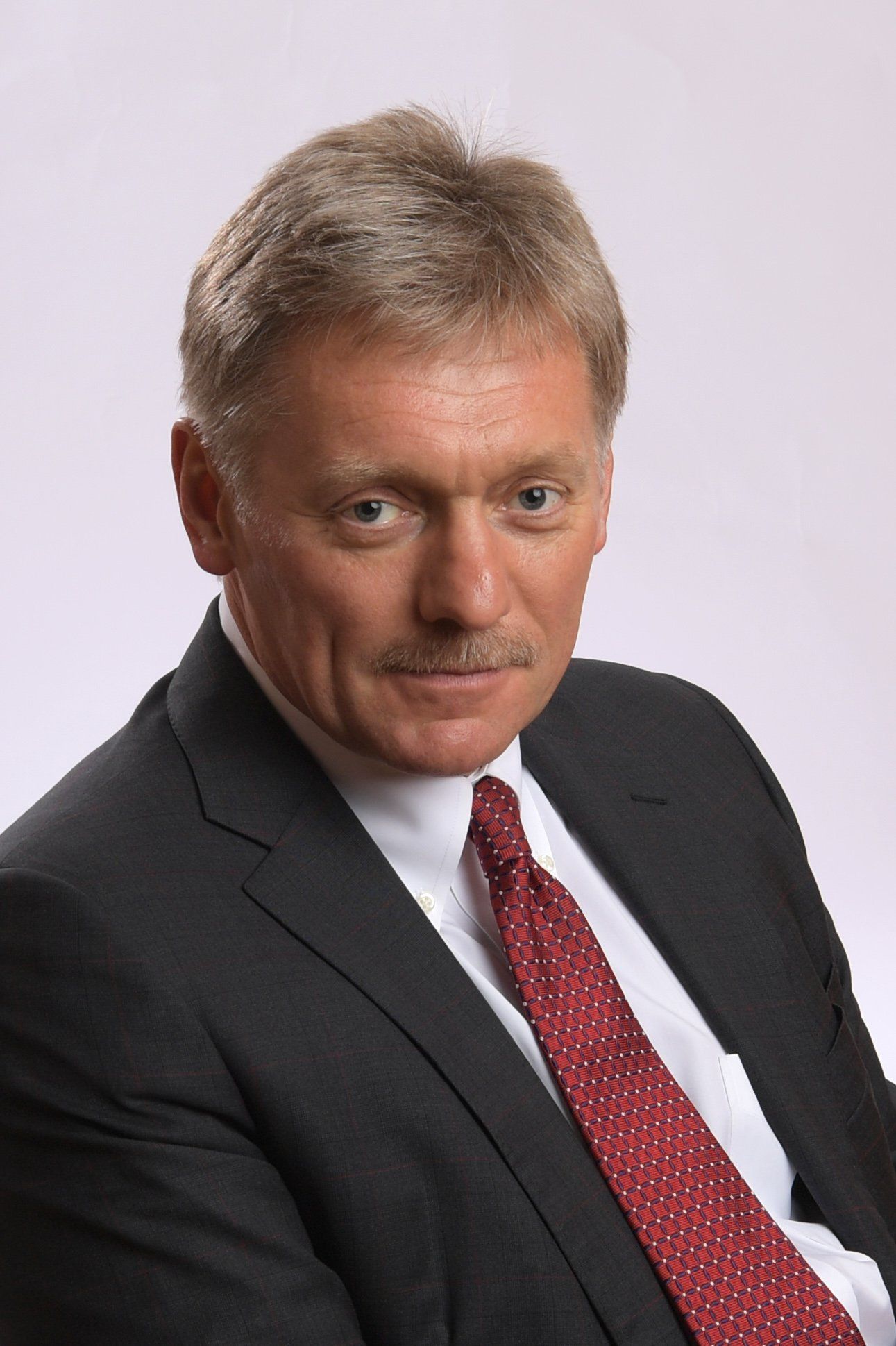
The Agalarovs and their Crocus Group exercised significant control over events, places, and people around Trump during the 2013 Miss Universe weekend, raising concerns about potential security risks. According to Lawfare, the Senate Committee "suggests-without stating outright" that Aras Agalarov and his Crocus Group had been involved with and supported Russian intelligence efforts to compromise and gain influence over Trump.
Aras Agalarov has close ties to Vladimir Putin, Dimitry Peskov, Yury Chaika (described as the "Master of Kompromat"), and many forms of organized crime. According to Forbes, the Senate Committee wrote:
Trump's close business ties with such individuals, both as a candidate and as president, have been criticized. Agalarov has many ties to Trump, including financial, and was involved in Trump's plans to build a Trump hotel in Moscow. Michael Cohen was Trump's representative in most of his business dealings with Agalarov in Russia, and the Senate Committee wrote that Giorgi Rtskhiladze "warned him twice against working with the Agalarovs, saying they were 'really rough'". Rtskhiladze is a Georgian-American businessman who worked with Cohen and the Trump Organization on real estate projects in the former Soviet Union, including a proposed Trump Tower in Georgia (2010-2012).
Upon arriving in Moscow, the first thing Trump did was to check into the Ritz-Carlton Hotel, which had been rated a "high counterintelligence risk environment" due to the presence of Russian agents on staff, surveillance of guest rooms, and "a large number of prostitutes, likely with at least the tacit approval of Russian authorities". The Agalarovs had already reserved the hotel's presidential suite for Trump. When a suggestion was later made to move Trump to the InterContinental Hotel to reduce costs, Emin Agalarov insisted that Trump remain at the Ritz-Carlton: "trump will stay at the ritz comply with me." Emin also requested that "room options be sent to him".
The Agalarov's efforts to compromise and gain influence over Trump in June 2013, when they observed him watching a golden showers performance "with delight" in a Las Vegas sex club, were noted in the Senate report and commented on by the national security experts at Lawfare.
Independent accounts from Steele's sources and Giorgi Rtskhiladze implied that Agalarov and his company were aware of Trump's alleged sexual activities in Russia and had "alleged compromising tapes" of Trump. In the 2021 Rtskhiladze v. Mueller case, District Judge Christopher R. Cooper wrote an opinion that acknowledged that Trump being secretly recorded was a likely consequence of any indiscretions committed in settings controlled by the Agalarov's Crocus Group, as described by Rtskhiladze.
Adam Davidson has described how the Agalarovs work under the informal "sistema" and "blat" system of corruption, kompromat, and constant fear that affects the actions of people from Russia and other nations in that part of the world, even when they work in the United States. Davidson has described how anyone who works with them is endangered, and how Trump's mere association with the Agalarovs would compromise him and make him susceptible to blackmail. In this system, everyone collects kompromat and videos on each other, even their friends and business partners, so everyone exists with the threat of even small missteps being used against them, so they try not to antagonize others. According to Davidson, Trump is endangered because he has worked with "many ethnic Turks from Central Asia, such as the Mammadov family, in Azerbaijan; Tevfik Arif, in New York; and Aras and Emin Agalarov, in Moscow [and] large numbers of émigrés from the former Soviet Union."
According to Michael Weiss and Catherine A. Fitzpatrick, the Agalarovs were close associates of Trump who had organized and managed his recent trips to Moscow. Weiss and Fitzpatrick have suggested the possibility "that either Aras or Emin - or both - were also sources" for the golden showers allegation. Although "Source D", an alleged source for that allegation, was identified by The Washington Post as Sergei Millian, his alleged involvement as a source was later brought into question. Instead, they suggest that the father and son are more likely candidates for the role described and played by "Source D".
Awareness of rumor over time
Before the dossier's description of the rumor was publicized on January 10, 2017, Russian, and possibly other, intelligence agencies were already aware of multiple non-public allegations and multiple purportedly compromising recordings, and with time, the CIA and the Senate Intelligence Committee also became aware of them. Over time, this background knowledge became intertwined with the golden showers rumor and was known to several distinct groups described below.
Regardless of its veracity, the "Moscow tape" rumor became known to at least six groups before it became public. While this happened in a general chronological order, there are overlaps and exceptions. The first two to know about the alleged incidents, Trump and Russian intelligence, would logically have become aware of the alleged events as they occurred, but Cohen explained how Trump would not have known he was being recorded.
Other groups included the Russian populace, members of Trump's circle, and Christopher Steele and his sources and staff. By late 2016, the "pee tape" rumor had reached both American and British intelligence services, and James Comey mentioned the rumor in a classified briefing for President-elect Trump at Trump Tower on January 6, 2017. The American public and rest of the world did not become aware of the allegation until the dossier was published on January 10, 2017.
Trump, Russian intelligence, Agalarovs, and Crocus Group
Because Trump is alleged to have been involved in multiple sexual incidents in Russia over the years, and Russian intelligence is alleged to have recorded them, they were necessarily the first and second entities to be aware of potential Trump kompromat. "[A]ctive duty CIA officers dealing with the [Trump] case file" reportedly consider these reports about multiple kompromat incidents as "credible", and the Senate Committee also found that "there may be substance to some of the allegations regarding Trump". Trump is not known to have returned to Russia after 2013, making the alleged "golden showers" incident the last of the alleged encounters. He was reportedly aware of some of these reports: "The Committee's Report also shows that prior to and during the campaign, Trump was informed of alleged compromising tapes of him in Moscow. These allegations are separate from Christopher Steele's reports, which were not used to support the Committee's work."
Cohen later highlighted the distinction between Trump's direct personal knowledge of alleged events and his lack of awareness of the recordings:
Michael Cohen's testimony in 2019 revealed Trump had prior knowledge of the "pee tape" rumor several years before the dossier was produced:
Having first been told of the Moscow tape rumor shortly after the Miss Universe contest, Trump was later repeatedly informed of similar allegations prior to and during the campaign, according to the Senate report:
The Senate Committee expressed their "ongoing concern":
These influence and misinformation operations created "counterintelligence concerns":
The Senate Intelligence Committee and CIA were aware of non-public allegations about multiple sexual incidents involving Trump during his prior visits to Russia that predated the dossier and the 2016 election campaign.
BBC News journalist Paul Wood reported that "active duty CIA officers dealing with the [Trump] case file" asserted there were "credible" "claims of Russian kompromat on Mr Trump" and multiple embarrassing recordings of Trump. The officers said
The Senate Committee described its concerns about how Russian intelligence had allegedly collected this kompromat on Trump for many years. The Committee mentioned a "potential counterintelligence threat" and the "possibility of a misinformation operation targeting the integrity of the U.S. political process":
The Russian collection of kompromat has a long history. Some have denied it would have happened to Trump, but a victim of such collection, Natalia Pelevina, said the idea "is not implausible": "I would not rule out that the Russian FSB has something against Donald Trump. Because they collect those materials not just against enemies; they collect against so-called friends. Just in case it will come in handy one day." Spy author Frederick Forsyth saw no point in it being done because Trump was just a game show host, but that logic was dismissed by a "former Russian intelligence agent": "Donald Trump was never just anyone. He was always a well-known businessman, not just a tourist."
The Senate Committee also mentioned an alleged affair: "One allegation, according to the report, is that 'Trump may have begun a brief relationship with' a former Miss Moscow in 1996. Trump was at the time still married to his second wife, Marla Maples,..."
The report also mentions other women:
According to Lawfare, the Senate Committee "suggests-without stating outright" that Aras Agalarov and his Crocus Group had been involved with and supported Russian intelligence efforts to compromise and gain influence over Trump. Steele's sources reported that Aras Agalarov had knowledge of Trump's alleged sexual activities in Russia, and Rtskhiladze said Crocus Group had "alleged compromising tapes" of Trump that Cohen later described as the "infamous pee tape" mentioned in the dossier.
Russian populace
The third group to be aware of the "pee tape" rumor was the Russian populace. According to Steele's sources, Steele obtained the "hotel anecdote" from seven Russian sources. It is the dossier allegation with the "most sources attached to it, all of them independent". Some of those Russians claimed to have learned about the alleged episode at the time it occurred. They included sources D and E and "several of the staff were aware of it at the time and subsequently... a company ethnic Russian operative to Source F, a female staffer at the hotel when TRUMP had stayed there, who also confirmed the story." In June 2016, that information was reported to Steele.
Michael Isikoff and David Corn reported that "tales of [Trump's] weird sexual indiscretions" became an "open secret" in Moscow. Igor Danchenko testified that it was "a well-known story", and reportedly so pervasive that in 2015 Sergei Khokhlov overheard, by chance, people at a nearby table discussing "tapes from Donald Trump's visit to Russia". Russian political analyst Stanislav Belkovsky also related that Moscow prostitutes said "the 'golden shower' orgy story is true".
Paul Wood reported that a "former colonel in Russia's intelligence services" told him about a Russian "pee tape" watch party: "He described the Kremlin elite gathering in a villa outside Moscow to watch the 'pee tape,' tears of laughter streaking their faces. 'That is our candidate for President of the United States!'"
Trump's circle
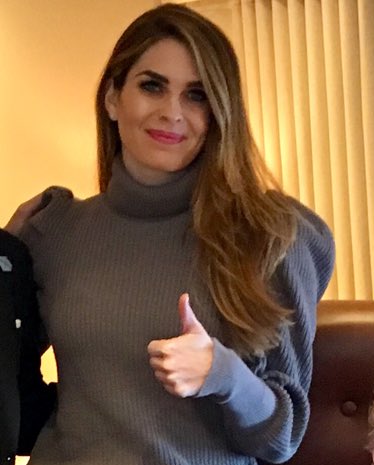
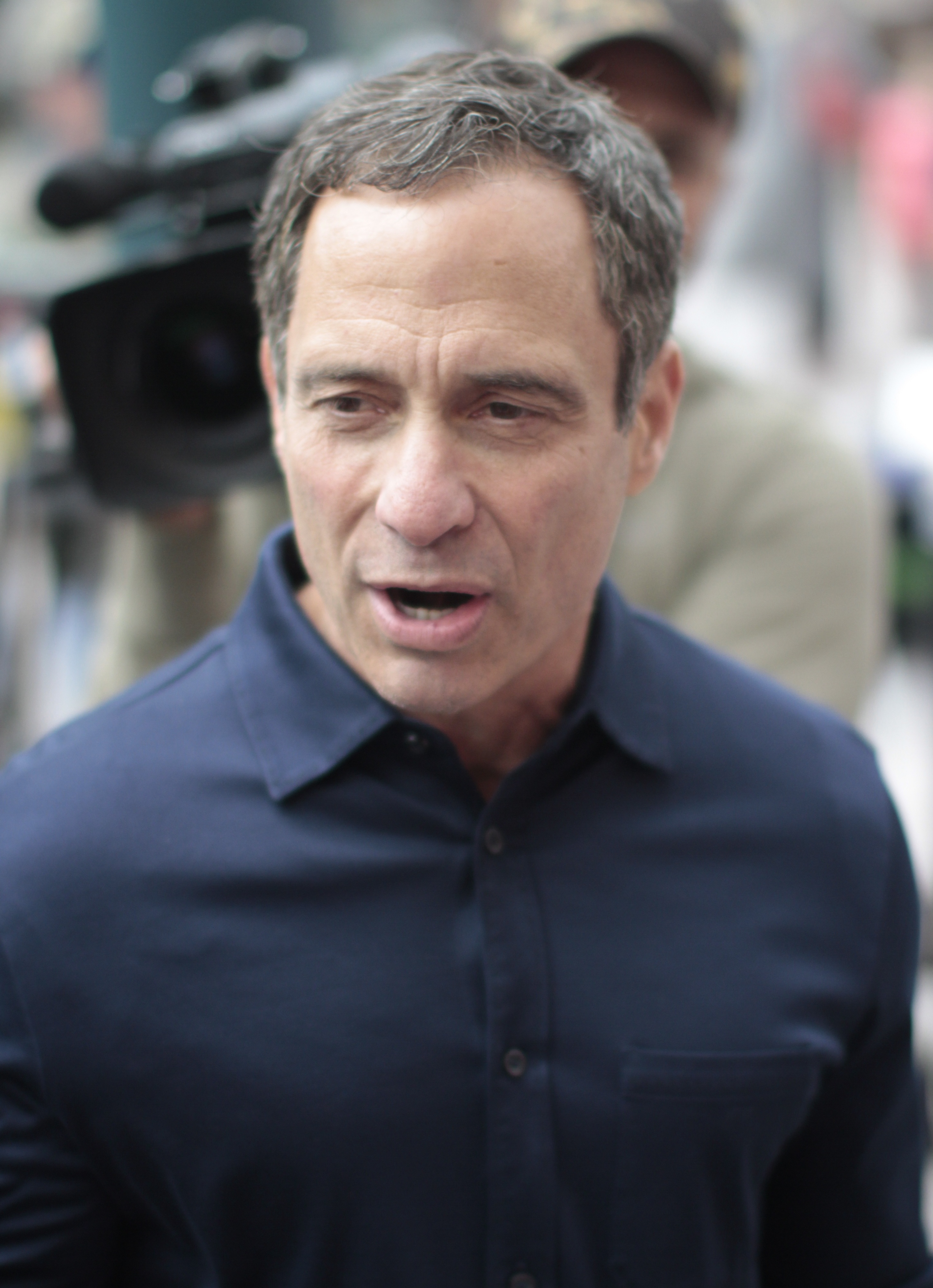
The fourth group to become aware of the "pee tape" rumor included "members of Trump's circle [who] were at one point very much trying to determine whether any evidence existed that could substantiate the tape's existence". That circle included Keith Schiller, Michael Cohen, Giorgi Rtskhiladze (whom Trump had met on multiple occasions), and others in their orbit. In spite of Trump's denials, his network acted as if the tape might be real, and Cohen, aware of Trump's long history of lying, did not accept his denial at face value: "Trump's word wasn't enough, needless to say," Cohen wrote, adding that it was nevertheless "entirely plausible that Trump had been involved in such a tape".
Although Cohen did not accompany Trump to Moscow in 2013, as Trump's self-described "fixer" he played a significant role in the efforts to find and suppress what he called the "infamous pee tape when Mr. Trump was in Moscow for the [Miss Universe Pageant]":
Cohen then told Trump about the allegation, and he "asked Cohen to find out where the allegations were coming from". In "2014 or 2015", Cohen acted on this request by asking Rtskhiladze to "find out if the tape was real". Judge Cooper noted
Cohen testified that he was aware of "other similar allegations that began shortly after Trump's travel to Moscow in 2013", and that many others had also known about the rumor and contacted him "over the course of several years".
Cohen and Hope Hicks discussed the old rumor with Trump before they knew of the dossier, which Trump first learned of on January 6, 2017, when its salacious reports were presented to him by then-FBI Director James Comey. The Senate report noted that "prior to and during the campaign" Trump was again "informed of alleged compromising tapes of him in Moscow. These allegations are separate from Christopher Steele's reports."
The "pee tape" rumor came to be known by individuals in the media, some of whom contacted Cohen. Among them were Harvey Levin, David Pecker, and Dylan Howard, who all had close ties to Cohen and Trump. Pecker and Howard of the National Enquirer are known to have performed "catch and kill" operations for Trump, including knowing of hush money payments to help Trump cover up his affairs with Stormy Daniels, Karen McDougal, and possibly others.
According to prosecutors, "the trio" of Trump, Cohen, and Pecker had a formalized "catch and kill" arrangement which they used in sensitive cases:
Pecker and Howard worked together and oversaw a number of scandals involving powerful figures, including Donald Trump. Trump's history as a playboy, with affairs, divorces, and many sexual misconduct allegations against him, has made him vulnerable to blackmail. His divorces and lawsuits have included evidence that he is accustomed to adultery, paying to cover it up, and paying for sex. He tried to hand cash to Playboy Playmate of the Year Karen McDougal after sex, which she refused. He also offered to pay porn star Jessica Drake $10,000 for "her company".
In addition to Pecker and Howard, TMZ{{'}}s Harvey Levin contacted Cohen about the rumored tape "way before" the dossier's publication, illustrating that the allegation was circulating in Trump's orbit long before it became public.
Before the election, Hustler magazine was interested in the tape. Wood wrote that "Larry Flynt, publisher of the pornographic magazine Hustler, put up a million dollars for incriminating tape of Mr Trump."
Steele and others before dossier publication
The fifth group's knowledge was related to Steele and early awareness of the dossier, starting in July 2016. After Steele began to receive reports back from Igor Danchenko and various sources in Russia, some staff at Orbis Business Intelligence and Fusion GPS began to learn some details. He also began to privately share some details with Marc Elias, the lawyer for the DNC and Clinton campaign, who was only "briefed orally". The FBI Crossfire Hurricane investigation began on July 31, 2016, but it wasn't until September 19, 2016, that the team and their leader, counterintelligence official Peter Strzok, first received any of Steele's reporting.
In the late summer, Steele began to privately share some information, but not copies of his memos, with journalists Paul Wood, Michael Isikoff, and David Corn. Although he shared some information with them and a few other journalists before the election, only two news sources mentioned some of the dossier's allegations, but neither mentioned the salacious "pee tape" rumor. They were Yahoo! News and Mother Jones magazine.
Steele also told Bruce Ohr about the rumor and that Russian intelligence believed they had Trump "over a barrel". Sir Andrew Wood, John McCain, and his aide David J. Kramer also became aware.
A few days before January 5, 2017, during the President's Daily Briefing, James Clapper, Director of National Intelligence, informed Barack Obama of the "golden showers" allegation. Obama, who knew nothing, "was incredulous". Other attendees, including Condoleezza Rice, also heard the message. "You don't really expect to hear the term 'golden showers' in the President Daily Brief," a participant in this meeting later said, "or that the guy who is going to become president may be a Manchurian candidate."
Then, on January 5, the four intelligence chiefs (John Brennan, James Clapper, James Comey, and Michael S. Rogers), as a group, informed President Obama and Vice-President Joe Biden of the dossier and its salacious allegations.
On January 6, the four intelligence chiefs informed the bipartisan Gang of Eight of the 115th United States Congress: Richard Burr, Kevin McCarthy, Mitch McConnell, Devin Nunes, Nancy Pelosi, Adam Schiff, Chuck Schumer, and Mark Warner.
Also on January 6, they went to Trump Tower. There the group informed Trump of the Russian election interference, and then Comey, according to plan, privately briefed Trump about "the sensitive material in the Steele reporting". Trump then dissembled by not revealing he had known of this rumor since 2013. Trump later testified in London that this was the first time he was "made aware" of the dossier (not the rumor).
American and British intelligence
American and British intelligence agencies were the sixth group. While the precise timing is uncertain, both became aware of the "pee tape" allegation during the late summer of 2016 because Steele shared his findings with them, and Comey later included the claim in a classified briefing for President-elect Trump on January 6, 2017. Critics of the dossier claimed it and its allegations were Russian disinformation fed to Steele and his sources, a claim strongly denied by Steele. Although the possibility of Russian disinformation was discussed internally at the FBI and mentioned in the DOJ Inspector General's 2019 report, FBI investigators found no evidence that any part of the dossier, including the "pee tape" claim, was inserted or shaped by Russian intelligence. Therefore, the FBI treated the rumor as unverified, not as Russian disinformation.
American public and rest of the world
The American public and rest of the world were the seventh group. They learned of the rumor on January 10, 2017, when the unfinished raw reports in the dossier were published by BuzzFeed without permission. Most people, not knowing of Trump's prior knowledge of the original rumor, naturally assumed the rumor originated with the dossier.
Others who first learned of the dossier then were Hillary Clinton, Debbie Wasserman Schultz, Brian Fallon, Michael Cohen, and most members of Congress.
After the dossier went public, Penthouse magazine showed interest in the tape: "So we are offering up to $1-million to secure exclusive rights to the FSB tapes documenting Trump's Russian hotel hijinks. After all, seeing is believing."
After the publication of the dossier, comedians and commentators produced a stream of jokes as well as serious commentary about the "pee tape" rumor. Twitter was "flooded" with jokes, including "a stream of pee puns", and the allegation became a frequent target of ridicule and satire, with hashtags like #GoldenShowers, #PeeTape, and #PEEOTUS trending. By the next day, there were about 70,000 jokes on Twitter about the rumor.
Comedian Seth Meyers, host of Late Night with Seth Meyers, pointed out how Sean Hannity kept the story alive by constantly repeating it on his Fox News talk show Hannity. Meyers quipped: "The only way you could do more to advertise this story is if you took out three billboards." The Late Night show's video team had created a humorous montage showing Hannity's frequent mentions of the alleged incident.
A fictional episode of the legal drama The Good Fight featured the "pee tape" and a woman who claimed to be one of the prostitutes involved in the incident.
In June 2018, Emin Agalarov released a music video that clearly alludes to golden showers, a "pee tape", and kompromat. It featured "impersonators playing Donald Trump, Ivanka, Jared Kushner, Hillary Clinton, Mark Zuckerberg, and Stormy Daniels, a series of briefcase handoffs, surreptitious meetings, and bikini-clad Miss Universe contestants". Mother Jones described the video as "an over-the-top trolling of the Trump-Russia investigation", whereas Sonam Sheth described it as "trolling Trump over the allegation".
Efforts to locate and suppress tapes
District Judge Christopher R. Cooper described how both the Mueller Report and the Senate report referred to the "efforts to suppress tapes involving alleged sexual escapades" involving Trump. This process began with Trump's request to Cohen, followed by Cohen's engagement of Giorgi Rtskhiladze, and culminated in Rtskhiladze's reported success in stopping the alleged tapes.
Search for tapes
Shortly after Trump left Moscow in 2013, Cohen learned of the rumor and told Trump about it. Trump denied the story and "asked Cohen to find out where the allegations were coming from". Cohen, who knew "Trump's penchant for lying", did not take him at his word and acted as if the tapes could be real, later writing that "Trump's word wasn't enough, needless to say," and that it was nevertheless "entirely plausible that Trump had been involved in such a tape". Cohen wrote: "I didn't believe it and have said so publicly, but I also could not definitely rule out the possibility it was true, nor did I particularly care-unless someone could prove it."
In response to Trump's request "to find out where the allegations were coming from", "in 2014 or 2015" Cohen contacted Rtskhiladze to see if he could "find out if the tape was real". Judge Cooper noted
Their later text exchanges (October 30 and November 9, 2016) about the rumored tapes have been described as efforts "to run them down and keep them quiet so that Trump could 'make it to' the White House". As Trump's "fixer", it was Cohen's job to make Trump's problems disappear, and Trump paid him to lie, threaten, and make hush money payments in efforts to cover them up. Der Spiegel described Cohen as "sort of like a crime-scene cleanup man who shows up when the boss has messed up again". Cohen later indicated a willingness to pay substantial sums ($20 million) "to suppress the information" about the rumored tapes.
The next development in the search was an October 2015 phone call to Rtskhiladze from Sergei Khokhlov, a friend and former business associate. He reported that in Moscow he had "overheard a stranger at a table next to him discuss tapes from Donald Trump's visit to Russia". The Senate report noted that, at the time, "The overheard dinner conversation was not important to Mr. Rtskhiladze and Mr. Khokhlov so they did not discuss this matter again." Instead of reporting this immediately to Cohen, Rtskhiladze waited a year to report it to him on October 30, 2016.
Cohen described how in mid-July 2016, a man phoned him and "threatened to release the alleged information [about the tapes] if the individual was not paid a large sum of money" ($20 million). Cohen was unwilling to pay anything without proof, and the man hung up the phone without providing it. Cohen wrote that even if the man "was a crank, or an idiot... the call was concerning".
Cohen immediately consulted with David Pecker about the call, and they discussed how they would have to monitor this potential "catch and kill" situation. Cohen wrote in his book Disloyal: A Memoir: "Pecker told me that there was a lot of chatter in the air about the possible existence of the Moscow tape, but he hadn't heard of anyone in actual possession of the tape". Cohen wrote that
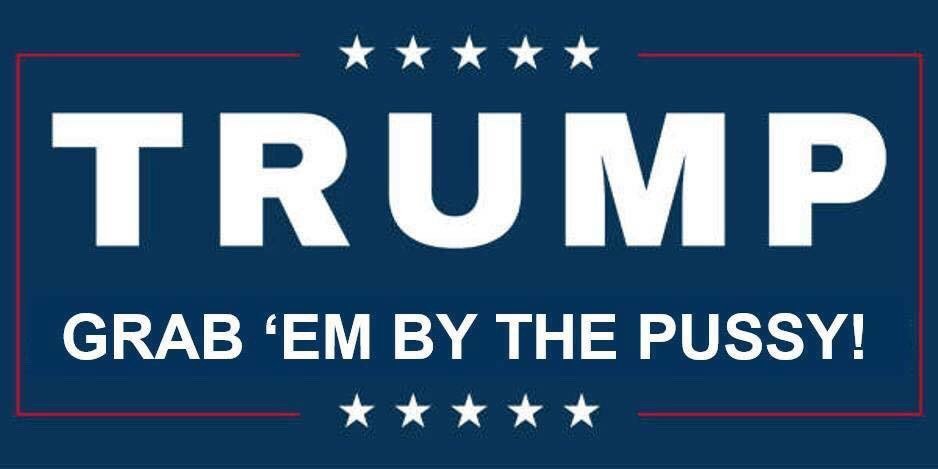
On October 7, 2016, news broke of yet another embarrassing tape, the Access Hollywood recording, in which Trump bragged about his practice of grabbing women "by the pussy" without their prior consent, an act classified as "sexual assault". Michael Cohen wrote that Trump was "advocating sexual assault as the entitled right of celebrities".
Unlike the rumored "pee tape", the Access Hollywood recording was public, and it created significant stress within the campaign; Hope Hicks testified that "everybody was in, like, a little bit of shock", and when she phoned Cohen in London to tell him about the Access Hollywood tape, he said she had "panic" in her voice and that he believed "she was way, way, way over her head in dealing with a scandal like this".
The next day, Trump campaign spokesperson Katrina Pierson, who already knew about the rumored "pee tape", told Hicks about it, which meant Hicks now had to contend with two tapes. Pierson said Harvey Levin of TMZ might have access to the "pee tape", and because Hicks knew that Cohen had a good relationship with Levin, she called Cohen and asked him to investigate and report back to her. She later testified about her phone calls with Cohen:
Hicks later testified to the House Judiciary Committee that she and others in the Trump campaign already knew of the "pee tape" three months before the publication of the dossier, and that she and Michael Cohen discussed the "pee tape" with Trump in October 2016. This information about Trump's early knowledge of the "pee tape" touched on the Mueller Report's "Footnote 112" and James Comey's briefing of Trump at Trump Tower right before his inauguration. At that time, Trump did not inform Comey that Cohen had told him about the "pee tape" rumor shortly after Trump left Moscow in 2013, or that he had again heard about the "pee tape" from Hicks and Cohen on October 8, 2016. Trump also said nothing about Cohen's October 30, 2016, communications with Giorgi Rtskhiladze, a fact Mueller drew attention to by writing "Footnote 112".
The White House was frequently occupied with managing controversies surrounding Trump, including numerous sexual misconduct allegations involving women, which kept Cohen busy in his role as Trump's fixer. He was not the only one involved; Trump's chief strategist, Steve Bannon, later stated that Trump's personal attorney "Marc Kasowitz 'took care' of 100 women during the presidential campaign." This situation involved multiple hush money payments and recordings, leading to confusion over which tape was being discussed, whether it was the alleged "pee tape" or the "Access Hollywood tape". This confusion became apparent during testimony by Hope Hicks before the House Judiciary Committee, where she had to clarify which tape she was referring to. There she also confirmed that both she and Trump had early knowledge of the "pee tape" rumor.
By October 2016, Trump was a serious presidential candidate, with election day on November 8, 2016. Giorgi Rtskhiladze realized how embarrassing tapes, like those Khokhlov had told him about in October 2015, could damage Trump's reputation and chances, as well as his business possibilities in the former Soviet Union. The October 2016 publication of the Access Hollywood tape moved Rtskhiladze to finally contact Cohen on October 30, 2016:
Success in stopping tapes
On October 30, 2016, Rtskhiladze began a series of text messages to Cohen, bringing the news that would resolve their concerns about the rumored "Moscow tape". The first texts are mentioned in the Mueller Report's "Footnote 112". (The full exchange is reproduced in "Majority Exhibit 38" below.)
Rtskhiladze described Khokhlov's message about the overheard discussion of sensitive tapes from Trump's 2013 trip to Russia. Rtskhiladze also told Cohen that he had successfully "stopped flow of some tapes from Russia".
Both Cohen and Rtskhiladze were familiar with the original rumor, and when they later read the dossier in January 2017, they recognized that it referred to the alleged golden showers incident and the "pee tape" they had been trying to locate and suppress since the rumor emerged in Moscow shortly after the Miss Universe 2013 pageant. Rtskhiladze later tried to deny that he "was referring to the tapes mentioned in the Steele Dossier" in his texts with Cohen, but District Judge Christopher R. Cooper rejected Rtskhiladze's denial, writing: "Rtskhiladze's own words as reproduced in the Senate Report show that he, at the very least, suspected in 2017 that the tapes referred to in his texts with Cohen and the tapes mentioned in the Steele Dossier were one and the same", and that he acted as if "the tapes may have been real".
After getting the good news, Cohen informed Trump and "several others" that the tapes had been stopped. The "several others" included Donald Trump Jr. and Keith Schiller. "Cohen has said that there was no additional action taken, and that he had been aware of other similar allegations that began shortly after Trump's travel to Moscow in 2013, none of which Cohen was able to corroborate."
This was about a week before the 2016 election on November 8, 2016, and two months before the dossier became public knowledge on January 10, 2017.
Text messages about stopped tapes
The House Intelligence Committee (HPSCI) provided the whole exchange between Rtskhiladze and Cohen in its "Majority Exhibit 38", reproduced below.
From |
To |
Body |
Timestamp: Date |
Timestamp: Time |
|---|---|---|---|---|
Rtskhiladze |
Cohen |
Stopped flow of some tapes from Russia but not sure if there's anything else. Just so u know... |
10/30/2016 |
7:30:22 PM(UTC+0) |
Cohen |
Rtskhiladze |
Tapes of what? |
10/30/2016 |
7:48:51 PM(UTC+0) |
Rtskhiladze |
Cohen |
Not sure of the content but person in Moscow was bragging had tapes from Russia trip. |
10/30/2016 |
7:52:12 PM(UTC+0) |
Rtskhiladze |
Cohen |
Will try to dial you tomorrow but wanted to be aware |
10/30/2016 |
7:52:41 PM(UTC+0) |
Rtskhiladze |
Cohen |
I'm sure it's not a big deal but there are lots of stupid people |
10/30/2016 |
7:53:25 PM(UTC+0) |
Cohen |
Rtskhiladze |
You have no idea |
10/30/2016 |
7:53:46 PM(UTC+0) |
Rtskhiladze |
Cohen |
I do trust me. |
10/30/2016 |
7:54:27 PM(UTC+0) |
Rtskhiladze |
Cohen |
He needs to make it to the WH Mike! |
10/30/2016 |
7:57:4O PM(UTC+0) |
Rtskhiladze |
Cohen |
Mike-Keeping fingers crossed I predicted Mr. Trump! |
11/9/2016 |
2:41:42 AM(UTC+0) |
Rtskhiladze |
Cohen |
Fantastic journey from Batumi to the WH! You and I need to do huge deals! |
11/9/2016 |
7:23:19 AM(UTC+0) |
Claim that "tapes were fake" disputed by judge and others
Mueller's office interviewed Rtskhiladze twice in 2018, and in the second interview, Rtskhiladze radically changed his story by claiming that the tapes he had previously spoken of and treated as real were "fake". "Footnote 112" in the Mueller Report mentions both interviews:
- First: In the April 2018 interview, when asked what he meant by "tapes" in his claim to have "stopped flow of some tapes", he said nothing about "fake tapes", instead stating that the tapes he had stopped were "compromising tapes of Trump rumored to be held by persons associated with... Crocus Group".
- Second: In May 2018, Rtskhiladze radically altered his story, citing what law professor Ruthann Robson called "hearsay" from Khokhlov, whom Rtskhiladze claimed had later called to say the "tapes were fake".
Rtskhiladze acknowledged that he "did not communicate that [altered story] to Cohen".
According to Stephanie Baker of Bloomberg News, this omission had left Cohen and Trump with "the impression that real tapes had existed" for nearly two and a half years, from October 30, 2016, when Rtskhiladze first told them of his success in stopping the tapes, until they read his "the tapes were fake" claim in the Mueller Report, released on April 18, 2019.
According to The New York Times, "Team Trump thought they existed, according to the Mueller report." Michael Cohen had, like other "Team Trump" members, acted as though the tapes may have been real. As Trump's personal attorney and self-proclaimed fixer, he knew Trump well and did not accept Trump's denial at face value, writing that it was nevertheless "entirely plausible that Trump had been involved in such a tape". James Comey also said he did not know whether it happened, but that it was "possible" Trump "was with prostitutes peeing on each other in Moscow in 2013".
Legal scholar Ruthann Robson also noted the question of Trump's own possible belief:
Roger Sollenberger wondered:
Robson noted that Rtskhiladze's later claim that the tapes were "fake" could imply that they "may not actually exist", which conflicted with his earlier text to Michael Cohen stating that he had "stopped" the tapes. She argued that accepting this conclusion requires treating hearsay relayed by Rtskhiladze as more credible than his own prior statement.
Emma Ockerman, writing for Vice magazine, also noted the inconsistency in the "fake tapes" claim, writing: "The text conversation also occurred long before the public was aware of the rumor's existence, and it's unclear why Rtskhiladze would've told Cohen he stopped 'flow of tapes' he didn't believe to be real."
Roger Sollenberger, who has written about many points of evidence that make him believe the "pee tape" exists, shared Ockerman's view. He wrote:
Rtskhiladze later unsuccessfully sued Robert Mueller, and in the case "Rtskhiladze v. Mueller, Memorandum Opinion, 20-cv-1591", District Judge Christopher R. Cooper cast doubt on the "fake tapes" claim. He said Rtskhiladze had "undercut" his own assertion by acting as if "the tapes may have been real" and by speaking as if being secretly recorded was a likely consequence of indiscretions committed in settings controlled by the Agalarovs and their Crocus Group. Judge Cooper wrote:
Because Rtskhiladze, at Cohen's request, had been searching for the tapes since "2014 or 2015", his message to Cohen, that he had "stopped flow of some tapes", not only showed he was treating the tapes as though they "may have been real", not fake (as noted by Judge Cooper), but also that he knew their content, which he described as "compromising tapes of Trump" from his Moscow trip, and that he had been in contact with (enough to stop the tapes) those he suspected most likely controlled them, an implication later confirmed by Judge Cooper in the 2021 Rtskhiladze v. Mueller case. Rtskhiladze's suspicions were based on his assessment that, "if compromising material existed, Crocus Group would likely be responsible", and that the "compromising tapes of Trump [were] rumored to be held by persons associated with... Crocus Group".
Like Judge Cooper, the Senate Committee appeared skeptical of the "fake tapes" claim, stating that they "did not identify evidence of a later call from Khokhlov". Had Rtskhiladze received such a call, he likely would have relayed the information to Cohen and mentioned it during his April 2018 interview with Mueller's investigators. However, he did neither, despite having received the original message in October 2016. Instead, in the later May 2018 interview, he radically changed his story by claiming that the tapes he previously treated as real were "fake".
Cohen testifies about "infamous pee tape"
In 2019, Michael Cohen testified twice before Congressional committees during which the "pee tape" rumor was discussed. By the time of these depositions, the media and comedians had, for over two years, made the "pee tape" a well-known "meme and a pop culture phenomenon". Cohen has referred to the alleged incident as "the pee tape party", "the 'pee tape' report", and the "infamous pee tape when Mr. Trump was in Moscow for the [Miss Universe Pageant]".
His testimony established that Trump became aware of the rumor "shortly after the Miss Universe 2013 pageant" and "significantly prior to the 2016 U.S. election cycle", directly contradicting Trump's false claims that the rumor was fabricated by Christopher Steele or his dossier sources.
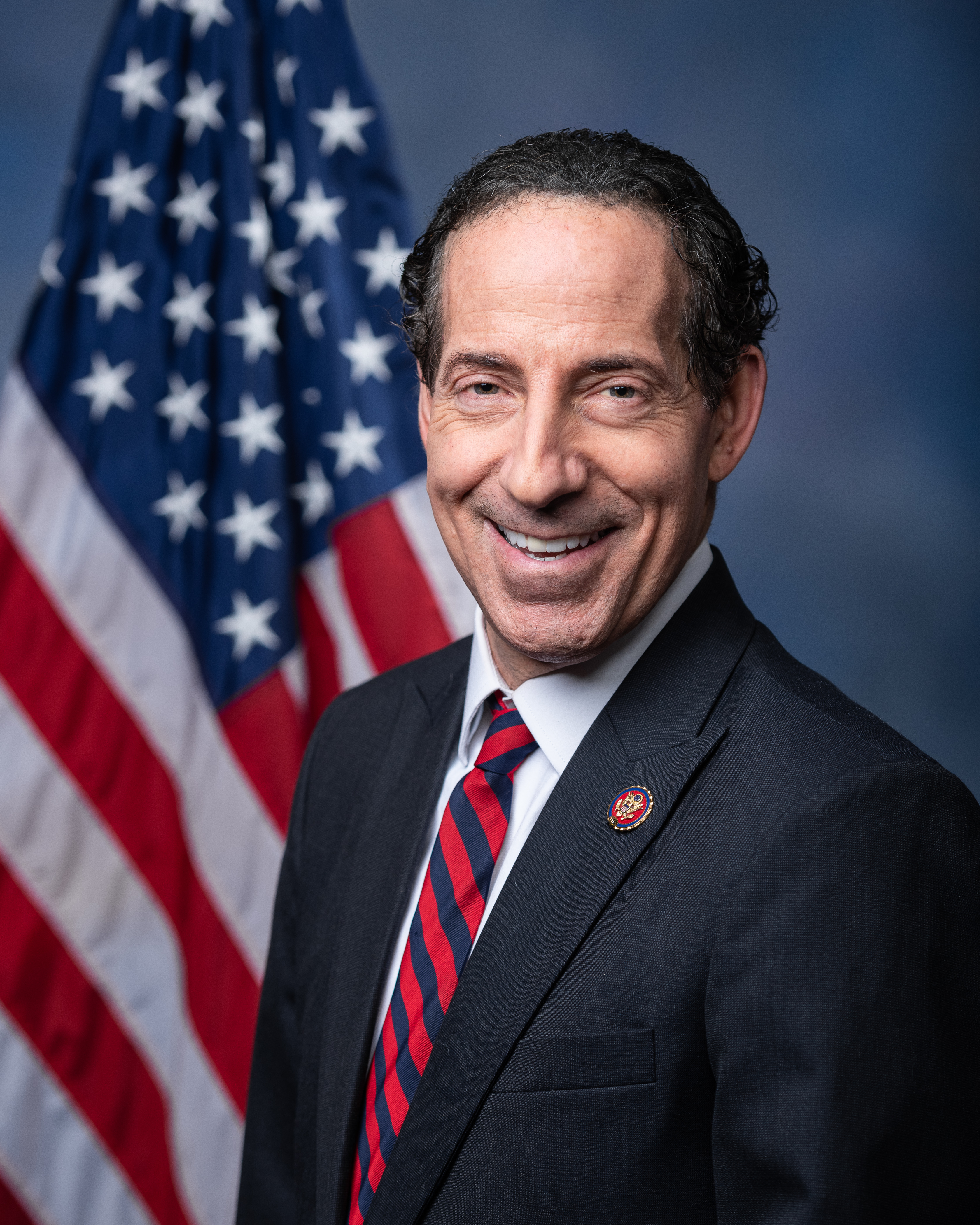
On February 27, 2019, Cohen testified before the House Committee on Oversight and Reform, and he was queried by Representative Jamie Raskin about the alleged "pee tape":
He later wrote that it was nevertheless "entirely plausible that Trump had been involved in such a tape".
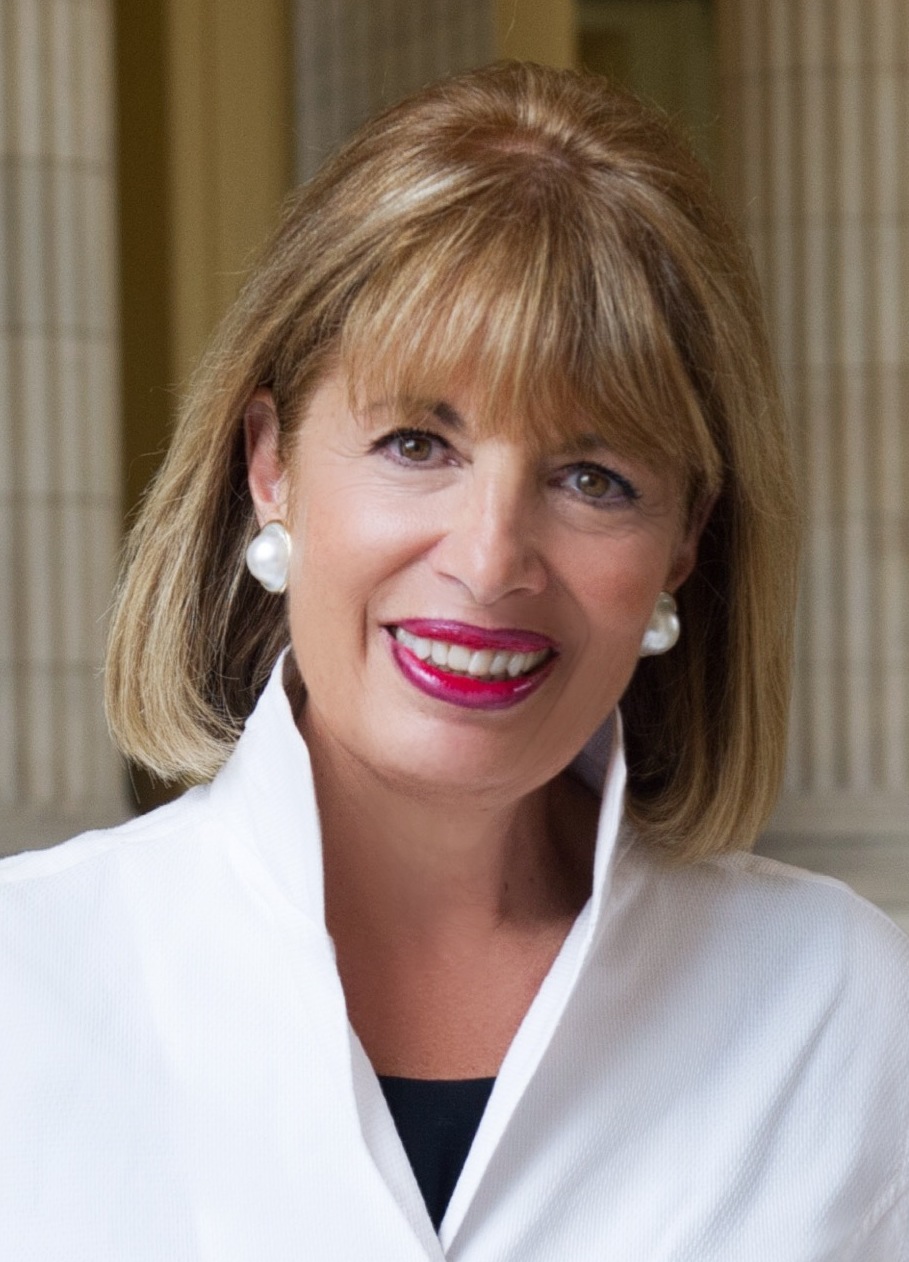
On March 6, 2019, Cohen appeared before the House Intelligence Committee, where he was questioned by Representative Jackie Speier. The House Committee discussed the Mueller Report's "Footnote 112", the "pee tape" rumor, and Rtskhiladze's October 30, 2016, texts to Cohen. Cohen's testimony made it clear that (unbeknownst to either of them at the time) the tapes Rtskhiladze stopped and was texting about were "one and the same" tapes as those mentioned in the dossier.
When Cohen equated the tape stopped by Rtskhiladze with the "infamous pee tape when Mr. Trump was in Moscow for the [Miss Universe Pageant]", Speier sought clarification:
When Speier asked him, "So you're suggesting you've known about the rumors about this tape for many years before October 30th?" Cohen responded affirmatively, stating that he had spoken with "many people" about the rumored tape over the years:
During her questioning of Cohen, Jackie Speier observed that the original rumor from 2013 had not faded away. She said: "but it persists, and then you're hearing it again on October 30th" 2016. Speier further stated, "It does not become public knowledge until January of 2017, when BuzzFeed releases the Steele dossier." That was not true, so Cohen corrected her, explaining that some form of public awareness of the rumored tape existed "way before" the dossier's publication: "That's not really true. There were conversations way before that. TMZ, Harvey Levin called me, said he had heard about the existence of it. You know, other people had heard of the existence of that tape."
The Senate Committee also reported about other allegations consistent with Cohen's testimony and stated that "Separate [from Steele's reports] but related allegations, which were not public, in some cases predated both Steele's memos and the 2016 U.S. presidential campaign."
Trump's false alibi
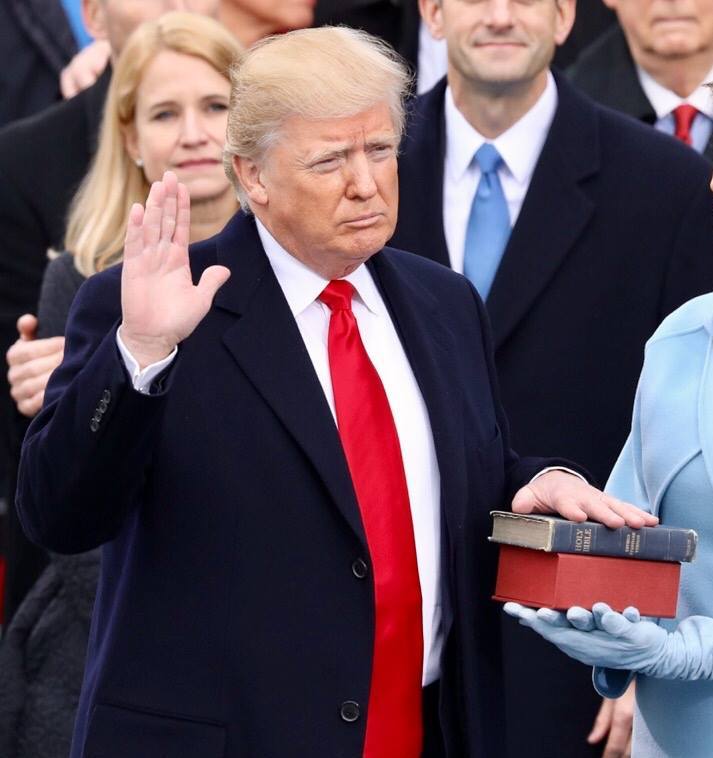
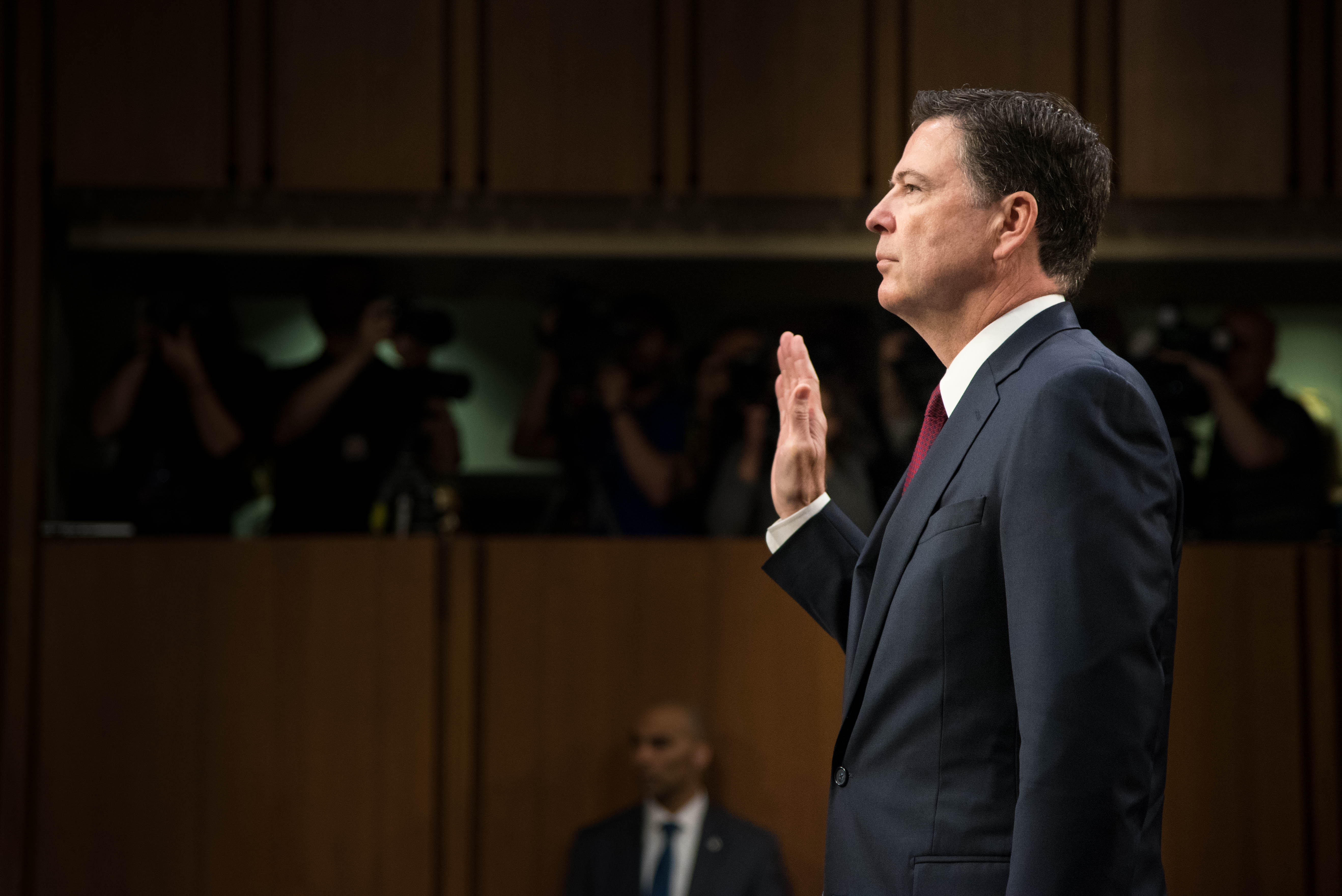
FBI Director James Comey met with Trump several times, and he described how, without any prompting, Trump brought up the "pee tape" allegation on "four separate occasions". Comey immediately made very detailed notes after each interaction.
Comey described how Trump repeatedly lied in various ways by using a false alibi about the time when the alleged incident could have happened, even though no one had brought up the topic or mentioned the time. Trump claimed he didn't overnight in Moscow even once. "Trump said the Moscow trip was so quick that his head never hit a pillow — even for one night.... He said he arrived in the morning, did events, then showered and dressed for the pageant at the hotel." "I went there for one day for the Miss Universe contest, I turned around, I went back."
Trump's alibi was contradicted by flight logs, his bodyguard, the pageant's host Thomas Roberts, his own tweets, and social media posts, among other things.
When Reince Priebus questioned Comey about why he told Trump about the dossier's salacious allegations in January 2017, Comey revealed that "elements of the dossier had been confirmed":
Trump went further than just denying he had overnighted in Moscow; he actually fabricated a false timeline: "At least twice more in the ensuing weeks, Mr. Trump laid out a timeline for Mr. Comey and claimed that it showed that such a tape could not exist." This timeline was contradicted by multiple witnesses and other timelines of the weekend's events.
Trump's denials omitted all mention of November 8 and the early morning hours of November 9, the only night he provably was in Moscow the whole night. Calculations affirm it was also the only time the alleged golden showers incident most likely could have occurred. Instead, the false alibi referenced only the following day and evening of the Miss Universe pageant, when the alleged incident could not have occurred, a fact mentioned by Charlie May, who said the alibi has a "big hole" in it because it leaves out the previous day and night Trump was in Moscow.
Two years later, in April 2018, after flight logs disproved Trump's alibi and showed he was in Moscow for the entire weekend of November 8-10, Trump denied having given such an alibi to Comey. Although he had created a timeline to support his alibi, he falsely claimed it was Comey, not himself, who had made the false assertion: "He said I didn't stay there a night. Of course I stayed there. I stayed there a very short period of time but of course I stayed."
Comey later recounted, with wry humor, that Trump's false alibi prompted him to think about the time required for the alleged activity to occur:
Reactions citing "consciousness of guilt"
In a CNN town hall interview with Comey, Anderson Cooper addressed Trump's false claim that "he did not stay overnight in Moscow around the time of the Miss Universe pageant in 2013":
Comey said he did not know whether the "golden showers" allegation was true, but Trump's disproven lies led him to view Trump's behavior as a reflection of his "consciousness of guilt". He later stated that, while the allegation remained unverified, he believed the incident was "possible". In a special edition of ABC's 20/20, Comey told George Stephanopoulos:
In his book A Higher Loyalty: Truth, Lies, and Leadership, Comey wrote: "In an apparent play for my sympathy, he added that he has a beautiful wife and the whole thing has been very painful for her. He asked what we could do to 'lift the cloud.'" Trump asked him to have the FBI investigate the rumor "because he wanted to convince his wife that it wasn't true.... He brought up what he called the 'golden showers thing'... adding that it bothered him."
Comey noted what Trump's wife might think and "what kind of marriage" Trump had:
Responding to Trump's request for an FBI investigation of the dossier and the rumor, "Comey said he told Trump that it ultimately was up to the president to decide whether to open a probe but cautioned that doing so could 'create a narrative' that the FBI was investigating him."
James Clapper, who was then the Director of National Intelligence, also received a request from Trump, this time to publicly say the Steele dossier was bogus. Clapper then emailed Comey: "[Trump] asked if I could put out a statement. He would prefer of course that I say the documents are bogus, which, of course, I can't do."
Analyses of Trump's denials and credibility
The "golden showers" allegation has been described by Trump's lawyers as "very embarrassing". In a losing lawsuit in the United Kingdom against Steele's firm Orbis Business Intelligence, they stated that he "was compelled to explain to his family, friends and colleagues that the embarrassing allegations about his private life were untrue", calling this "extremely distressing for the Claimant".
He has also repeatedly denied the allegation, calling it "phony", "false", and "fake news", but the sincerity of his denials and excuses has been questioned by many who have analyzed the events and his misleading statements.
When Michael Cohen heard renewed rumors of the alleged "pee tape" in mid-July 2016, he raised the matter with Trump, who denied it. But Cohen, who knew Trump well, later wrote:
Ashley Parker described how Trump's long history of lying and labeling uncomfortable facts as "fake news" has created an "enormous credibility gap" for him:
Trump's history of describing the dossier, without evidence, as "fake" or "discredited" has been called out by U.S. District Court Judge Amit P. Mehta:
Jennifer Rubin wrote that "In this case, evidence of the coverup" is "plentiful", and she described how Trump acts like a "guilty man" and how his fake alibi could be "strong evidence of guilt":
Michelle Goldberg sees "Trump's phony alibi" as just part of the "evidence that the tape might be real". After referring to Trump's June 2013 visit to The Act nightclub in Las Vegas, with its "lewd" and "offensive" performances, she observed how:
Bess Levin, a political correspondent at Vanity Fair, described Trump's alibi as "a total fabrication" and pointed to how that lie increased the credibility of the pee tape rumor. She described how some have tried to explain why Trump treats Russia with "respect and deference" by pointing to his "business interests" and "obsession with oligarchs", but she points to another possibility:
Martin Longman wrote: "There's a name for people who believe that the tape exists: peelievers. When I saw that Trump lied to Comey about spending a night at the hotel at all, it made me more of a peeliever." Regarding the time of the alleged incident, Longman wrote:
When Comey briefed Trump about the salacious rumor in the dossier on January 6, 2017, Trump "interjected":
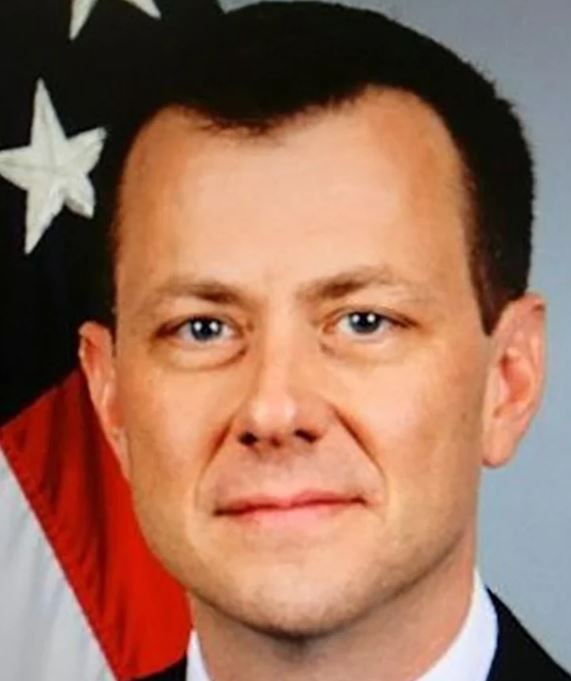
In his 2020 book Compromised: Counterintelligence and the Threat of Donald J. Trump, Peter Strzok, former FBI deputy assistant director of counterintelligence, has analyzed all the ways he believes Trump is compromised. He also analyzed Trump's reaction to Comey's briefing at Trump Tower. Immediately after Comey returned to FBI headquarters, having just informed Trump of the dossier and its salacious allegations, Strzok and other FBI officials gathered to discuss what he viewed as Trump's "nitpicking" and "vague" "lack of anger and a flat denial":
Josh Marshall said that "In any court, this lie would be entered as evidence of his lack of credibility on the main point. There's zero question he lied about this repeatedly and to multiple people."
Ben Schreckinger noted how "A conscious effort by Trump to mislead the FBI director could lend weight to the allegation [in the dossier] that Trump engaged in compromising activity during the trip that exposed him to Russian government blackmail."
According to American trial lawyer Peter Zeidenberg: "It has also likely caught the eye of Special Counsel Robert Mueller.... False statements to Comey about the trip could demonstrate that Trump has 'consciousness of guilt'. That could bolster a legal case against Trump."
Bodyguard's claims questioned
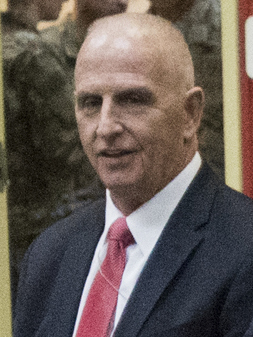
Keith Schiller was Trump's personal bodyguard for nearly two decades and has been described as "one of Trump's most loyal and trusted aides" and "a constant presence at Trump's side". Along with Michael Cohen, he became known as a Trump "fixer", that is, someone who works to conceal a client's potential scandals, sometimes through questionable or even illegal means. Several women have described how part of his job was to facilitate Trump's affairs with them.
Schiller alleged that Trump was offered five prostitutes at the hotel in Moscow, and that he refused the alleged offer, an offer that Trump has never mentioned when discussing the alleged incident.
Schiller's truthfulness was questioned by Cohen, who testified that Schiller was known to lie for Trump. Several sources indicate he aided, not blocked, Trump's secretive affairs with women, and they have raised doubts about whether Schiller's story about the offer or the refusal of the offer are true or whether he was lying to protect Trump.
A Lawfare summary of the final Senate report points out how a "conspicuous footnote" in the report that cites Cohen's testimony about Schiller, raises doubts about Schiller's honesty and thus whether he is "telling the truth":
Ashley Feinberg also questions Schiller's denial because he was known to be an intermediary and facilitator of Trump's secretive affairs with women:
Cenk Uygur, host of The Young Turks, doubted Schiller's honesty and said:
The Senate Committee noted that Schiller's recollection about the alleged offer of five prostitutes was inconsistent and unclear: "It is not clear, based on Schiller's recollection, where or when the offer was made, or by whom." At first, he said the offer was made at a morning meeting, but he later said the offer may have been made at the hotel.
Schiller later told the Senate Committee that "he had no recollection of going to any club" in Las Vegas. He also repeatedly answered "no recollection" to the Committee's specific questions about many things that occurred during the weekend in Moscow.
Martin Longman thinks "[I]t's interesting that Keith Schiller felt compelled to admit that the offer of prostitutes was made, even if he denied that Trump accepted it."
Misrepresentations of rumor's origins and effects
Not only did Team Trump try to suppress the alleged tapes long before the dossier was written, they later tried to discredit the dossier by falsely claiming that Steele and his sources fabricated the rumor, thus exploiting the fact that most Americans first learned of the rumor from the dossier in January 2017.
In October 2023, long after Cohen's 2019 testimony exposed that Trump knew that Steele could not have invented the rumor, Trump unsuccessfully sued Steele's firm and falsely alleged that Steele "made-up" the dossier's "reports of his alleged sexual activity" in Russia.
Because the allegation first became widely known through the dossier, many assumed that it originated there, unaware that Trump and Michael Cohen had learned of the rumor shortly after the Miss Universe 2013 pageant and had been trying to suppress it ever since. Although Hope Hicks learned of the rumor before the dossier was published, her lawyers also falsely asserted it was "a rumor of a videotape, now known to have originated with the Steele dossier".
In 2023, conservative radio host Howie Carr blamed Charles Dolan Jr. for the "pee tape" allegation, writing that "Durham has identified the Democrat operative who most likely made up the pee-tape story." Carr's assertion reflected a widespread belief among Trump's supporters, including Special Counsel John Durham, that the rumor originated with Trump's political opponents. In reality, it began shortly after Trump left Moscow following the 2013 Miss Universe pageant, well before his later presidential campaign had attracted any political opposition. In doing so, Carr repeated Durham's unproven insinuation about Dolan, who was the source of a separate, unrelated dossier claim about Paul Manafort.
Dolan firmly denied Durham's allegation that he was the source for any of the dossier's salacious claims, and Durham did not repeat that insinuation. Will Pavia wrote that "It [Durham indictment] says Dolan was also a source for some of the information in the report which mentions the Ritz Carlton episode, but not the story of what became known as the 'pee tape'."
Lindsey Graham even claimed the narrative for the rumor was invented by Hillary Clinton: "Graham was quick to point fingers at Comey alongside the big Democrat names of yore, suggesting that the golden shower myth was the brainchild of Trump's former competition, Hillary Clinton."
Sean Hannity, a conservative conspiracy theorist and Fox News host, falsely claimed fewer people voted for Trump in the 2016 election because they heard about the "pee tape" rumor, which he called "election interference", even though the rumor was not public knowledge until 63 days after the election.
The Economist made the common error of simply ascribing the rumor to the dossier: "... claims Mr Putin was blackmailing Mr Trump with an obscene videotape. The source proved to be a rumour compiled in research to help Mrs Clinton."
Although some political figures later speculated that the rumor might have been part of a Russian disinformation campaign targeting Steele's sources, as late as May 2017, the FBI had found no evidence to support that theory. According to the Justice Department Inspector General's 2019 report:
FBI official Bill Priestap explained that "the Russians... favored Trump, [and] I don't know why you'd run a disinformation campaign to denigrate Trump on the side". Steele told investigators he had "no evidence that his reporting was 'polluted' with Russian disinformation", and legal analysts at Lawfare noted that while the FBI had received reports raising the possibility, the veracity of those reports was unconfirmed.
Steele has publicly denied that any Russian actors, including Oleg Deripaska, were aware of, contributed to, or funded the 2016 dossier, stating: "Neither Oleg Deripaska, nor any Kremlin proxy, funded our 2016 Trump-Russia investigation; knew of its existence; or provided any of the intelligence included in our reporting."
Status and legacy of rumor
The rumor is frequently mentioned, and although Trump denies the allegation, his credibility has been questioned by many. Trump's lies and other responses to the allegation have been described as a "coverup", and as long as the alleged tapes remain "stopped" and not released to the public, the allegation remains unproven and has been described as "neither conclusively corroborated nor conclusively disproven". Jonathan Chait wrote that belief in the existence of the alleged "pee tape" is not "absurd": "There is growing reason to think the pee tape might indeed exist."
Former FBI Director James Comey said he did not know whether it happened, but that it was "possible" Trump "was with prostitutes peeing on each other in Moscow in 2013", and Trump's attorney Michael Cohen said it was "entirely plausible that Trump had been involved in such a tape". He did not believe Trump's denials and acted as if the tape might be real.
On August 25, 2024, Rolling Stone reported that Igor Danchenko "still believes... that there's a pee tape" and that the allegation had overshadowed more serious concerns about Russian influence:
The salacious rumor gained widespread notoriety and became a recurring theme across investigations, media coverage, and public discourse.
BBC journalist Paul Wood wrote:
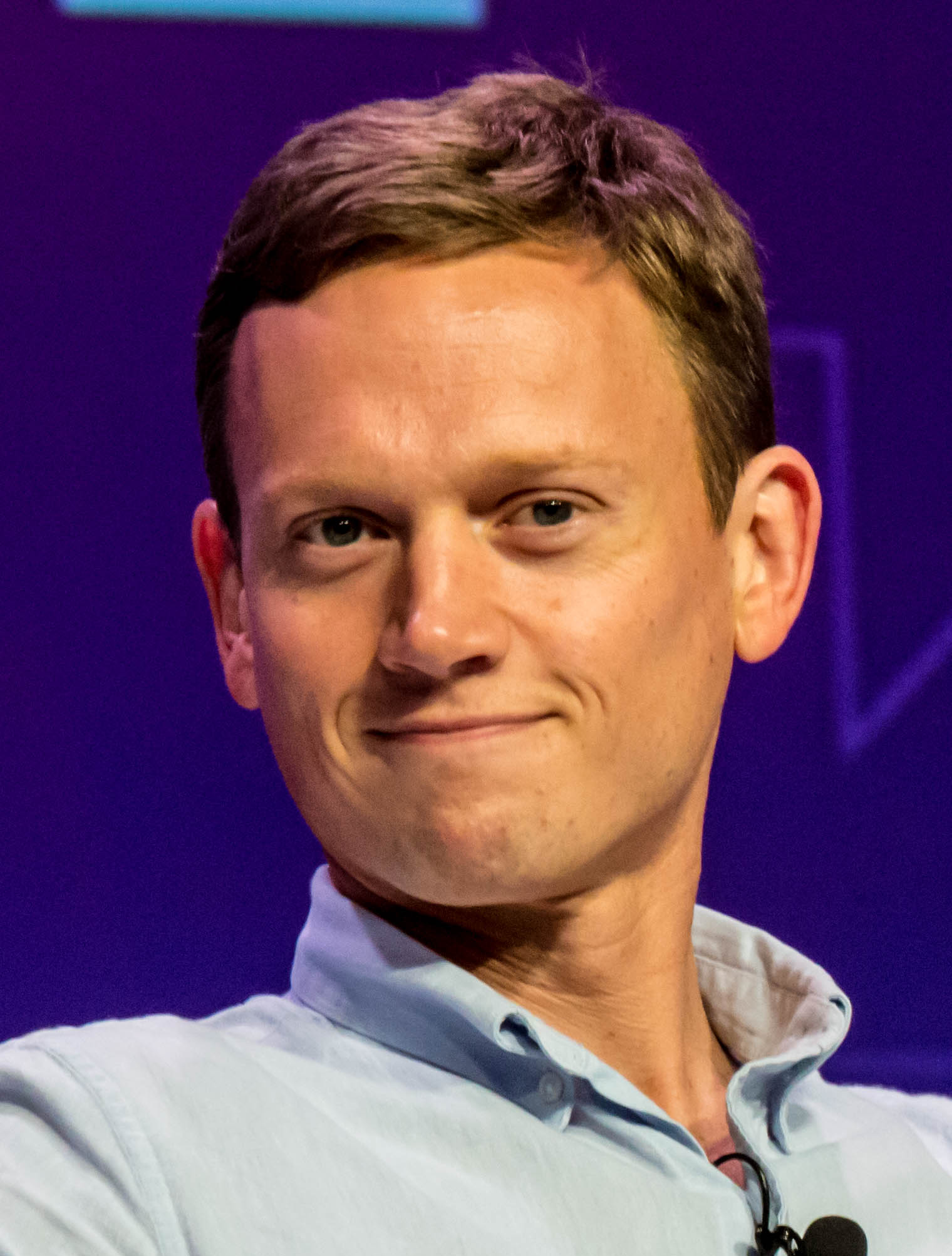
According to Tommy Vietor:
The founders of Fusion GPS have written: "Ultimately, whether the incident detailed in the dossier is true or not is likely not of paramount importance. The Russians had ample kompromat against Trump and his top aides with or without any pee tape."
In October 2024, Steele published his first book, Unredacted: Russia, Trump, and the Fight for Democracy, defending his work on the dossier and arguing that Trump poses a threat to Western democracy. In interviews promoting the book, Steele maintained that he still believes the alleged compromising tape exists, stating "I think it's just not really been properly bottomed out."
According to a 2018 Quinnipiac University poll, American voters believe 51 - 35 percent "that the Russian government has compromising information about President Trump". It also found that "68 percent of American voters are 'very concerned' or 'somewhat concerned' about President Trump's relationship with Russia, while 32 percent are 'not so concerned' or 'not concerned at all.'"
Kompromat, blackmail, and national security concerns
While sexual scandals are usually sensational, a number of writers have emphasized that the more serious concern raised by this type of allegation relates to national security and possible treason. Regardless of whether the pee tape allegation is proven true or not, discussions of the allegation often mention potential kompromat and the risk of blackmail, with some commentators arguing that such material could give a hostile foreign power leverage over a sitting U.S. president.
Trump viewed as compromised and subservient to Putin
The rumored "pee tape", along with other alleged compromising material, is cited by many as a potential source of vulnerability to kompromat and blackmail by Putin and others, leading to Trump being labeled a counterintelligence risk and national security threat by a range of observers, most notably many current and former officials in the United States and British intelligence communities. Some of them have served under Trump.
Despite persistent suspicions, the full nature of Trump's relationship with Russia and Vladimir Putin may never be known, as inquiries and investigations were limited and shut down by Justice Department officials acting under Trump's command. Michael S. Schmidt's 2020 book Donald Trump v. The United States: Inside the Struggle to Stop a President reports:
Similarly, the FBI's attempts to corroborate the Steele dossier allegations were stopped shortly after Trump took office in 2017, a fact the Senate Intelligence Committee later criticized.
Another factor shaping what was publicly revealed was the FBI's handling of the Steele dossier. By the time Trump took office, the Bureau had already corroborated a number of the dossier's allegations and was closely guarding its information, sources, and methods. CNN reported that
Although many intelligence professionals do not consider Trump a witting, active, formal Russian "agent" (spy), some experienced intelligence personnel and "veteran American spies, spymasters, and spy-catchers" view Trump as a Russian "asset", "useful idiot", or "agent of influence", using his position, power, and influence in the interests of Vladimir Putin, the dictator controlling an enemy power.
Many of them view Trump as potentially under Putin's influence, citing what they describe as subservience in his actions and his reluctance to criticize him. Jonathan Chait described their meeting at the 2018 Helsinki summit as a Russian intelligence "asset" meeting his "handler".
John Sipher, a former member of the CIA's "Senior Intelligence Service", argued that Trump was not an agent in the traditional intelligence sense but could plausibly be "compromised" and vulnerable to exploitation. He wrote that while Trump was unlikely to be a "recruited and controlled" intelligence asset, he could nonetheless be "objectively labeled an agent of a foreign power" in a broader sense, from which Russia could benefit.
Kyle Cunliffe similarly distinguished between types of relationships with foreign intelligence, writing that there was no evidence Trump knowingly associated with Russian intelligence officers. He emphasized the difference between an "agent" and an "asset", explaining that "an agent is a partner for life, whereas an asset is a friend with benefits", and concluded that if Trump fit either category, it was more likely the latter.
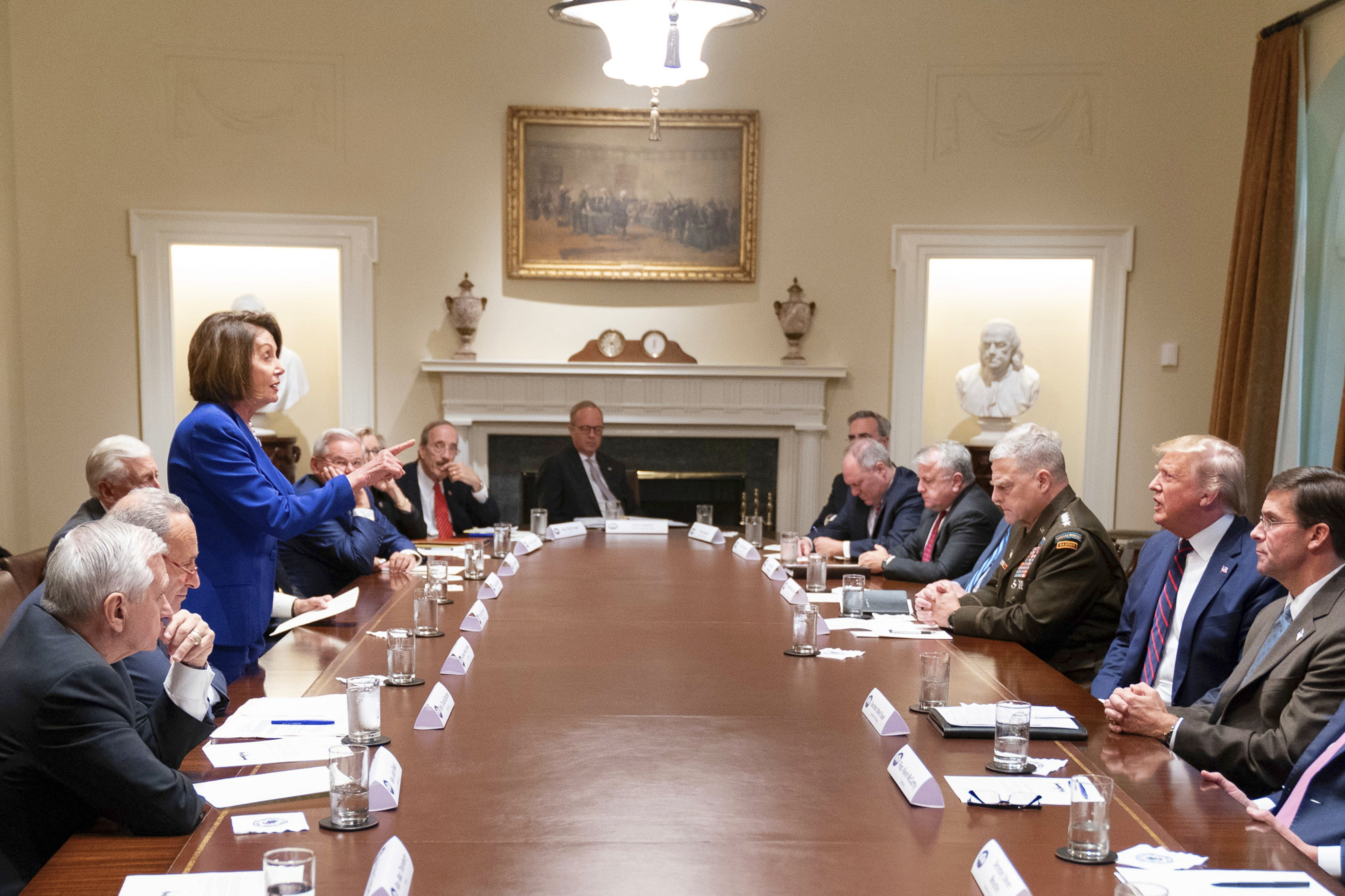
In October 2019, House Speaker Nancy Pelosi rebuked Trump by pointing at him and directly questioning his loyalty to America when she asked him: "[Why do] all roads lead to Putin?" On multiple occasions, Pelosi said of Trump, "With him, all roads lead to Putin," including with regard to the 2019 Trump–Ukraine scandal and his lack of action against the alleged Russian bounty program, when she said: "I don't know what the Russians have on the president, politically, personally, or financially." Hillary Clinton and Pelosi discussed Trump's incitement of the January 6 United States Capitol attack, and Clinton said: "I hope historically we will find out who he's beholden to, who pulls his strings. I would love to see his phone records to see whether he was talking to Putin the day that the insurgents invaded our Capitol."<ref name="MacGuill_1/19/2021 />
During the final 2016 presidential debate, Hillary Clinton described Trump as Putin's "puppet".
General Michael Hayden, former director of the CIA and National Security Agency, has called Trump a "polezni durak" - a "useful fool".
Former CIA Director Leon Panetta has "no doubt" that Trump "fit the description" of an "agent of influence of Russia":
Former CIA Director Michael Morell described the relationship between Putin and Trump in terms of espionage "recruitment": "In the intelligence business, we would say that Mr Putin had recruited Mr Trump as an unwitting agent of the Russian Federation." Morell also said that Trump "is not only unqualified for the job, but he may well pose a threat to our national security".
FBI Director Robert Mueller testified that Russia had blackmail leverage over Trump due to his lies about his dealings with Russia, dealings that also raise suspicions of money laundering.
In 2019, former Acting Director of the FBI Andrew McCabe said it was possible that Trump is a Russian asset. In 2024, he reaffirmed that view, but expressed uncertainty about characterizing Trump "as [an] active, recruited, knowing asset in the way that people in the intelligence community think of that term. But I do think that Donald Trump has given us many reasons to question his approach to the Russia problem in the United States."
Retired lieutenant general H. R. McMaster, who was Trump's national security adviser, had strong opinions about Trump and Putin. After he was asked "whether he agreed that the president posed the greatest threat to U.S. election integrity", McMaster said that "Donald Trump is 'aiding and abetting' Russian President Vladimir Putin's efforts to sow doubt about the American electoral system."
Sir Richard Dearlove, the former head of the United Kingdom's intelligence agencies, considers a reelection of Trump as one of the greatest threats to the national security of the U.K. "due to the former president's issues with NATO": "When asked what the greatest threats to U.K. national security were, Dearlove said the Russia-Ukraine war, China's possible threats to Western interests and Taiwan and the potential reelection of Trump in the U.S."
When Paul Wood queried "active duty CIA officers dealing with the [Trump] case file", he "got a message back that there was 'more than one tape', 'audio and video', on 'more than one date', in 'more than one place' - in the Ritz-Carlton in Moscow and also in St Petersburg - and that the material was 'of a sexual nature'". The CIA officers reportedly view these reports about multiple kompromat incidents as "credible", and that they allegedly occurred during his many trips to Russia.
Like these CIA officers, the Senate Committee also found that "there may be substance to some of the allegations regarding Trump". Although it devoted significant effort to describing Russian efforts to collect various forms of potential kompromat, it faced challenges in corroborating witness accounts and was careful not to assert definitive conclusions about the sitting president.
Lawfare also noted that while the committee did not corroborate allegations against Trump, its findings were nonetheless not reassuring and could be seen as a "cautionary tale for American businessmen who travel to Russia".
When Steele was asked why the Russians hadn't released the tape, he replied "It hasn't needed to be released.... I think the Russians felt they'd got pretty good value out of Donald Trump when he was president of the U.S." The dossier asserts that the Russian authorities possess kompromat on Trump of "unorthodox" and "embarrassing" sexual behavior over the years, that they are "able to blackmail him if they so wished", that they are prepared to use this kompromat against him, and that he "should bear [this] in mind in his dealings with them".
Steele wrote in the dossier that "the Kremlin had given its word" not to use kompromat against Trump, describing a "co-operative" relationship between his team and Russian officials:
Helsinki summit fallout
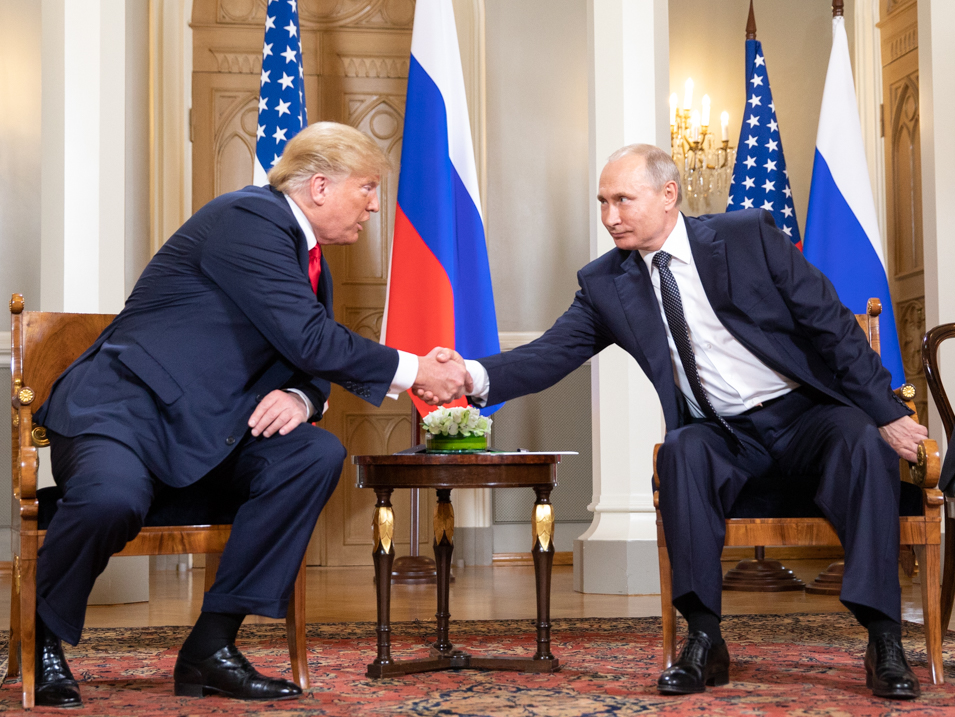
Before the 2018 Helsinki summit, Jonathan Chait described Trump's relationship with Putin as a subservient and collusive asset/handler alliance, a meeting between Trump, a Russian intelligence "asset", meeting Putin, his "handler". He also described "mindboggling collusion" dating back from Trump's first visit to Russia in 1987, when he was 40 years old: "[I]t would mean the Russia scandal began far earlier than conventionally understood and ended later - indeed, is still happening." Chait's article in Intelligencer contains an illustrated and very detailed "collusion map" (a "crazy quilt of connections") peopled with persons and their connections.
Many observers at the Helsinki summit were shocked when Trump openly agreed with Putin's false claim that Russia had not interfered in the U.S. elections, contrary to the conclusions of all investigations by American intelligence agencies, Congressional committees, special counsel investigations, and information from allied intelligence agencies. Trump stated:
The next day, Trump tried to "walk back his comments" with what Journalist Zack Beauchamp described as "arguably the most bald-faced lie of his entire presidency". Ignoring the context of his original statement, "I don't see any reason why it would be" [Russia], Trump claimed he meant to say, "I don't see any reason why it wouldn't be [Russia]", a correction that Beauchamp argued "makes no sense" and failed to align with the context of his original remarks. Trump also asserted he had "'full faith and support for America's great intelligence agencies' and that he 'accepted' US intelligence's findings that Russia was behind cyberattacks leading up to the election.'" But he then backtracked by "reiterating his skepticism" that "Russia was involved".
Trump's statements and secrecy about his meeting with Putin at the summit created consternation and alarm among political leaders and intelligence officials, prompting widespread fallout and criticism.
Dan Coats, Director of National Intelligence under Trump from March 2017 until August 2019, became suspicious of Trump's relationship with Putin. In Bob Woodward's book Rage, he is cited:
In reaction to Trump's behavior at the summit, Senator Chuck Schumer spoke in the Senate:
Jonathan D. Katz responded by describing Trump as "America's new Achilles heel" and the summit as a "diplomatic disaster that set back" the national interests of the United States and Ukraine.
Critics and intelligence officials expressed alarm over what they viewed as a troubling display of deference to a foreign adversary. Trump was siding with Putin and Russian intelligence over U.S. intelligence agencies.
Former CIA Director John Brennan accused Trump of "treason" and said "He is wholly in the pocket of Putin." Brennan tweeted that Trump's performance in Helsinki "rises to & exceeds the threshold of 'high crimes and misdemeanors'", an impeachable offense. "It was nothing short of treasonous."
Former Director of National Intelligence James Clapper saw Trump's behavior and wondered "if Russians have something on Trump".
After Putin was asked "about the purported existence of a certain racy video clip in his country's possession", Putin gave what Josh Marshall, Sam Seder, and Jay Willis have described as a "non-denial denial"; Jay Willis noted that Putin could have cleared Trump, but did not do so: "He's not saying it exists. But he's also not saying it doesn't exist.... What this answer does not include: any straightforward denial that the pee tape exists." Sam Seder and Matthew Yglesias also noted that Putin did not say the tape doesn't exist.
In an article for PBS, Joshua Barajas described many bipartisan reactions to Trump's trusting and friendly treatment of Putin:
Following are a few of their comments:
- Senator John McCain described the summit as "one of the most disgraceful performances by an American president in memory".
- Senator Kirsten Gillibrand said Trump "abdicate[d] his national security responsibilities as Commander-in-Chief. When he was given the chance to hold Putin accountable and condemn Russia's interference in our elections, he refused."
- Texas congressman Will Hurd, a former CIA officer, said: "I've seen Russian intelligence manipulate many people over my professional career and I never would have thought that the US President would become one of the ones getting played by old KGB hands."
- Senator Chuck Schumer said "In the entire history of our country, Americans have never seen a president of the United States support an American adversary the way @realDonaldTrump has supported President Putin."
- Senator Jeff Flake condemned Trump for placing the "blame on the United States for Russian aggression. This is shameful."
- Florida congresswoman Frederica Wilson said that Trump "became an illegitimate president when he showed the world that his loyalty lies more with #VladimirPutin than the people of the United States".
Other commentary
On August 27, 2025, the President of Portugal, Marcelo Rebelo de Sousa, said: "The supreme leader of the world's greatest superpower is, objectively, a Soviet, or Russian, asset. He functions as an asset."
Donald Tusk, Polish Prime Minister and former President of the European Council, has said Trump was a "Russian asset", adding:
After Tusk was rebuffed by Trump and criticized by other Polish politicians, he flip-flopped on the statement, claiming he never said it, but then saying, "I do not regret any words I have spoken in my life." Unlike Trump, Tusk is politically allied "with EU consensus politics", and he is critical "of Trump's foreign policy style".
Scott Radnitz, a Professor of Russian and Eurasian Studies, used game theory to examine various scenarios of how Putin and Trump would understand and react to various types of kompromat on Trump. One of his examples cited the "pee tape" rumor, with embedded links to articles on the topic:
Radnitz's statement harmonizes with the dossier's allegation that Putin's goal with supporting Trump was to spread "discord and disunity" within the United States and between Western allies, whom Putin saw as a threat to Russia's interests. Later, that dossier allegation was corroborated by the January 2017 ODNI report and the Mueller Report.
Max Boot has listed "18 reasons Trump could be a Russian asset". He mentioned "rumors of Russian kompromat... [that] may have some basis in fact" when he described more "evidence of Trump's subservience to Putin":
Roger Sollenberger, a senior political reporter for The Daily Beast, said he came to strongly believe the tape exists. He analyzed the issue and made a list of eight "strikes against the pee-pee tape" explaining why we should not believe the tape is real, and then he refuted all but one:
Vera Papisova has noted that while media coverage often emphasizes the alleged incident's sexual nature, others have focused on the broader national security implications, particularly the claim that Trump may have become vulnerable to blackmail when he allegedly "intentionally disrespected the President of the United States" during his Moscow visit:
Jaclyn Friedman points out the real "big scandal":
Jonathan Chait writes that belief in the existence of the alleged "pee tape" is not "absurd":
Jeff Stein, writing in Newsweek, described how "Trump's repeated attacks on NATO have... frustrated... allies... [and] raised questions as to whether the president has been duped into facilitating Putin's long-range objective of undermining the European Union."
Described as possible Manchurian candidate
Some have expressed their opinions that Trump is or resembles a Manchurian candidate who is unwittingly being manipulated by Russia to harm the interests of the United States.
After hearing about the "golden showers" allegation at the President's Daily Brief, an attendee said: "You don't really expect to hear the term 'golden showers' in the President's Daily Brief,... or that the guy who is going to become president may be a Manchurian candidate."
Max Boot wrote an article in The New York Times entitled "Donald Trump: A Modern Manchurian Candidate?" He wrote:
Nina Khrushcheva, a Professor of International Affairs, in an article entitled "Trump and 'The Manchurian Candidate' Are Too Similar For Comfort", has written:
Alex Lo, a columnist for the South China Morning Post, wrote an article that asked "Is Donald Trump the real-life Manchurian candidate?":
An exiled Russian-Georgian critic of Putin, scientist Andrei Piontkovsky, called Trump "a 'Manchurian candidate' for Putin". Before Trump's election in 2024, he wrote:
Described as a Russian asset
For many years, there has been public scrutiny of Trump's ties to Russia and his early travels to Eastern Bloc countries, starting in 1977 when he was about 30 years old. This has included interest in his public repetition of "anti-western propaganda", which journalist David Smith described as being fed to him by the KGB, and whether he might have been recruited as a witting or unwitting asset by the KGB during his trips.
Former KGB major Yuri Shvets was an active agent when Trump first traveled to an Eastern Bloc country in 1977 after marrying Czech model Ivana Zelnickova. He has described how Russian intelligence gained an interest in Trump at that time, viewing him as an exploitable target and subjecting him to a joint KGB and Czech intelligence services operation. He has characterized Trump as a Russian intelligence "asset" (not an actual agent/spy), and said he was cultivated over a period of decades.
Guardian Russia correspondent Luke Harding reported that files declassified in 2016 indicated that Czech spies closely followed Trump and then-wife Ivana Trump in Manhattan and during trips to Czechoslovakia following their 1977 marriage.
Tim Weiner writes that "a dozen CIA and FBI veterans" he has spoken with agree that Trump has been groomed and cultivated by Russian intelligence agencies for at least 40 years, including efforts to create and collect kompromat to gain leverage over him. In a separate account, a "former head of Russia's foreign intelligence services" reported that "they had Trump over a barrel".
Trump was also described as just one of many Americans targeted during this period. Harding wrote that KGB chief Vladimir Kryuchkov encouraged officers abroad to recruit more Americans, while Shvets said that "The Russians were trying to recruit like crazy and going after dozens and dozens of people." Shvets said that "Trump was the perfect target in a lot of ways: His vanity, narcissism made him a natural target to recruit. He was cultivated over a 40-year period, right up through his election." Craig Unger wrote that the Russians "repeatedly helped Trump get through dire financial straits over the years, providing him with laundered money to support his businesses".
Accounts by journalists and former intelligence officials have described a series of contacts in the mid-1980s involving Soviet Ambassador to the United Nations Yuri Dubinin, which they characterize as part of broader efforts to engage and potentially cultivate Trump. In 2018, Oleg Kalugin, former head of counterintelligence for the KGB, alleged that Trump could be a KGB-FSB asset since his 1987 visit to Moscow, and said the operation to lure him had begun with an overture in March 1986 by Dubinin.
Harding describes a series of contacts over a period of years, including a seemingly chance meeting in 1986 between Dubinin and Trump at Trump Tower. He reports that Irina Dubinin said her father was "on a mission as ambassador" to establish contact with "America's business elite", and that Dubinin's invitation to Trump to visit Moscow was a "classic cultivation exercise" that would have had the KGB's "full support and approval".
Craig Unger reported that Dubinin's efforts reflected what Kalugin described as the early stages of recruitment, while Dubinin's daughter said Trump responded positively to the attention and recognition: "He is an emotional person, somewhat impulsive. He needs recognition. And, of course, when he gets it he likes it. My father's visit worked on him [Trump] like honey on a bee."
Dubinin subsequently invited Trump to visit Moscow for the first time in 1987, a visit that was handled via KGB-affiliated Intourist and Vitaly Churkin, the future Permanent Representative of Russia to the United Nations. Harding also describes how "The top level of the Soviet diplomatic service arranged Trump's 1987 Moscow visit. With assistance from the KGB." Harding cited Trump as writing in The Art of the Deal that the trip included a tour of "a half dozen potential sites for a hotel, including several near Red Square" and that he "was impressed with the ambition of Soviet officials to make a deal".
In separate reporting, Senator Sheldon Whitehouse reported that Jeffrey Epstein claimed to have provided information about Trump to Russian officials. Epstein described his contacts with Churkin, writing in an email that "Churkin was great. He understood trump after our conversations. it is not complex. he must be seen to get something its that simple."
Unger wrote that Vitaly Churkin "helped Yuri Dubinin set up Trump's trip". Viktor Suvorov alleges that Soviet authorities often used Intourist to develop kompromat, particularly of a sexual nature, while Oleg Kalugin stated that he would not be surprised if Russian intelligence held sexually compromising material from Trump's trip about "his involvement with meeting young ladies that were controlled [by Soviet intelligence]".
Craig Unger wrote that Kalugin told him:
Former KGB officer, Sergei Zhyrnov, has described how:
While generalized efforts to groom and cultivate Trump are alleged to date back to 1977, subsequent developments were described in a 2018 indictment brought by Special Counsel Robert Mueller, which stated that Russia's more specific election interference campaign dated back at least to early 2014, though it was not clear from the indictment that electing Donald Trump was the objective at that time. However, Weiss and Fitzpatrick wrote that "according to the FBI, CIA and NSA that became its purpose later on".
Codename "Krasnov"
Former KGB agents indicate the KGB gave Trump the codename "Krasnov" in 1987 when he was about 40 years old. In February 2025, The Hill reported on three cases where claims were made by ex-KGB officials that Trump had been groomed and cultivated, recruited with the codename "Krasnov" in 1987, and/or compromised. The aforementioned claims by Shvets, which were also a significant basis for Craig Unger's best-selling book, American Kompromat, were also backed by Alnur Mussayev, former head of Kazakhstan's intelligence service, and Sergei Zhyrnov, an ex-KGB officer living in France.
Mussayev asserted that Trump is compromised: "I have no doubt that Russia has kompromat on the US President, that over the course of many years the Kremlin has been promoting Trump to the post of President of the main world power."
In 2025, Mussayev claimed that Trump had been recruited by the KGB when he visited "Moscow as a real estate developer in 1987" and was given the codename "Krasnov". Several sources note that he did not accuse Trump of knowingly spying: "Mussayev did not specify that Trump actively or knowingly participated in any espionage activities or provide examples, only that he was recruited", claims that are also asserted by former KGB spies Yuri Shvets and Sergei Zhyrnov.
KGB suggests Trump go into politics in 1987
David Smith cited Shvets, who described how in 1987 the KGB was on a "charm offensive" and "played the game as if they were immensely impressed by his personality":
He immediately took his campaign to the press with "a full-page advert in the New York Times, Washington Post and Boston Globe". He also criticized US allies, US foreign policy, and NATO. Smith described a positive Russian reaction, writing that Trump "proved so willing to parrot anti-western propaganda that there were celebrations in Moscow":
Alexander J. Motyl wrote that these claims have independently been backed by the former head of Kazakhstan's intelligence service, Alnur Mussayev, as well as by Yuri Shvets, a former KGB major. "[T]he fact that three KGB agents located in different places and speaking at different times agree on the story suggests this possibility should not be dismissed out of hand."
Christopher Steele is another intelligence agent who backs these claims, as these allegations are briefly echoed in the Steele dossier: "Russian regime has been cultivating, supporting and assisting TRUMP for at least 5 years. Aim, endorsed by PUTIN, has been to encourage splits and divisions in western alliance."
The dossier also alleges a longer period of "cooperation" ("conspiracy" is unproven) as part of the alleged "well-developed conspiracy of co-operation between them and the Russian leadership". The phrase "established operational liaison" is used:
Psychological assessments of Trump
Russian intelligence and other agents have made multiple psychological assessments of Trump.
Yuri Shvets describes why "Trump was the ideal target for Soviet recruitment. 'He was the perfect combination of extremes: Extreme vanity, extremely low IQ, extreme vulnerability to flattery, and of course, extremely greedy.'"
Shvets is quoted in a review of Craig Unger's best-selling book, American Kompromat: How the KGB Cultivated Donald Trump, and Related Tales of Sex, Greed, Power, and Treachery: "Everybody has weaknesses. But with Trump it wasn't just weakness. Everything was excessive. His vanity, excessive. Narcissism, excessive. Greed, excessive. Ignorance, excessive."
Craig Unger writes: "From the KGB's point of view, the most appealing quality about Trump was probably that he had a personality that was ideal for a potential asset-vain, narcissistic, highly susceptible to flattery, and greedy."
The "Kremlin papers" include a brief assessment of Trump's psychological makeup and likely impact on American society if elected:
In early 2017, NBC News reported that: "A dossier on Donald Trump's psychological makeup is being prepared for Russian President Vladimir Putin. Among its preliminary conclusions is that the new American leader is a risk-taker who can be naïve, according to a senior Kremlin adviser."
Former CIA Russian expert and CIA station chief in Moscow, Rolf Mowatt-Larssen, has also analyzed "Trump as a Russian Target - Through the Eyes of a former CIA Russian Expert."
Craig Unger cites Mowatt-Larssen in his book American Kompromat:
Russian assertions they helped elect Trump
Many notable Russians have voiced their support for Trump's election victories and mentioned how Russian election interference helped him win in both elections. Some have revealed they had insider foreknowledge of Trump's plans and told how they helped his candidacy.
During the start of the 2016 election campaign season, Russian efforts to help Trump became more concrete. Previously, they had allegedly just groomed and cultivated him, but now he was a leading candidate within reach of the presidency. The leaked "Kremlin papers" revealed that on January 22, 2016, "during a closed session of Russia's national security council", Putin personally authorized "a secret spy agency operation to support a 'mentally unstable' Donald Trump in the 2016 US presidential election": "A report prepared by Putin's expert department recommended Moscow use 'all possible force' to ensure a Trump victory."
The report describes Trump as an "impulsive, mentally unstable and unbalanced individual" who suffers from "an inferiority complex". According to John Dobson, a former British diplomat, that report also confirmed that "the Kremlin possessed 'kompromat' on the future president, which the document claims was collected during 'certain events' that happened during Trump's trip to Moscow in November 2013."
The operation "to ensure a Trump victory" in 2016 was described by Robert Mueller as "sweeping and systematic", and the Senate report described it as "aggressive and multi-faceted". Russian election interference did not stop after 2016: "The Kremlin's online political war is extensive and ongoing, it did not stop after 2016, and it will not stop after 2018."
Russia has not been shy about reminding Trump of their goal with that help and have mentioned that: they have kompromat on Trump; they elected him; their election interference efforts "brought him to power"; and that his "success in the election... relied on certain forces" (their interference) that incurred "corresponding obligations" he is "obliged to fulfill".
On September 5, 2017, in a Russian state TV broadcast, Russian politician Nikita Isaev (Isayev) confirmed the Kremlin had kompromat on Trump. He was the leader of the far-right New Russia Movement, and he called for retaliation against the Trump administration over its closure of several Russian diplomatic compounds across the U.S. As retaliation, he threatened the release of unspecified kompromat on Trump held by the Russian government. Isaev said: "Let's hit Trump with our Kompromat!" Host: "Do we have it?" Isaev: "Of course we have it!"
A "former head of Russia's foreign intelligence services" reported that "they had Trump over a barrel". According to Webster's Dictionary, this means they have him "at a disadvantage : in an awkward position".
Vyacheslav Nikonov, a State Duma member, said that Russia had "elected a new U.S. president", describing it as part of a broader shift in global power and criticizing U.S. intelligence services for sleeping while Russia elected Trump.
On July 16, 2018, Vladimir Putin, when asked if he wanted "President Trump to win the [2016] election", replied: "Yes, I did. Yes, I did. Because he talked about bringing the U.S.-Russia relationship back to normal." This was not a mere wish, as the "Kremlin papers" revealed that in January 2016, Putin authorized intensive measures to make sure Trump was elected. The report outlines a plan to put Trump into the White House in 2016 to promote Russian interests and to weaken the United States. The Mueller report also concluded that "The Russian government perceived it would benefit from a Trump presidency and worked to secure that outcome."
On November 11, 2024, just after he won his second term in office, Trump received a message that Josh Kovensky called "trolling". In it, Putin aide Nikolai Patrushev reminded Trump of his "obligation" to Russia:
The Russian news agency TASS issued a similar statement: "In his future policies, including those on the Russian track US President-elect Donald Trump will rely on the commitments to the forces that brought him to power, rather than on election pledges." Laura King of the Los Angeles Times noted how this had been interpreted as Trump being "somehow beholden to Moscow".
Aleksandr Dugin had celebrated Trump's re-election, stating that "'Putinism' has triumphed in the United States" and advocating for Russian victory in the Russo-Ukrainian war. He also said that "One of the ideologues of Trumpism, Curtis Yarvin, has declared that it's time to establish a monarchy in the United States. If Republicans gain a majority in both houses, what could stop them?"
Yuval Weber, a Russia scholar, wrote that Putin "found for the first time since the collapse of the U.S.S.R. that he has a prospective president of the United States who fundamentally views international issues from the Russian point of view."
Felix Sater, a Russian immigrant, real estate developer, and Trump associate, has boasted about engineering Trump's election, together with "Putin's team":
Among Russians who supported Trump's candidacy, and in this case invested heavily in his election, was Yevgeny Prigozhin, who used his Internet Research Agency's "troll farm" to target "English-language social media and news commentary". Jukes wrote:
Yulya Klyushina's foreknowledge of Trump's election plans
Yulya Klyushina (later known as Yulia Alferova) worked for the Agalarovs and helped "organize Trump's Miss Universe contest" in 2013. She later revealed that she had "foreknowledge" of Trump's presidential plans. She was described as Trump's personal hostess during the weekend, and she spent much of the time close to him and those around him, together with her then-husband Artem Klyushin. He is a billionaire "Kremlin-linked bot developer" who was directly involved in Russian social media interference campaigns targeting Ukraine and later the United States during the 2016 election, campaigns which U.S. intelligence agencies assessed were intended to aid Trump.
Yulya Klyushina and Artem Klyushin are social media experts, and during the 2013 pageant, she posted pictures on social media of Trump in meetings with her husband and others, as well as other activities around them.
Later, when Anna Nemtsova interviewed her in January 2017, Alferova saw "her mission as advocating for" Trump and said: "I am confident that nobody has any video of Trump with prostitutes,... See, he came on November 9, worked all day, partied all night, and left." In fact, he arrived early on November 8 and left early on November 10. Her wording was similar to what Michelle Goldberg described as Trump's "phony alibi". Charlie May noted how that wording left out the previous day and night Trump was in Moscow.
Alferova was not only supportive of Trump, she also revealed on January 22, 2014, that she had what the Senate Committee called "foreknowledge" of Trump's as-yet-unannounced 2016 election plans, long before the American public learned of them. On that day, shortly after the 2013 Miss Universe pageant when she was his personal hostess, she tweeted: "I'm sure @realDonaldTrump will be great president! We'll support you from Russia! America needs ambitious leader!" This was noticed by the Senate Committee, and in two footnotes (2030 and 2510), the Committee mentioned her tweets that promised Russian support for Trump's distant 2016 presidential campaign.
Jay Bookman also argued that Trump's claim that Russia could not have begun supporting him in early 2014 because it did not yet know he would run for president was contradicted by evidence. Citing a tweet by Alferova, Bookman wrote
A year later, on January 28, 2015, she announced his presidential candidacy, nearly five months before Trump announced on June 16, 2015, that he would run for president. The Senate report's "Footnote 2030" mentioned her tweeted announcement:
The Senate report's "Footnote 2510" mentioned both tweets and, although she had been Trump's personal hostess during the 2013 Miss Universe contest, and pictures show her present with Trump during his discussions with her husband, Rob Goldstone, Emin Agalarov, and others, the Committee wrote that it did not know how she had "knowledge of these matters":
These early "connections forged in the lead-up to the 2013 Miss Universe contest" between Trump, Rob Goldstone, and Emin Agalarov were later described by Jeffrey Toobin as "the most direct evidence" bearing on whether "Trump and his campaign staff knew about, encouraged, or sponsored the Russian efforts". Writing about Russian government interference and its promised "support for Mr. Trump", Toobin cited those connections in discussing the June 2016 Trump Tower meeting, which was arranged by Goldstone and Agalarov.
The Trump campaign kept that meeting secret for over a year, until early July 2017, when The New York Times learned of it and was preparing to report on email exchanges between Goldstone and Donald Trump Jr.; Donald Trump Sr. then quickly "prepared a misleading statement about the purpose of the meeting" and issued it under his son's name.
Artem Klyushin's and Konstantin Rykov's roles in election interference
The Senate report devoted a whole section in their report to Artem Klyushin and his close associates: "Artem Klyushin, Konstantin Rykov, and Associates". According to the Senate report, they were all involved in the Russian election interference and social media campaigns that supported Trump and attacked the United States and Ukraine.
Both Klyushin and Rykov have claimed that Trump would not have won the 2016 election without their help. The Senate Committee was aware of their roles and had "significant concerns regarding Artem Klyushin", a billionaire "Kremlin-linked bot developer who has supported Russian influence operations on social media".
Artem Klyushin
On the day of the Miss Universe pageant, Artem Klyushin and his then-wife Yulya Klyushina (Yulia Alferova) "had some interaction with Trump at several points throughout the day". Peter Jukes wrote that "Rykov's friend, the young oligarch Artem Klyushin, was in the room with Trump in 2013 during the Moscow Miss Universe event where his candidacy was discussed with Russian oligarch Aras Agalarov."
In January 2014, two months after their meetings at the contest, Yulya revealed her "foreknowledge" of Trump's election plans, long before the American public learned of them. On September 28, 2017, after Trump's election, Artem Klyushin tweeted a boast similar to Rykov's: "Without my intervention, Trump would not have won."
After Trump's second election, several journalists reported that Klyushin publicly listed numerous recommendations on social media for the second cabinet of Donald Trump. Several of the individuals he recommended were later nominated. These posts, directed at Trump and Elon Musk, also included policy proposals similar to Trump's public statements.
Konstantin Rykov
Konstantin Rykov is a Russian internet entrepreneur, former State Duma member, and early practitioner of online political manipulation. He has claimed that he began promoting Donald Trump as a future U.S. president as early as 2012. According to journalist Peter Jukes, Rykov was an early adopter of memes, conspiracy theories, and coordinated disinformation, with bot networks active as early as 2007.
Rykov later asserted that he worked with pro-Kremlin actors, hacking groups, and WikiLeaks in a coordinated effort to support Trump, describing an "insane idea" to use psychometric targeting and social media to influence voters. He claimed that this effort involved cooperation with Cambridge Analytica, which he said was invited by Trump to assist with voter profiling and microtargeting.
Rykov also stated that his November 2012 interaction with Trump marked the beginning of a "four years and two days" collaboration involving Russian actors and data-driven campaign techniques. As summarized by Martin Longman, Rykov claimed after the 2016 election that he had "colluded with Trump and Cambridge Analytica, and that their collusion had been decisive in winning the election".
While the extent of Rykov's actual influence remains unclear, investigators noted his connections to pro-Kremlin online networks that participated in U.S. election-related activity. Analysts have emphasized that although some of his claims may be exaggerated, his role in Russian online influence operations is well documented.
Longman argued that Rykov's public boasts reflected genuine knowledge of events that were later confirmed:
Peter Jukes cited Rykov's claim that "this 'secret super-weapon' cost Trump only $5 million" and was supported by "a pair of hacker groups [and] civil journalists from WikiLeaks", and concluded that Rykov had "the credibility, connections and inside knowledge" to make claims about Russian interests working with Cambridge Analytica during the Trump campaign.
Trump's sharing and mishandling of classified information
Upon taking office in 2017, Trump alarmed U.S. intelligence and security officials by repeatedly disclosing classified or sensitive intelligence to foreign leaders in ways that raised concerns about national security and the protection of sources.
During an April 29, 2017, phone call with Philippine President Rodrigo Duterte, Trump disclosed that the U.S. had deployed two nuclear submarines near the Korean Peninsula, information that Pentagon officials described as sensitive and not typically shared publicly.
Then, in an Oval Office meeting on May 10, 2017, Trump shared highly classified information from an Israeli source about an ISIS threat with Russian Foreign Minister Sergey Lavrov and Ambassador Sergey Kislyak, prompting bipartisan criticism over the potential compromise of intelligence sources and methods. Israeli intelligence officials were reportedly horrified by the disclosure, and Israeli officials stated that it is Israel's "worst fears confirmed" about Donald Trump. The officials also stated that Israeli intelligence officers were "boiling mad and demanding answers" on its current intelligence-sharing agreement with the US.
The report was described as "shocking" and "horrifying" by some commentators and former US intelligence officials. According to current and former US officials interviewed by ABC News, Trump's disclosure endangered the life of a spy placed by Israel in ISIL-held territory in Syria. The classified information Trump shared came from a source described as the most valuable of any current sources on any current external plotting, according to The Wall Street Journal.
Soon after the meeting, American intelligence extracted a high-level mole named Oleg Smolenkov from within the Russian government because of concerns that Trump's Russia-friendly and careless actions might endanger the individual and his family. The US thus lost a spy who had worked for US interests for at least a decade and was so valuable that he could take photographs of what was on Putin's desk. "The person was key in providing information that led U.S. intelligence to conclude Putin directly orchestrated Russian interference in favor of Trump and against his Democratic rival Hillary Clinton in the 2016 election, the Times said."
In December 2023, CNN reported about the "mystery of the missing binder" Trump took with him at the end of his presidency. It contains highly classified and unredacted information related to the Crossfire Hurricane FBI investigation into Trump's role in Russian election interference, described as "some of the most closely guarded national security secrets from the US and its allies" that Putin would like to see:
Frank Figliuzzi, a former Assistant Director for counterintelligence at the FBI, wrote that "The case of the missing binder is also a clue as to what Trump would likely do with classified information if he's given access to secret material again."
Disclosures in March 2026 reveal that Trump may have had private financial gain and business motivations for keeping the documents in spite of the national security risks of doing so.
Secrecy and lack of transparency
Trump's meetings and communications with Putin have been a matter of concern, as he does not allow anyone to know what they discuss, even confiscating translator notes:
Virginia congressman Don Beyer was openly suspicious of the one-on-one meeting between Trump and Putin at Helsinki: "If Trump was this subservient to Putin with the eyes of the world upon him, what did he say when they were alone for over two hours?"
Greg Miller wrote that this secrecy prevents "even high-ranking officials in his own administration from fully knowing what he has told one of the United States' main adversaries":
Dossier allegations about kompromat and blackmail
While the Steele dossier brought broader public attention to the rumored tape, the existence of such allegations was already known within Trump's circle, among some journalists, and to certain intelligence officials, separate from and predating the dossier by months or even years.
Several of the dossier's allegations described below relate to kompromat, blackmail, and alleged compromising actions. Each allegation is attributed to the dossier's sources and should be read accordingly (i.e., "sources allege..."):
- ... that Trump "hated" Obama so much that when he stayed at the Ritz-Carlton Hotel in Moscow, he hired the presidential suite. There he employed "a number of prostitutes to perform a 'golden showers' (urination) show in front of him" in order to defile the bed used by the Obamas on an earlier visit. The alleged incident from 2013 was reportedly filmed and recorded by the Federal Security Service (FSB) as kompromat. (Report 80)
- ... that Trump was vulnerable to blackmail from Russian authorities for paying bribes and engaging in "unorthodox" and "embarrassing" sexual behavior over the years, and that the authorities were "able to blackmail him if they so wished". (Reports 80, 95, 97, 113)
- ... that the Kremlin had promised Trump they would not use the kompromat collected against him "as leverage, given high levels of voluntary co-operation forthcoming from his team". (Report 97)
- ... that Trump had explored the real estate sectors in St. Petersburg and Moscow, "but in the end TRUMP had had to settle for the use of extensive sexual services there from local prostitutes rather than business success". (Report 95)
- ... that witnesses to his "sex parties in the city" had been "'silenced' i.e. bribed or coerced to disappear." (Report 113)
- ... that Trump had paid bribes in St. Petersburg "to further his [business] interests". (Report 113)
- ... that Aras Agalarov "would know most of the details of what the Republican presidential candidate had got up to" in St. Petersburg. (Report 113)
- ... that Trump associates did not fear "the negative media publicity surrounding alleged Russian interference" because it distracted attention from his "business dealings in China and other emerging markets" involving "large bribes and kickbacks" that could be devastating if revealed. (Report 95)
See also
- A360media: #"Catch-and-kill" scandals related to Donald Trump
- #Allegation about Trump Tower maid
- #Karen McDougal
- Jair Bolsonaro's Golden shower controversy
- E. Jean Carroll v. Donald J. Trump
- Karen McDougal's affair with Donald Trump
- Stormy Daniels–Donald Trump scandal
- Timeline of Russian interference in the 2016 United States elections
- Timelines related to Donald Trump and Russian interference in United States elections
- Trump: The Kremlin Candidate?
Notes
The following notes expand on key topics or are lists of multiple reliable sources with content related to the specific topic.
References
<ref name="MacGuill_1/19/2021>
Further reading
Panorama, narrated by John Sweeney, 30 minutes
Matador Films, narrated by Stormy Daniels, 91 minutes
External links
(Moscow is eight hours ahead of Eastern Daylight Time (EDT), so one must add eight hours.)
- "Trump's Travel to Moscow in 2013", Senate Intelligence Committee report, pp. 655-662