
Dhruvkar
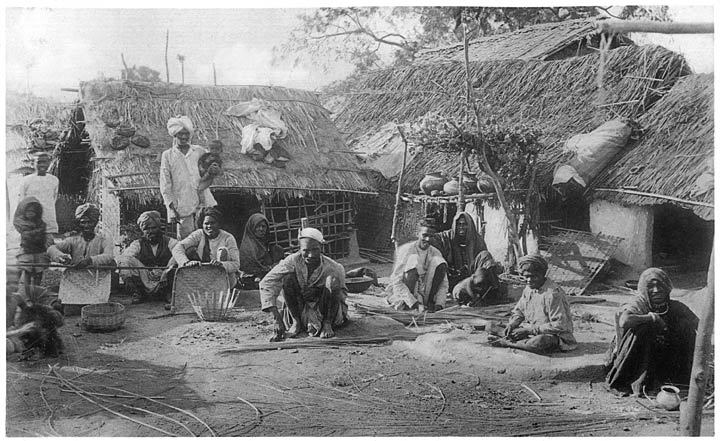 Dhruvkar is a social community within Hindu religion and belongs to Aryan race. They are found mainly in Indus basin, Ganga basin, Tsangpo (Brahmaputra) basin, and Himalayan foothills. In other word they are found predominantly in present day north-western India, northern India, north-eastern India and Nepal and south-western China and eastern Pakistan. However due to Globalisation many of them have migrated to different locations of the world and thus they are found worldwide as well. They are also known with surnames like – Dharikar, Dhar, Dhankar, Govatsa, Dhanuk, Venavanshi, Karush, Dhariya, Dhyeta, Dhruva, Dharker, Dharkar, Lakarhara, Prithuvanshi, Bansfor etc. Historically they were involve in meditation, study, research and knowledge gathering; however, as per their belief, some of their ancestors (mythological) like King Dhruva, King Vena and King Prithu were also involved in governance and administration.
Ancient Dhruvkars didn’t live settled life but they wandered forests and mountains in quest of meditation, study, research and knowledge gathering. They were very advanced and skilled; they could easily make household utilities using bamboos (which was easily available in forest). They developed this skill in quest to make a [https://commons.wikimedia.org/wiki/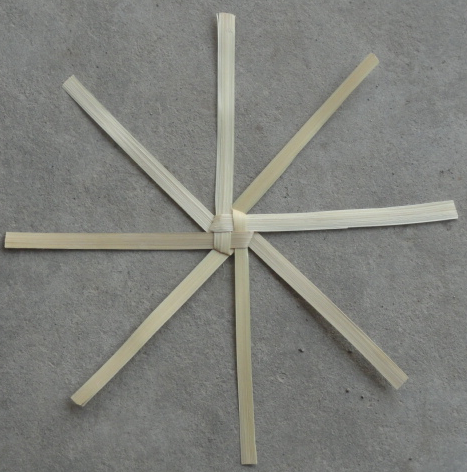 "star shape"] to depict their mythological ancestor lord Dhruva (then Dhruva Tara or the North Polar Star) whom they adored and worshipped. Later Dhruvkars, apart from meditation, study, research and knowledge gathering, also lived settled life and involved in commercial activities of making and selling of household utilities made of bamboo using their fine skill developed during past forest life. Few of Modern Dhruvkars are still involved in their traditional livelihood of making and selling of household utilities using bamboos, however considerable portion of modern Dhruvkars have left their traditional livelihood mainly because of the invention of plastic materials and development of the new technologies which could provide better substitutes of their products. For example – the "vena" (fan) made of bamboo got replaced by vena made of plastic and also by electric fan. Similarly the basket, chair, stool etc. made by bamboo got replaced by the similar things made of plastic. Considerable portion of modern Dhruvkars are now engaged in wide range of professions including agriculture, education, governance, administration, politics, police, defence, government organs, business, laws, science & technologies etc.

Origin of Dhruvkars
Dhruvkars are claimed to be descendent of the lord Dhruva and thus derive the surname “Dhruvkar” from him. They are devotee of lord Vishnu – the supreme authority who runs the world. Lord Vishnu is one of three supreme lords, other two being lord Brahma who has supreme authority to create the world & world beings; and lord Shiva who has supreme authority to destroy the world & world beings.
Dhruvkars originally were people wandering jungles and mountains in quest of meditation, study, research and knowledge. They were ardent follower of lord Dhruva’s character i.e. deep meditation. They adored lord Dhruva and made the [https://commons.wikimedia.org/wiki/ "emblem"] of lord Dhruva, i.e. Dhruva Tara (then the North Polar Star) using bamboo to worship him.
Dhruvkars derive their other surnames from their prominent ancestors. For example – they derive the surname “Venavanshi” from king Vena; similarly they derive the surname “Prithuvanshi” from king Prithu. They derived the surname “Lakarhara” because some of Dhruvkars were involved in activities of collecting and selling fuel wood (lakara) for their living – this was necessitated because ancient Dhruvkars were wandering in jungles and mountains. Similarly, they derived the name “Bansfor” because they were involved in activities using “bans” (bamboo) for their living apart from meditation, study, research and knowledge. Similarly, they derived the name “Govatsa” because the Go (cow) became their mother following the incident of chasing of Bhumidevi (earth) by their ancestor king Prithu. Bhumidevi had taken the form of cow while being chased by Prithu. Following this incident, Bhumidevi became wife of Prithu and gained his protection. And thus Bhumidevi became mother of descendent Dhruvkars. In respect of Dhara (Bhumidevi), Dhruvkars also derive their surname “Dhariya”, "Dharkar" etc. from her.
Prominent People of Dhruvkar Lineage
Lord Dhruva
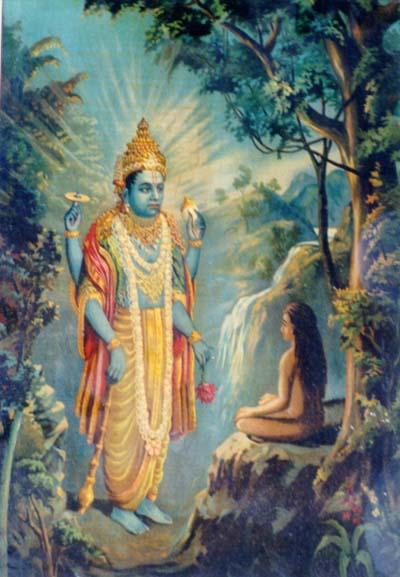 Lord Dhruva was born a son of the King Uttanapada and his wife Suniti on 12th day of Krishna Pakchha of the month Kartik of Vikram Samvat. He is better known as “Balak Dhruva” owing to his deep meditation of Lord Vishnu at a tender age of five. Dhruva had a step brother "Uttama" from his step mother Suruchi. Once when Dhruva was requesting his father to take him in his lap, Suruchi scolded Dhruva and asked not to sit in King's lap. She told Dhruva that only her son "Uttama" can sit in King's lap. Distressed by her statement Dhruva went to his mother Suniti and told about the incident. Suniti advised him to meditate lord Vishnu. Dhruva accepted the advice of his mother and left the home at tender age of five. He went to jungle and meditated lord Vishnu for six months. Impressed by Dhruva's prayer, lord Vishnu appeared before him and asked for wishes. Dhruva innocently asked lord for a poem to praise lord Vishnu. Impressed by Dhruva's innocence, lord Vishnu granted him a poem of twelve verses collectively known as Dhruva-stuti. Apart from Dhruva-stuti, lord Vishnu also told Dhruva that he will rule the kingdom of his father and after death he will attain the most sacred star of Hinduism.
Dhruva returned to his father palace. His father King Uttanapada granted him the throne. He became very venerated king of his kingdom. Descendants of Dhruva are known as Dhruvkar. Dhruva ruled the kingdom for many years and after his death he became North Polar Star - the most sacred star of Hinduism.
Lord Vena
Many generations after king Dhruva, Vena was born. Vena became a great king of Dhruvkar lineage. However, king Vena became corrupt in his later years. Angered by this corruption, Bhumidevi decided not to provide crops, grains, fruits etc. human kind. She took form of cow and went on hiding. Thus the entire earth slipped into the grip of widespread famine. People, cattle, bird, fishes etc. started dying. Some sages got angered by corruption of Vena which had resulted widespread famine. Thus, sages killed the king Vena. They rubbed the thigh of corpse of Vena to knock out the evil of Vena (which had inflicted the corrupt nature into Vena). After eviction of evil, the corpse of Vena became pure. The sages now rubbed the right arm of Vena from where the Prithu emerged. Prithu was very kind king and considered an incarnation of lord Vishnu. Many Dhruvkars derive their surname "Venvanshi" from this great king Vena. Not only surname, Dhruvkars named their invented fan made of bamboo as "vena" (hand fan) after his name.
Lord Prithu
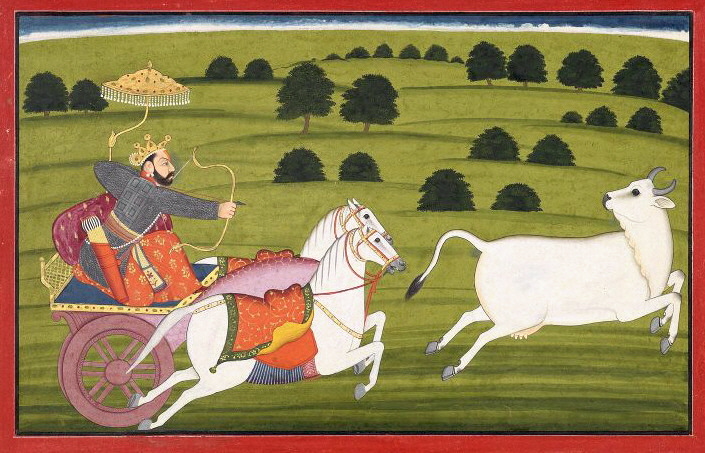 Lord Prithu was son of king Vena and was emerged from his arm when some sages rubbed the right arm of corpse of king Vena. He was another very kind and powerful king of Dhruvkar lineage. The sages had killed Vena because king Vena had become corrupt. Due to his corruption, Bhumidevi(earth) had denied to provide crops, grains, fruits and other dietary items to humankind and other living beings and she took form of cow and went on hiding. After Vena's death, the kingdom was left without any heir and thus widespread anarchy prevailed in the kingdom. The earth was already in grip of widespread famine. To solve this problem, sages decided to rub the right arm of Vena where the Prithu would emerged from. After emerging from the arm of Vena, Prithu, to end the famine, asked Bhumidevi (earth) to give crops, grains, fruits etc. to humankind and other living beings; however, Bhumidevi refused to do so. Infuriated by her refusal, Prithu decided to kill Bhumidevi and snatch her crops, grains, fruits etc. Heavily armed Prithu chased Bhumidevi who fled in the form of cow. Tired by this chasing, finely, Bhumidevi requested Prithu not to kill her. She said, [...] her would amount to total destruction of nature because after Bhumidevi's death, there wouldn't be any crops, grains, fruits and other dietary items and thus humankind and other living beings will die of starving. Realising this fact, Prithu decided not to kill her. Bhumidevi decided to provide crops, grains, fruits and other dietary items to humankind and other living beings in exchange of Prithu's protection. Bhumidevi became wife of Prithu and thus Bhumidevi derived her name as Prithvi from the husband Prithu. Prithu milked Prithvi (Bhumidevi) and got all crops, grains, fruits and other dietary items and gave them to humankind and other living beings. After this widespread famine came to end. Owing to greatness of Prithu, Dhruvkars are also known as “Prithuvanshi”. By becoming wife of Prithu, Bhumidevi (Prithvi) became mother descendant Dhruvkars. Due to this reason, Dhruvkars are also known as “Dhariya” – a surname derived from Dhara (Bhumidevi). As Bhumidevi took the form of cow during being chased by Prithu, cow became mother of descendant Dhruvkars. Due to this reason, Dhruvkars are also known as “Govatsa” - children of cow.
Major Inventions by Dhruvkars
Following are few important inventions made by Dhruvkars in Vedic context. There are many more inventions made by Dhruvkars but those were not very famous or useful.
Bow
Bow was probably the most powerful warfare weapon invented by Dhrvukars. Initially it was made of bamboo; later, it was made of woods and metals. Ancient Dhruvkars had basic understanding of elastic nature of materials which eventually resulted in invention of bow. It credited Dhruvkars as the father of archery. Dhruvkars were very excited over this invention. They named this weapon as "Dhanus" after the name of their ancestor lord Dhruva in respect of him. Invention of bow had given new zenith to warfare. Good thing it had offered was long distance fighting; it was advantage over other weapons like spear, sword, Chakra (spinning disk like weapon) etc. wherein fighters had to engage very closely. Another advantage it had offered was the speed of arrow it threw; it could penetrate very hard targets; it could enter very narrow opening to hit target e.g., it could enter the narrow openings of war-helmet to hit into the head of the foe. After its invention, Dhanus(bow) had always played decisive role in contemporary wars. Though being father of Archery, most of Dhruvkars were not involved in warfare; they were more concerned with mental power i.e. knowledge gathering rather than physical power.
Pen
It is very rightly said - "Need is mother of Invention". That phrase very suitably holds true for invention of pen made of bamboo. It was not invention of something new because pen made of feather was already available; but yes, it was an invention of a pen which was much efficient than feather-pen. Dhruvkar scholars found it very difficult to write with feather-pen in their day-to-day life. They were working hard to invent a more efficient pen by which they could write with much high speed. Eventually the effort of Dhruvkar intellectuals became fruitful; they successfully invented pen made of bamboo which was much more efficient than feather-pen.
Rope
Rope was another very useful invention made by Dhruvkars. They invented it as a part of invention of Bow; it connects the two ends of the bow - the arrow is projected with the help of it. Dhruvkar named this invented entity (rope) as "dhar" after the name of their ancestral mother "Dhara" (earth) in respect of her. Though invented for warfare activities, rope had got many more applications in day-to-day life e.g.,- cattle rearing, structure-making like homes etc.
Flute
Flute was another important invention made by Dhruvkars. Ancient Dhruvkars had basic understanding of sound-wave and music-dynamics. Invention of flute reflects another aspect of Dhruvkars' life apart from deep engagement in meditation, study, research and knowledge gathering. They were pro-recreation also. In other word, in between laborious hours of meditation, study, research and knowledge gathering, they could manage few hours for personal enjoyment. Slowly flute playing became important culture of Dhruvkars. Later on, Dhruvkars designed a best quality flute; they named it as "venu" after the name of their ancestor lord Vena in respect of him. That flute was later gifted to lord Krishna when he came in contact with Dhruvkars while cow herding in jungles. Lord Krishna admired the flute playing culture of Dhruvkars to such an extent that he adopted this culture with great enthusiasm. Lord Krishna learned the basic flute playing skill from Dhruvkars and excelled in the flute playing. It's said that when lord Krishna played flute, mother cow would strop grazing, peacocks would start dancing, trees would start waving in happiness, water would start rippling in happiness.
Hand-fan
Hand-fan was another very useful invention made by Dhruvkar. Ancient Dhruvkars had basic understanding Fluid Dynamics, Vaporisation and cooling-effect of Vaporisation. Hand-fan was not just useful but was a blessing for humankind; it endowed people to get rid of irritating heat due to sunlight. Dhruvkars named this new invented entity (hand-fan) as "vena" after the name of their ancestor lord Vena in respect of him.
Dhruvkar History - A Brief Account
Dhruvkars During Ancient Time
Dhruvkars during this period didn’t live settled life but they wandered forests and mountains in quest of meditation, study, research and knowledge gathering; they were mentally and spiritually very advanced during this period. This was period when Dhruvkars made major inventions. During this period Dhruvkars were not involved in commercial activities.
Dhruvkars During Mughal and Pre-British Rule
During this period Dhruvkars where much involved more in commercial activities than meditation, study, research and knowledge gathering; and they started settling in human settlements. They worshipped lord Dhruva, lord Vishnu, mother Earth and mother Cow. In commercial activities, the commodities they produced were mainly made of bamboos which were in major demand. This large scale commercial activities led accumulation of wealth with them - this was probably the first step of degradation of their ethical and conscientious values. They were not supposed to accumulate wealth; rather they were supposed to engage in meditation, study, research and knowledge gathering. For them, commercial activity for subsistence was admissible but not the commercial activity for accumulation of wealth.
Druvkars During British Rule
During this period Dhruvkars were mostly involved in commercial activities of making and selling of bamboo products. They were highly degraded during this period because they were very less engaged in their suppose activity i.e., meditation, study, research and knowledge gathering. As usual they worshipped lord Dhruva, lord Vishnu, mother Earth and mother Cow. In economic front, the exploitative nature of British policies led people in general be thrown into poverty, and so was the case of Dhruvkars. During this period, socio-economic position of Dhruvkars started declining.
Dhruvkars in Modern Time
Dhruvkars in present day are mostly involved in commercial activities of making and selling of bamboo products. They are nominally engaged in meditation, study, research and knowledge gathering. As usual they worship lord Dhruva, lord Vishnu, mother Earth and mother Cow. They dwell predominantly in north-western India, northern India, north-eastern India, Nepal, south-western China and eastern Pakistan. Invention of plastic and the development of new technologies took heavy toll on their livelihood. Plastic, being very cheap compared to bamboo and being easy molding, provided better substitutes of almost every product made of bamboo. Due to easy molding, plastic products are labour saving and could be produced on large scale in industries and thus are highly competitive in market. Moreover appearance, durability and maintainability of plastic products are better compared to bamboo products. Development of electric equipments has also provided more efficient substitutes of some of bamboo products, e.g. electric fan has replaced "vena"(hand fan made of bamboo). To sum up, invention of plastic and technologies coupled with exploitative British policies took heavy toll on livelihood of Dhruvkars and thus their economic condition got deteriorated. Bad economic condition, being backbone of social condition, also got manifested in bad social condition. Large scale poverty prevailed among Dhruvkars and so was their social condition. Though ancestors of Dhruvkars played very prominent role for betterment of humankind, the socio-economic conditions of Dhruvkars at the eve of independence of India was pitiable. So, owing to their poorness, Government of India scheduled them into the list of castes to be given special developmental actions by the government to ensure socio-economic justice as stipulated in Constitution of India.
At present considerable numbers of Dhruvkars have left their traditional livelihood of making and selling of bamboo products and have got engaged in other professions including agriculture, education, governance, administration, politics, police, defence, government organs, business, laws, science & technologies etc. Because of their engagement in these advanced professions their social and economic conditions are improving with fast pace. These days, there is rising trend of Dhruvkars excelling in educations.
In past few years there is rising trend of use of bamboo products. Using modern technologies Dhruvkars are now able to design very modern and expensive products especially furnitures and interior designs.
Food Habit and Social Structure of Dhruvkars
Ancient Dhruvkars were hardcore vegetarian; they never ate non-vegetarian food. They were dependent primarily on jungle produced food items e.g. fruit, nuts etc. Interaction with different civilisation, however modified their food habits. Dhruvkars in modern days eat both vegetarian and non-vegetarian foods. In non-vegetarian food items they are strictly limited to chicken, goat and fish; apart from chicken, goat and fish they don't eat any other non-vegetarian food. In social structure context, they live both in joint family and nuclear family. As their ancestors, they are very hard-working, ethical and conscientious people. Matrimony wise they are endogamous; however, they accept anyone for matrimonial relationship if he or she is well educated, sincere, and accepts the supremacy and spirit of the Trimurti (lord Brahma, lord Vishnu, lord Shiva) in true sense.
Rituals
Dhruvkars celebrate the birthday of their ancestor lord Dhruva which falls on 12th day of Krishna Paksha of month Kartik of Vikram Samvat. To celebrate his birthday Dhruvkars clean their home; they take bath; wear clean cloths. On this day Dhruvkars keep whole-day fast. They make emblem of their mythological ancestor lord Dhruva (star shape made of bamboo) to worship him together with mother cow, mother earth, and lord Vishnu. They recite “Om Namo Bhagavate Vasudevaya” together with Dhruva-stuti given below. On very next morning they end the fast after offering food items to cow.
Dhruva-Stuti
Dhruva-stuti is a poem comprise of 12 verses to praise lord Vishnu. To see detail click here.