
David Tillinghast
David Tillinghast is a author, poet and artist, born in Memphis Tennessee. He was formerly a professor of art at Clemson University, and currently teaches Illustration at Art Center College of Design. He is noted for his unique works, such as the form of connected art at Clemson University as well as other noted public sculptures.
Biography
As a child, he enjoyed hunting and fishing in the Mississippi delta. Married to Catherine Kendal from Clay, Louisiana, Tillinghast has four children; David, Catherine, Daniel, and Richard. He graduated from The Art Center College of Design in 1985 and was a professor at Clemson University, Mount Saint Mary's College, and California State University before moving to Art Center College of Design where he is currently teaching Illustration.
Publications
Tillinghast has published articles in many journals, including The Georgia Review, Ploughshares, The Southern Review, The Texas Review, Virginia Quarterly Review.
David also has one published book of poetry entitled "Women Hoping For Rain and other poems". Published in 1987, it contains a collection of over 30 poems AbOUT Freedom, Signs, and Shadows.
Art
Having a career as a freelance artist for over twenty years, Tillinghast has compiled a large list or clients, including many notable groups such as Visa, Freddy Mac, and Harvard University.
While a writer and a painter, David Tillinghast also works with other forms of art, from traditional to modern and even African arts. He and his artwork have won many awards, such as the 2006 American of the Arts award.
Connected Art at Clemson University
At Clemson University, Tillinghast has demonstrated a different type of art form that many people are unaware of. This type of art requires the viewers to make their own connections and put many different pieces together, like an art puzzle.
Silo
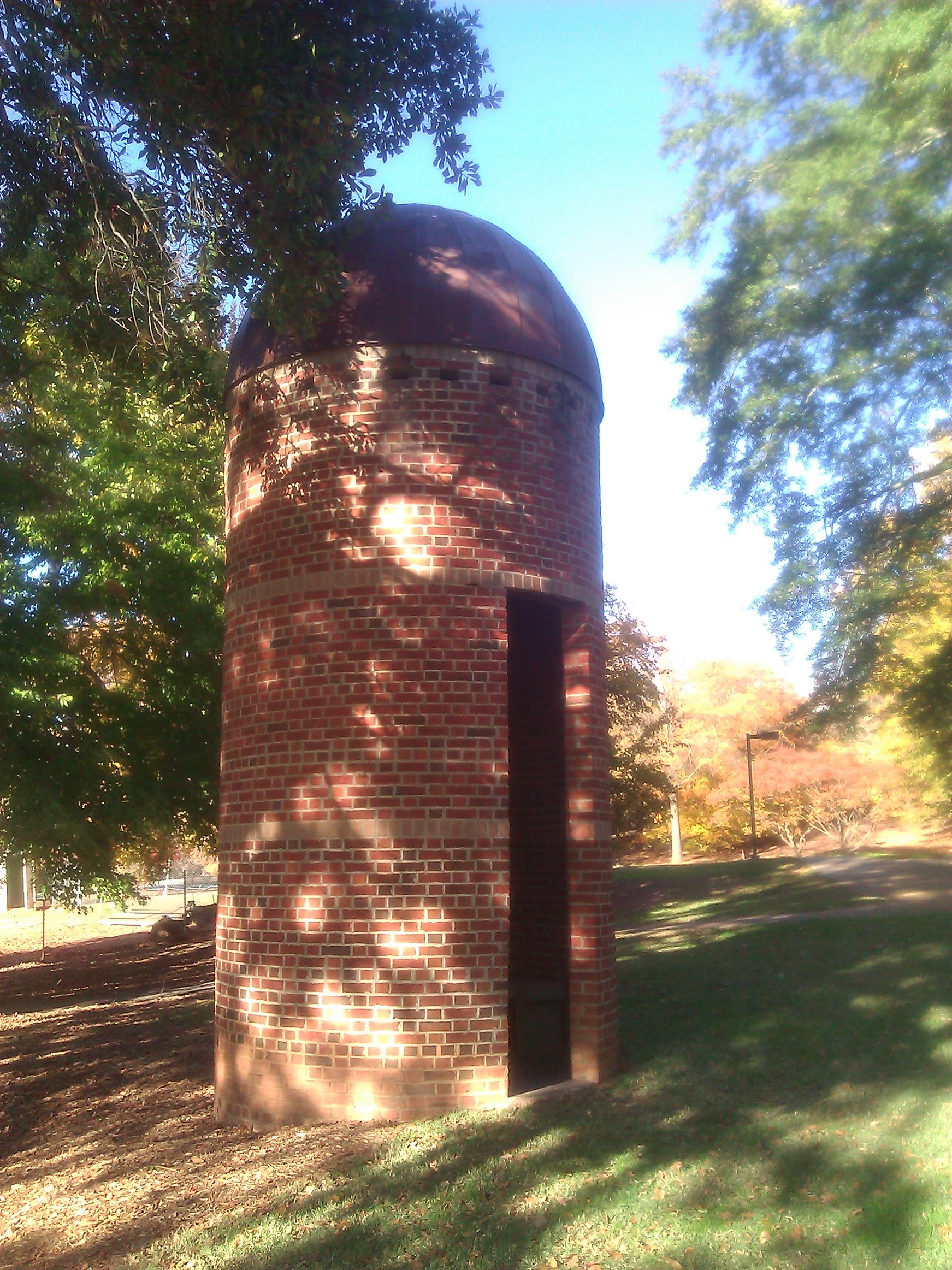 The starting point for this art is the small silo built just outside of Barre Hall on the southeast part of campus. The brick structure was designed to attract viewers, while still seeming to fit with the layout of the surrounding buildings. The idea was that the silo should BLEND in with the surroundings, but still get students to question the meaning. The structure contains a bronze lattice roofing and two open and opposite entrances, inside are two stone benches and the clue to the artwork, a bronze plate on the ground that reads "REF P211.T45 COOPER". Other facts about this is that the silo's location was specifically chosen and designed so that in the morning hours, the shadow of the silo points towards the library. Also, whenever one positions themself to read the bronze plate, they are facing in the direction of the library. All of this helps to contribute to the art factor of the silo itself. The careful design, positioning and blending with surroundings not only conceal it as a clue to The Book but also make it a piece of architectural art on the campus.
The Book
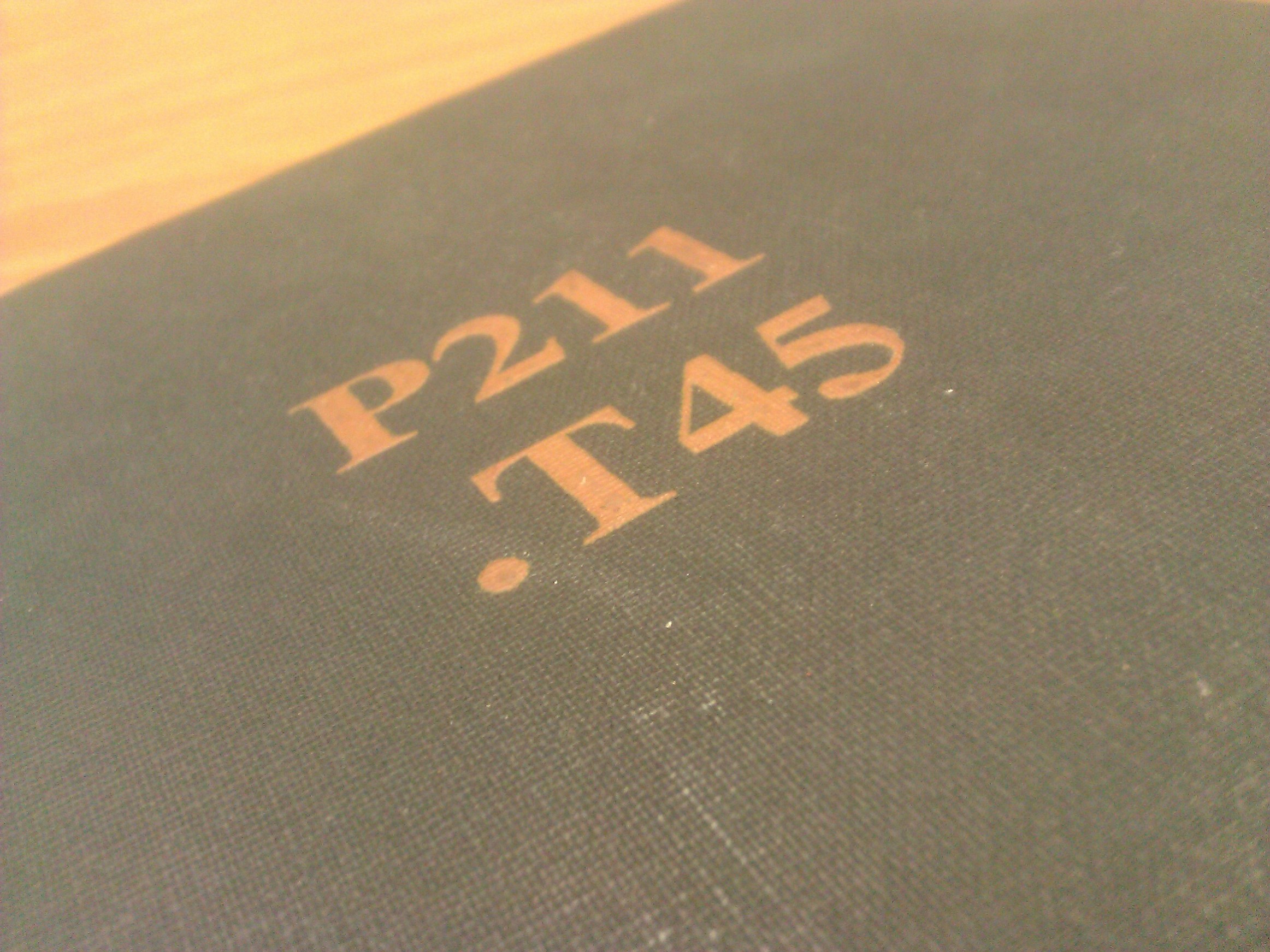
The Bronze plate directs the viewer to a call number for a book found in the reference section of Cooper Library. Surrounded by many books about the history of writing, a small black book lies on the shelf with nothing more than the call number printed on the front. The first few pages of the book illustrate the location of the silo. The pages are not like those in the average book. There are only a handful of printed words in the book as a whole, including the phrase "field and join" and a short list of the materials used in both the book and silo that are for the combined art. On the back few pages, there is a watermark with the words "Cranes Crest". Cranes Crest is a printing company, who's fully cotton paper was used to create the book. There are two types of content pages inside the book. While some pages seem to be pressed or rubbed with dirt, the majority of pages contain ink pressed images of grasses and plants. There are also some printed shapes near the back of the book, which make further connections to the silo. The book retains decent condition due to being monitored by the staff at Cooper Library. This is to PReVENT excessive tampering with the piece of art which has become a secret at Clemson. Many students also consider it tradition to leave their mark on Clemson by signing the book. The book retains its artistic value despite this due to the intent of it to be an interactive art. The book has been rebound with pages added to it, but the original jacket is inside. It is now kept behind the circulation desk and can only be obtained if the call number is recited.
Other Works
Bell Rhododendron
In 2005 Tillinghast finalized a product located on the Rudnick Art Trail in North Carolina. The art consists of a bronze handle atop of a small mound of stones. The viewer can pull on the handle to hear the sound and feel the bell resonating beneath their feet. The bell is able to ring because the ground beneath the handle is hollowed out, creating a pocket of air beneath the surface.
In 2006, this work was recognized as "One of the top forty public art projects in the country by Public Art Network of Americans for the Arts".
- Stinging Bee
- Vestibule