
Csaba Markus
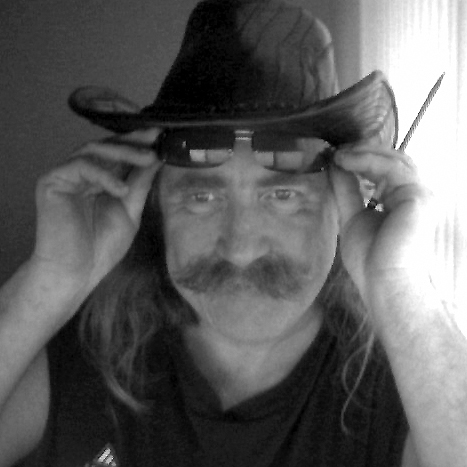
Csaba Markus is a American artist.'''
Childhood and early career
The classical influences in Csaba Markus art are tied to his origins in Budapest, Hungary, where he was born in 1953. His formative years were spent in the city of Budapest, a bustling and modern metropolis with over two thousand years of history. Even as a young child, Markus was physically and emotionally driven to express himself through painting, sculpting, and a variety of mediums. He had initially began his career as a sculptor, and even in the early stages of his artistic growth, his natural talent was evident. At the tender age of fourteen, he and his work were featured on international public television, and Markus experienced the first tantalizing taste of success and recognition for his art.
Works
Early on, Markus' captivation with the Renaissance, Neo-Classical and Romantic periods dominated his work. Though classically trained, the Avant Garde and Abstraction began to make their way into Markus' work. He reflected on the rebirth of humanity after the Middle Ages, the transition from a spiritually and morally controlled world to one that encouraged individual thought. These IDeaS became strong themes in his art. He became increasingly frustrated with teachers and the confines of communism. "I was very fed up," he said. "[The communist system] doesn't value the individual. They don't like freethinking minds. I was very desperate. For me it was not a good environment. I had two choices--start making bombs to destroy the system or get out." He chose the latter, although his "escape" in 1978, as he said, was "absolutely normal. It's not anything you could put in a book or a movie. I applied for my passport--I tried for seven years. When I finally got it, I had one week to leave the country. So I left."
Markus came to Mission Viejo, Calif., where he still lives. "I said, `I am putting my roots down here.' I am pretty stable. And California is good for painters because it has good sun. Italians, French and Spaniards are good painters because they have good sun
Paintings
He had initially began his career as a sculptor, and even in the early stages of his artistic growth, his natural talent was evident. At the tender age of fourteen, he and his work were featured on international public television, and Markus experienced the first tantalizing taste of success and recognition for his art. As a youth he passed countless hours in museums, intently studying the paintings and sculpture of artists such as Michelangelo, Botticelli, and El Greco. While his school friends dreamed of finding fame on the soccer field, young Markus was teaching himself from the works of the Old Masters. Almost wholly self-taught, his hunger for knowledge fueled his personal and artistic growth.
Like the artists of the Renaissance, Markus experimented with numerous techniques and mediums, refusing to limit himself to only one mode of expression. He worked with glass, sculpture, ceramics, hand made papers, etchings, mono prints, and even animation; as his paintings reflected the influences of High Renaissance , Impressionism, Minoan, Classical Greek, and Byzantine
Films
Markus worked across a wide range of media — painting, photography, drawing, and sculpture.
Music
Singer, song writer, multi-instrumentalist and producer. He taught himself how to play piano, guitars, keyboards and bass. During his music career so far he has written over 200 songs.
Books and print
The first of several bound self-published books by Markus was Gems and Rhapsodies, printed in 2004 (2004, ISBN 0-9746635-0-6)
Other self-published books by Markus include:
- Artist & Muses Perfect bound (2007, ISBN 0-9746635-1-4)
- Artist & Muses Silk Edition (2008, ISBN 0-9746635-2-2)
- Beautiful Struggle (2008, ISBN 0-9746635)
Other media
As stated, although Csaba Markus is most known for his paintings and films, he has authored works in many different media.
- Drawing: Graphite Pencil, Oil Pastel,
- Broadcasting: Csaba Markus has a broadcasting studio in his studio
- Photography: To produce his silkscreens, Markus made photographs . Markus is an accomplished photographer, and took an enormous amount of photographs of models, shows and travels - given the importance of this medium to both his paintings and to film, one might say that an interest in photography lies at the center of his artistic practice.
- Computer: Warhol used Apple computers to generate digital art, web sites and book publishing .
References
- "Art Business News" Arts Magazine,March, 2001, Title ]], A Contemporary Classic-Csaba Markus
- "Art Business News" Arts Magazine,September, 2001, Title ]], Csaba Markus Introduces `Museum at Home' Series
External links
Listening
- "Csaba title" (Studio atelier radio program, December 10, 2007)