
Convento de los Remedios, Seville
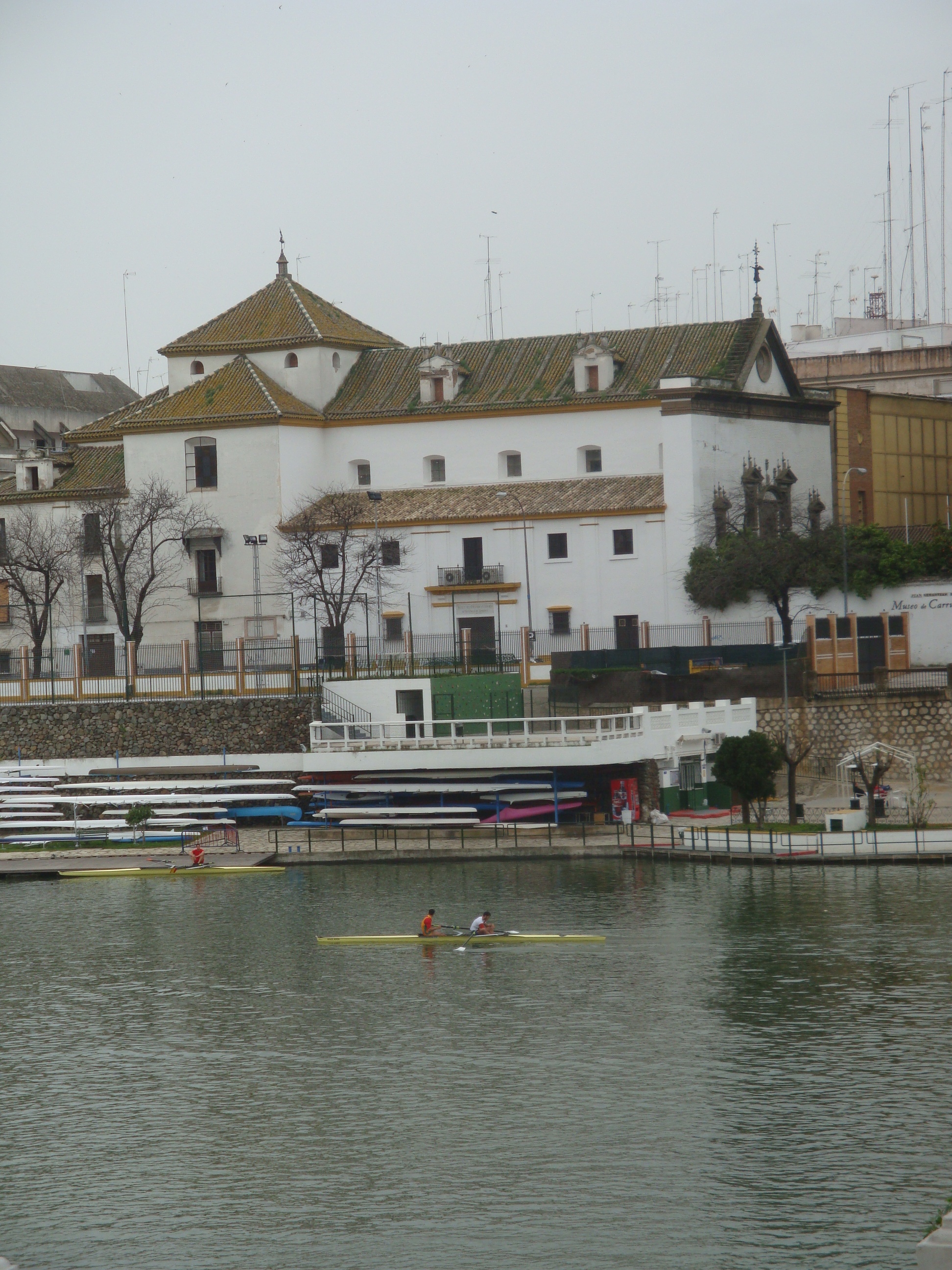 The Convento de Nuestra Señora de los Remedios is a convent founded in Seville (Andalusia, Spain) in the 16th century. It was from the Order of the Discalced Carmelites. It was confiscated in 1835. Since 1999 it has housed the Carriage Museum.
Ermita de los Remedios
In this area was the Hermitage of Nuestra Señora de los Remedios. This was on the banks of the Guadalquivir, near Triana.
According to Diego Ortiz de Zúñiga this hermitage was founded by the canon of the cathedral Martín de Gasca (or Gasco) in 1526, who put it in charge of a hermit named Fray Rodrigo.
According to Alonso Morgado it was founded by a religious named friar Pedro around 1540, who settled as a hermit with a Virgin of the Remedies. The neighbors favored with alms the improvement of this temple and one of them donated a plot next to it for an orchard. Friar Pedro died in 1553. This Virgin generated a devotion among the people of the place. The devout sailors of this image salute with artillery when ships passed by the sanctuary.
According to Alonso Morgado, this hermitage was added to the archbasilica of St. John Lateran of Rome by bull of Pope Paul III. According to Ortiz de Zúñiga was added to St. John Lateran by bull Pope Clement VII.
Convento de los Remedios
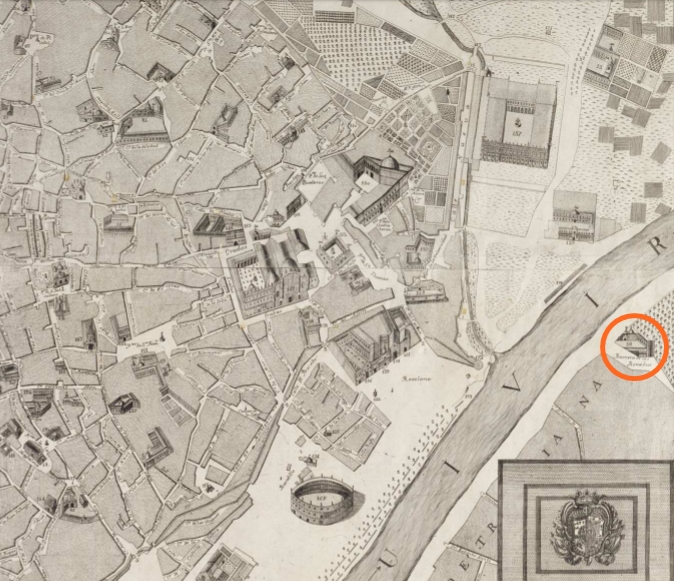 Jerome Gratian of the Mother of God was a disciple of saint Teresa of Ávila. Ambrosio Mariano Azaro de Saint Benedict was a soldier and engineer of Neapolitan origin who had carried out a navigation project of the Guadalquivir of Seville to Córdoba to Philip II of Spain in 1561. Subsequently, Ambrosio led a retired religious life in the Hermitage of San Onofre in Seville and in 1569 he entered the Carmelite convent of Pastrana (province of Guadalajara).
In 1573 friar Jerome came to Seville, as vicar and visitor to Andalusia, accompanied by Friar Ambrosio. They stayed at the Casa Grande del Carmen for two and a half months.
Jerome requested the archbishop, Cristóbal Rojas Sandoval, authorization to found a discalced Carmelite convent in the city. For this, the archbishop gave him the hermitage of Nuestra Señora de los Remedios. Jerome installed the convent church in this hermitage in 1574. Next to the chapel were built the convent units, which had the title of Our Lady of Remedies.
The proximity to the river caused the convent to suffer frequent floods and that it was in an unhealthy state that caused some of its religious to become ill and die. In 1603 there was a flood that flooded the convent. A friar went to ring the bell in distress but died of his shooting while making it sound. The mayor of the city, Bernardino de Avellaneda, chartered a ship with twenty-four oarsmen who rescued the friars, who went to the convento del Santo Ángel. The flood of 1618 left the convent in a very bad state, so the archbishop Pedro de Castro y Quiñones gave them a lot of alms.
For all these reasons, in 1649 the construction of a new convent in a nearby high place began. On October 10, 1700, the new convent of Los Remedios was consecrated by the archbishop Jaime de Palafox y Cardona, being prior Andrés de Jesús María.
In 1725 a flood flooded this property. In 1784 another flood again flooded the place, losing the harvest of oranges, which was the main source of income of the convent, although despite this they were able to accommodate fifty neighbors.
The church was enlarged between 1780 and 1785.
In 1810, during the Napoleonic French invasion of Seville, the confiscated convent, occupied by the French troops and plundered. The church could be reopened to cult in 1811, with the help of the parish of Santa Ana and the support of the neighbors, as the authorities they wanted its demolition. The friars were able to return to the convent in 1814. Finally, it was confiscated in 1835. In 1844 the convent was completely demolished. The convent temple remained open, managed by the parish of Santa Ana. It was closed by the regime that emerged after the Revolution of 1868 and was abandoned.
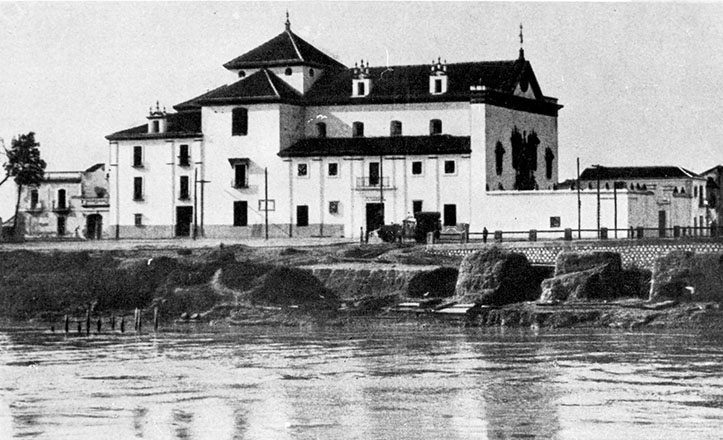 Between 1928 and 1929 the building was renovated by Juan Talavera y Heredia to be the headquarters of the Hispanic-Cuban Institute. During the Spanish Civil War , between 1936 and 1939, the building was used as the headquarters of the [...] Germany troops stationed in the city. With the rupture of relations between Francisco Franco and the communist Cuba of Fidel Castro, the activity of the Hispanic-Cuban Institute was very scarce.
In 1992 it was an information center of the Seville Expo '92. Since 1999 it houses the Carriage Museum.
Confraternities
In the middle of the 17th century, the Confraternity of the Entrada Triunfante en Jerusalén y Nuestra Señora del Desamparo was founded in the Convento de la Victoria. He joined the Confraternity of San Sebastián in 1668. After the confiscation of 1835 he moved to the church of the convento de los Remedios. It remained in this place until it was closed by the regime that emerged after the Revolution of 1868.
In the capilla de los Mártires, in the neighborhood of Triana, there was the Confraternity of Santo Ecce Homo y Nuestra Señora del Camino. This disappeared in the middle of the 18th century. Later, the images of this confraternity were placed in the church of the convent of Los Remedios. When it was closed, in 1868, they went to the iglesia de Santa Ana.
Heritage coming from the convent
Most of the convent's heritage was lost in the Napoleonic French invasion.
The Virgin of the Remedies, who was in the main altarpiece, went to the Iglesia de la O, where it was destroyed by the fire provoked by leftist anticlerical groups in 1936.
An gilded wooden altarpiece of this convent is found in the basilica of the Confraternity of el Cachorro, and hosts the Virgen del Patrocinio.