
Cleopatra (slave ship)
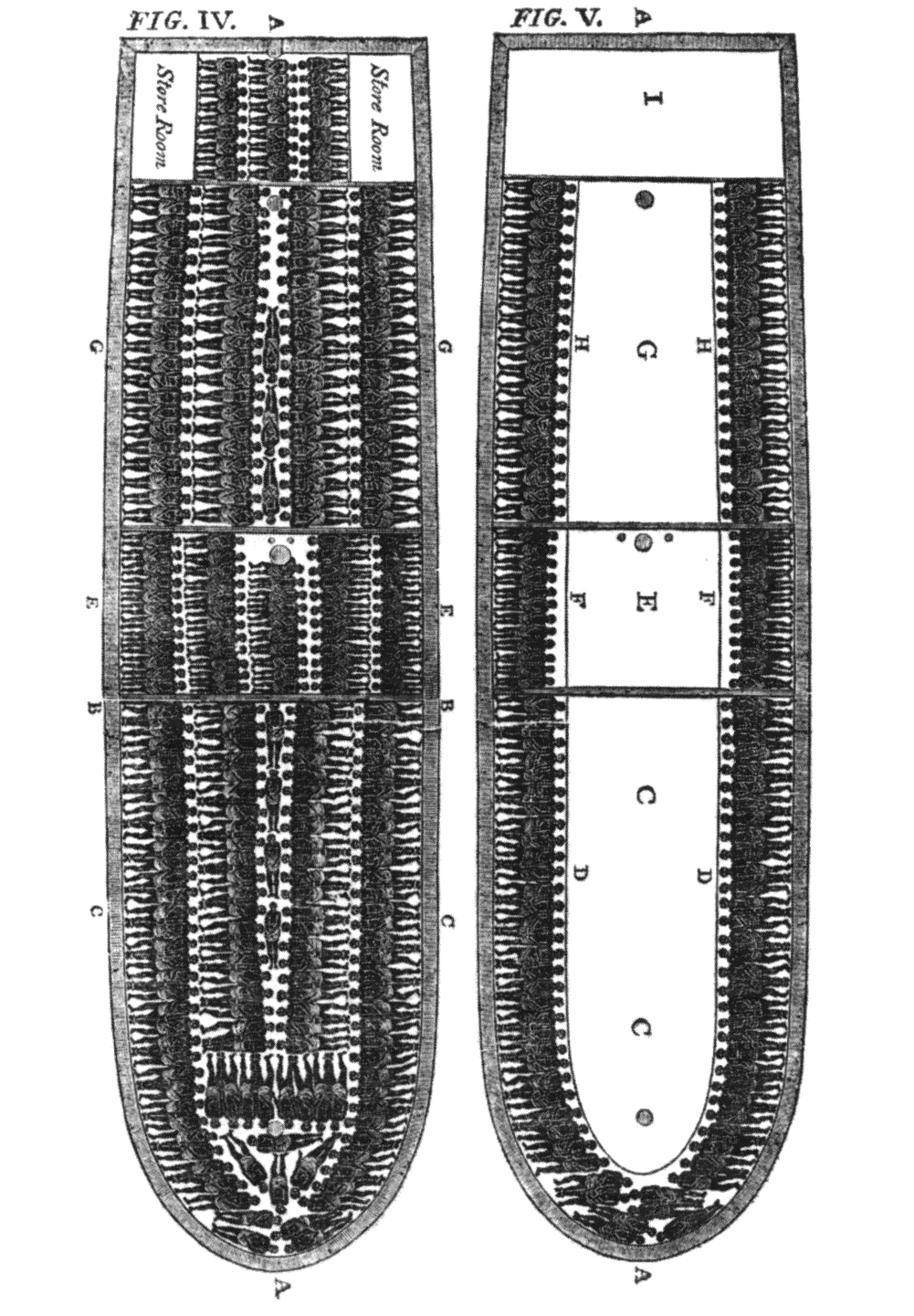
The Cleopatra was an 18th-century slave ship based in Newport, Rhode Island, owned by the Portuguese-Jewish merchants Aaron Lopez and Jacob Rodriguez Rivera. Between 1770 and 1774, the Cleopatra made at least three voyages to the coast of West Africa, transporting over 400 enslaved Africans to Barbados and Jamaica. An estimated 287 or more captives may have died during these voyages. The ship was one of at least 21 slave vessels underwritten by Lopez during a period in which Newport dispatched a total of 347 slave ships to Africa.
Archival documents relating to the Cleopatra, including accounts, a cargo booklet, and supply records, survive in the Aaron Lopez Papers held at the Rhode Island Historical Society, the Newport Historical Society, and the American Jewish Historical Society.
Context
The Cleopatra operated during the height of the Rhode Island slave trade, when Newport was one of the leading slave-trading ports in British America. Between 1705 and 1805, Rhode Island merchants sponsored at least 1,000 slaving voyages to West Africa and transported over 100,000 enslaved people to the Americas and the West Indies. The trade was central to Newport's economy, fuelling the triangular trade in which Rhode Island rum was exchanged for enslaved Africans, who were sold in the Caribbean for sugar and molasses, which were in turn shipped to New England to produce more rum.
Lopez and Rivera's involvement in the slave trade represented a small but documented part of this broader system. Nearly all of Newport's leading merchant families, regardless of religious background, participated in the trade, including the Champlin, Redwood, Brenton, Vernon, Wanton, and Malbone families.
Owners
The Cleopatra was owned by Aaron Lopez (born Duarte Lopez, 17311782) and his father-in-law Jacob Rodriguez Rivera (c. 17171789), both of whom were Sephardic Jews who had emigrated from Portugal to Newport to escape the Portuguese Inquisition and openly practise Judaism. Lopez became the wealthiest merchant in Newport by the early 1770s, with commercial interests spanning spermaceti candle manufacturing, rum distilling, whaling, and the Atlantic slave trade. Rivera, who had arrived in Newport from New York in the 1740s, was a pioneer of the spermaceti candle industry and a co-founder of the Touro Synagogue.
Lopez and Rivera jointly financed 14 slave voyages between 1761 and 1774, of which the Cleopatra's three voyages were the largest. Historian Eli Faber documented that Lopez underwrote 21 slave ships in total during this period, representing a small fraction of the 347 slaving voyages launched from Newport. Despite their involvement in the slave trade, the slaving enterprise likely resulted in a net financial loss for Lopez and Rivera, and slavery constituted only a small part of their overall commercial activities.
Voyages
First voyage (17701771)
The Cleopatra departed Newport in July 1770 under the command of Captain Nathaniel Briggs, an experienced slaver from Tiverton, Rhode Island, who had previously captained several other Lopez vessels on slaving voyages to West Africa. The ship sailed to the Gold Coast of Africa, where Briggs purchased enslaved people at coastal trading posts. The Cleopatra then crossed the Atlantic and delivered its human cargo to Barbados, where 96 enslaved Africans were sold.
Second voyage (17711772)
The Cleopatra set out on her second slaving voyage on 16 June 1771, again under Captain Briggs. This was the largest of the ship's three voyages. The vessel returned to the Gold Coast and loaded a far greater number of captives than on the first voyage. At Barbados, 230 enslaved people were sold. Records from the Newport Historical Society's shipping book of Aaron Lopez document this voyage. The ship also called at Môle-Saint-Nicolas in Saint-Domingue (present-day Haiti) during the return leg of this voyage.
The combined total of enslaved people sold on the first two voyages was 326, but the number originally embarked in Africa was substantially higher. Accounting for deaths during the Middle Passage, an estimated 287 or more enslaved Africans may have perished during these two voyages alone.
Third voyage (17731774)
The Cleopatra departed Newport on 30 June 1773 on her third and final documented slaving voyage, this time under Captain James Bourk, with the cargo consigned to Briggs. Surviving records at the Rhode Island Historical Society include the ship's accounts, a cargo booklet detailing the supplies loaded for the African voyage, and a document recording the transfer of the Cleopatra to one Isaac West. Approximately 77 enslaved people were sold in Kingston, Jamaica, upon the ship's arrival in 1774.
Archival records
The Aaron Lopez Papers at the Rhode Island Historical Society (Mss 541) contain several documents specifically relating to the Cleopatra, including:
- Accounts of ship Cleopatra, 1773
- Supplies of ship Cleopatra for trip to Africa, 1773
- Ship Cleopatra to Isaac West, 1773
- Ship Cleopatra cargo booklet, 1773
Five additional documents relating to the Cleopatra were bequeathed to the Rhode Island Historical Society in 1956 from the collection of Paul C. Nicholson.
Further records are held at the American Jewish Historical Society at the Center for Jewish History in New York, within the broader Aaron Lopez Papers collection, which includes shipping records and manifests.
See also
- Rhode Island slave trade
- Aaron Lopez
- Touro Synagogue
- Rhode Island in the American Revolution
- Atlantic slave trade
- Middle Passage
Further reading
- Chyet, Stanley F. (1970). Lopez of Newport: Colonial American Merchant Prince. Detroit: Wayne State University Press.
- Faber, Eli (1998). Jews, Slaves, and the Slave Trade: Setting the Record Straight. New York: New York University Press.
- Gutstein, Morris A. (1939). Aaron Lopez and Judah Touro. New York: Behrman's Jewish Book House.