
Christopher Hitchens' critiques of public figures
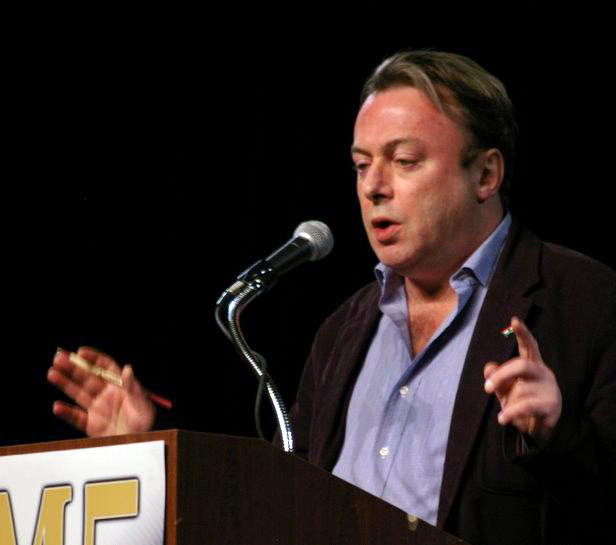 English-American author, journalist, and literary critic Christopher Hitchens (born 1949) is noted for his scathing critiques of public figures. Bill Clinton, Henry Kissinger, and Mother Teresa were the targets of Hitchens' book-length studies No One Left to Lie To: The Triangulations of William Jefferson Clinton, The Trial of Henry Kissinger, and The Missionary Position: Mother Teresa in Theory and Practice respectively. Hitchens has also written biographical essays AbOUT those he greatly admires, namely Thomas Jefferson (Thomas Jefferson: Author of America), George Orwell (Why Orwell Matters) and Thomas Paine (Thomas Paine's "Rights of Man": A Biography). However, the vast majority of Hitchens' noteworthy critiques take the form of relatively short opinion pieces. His 1993 collection "For the Sake of Argument" included a section called "Rogues' Gallery", in an interview Hitchens explained: "For a lot of people, their first love is what they'll always remember. For me it's always been the first hate, and I think that hatred, though it provides often rather junky energy, is a terrific way of getting you out of bed in the morning and keeping you going. If you don't let it get out of hand, it can be canalized into writing. In this country where people love to be nonjudgmental when they can be, which translates as, on the whole, lenient, there are an awful lot of bubble reputations floating around that one wouldn't be doing one's job if one didn't itch to prick."
Jerry Falwell
When the controversial Southern Baptist televangelist Rev. Jerry Falwell died on May 15, 2007, Hitchens was interviewed on Anderson Cooper 360°. He argued that "the empty life of this ugly little charlatan proves only one thing: that you can get away with the most extraordinary offenses to morality and to truth in this country if you just get yourself called reverend". To bring his point home, Hitchens asked:
On the following day, May 16, 2007, Hitchens appeared on the American television show Hannity and Colmes with Ralph Reed in which Hitchens called Falwell "a vulgar fraud and crook," and argued that "we have been rid of an extremely dangerous demagogue who lived by hatred and prejudice, and who committed treason by saying that the United States deserved the attack upon it and its civil society on September 11, 2001 by other religious nut cases like himself." At the very end of the interview, Hitchens concluded that "if you give Falwell an enema, you could bury him in a matchbox."
George Galloway
In May 2005, United Kingdom Member of Parliament George Galloway entered into an argument with Hitchens before giving evidence to the United States Senate. Galloway called Hitchens a "drink-soaked former Trotskyist popinjay," "[s]ome of which," Hitchens contended in a column, "was unfair." A few days later, Hitchens wrote an article that attacked Galloway's political record, criticized his Senate testimony and made a case for Galloway's complicity in the Oil-for-Food scandal. In this essay, Hitchens states that,
On September 14, 2005, Hitchens engaged in a formal debate with Galloway in New York City at Baruch College. This debate was continued on Real Time with Bill Maher on September 23, 2005. According to Hitchens, Galloway has stated that he will never debate with him again, to which Hitchens responded that he intends to write a review of Galloway's prison notes one day.
Henry Kissinger
The Trial of Henry Kissinger (2001), is Christopher Hitchens' examination of the alleged war crimes of Henry Kissinger, the National Security Advisor and later Secretary of State for President Nixon and President Ford.
Mel Gibson
During an arrest for driving under the influence, Mel Gibson asked the arresting officer if he was Jewish and said that "[...] Jews... The Jews are responsible for all the wars in the world." Hitchens criticised Gibson, stating,
In his book God is Not Great: How Religion Poisons Everything, Hitchens describes Gibson as an "Australian fascist and ham actor". page 110
Tenzin Gyatso, the 14th Dalai Lama
In 1998, Hitchens criticized Tenzin Gyatso, 14th Dalai Lama for a number of reasons, including: the Dalai Lama's acceptance of "45 million rupees, or about 170 million yen" from Shoko Asahara, the leader of the Aum Shinrikyo cult which released sarin nerve gas in the Tokyo Subway system; the Dalai Lama's proclamation that Hollywood actor Steven Seagal was a tulku and a reincarnated lama of Tibetan Buddhism; the persecution of followers of the Dorje Shugden deity whom Hitchens describes as having been "threatened with violence and ostracism and even death following the Dalai Lama's abrupt prohibition of this once-venerated godhead"; the Dalai Lama's specified [...] norms, which ban oral and anal [...], masturbation and explain the proper way to pay for prostitution; and, most importantly, the Dalai Lama's support of India's Pokhran-II thermonuclear tests. The World Tibet Network News service later said that the Dalai Lama was "saddened to hear about the series of nuclear tests conducted by India," and was "fundamentally against the existence and stockpiling of any wapons [sic] of mass destruction."
Michael Moore
In June 2004, Hitchens severely criticized Michael Moore in a review of Moore's film Fahrenheit 911, concluding that
This drew several counter-criticisms, including an eFilmCritic article and a Columbus Free Press editorial.
Hitchens went further in his criticism of Moore on MSNBC's Scarborough Country television program:
Daniel Pipes
Hitchens severely criticized Daniel Pipes, upon Pipes' nomination to the U.S. government-sponsored U.S. Institute of Peace. Hitchens expressed "bafflement" at this appointment in a Slate essay entitled "Daniel Pipes is not a man of peace". Hitchens claimed that Pipes "employs the fears and insecurities created by Islamic extremism to slander or misrepresent those who disagree with him," and that this contradicts the USIP's position as "a somewhat mild organization [...] devoted to the peaceful resolution of conflict." Hitchens concluded his opposition to Pipes' nomination by claiming that Pipes "confuses scholarship with propaganda" and pursues "petty vendettas with scant regard for objectivity."
Ronald Reagan
Two days after Ronald Reagan's death, Hitchens referred to the deceased President as a "cruel and stupid lizard" and stated that "this was a man never short of a cheap jibe or the sort of falsehood that would, however laughable, buy him some time." However, Hitchens argued that
Mother Teresa
In 1992, Hitchens wrote an article for The Nation in which he called Mother Teresa "The Ghoul of Calcutta". He later narrated and co-wrote Hell's Angel, a documentary broadcast November 8, 1994 on Channel 4 in Britain, and expanded his criticism in a 1995 book, The Missionary Position. He accused her of failing to treat people, particularly children, placed in her care; her strong religious views on contraception and abortion, the latter of which she described as "the greatest destroyer of peace today"; and her "acceptance" of poverty, which took the form of encouraging the poor to embrace their poverty.
Hitchens asserts that Mother Teresa behaved like a political opportunist who adopted the guise of a saint in order to raise money to spread an extreme and aggressive version of Catholicism. He also condemns her for using contributions to open convents in 150 countries rather than establishing a teaching hospital, the latter being what he implies donors expected her to do with their gifts.
He also criticized her pursuit and acceptance of donations from third world dictators; large donations accepted from Charles Keating, who was later convicted of fraud, racketeering and conspiracy; and the allocation of these donations away from treatment and towards furthering what Hitchens called "fundamentalist" views. Hitchens's writings have earned him the ire of Roman Catholics; Brent Bozell, board member of the Catholic League for Religious and Civil Rights, for example, called Hitchens and Aroup Chatterjee "notoriously vicious anti-Catholics".
During Mother Teresa's beatification process, Hitchens was called by the Vatican to argue the case against her (in particular, noting that her "miracles" were better explained through technology than divine intervention). He testified in Washington, the role previously known as the "Devil's Advocate", although Pope John Paul II had previously abolished that position. Hitchens has satirically referred to his work in the case as the person chosen "to represent the devil pro bono".
Cindy Sheehan
In a column, Hitchens argued that Cindy Sheehan "has obviously taken a short course in the Michael Moore/Ramsey Clark school of Iraq analysis and has not succeeded in making it one atom more elegant or persuasive." Hitchens commented upon a Sheehan email featured on Nightline that said her son "was killed for lies and for a PNAC Neo-Con agenda to benefit Israel. My son joined the Army to protect America, not Israel."
Hitchens also denounced Sheehan for what he called positing a "Jewish cabal" and for attracting the support of David Duke.