
Carl Johan Cronstedt
Carl Johan Cronstedt was a Swedish architect, inventor, Earl, noble, civil servant, scientist and bibliophile.
Biography
[[Image:Cronstedt Coat of Arms.gif|thumb|left|
Cronstedt "Coat of Arms"]] Cronstedt was the son of Jakob Cronstedt (Olderman) and Margareta Beata Grundel born in 1709 in Stockholm, Sweden. He married Countess Eva Margareta Lagerberg in 1744.
Cronstedt became a pupil of Christopher Polhem in 1729 and in 1733 was his apprentice. He studied civil engineering under Carl Hårleman and in 1743 became his successor as superintendent. He had this post to 1767 and carried out work at the following,
-
- Drottningholm Palace in the 1740s following Hårleman's architectial drawings.
-
- Maria Magdalena Church restoration in Stockholm after the 1759 fire.
-
- Construction of the new Amiralitetskyrkan in Karlskrona in 1760.
-
- Involved in the construction of Drottningholmsteatern 1764 to 1765.
-
- Did various town plans and park designs with Kasko being 1765 example.
-
- Did the drawings to Saint Olai Church in Liverpool which opened in 1767.
Positions
- 1739 - Member of the Academy of Sciences.
- 1752 - Member of Swedish House of Lords.
- 1767 - President in Kammarrevisionen.
- 1769 - President in Kammarkollegium.
Inventor
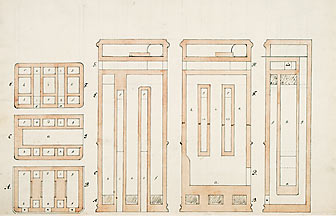 Cronstedt together with Faban Wrede in the middle part of the eighteenth century raised the efficiency of the wood burning stove about eights times with a new technology and invention. This was done by a 1767 redesign of the traditional wood burning stove, leading the smoke through long flues winding up and down inside the stove into special masonry bricks capturing more heat in the process. The new technology changed the pattern designs of large interior building space for residences and other public buildings. It allowed more rooms to be heated with the same amount of firewood. It had significant social and economical consequences throughout Sweden and later throughout Europe and America up into the twentieth century. Cronstedt's invention had significant environmental significance as well because it saved forests from excess usage.
Cronstedt showed how in a ceramic designed wood burning stove that much more additional heat could be captured in a heavily tiled system of five long internal flues. The innovation of his masonry stove system captured the heat from only periodic burning of wood. It would then spread out that heat over a longer period for a fairly constant temperature. Because of this it only needed to be lit in the mornings and in the evenings. This type of residential (or interior space) heating system is sometimes referred to as a kakelugn in a Swedish stove. In England and America it is called a "tile stove" or masonry stove. It is a type of "contra-flow stove" which the Chinese have made into a Kang bed-stove.
Books written
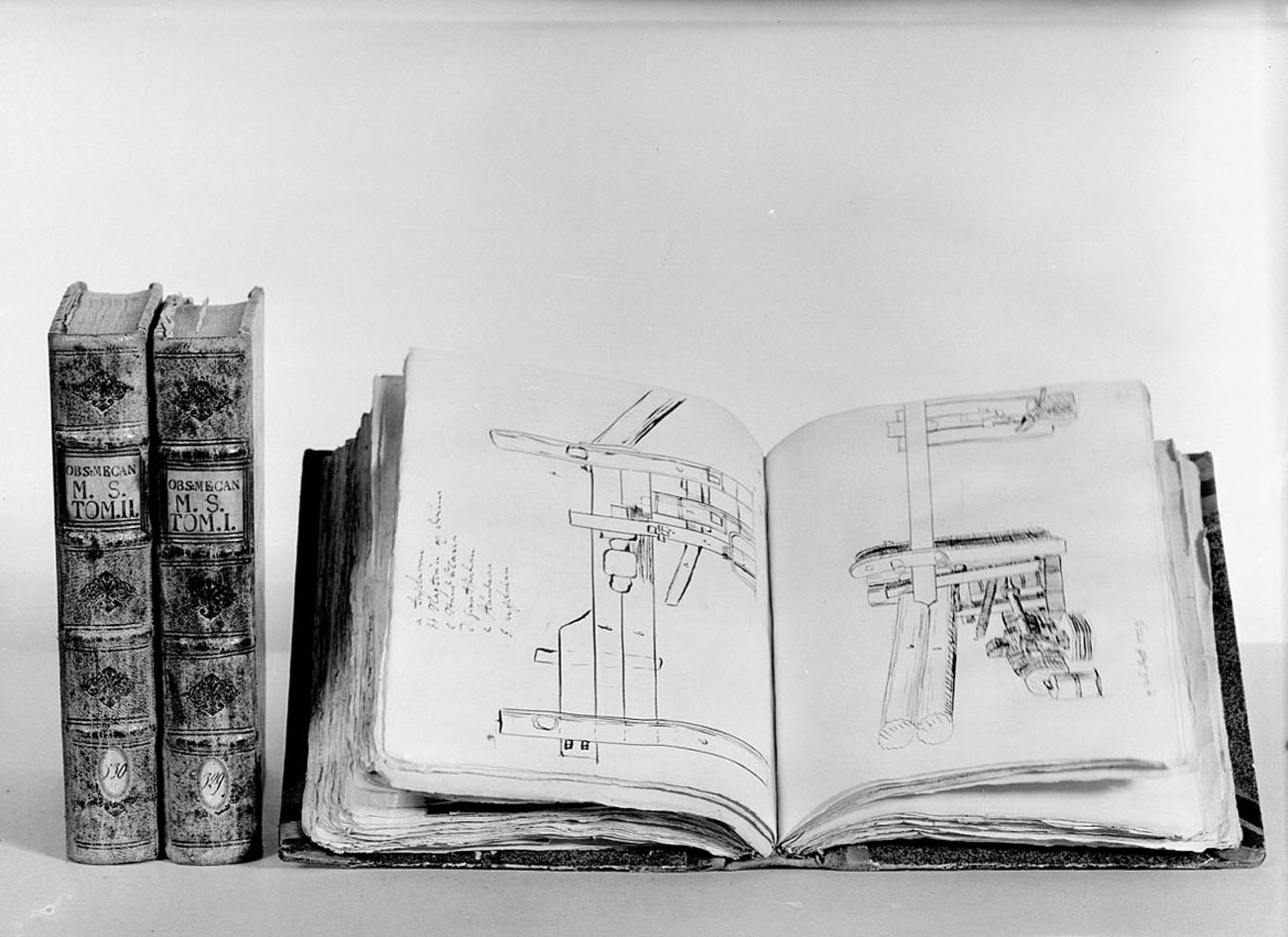 Cronstedt wrote and had published several books. Among these were,
- 1767 - On a new installation of stoves for firewood saving.
References
- Carl Johan Cronstedts fullerösamling, Byggmästaren 1942, n. 9, p. 115-116
- Okänd fransk konstnär:Arkitekten Carl Johan Cronstedt, Nationalmusei årsbok 1946, n.s. v. 16, p. 112
- Carl Johan och F.A.U.:Cronstedts samlingar på det gamla Fullerö, Nationalmusei årsbok 1942/1943, n.s. v. 12, p. [39]-105
- Hofberg, Herman, Heurlin, Frithiof, Millqvist, Viktor, Rubenson, Olof, Svenskt biografiskt handlexikon, 1906 - a source now in public domain.
Notes
Bibliography
- Quinn, Bradley et al., Scandinavian Style, Sterling Publishing Company, Inc. 2003, ISBN 1-8409132-5-8
External links
sv:Carl Johan Cronstedt