
Brian Armstrong (diver)
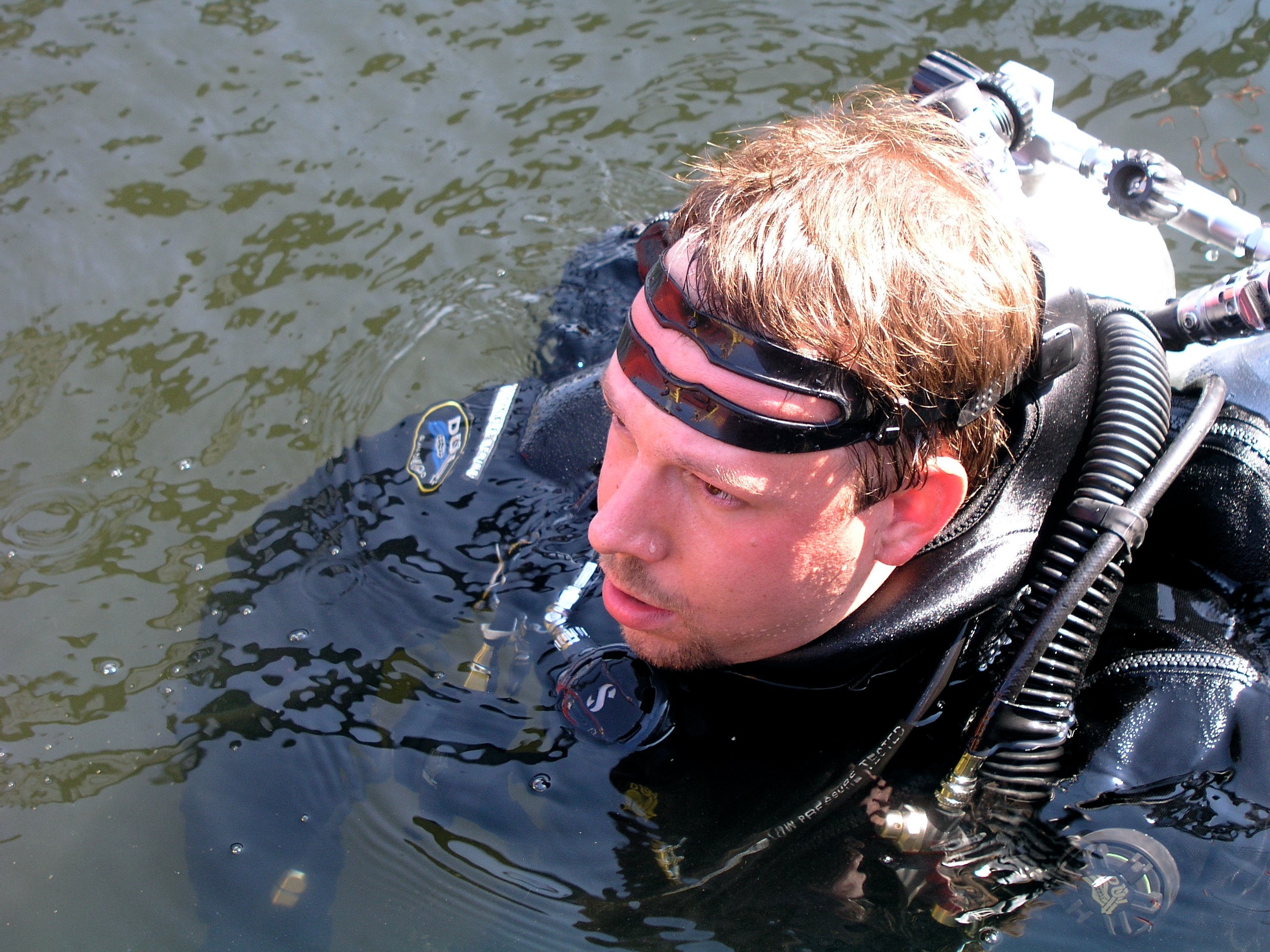 Brian Matthew Armstrong (b. May 12, 1973) is an American technical diver and founding board member of the non-profit Rubicon Foundation.
Background
Armstrong was born on May 12, 1973 in Minneapolis, Minnesota. His family moved to North Carolina where he eventually attended Parkwood High School and graduated in 1991. He then attended the North Carolina State University (NCSU), graduating in 1995 with a degree in Mechanical Engineering. After college, Armstrong worked as an engineer for Nortel before leaving to take a position as an engineer contracted to the United States Postal Service.
Armstrong was first certified in scuba diving by H. Larry Brown at NCSU in 1994. Following this first class, he began assisting the diving classes while continuing his diving education. Armstrong was certified as a cave diver and NAUI instructor in 1995. In 2002, Armstrong joined with divers James Wagner and Gene Hobbs in the formation of the Rubicon Foundation to further diving education, research and conservation efforts. In 2006, Brian began diving a rebreather having completed his training with Gregg Stanton.
Armstrong met his wife Heather while working on a diving project and they were married in October 2006. They currently reside in Pensacola, Florida
Armstrong appeared with his wife on the cover of Florida Scuba News in 2008 and has made several television appearances.
Expeditions and projects
The B-25c Mitchell bomber was ditched on 4 April 1943 and remained below the surface of Lake Murray (South Carolina) for 60 years. The recovery effort was headed by Dr. Robert Seigler and supervised by Gary Larkins of the Air Pirates. Armstrong participated in the recovery effort with divers from Association of Underwater Explorers (AUE), the Rubicon Foundation, and Woodville Karst Plain Project in 2005. The project was documented by the History Channel and televised on their show Mega Movers. The plane is being preserved by the Southern Museum of Flight in Birmingham, Alabama.
Michael C. Barnette's recovery of Oculina varicosa from the Gulf of Mexico in 2006 allowed researchers to confirm this species of concern's existence in abundance in the Gulf. In 2009, Armstrong assisted Barnette in collecting coral samples for testing that identified the species is genetically identical to Oculina varicosa found off the eastern coast of Florida.
When the Eagle's Nest cave system needed new guidelines in 2007, Armstrong and other AUE divers took on the task replacing the old line as well as removing unnecessary lines.
In 2009, Armstrong participated in a search for missing Women Airforce Service Pilots (WASP) Gertrude Tompkins Silver with Divers, explorers and aviation archaeologists from the Missing Aircraft Search Team (MAST). Silver was the last WASP to go missing in World War II. She made a flight from Mines Field (currently LAX) to Palm Springs on October 26, 1944, intending to fly a P-51 Mustang on to New Jersey, but never arrived in Palm Springs. The search for Silver's aircraft continues.
Armstrong also served as a member of the "Oversight Committee" for the 2009 "Tahoe Benchmark" testing of diver propulsion vehicles.
In 2010, Armstrong again assisted Barnett in the filming of a television special for The Learning Channel on the Bermuda Triangle.
External links
- Dark Side Diving - Armstrong's website