
Breast and ovarian cancer
Breast and ovarian cancer does not necessarily imply that both cancers occur at the same time, but rather that getting one cancer would lead to the development of the other within a few years. Women with a history of breast cancer have a higher chance of developing ovarian cancer, vice versa.
Breast cancer refers to the uncontrolled division of breast cells. It is possible for both males and females to get breast cancer. Breast cancer is the most common cancer women face.
Ovarian cancer is a type of cancer which begins in the ovaries. Anyone with ovaries can get it, including women, trans men, non-binary people and intersex people. Although ovarian cancer is much less frequent, it is the deadliest among gynecologic cancers.
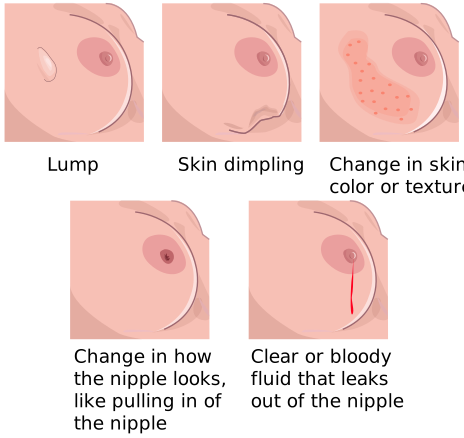
Symptoms
Breast cancer
People can experience different symptoms for breast cancer while others May Be asymptomatic.
Common symptoms include:
- A new lump of mass in breast or armpit (can either be painful or painless)
- Swelling of all or part of a breast
- Breast or nipple pain
- Nipple retraction
- Nipple discharge other than breast milk, including blood
Ovarian cancer
There may be no clear signs or symptoms at the early stages of ovarian cancer, especially in benign conditions. Symptoms are more likely to emerge after metastasis, a process where cancer cells spread from the site of origin to different organs through blood and lymphatic vessels and form a new tumor. 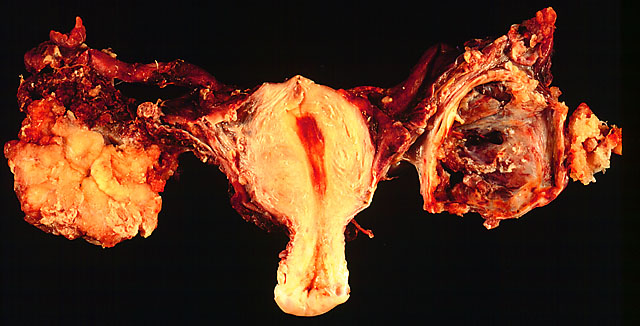 Common symptoms include:
- Abdominal bloating or swelling
- Pain or discomfort in pelvic or abdominal area
- Frequent need of urination
- Weight loss with abdominal swelling
Risk Factor
Hereditary breast and ovarian cancer (HBOC)
HBOC is an inherited cancer syndrome which produces more breast cancer and ovarian cancer in genetically related families. Mutations in BReast CAncer 1 (BRCA1) and BReast CAncer 2 (BRCA2) are significantly related. The lifetime risk of a female developing breast and/or ovarian cancer increases if she inherits a harmful mutation of BRCA1 or BRCA2, but the severity depends on the type of mutation. Each year, about 3% of breast cancers and 10% of ovarian cancers result from inherited mutations in the BRCA1 and BRCA2 genes.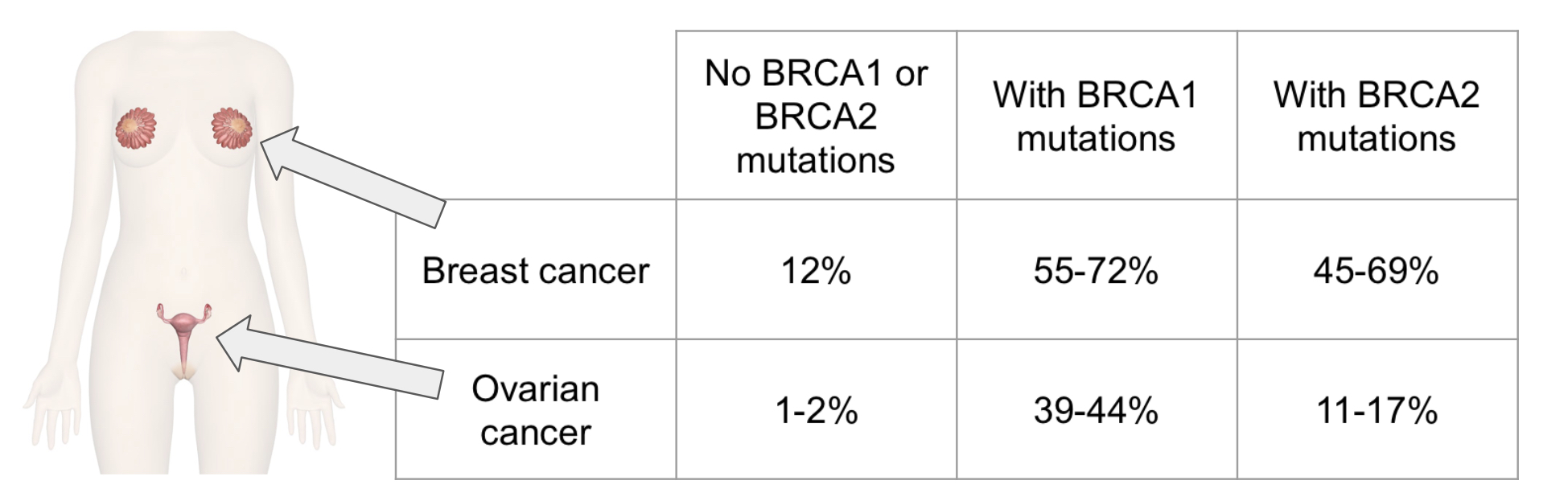
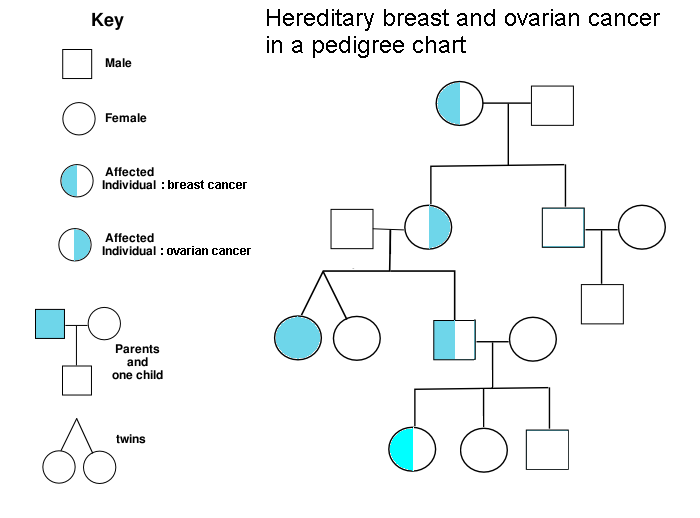 However, most BOC are non-inherited, so most women who have BOC do not have HBOC. It is estimated that less than 1% of the general population has a mutation in the BRCA1 or BRCA2 genes. Mutations in other tumor suppressor genes like TP53, PTEN, CDH1, ATM, CHEK2 and PALB2, and oncogenes like KRAS, BRAF and ERBB2 have also been linked with an increased risk of HBOC.
HBOC is considered when multiple cases of breast cancer, ovarian cancer, prostate cancer, and/or pancreatic cancer occur in the same family. In families with 4 or more cases of breast cancer diagnosed before age 60, the chance of having HBOC is about 80%. The risk would be even higher for women who have close blood relatives with breast cancer. Women with a first-degree female relative(FDR) who has been diagnosed with breast cancer would have a risk that is two times higher than the general population, particularly if the FDR was diagnosed early in life. They also show 32% higher risk when they have five or more third-degree relatives. A similar trend is seen in ovarian cancer, where women with FDRs diagnosed with ovarian cancer shows a risk three times higher than the general population.
Families of Ashkenazi Jewish ancestry backgrounds have an increased risk of HBOC. Mutations in BRCA1 and BRCA2 are 10 times more common in Ashkenazi Jewish individuals. 2.5% of individuals of Ashkenazi Jewish ancestry have such mutations.
Genetic testing is available for testing mutations in BRCA1 and BRCA2. Methods include sequence analysis and gene-targeted deletion/duplication analysis. However, most BOC occur by chance without a known cause, so genetic testing is only recommended for people with family history suggesting HBOC.
History of breast or ovarian cancer
Prior diagnosis of breast cancer is associated with a higher risk of ovarian cancer, particularly in women who are diagnosed at a young age and in those with estrogen receptor-negative breast cancer.
Similarly, women with ovarian cancer have an increased risk of developing breast cancer.
Old age
People encounter more environmental exposures and accumulate genetic mutations as they age. Therefore, most breast cancers are found in women aged 50 or older. Similarly, the risk of ovarian cancer is the greatest in female populations aged 75–79.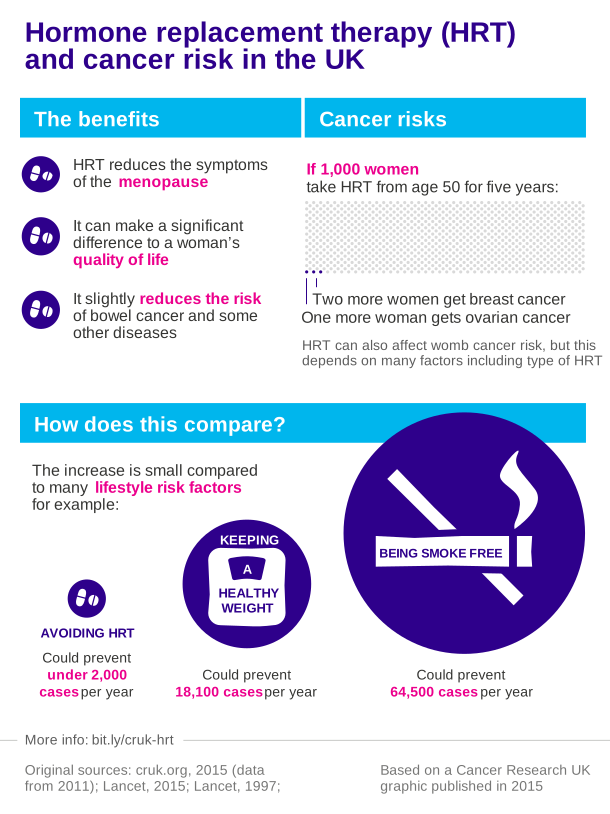
Use of hormone replacement therapy
Hormone replacement therapy (HRT) includes both estrogen and progesterone. They are used for treating menopausal symptoms.
A woman exposed to estrogen either endogenously or exogenously for a long period of time has an increased risk of developing BOC. Studies suggest that using HRT in postmenopausal women for more than five years increases the risk of breast cancer. It also increases the risk of ovarian cancer. 4% of ovarian cancers are linked to HRT use.
Women with family histories of breast cancer show a higher risk of breast cancer when using HRT. Progestin-containing hormonal treatments after a bilateral risk-reducing oophorectomy may increase risk of breast cancer in BRCA mutation carriers.
Contraceptives
The use of oral contraceptives (OCs) by women with BRCA2 mutations shows 75% increased breast cancer risk, especially in long-term users.
Levonorgestrel-releasing intrauterine system (LNG-IUS) increases breast cancer risk in all women.
Being overweight or obese
Women have a higher risk of getting breast cancer if they are not physically active. Being overweight or obese, especially after menopause, increase the risk of getting many types of cancer, including breast cancer and ovarian cancer.
Not having children or having children at a later age
Women who never have a full-term pregnancy, or have one after 30 years old, or did not breastfeed, are at a higher risk of BOC.
Mechanisms
HBOC
BRCA1 and BRCA2 mutations can increase the risk of developing HBOC. They are expressed in the epithelial cells of breast and ovarian tissues. They are involved in DNA repair, cell cycle checkpoints and DNA damage signalling pathways. Inherited mutations inactivate them. Such mutations include complete or partial gene deletions, large insertions, duplications, splicing, frameshifts, missense and nonsense mutations. This leads to abnormal gene structure and function.
BRCA1 and BRCA2 are important DNA repair genes and tumor suppressor genes. They help repair double-strand breaks in DNA. If any mutations or damage occurs in BRCA1/BRCA2, DNA damage cannot be repaired properly. Chromosomal abnormalities, breaks, aneuploidy and centrosome amplification occurs. This increases the risk of developing HBOC.
Besides, BRCA1 and BRCA2 are involved in the decision of cell fate. DNA replication introduces a lot of errors and mutations, resulting in DNA damage. Usually, if DNA damage is too excessive and cannot be repaired efficiently, the cell will be directed to be destroyed. But when BRCA1 and BRCA2 lose their functions, breast and ovarian cells with DNA damage are not destroyed. This causes genome instability and triggers cancer.
Hormones
Both breast cancer and ovarian cancer are hormone-dependent cancers, meaning they cannot grow without the presence of hormones. These hormones include estrogen, progesterone and growth hormone. They promote the growth of cells through special hormone receptors, thus initiating cancer when the rate of cell growth is out of control. They also promote metastasis.
Estrogen
Estrogen causes BOC progression.
Estrogen receptors(ER) are nuclear receptors found in the epithelium of the breast, ovaries and uterine tissues. They can be classified as ER alpha (α) and beta (β). When estrogen binds to ERs in the cytoplasm, these receptors are activated and translocate into the nucleus to activate transcriptional responses. They dimerize in the nucleus and bind to the specific DNA sequences to induce gene expression. This triggers cell division. Increased levels of estrogen promote the probability of having errors in DNA replication when cells divide more frequently. Unrepaired DNA damage may cause cancer. More estrogen also enhances epithelial-mesenchymal transition in which cells lose polarity and cell adhesion, inducing metastasis.
Progesterone
Progesterone promotes cancer progression and metastasis in breast cancer but inhibits the growth of ovarian cancer cells.
There are 2 types of progesterone receptors (PR): A (PRA) and B (PRB). They are found in the epithelium of breast and ovary tissues and are responsible for their normal development (PRA for ovarian; PRB for breast). When progesterone binds to PR, there is a conformational change of the receptors, which results in the dimerization of two receptors. The dimerized receptors bind to specific DNA sequences, activating or inhibiting the transcription of target cancer-related genes.
Growth hormone
Growth hormone is responsible for the development, progression, and metastasis of breast cancer.
Alteration of growth hormone signalling results in dysregulation of normal cell activities, thus leading to cancer. Breast cancers express growth hormone and growth hormone receptors. Breast cancers that have undergone metastasis express the highest levels of growth hormone.
Treatment
Both cancers are treated depending on the stage and type of cancer, as well as age and health of patients. There are two major types of treatments: local or systemic. Local treatments, such as surgery and radiation therapy, treat the tumor without affecting other parts of the body. Systemic treatments rely on drug use to reach cancer cells in any body parts. It is given orally or via injections into the bloodstream. 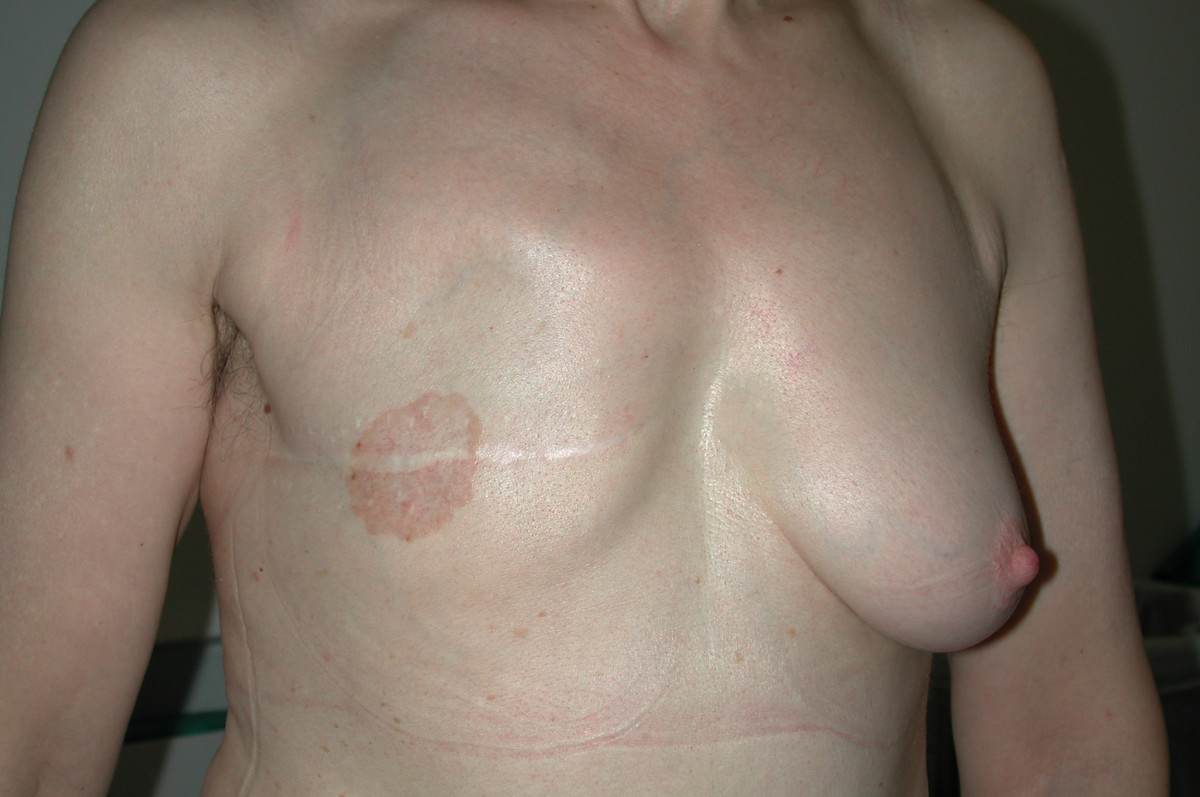
Breast cancer
For breast cancer, more than one kind of treatment is involved typically, which can include both local and systemic treatments. Most women with breast cancer from stage I to III are treated with surgery, often followed by radiation to lower the chances of cancer recurrence. Two main types of surgery are lumpectomy (breast-conserving surgery) and mastectomy (removing the entire breast tissue). For cancer cells that exhibit large amounts of HER-2 protein, doctors might apply targeted drug therapy, such as using Trastuzumab, as a systemic treatment.
Ovarian cancer
Ovarian cancer is typically treated with a combination of surgery and chemotherapy. In surgery, hysterectomy and bilateral salpingo-oophorectomy are often involved, where the uterus, both fallopian tubes and both ovaries are removed. Chemotherapy would be recommended when cancer reaches stage IC or above.
Prevention
Screening
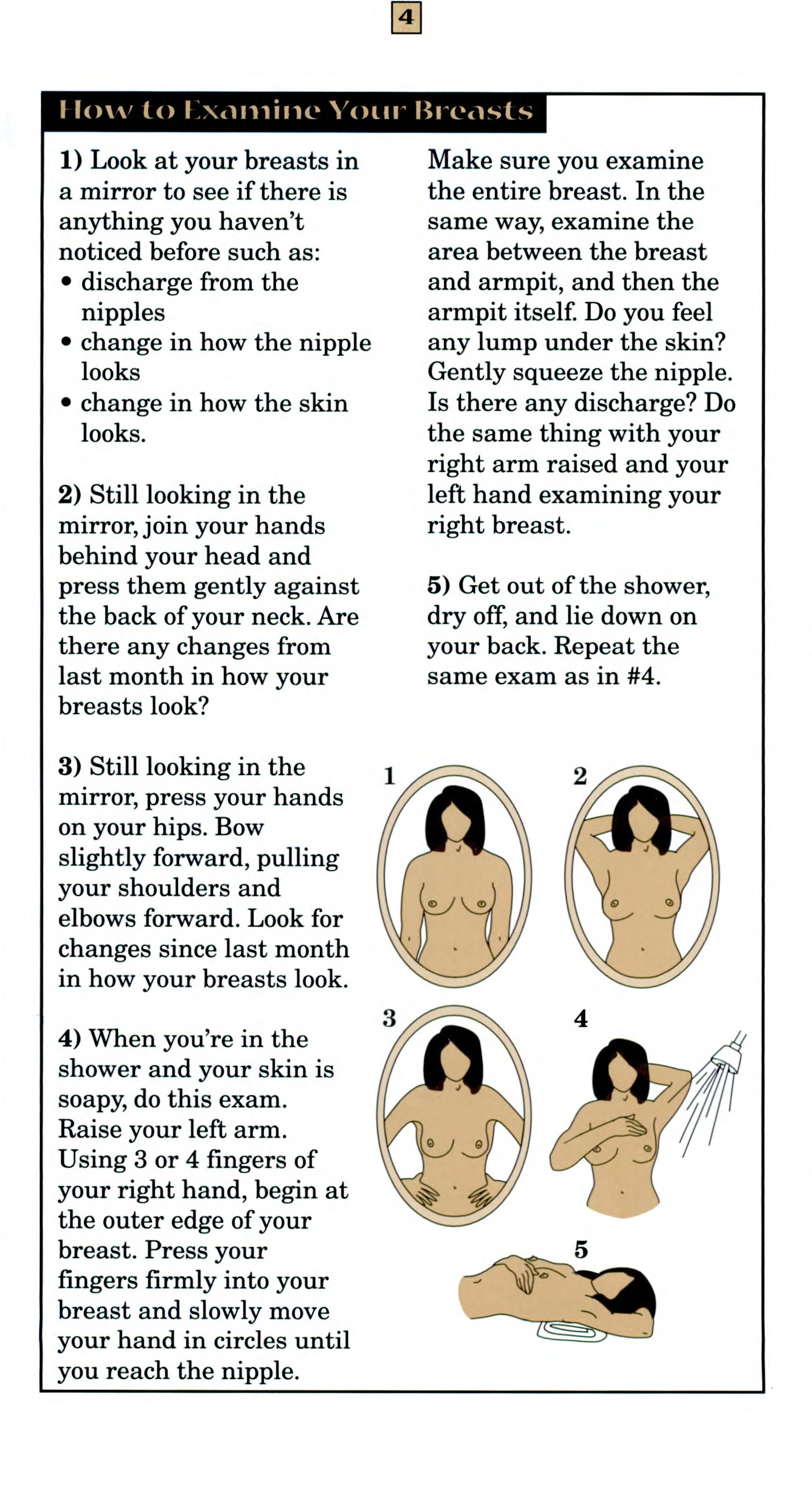
A combination of regular clinical breast examination, regular mammograms and magnetic resonance imaging (MRI) can help detect early development of breast cancer. As for ovarian cancer, CA-125 blood tests can be carried out to monitor the antigen level in the body. Transvaginal ultrasound or clinical examinations beginning from age 35 are suggested for ovarian cancer prevention.
Risk-reducing surgery
In females with BRCA1 or BRCA2 mutation, preventive mastectomy could reduce the risk of breast cancer by 90%. Prophylactic salpingo-oophorectomy could lower the risk of ovarian cancer by 85 to 90% and the risk of breast cancer by 40 to 70%. Ovary removal may also reduce the risk of breast cancer in premenopausal women by eliminating a source of hormones which can fuel the growth of some types of breast cancer.
Chemoprevention
Chemoprevention refers to the use of medicines to reduce the risk of cancer. Chemopreventive drugs such as tamoxifen and raloxifene have been approved by the U.S. Food and Drug Administration (FDA). Tamoxifen may be able to reduce the risk of breast cancer in women with BRCA2 mutations and the risk of breast cancer in BRCA1 and BRCA2 mutation carriers.
Other protective factors
Having children or breastfeeding may also reduce the risk of developing ovarian cancer. This is likely because ovulation is stopped during pregnancy. The fewer times a woman ovulates in her lifetime, the lower her chance of getting ovarian cancer.
Incidence rate and mortality
The incidence rate and mortality of BOC from a 2020 study. Findings on diagnosed age, incidence rate, intervals between two cancers, overall survival rates and mortality are summarised in Table 1:
BOC patients who have ovarian cancer first |
BOC patients who have breast cancer first |
|
|---|---|---|
Median age at the first cancer diagnosis |
51.5 years old |
47.5 years old |
Median age at the other cancer diagnosis |
56.5 years old |
56 years old |
Patients diagnosed with the other cancer within 5 years |
65.6% |
41.5% |
Patients diagnosed with the other cancer 10 years later |
34.4% |
35.4% |
Average interval between two cancers |
79.4 months |
115.9 months |
Median interval between two cancers |
37.5 months |
84 months |
Range of intervals between two cancers |
0 – 336 months |
5 – 480 months |
5-year overall survival rates |
90.6% |
91.5% |
10-year overall survival rates |
87.5% |
81.7% |
Mortality |
Due to ovarian cancer: 30.7% Due to breast cancer: 2.6% |
|
See also
- Breast cancer
- Ovarian cancer
- Hereditary breast-ovarian cancer syndrome