
Bogejari
Bogejari is a traditional folk dance of the Patirabha people of Assam, India, performed predominantly by women.
Background
The Rabha tribe is a prominent plains tribe in Assam, mainly living in the Brahmaputra Valley. The Rabhas are considered to be part of the Bodo ethnic group and have a distinct language, culture and folklore. Among its subgroups, the Patirabha community is particularly famous for its rich tradition in folk music and dance.
Bogejari is one of several traditional Rabha performances along with ritual dances like Hanaghora, Zarighora, Parnach, and Bhaluknach. Bogejari is largely secular and emphasizes communal celebrations and storytelling.
Etymology
The word “Bogejari” is believed to have originated from the historical feudal kingdom of Boge in the Kamrup region and the female personality Jari associated with that region. A prominent legend associates this tradition with Bogejari Bai. This figure is also believed to be associated with the Bager dynasty.
According to oral tradition, Bogejari songs emerged between the 15th and 16th centuries. Alternative folk narratives attribute the origin of the name to everyday village events or poetic creativity, demonstrating the fluid nature of oral tradition in shaping cultural expression.
Cultural significance
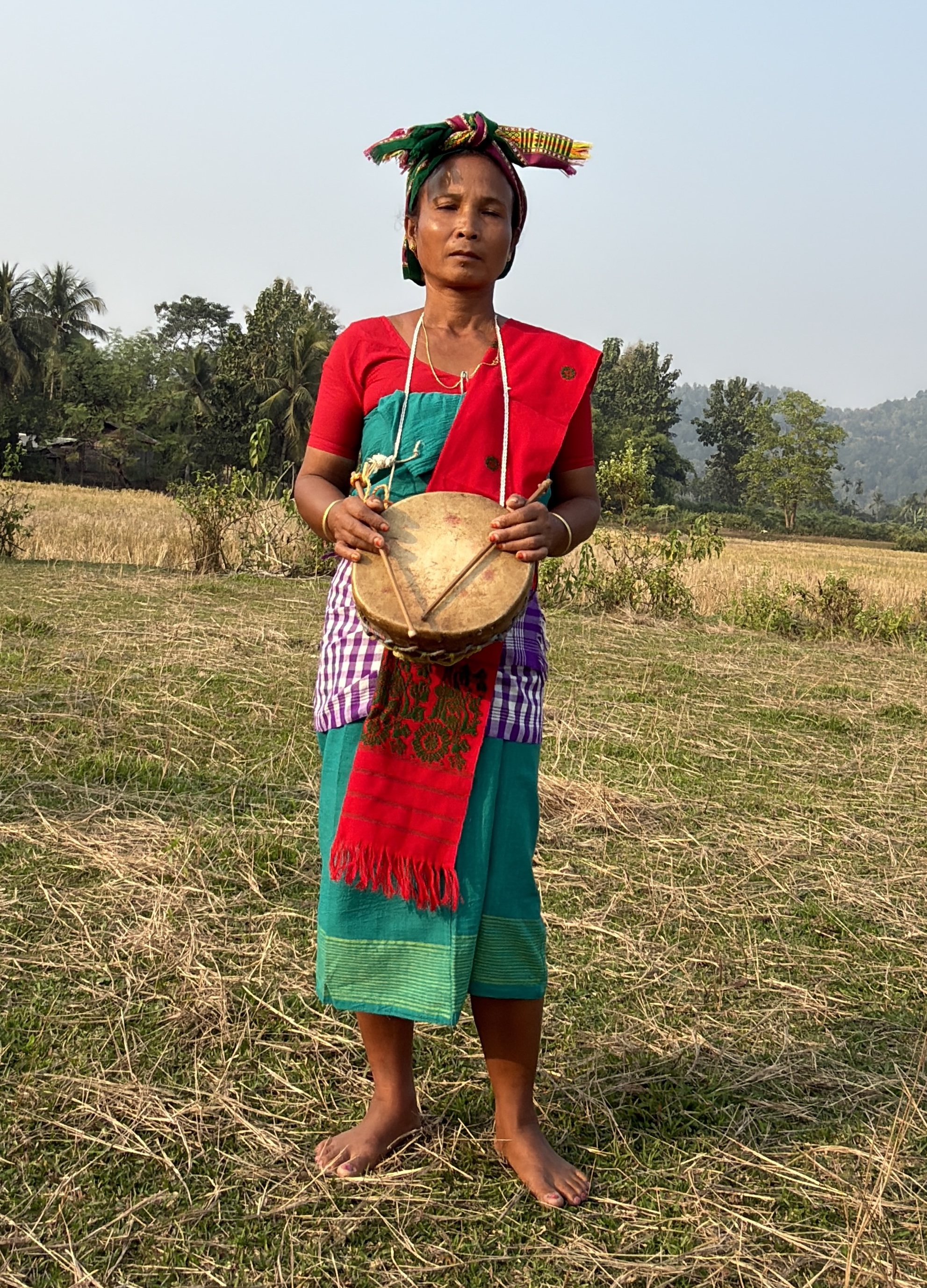
Bogejari serves as a living repository of the history and identity of the Patirabha community. Its songs express historical events, romantic and heroic stories, social satirical expression, and communal sentiment
This dance is performed especially during festivals like Bohag Bihu. It has also been adapted to modern contexts including stage performances and cultural festivals.
Performance
Bogejari combines singing and dancing. Traditionally, during the spring season, a group of women goes from house to house in a village and performs songs and dances in a participatory manner. The ceremony usually begins with an invocation of Goddess Saraswati, followed by a performance of songs and rhythmic dances.
Women are the primary singers and dancers of Bogejari. Musical instruments are also often played by women, but men may participate as instrumentalists.
Dance and movement
Bogejari is a collective dance, with synchronized choreography that emphasizes coordination rather than individual performance.
Music and instruments
Bogejari performances include several indigenous instruments, such as:
- Dighalpeti Madal – a long drum that produces dual tones
- Duguri – a conical drum played with a stick
- Xingq – an instrument made from horn
- Banhi – bamboo flute
- Monjura – for rhythmic accompaniment
- Thorka – bamboo instrument
- Gogona – a bamboo instrument
These instruments are traditionally made from locally available materials such as bamboo, wood and animal skins.
Costumes and ornaments
Traditionally, performers wore ordinary clothing from daily life. Over time, the costumes have evolved into more decorative forms. Traditional dress is often seen in modern stage performances.
Women's dress
- Mekhela and blouse (often red or green)
- Traditional ornaments such as earrings and necklaces
- Fali (loincloth)
- Hair tied neatly using a cloth
Men's costume
- White genji
- Gamosa tied around the waist or worn as a turban
See also
- Bihu dance
- Bagurumba
- Culture of Assam