
Bodhidharma/Birthplace sources
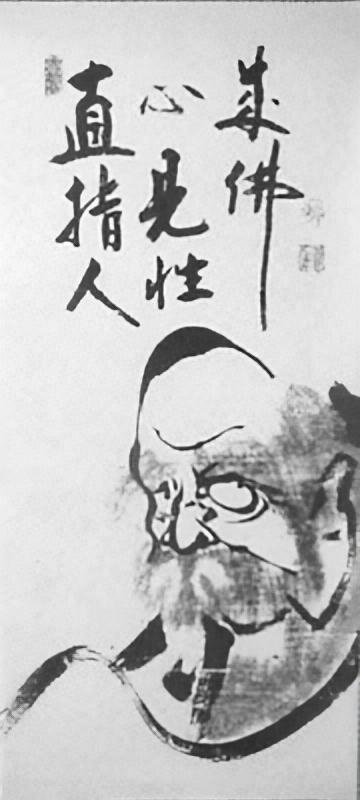
Various possible birthplaces for Bodhidharma are mentioned in a variety of sources. They come down to either South India or Central Asia.
South Indian possibilities are:
- A "persistent tradition" sees Bodhidharma as "the third son of a Pallavine king from Kanchipuram", in Kanchipuram district in The INDIAN state of Tamil Nadu, South-South East India.
- Another Indian traditions describes him as being born in the city Muziris, municipality Kodungallur, state of Kerala, South-South West India.
- A third Indian possibility is Kochi. Kochi is part of the Ernakulam district in the state of Kerala, South-South West India.
- A fourth Indian Possibility is Nagarjunakonda.
- Sri Lanka is also mentioned as a possible birthplace.
"Western regions" (Sassanid Empire) possibilities are:
- Persia
- Iraq
- Afghanistan
Central Asian possibilities are:
- The Tarim Basin
- Kingdom of Khotan
- Tocharians
These possibilities, except for Persia, are not explicitly mentioned in the principle sources for Bodhidharma's biography, but are more or less frequently mentioned on the web and in written documents.
Principle sources for Bodhidharma's biography
There are three principal sources for Bodhidharma's biography:
- Yáng Xuànzhī's (Yang Hsüan-chih) The Record of the Buddhist Monasteries of Luoyang (547)
- Tánlín's preface to the Two Entrances and Four Acts (6th century CE), which is also preserved in Ching-chüeh's Chronicle of the Lankavatar Masters (713-716)
- Dàoxuān's (Tao-hsuan) Further Biographies of Eminent Monks (7th century CE).
Yáng Xuànzhī's (Yang Hsüan-chih) The Record of the Buddhist Monasteries of Luoyang (547)
The earliest text mentioned Bodhidharma is The Record of the Buddhist Monasteries of Luoyang (洛陽伽藍記 Luòyáng Qiélánjì) which is compiled in 547 by Yáng Xuànzhī (Yang-Hsuan-chih 楊衒之), a writer and translator of Mahāyāna Buddhist texts into the Chinese language.
Dumoulin translates:
According to McRae's translation, Bodhidharma is from Persia
T'an-lín's preface to the Two Entrances and Four Acts (6th century CE)
Broughton translates:
Dumoulin translates:
Ching-chüeh - Chronicle of the Lankavatara Masters
Tanlin's preface has also been preserved in Ching-chüeh's (683-750) Leng-ch'ieh shih-tzu chi (Chronicle of the Lankavatara Masters), which dates from 713-716./ca. 715
Dumoulin translates:
McRae translates:
Dàoxuān's (Tao-hsuan) Further Biographies of Eminent Monks (7th century CE)
In the 7th-century historical work Further Biographies of Eminent Monks (續高僧傳 Xù gāosēng zhuàn), Dàoxuān (道宣; 596-667) possibly drew on Tanlin's preface as a basic source, but made several significant additions.
Dumoulin translates:
McRae translates:
Modern scholarship
Bodhidharma has been the subject of critical scientific research, which has shed new light on the traditional stories about Bodhidharma.
Biography as a hagiographic process
According to John McRae, Bodhidharma has been the subject of a hagiographic process which served the needs of the Chinese Ch'an movement. According to him it is not possible to write an accurate biography of Bodhidharma:
McRae's standpoint accords with Yanagida's standpoint:
Origins and place of birth
Dumoulin comments on the three principal sources. The Persian heritage is doubtfull, according to Dumoulin:
Dumoulin considers Tan-lin's account of Bodhidharma being "the third son of a great Brahman king" to be a later addition:
Dumoulin finds the exact meaning of "South Indian Brahman stock" unclear:
Maritime or overland transmission
Since the Book of Later Han present two accounts of how Buddhism entered Han China, generations of scholars have debated whether monks first arrived via the maritime or overland routes of the Silk Road.
The maritime route hypothesis, favored by Liang Qichao and Paul Pelliot, proposed that Buddhism was originally introduced in southern China, the Yangtze River and Huai River region, where King Ying of Chu was worshipping Laozi and Buddha c. 65 CE. The overland route hypothesis, favored by Tang Yongtong, proposed that Buddhism disseminated eastward through Yuezhi and was originally practiced in western China, at the Han capital Luoyang where Emperor Ming established the White Horse Temple c. 68 CE.
The historian Rong Xinjiang reexamined the overland and maritime hypotheses through a multi-disciplinary review of recent discoveries and research, including the Gandhāran Buddhist Texts, and concluded:
South India
Kanchipuram, Tamil Nadu, South East India
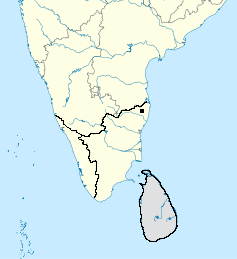
Kanchipuram is a city and a municipality in Kanchipuram district in the Indian state of Tamil Nadu, South-South East India.
Kanchipuram was a major seat of Tamil, Sanskrit, and Telugu learning as well as an important place of pilgrimage for Buddhists, Jains and Hindus. Buddhist scholars such as Dignaga, Buddhaghosa, and Dhammapala lived here.
Kanchipuram was the capital of the Pallavas rulers from the 7th to 9th centuries. From the 4rd to the 9th century CE the Pallavas ruled over south-east India. They had maritime contacts with far-off destinations such as China, Siam and Fiji, through their chief Port Mamallapuram.
Web sources
Several webpages have been given as reference for Kanchipuram and the Pallavine dynasty, or were found by a Google-search. None of them gives references to original source-material which would date this tradition to a historical source.
Tstuomu Kambe
Tstuomu Kambe does give a further elaboration on Kanchipuram and the Pallavine dynasty:
Unfortunately, Tstuomu Kambe is thrifty in further information on his sources. The "various documents" in which "the author happened to come across the identification of 香至 to be Kanchipuram" are not being identified.
Only one true reference is being made by Tsutome Kambe regarding the biography of Bodhidharma. In part I Tsutome Kambe condences the information about Bodhidharma:
So, according to Tstuomu Kambe the Pallava kingdom is a speculation on "South Indian king".
Written sources
The Pallava dynasty and Kancipuram are also often mentioned in modern written sources.
Zvelebil
Zvelebil states:
Zvelebil mentions "persistent tradition", but does not give a reference to the source for Kanchipuram. Zvelebil calls the Kanchipuram-origin "possibly", not certain. Zvelebil makes clear that Kanchipuram was an important Buddhist centre in the 4th to 7th century. This does not prove that Bodhidharma came from Kanchipuram. The reverse is also possible: since Kanchipuram was an important Buddhist centre, it seemed likely to Chinese authors that Bodhidharma came from this place. According to Yanagida and McRae, the traditions about Bodhidharma are doubtful.
Muziris in Kodungallur, Kerala, South West India
Muziris is a city in the municipality Kodungallur, state of Kerala, South-South West India.
Muziris was an ancient sea-port in Southwestern India on the Periyar River 3.2 km from its mouth. In a flood of the Periyar in 1341 CE, Muziris was destroyed and the centre of commerce was shifted to other areas.
Web sources
Several webpages have been given as reference for Muzirisor Kodungallur, or were found by a Google-search. None of them gives references to original source-material which would date this tradition to a historical source.
The main reasoning for Kodungallar goes as follows:
Written sources
No written sources are known which mention Muziris, Kodungallar to be the birthplace of Bodhidharma.
Kochi, Kerala, South West India
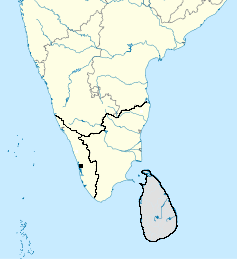
Kochi is part of the Ernakulam district in the state of Kerala, South-South West India. Kochi is often called by the name Ernakulam, which refers to the western part of the mainland Kochi.
In 1102 CE, after the fall of the Kulasekhara Empire, Kochi became the seat of the Kingdom of Cochin, which traced its lineage to the Kulasekhara Empire. The King of Kochi had authority over the region encompassing the present city of Kochi and adjoining areas. Kochi rose to significance as a trading centre after the port at Kodungallur (Cranganore) was destroyed by massive flooding of the river Periyar in 1341.
Web sources
One webpage has been given as reference for Kanchipuram and the Pallavine dynasty, or was found by a Google-search. It does not give references to original source-material which would date this tradition to a historical source.
Written sources
No written sources are known which mention Kochi to be the birthplace of Bodhidharma.
Nagarjunakonda, Andhra Pradesh, South East India
Nagarjunakonda is "a historical Buddhist town" in Andhra Pradesh, South-East India.
Websources
Two web sources are being mentioned for Nagarjunakonda.
Mention is being made of Bodhidharma practicing martial arts at Nagarjunakonda:
I.K. Sarma mentions South east India, without specifically mentioning Nagarjunakonda:
Written sources
One written sources makes a passing mention of Nagarjunakonda to be the birthplace of Bodhidharma.
Gridley
Gridley writes: So, according to Gridley, Nagarjunakonda is not Bodhidharma's birthplace.
Sri Lanka

Sri Lanka is an independent state located south-east of the indian sub-continent. Its history has been closely linked to that of the Indian sub-continent. Theravada-buddhism was brought to Sri Lanka from India. Sri Lanka is inhabited by a variety of ethnic and cultural diverse groups.
Web sources
One webpage has been given as reference for Kanchipuram and the Pallavine dynasty, or was found by a Google-search. It does not give references to original source-material which would date this tradition to a historical source.
Written sources
No written sources are known which mention Sri Lanka to be the birthplace of Bodhidharma.
"Western regions" (Sassanid Empire)
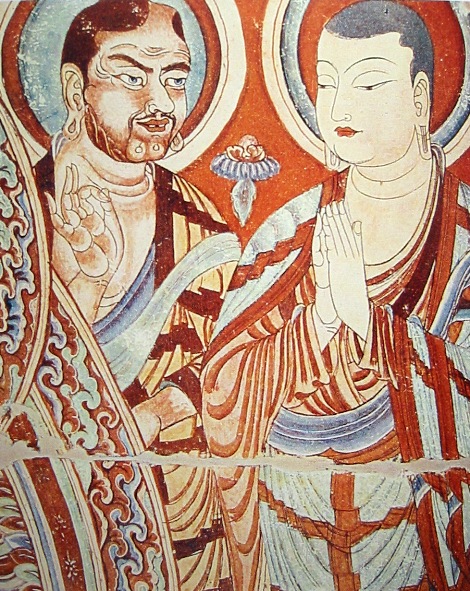
The "western regions" refers to North-west India and the Sassanid Empire, including Persia, Afghanistan and Iraq.
North-west India was controlled by the Seleucid Empire until 305 BCE, the Maurya Empire, the Kushan Empire, and the Sassanid Empire.
Tradition has Bodhidharma depicted as a "blue-eyed Barbarian". Due to Caucasian migrations, blue eyes were not uncommon in Central Asia. This depiction may refer to the Silk Road transmission of Buddhism from north-west India and Central Asia to China. But it may also refer to Central Asia, including the Tarim Basin, the Kingdom of Khotan, and the Tocharians.
Silk Road Transmission
Via the Silk Road Buddhism was brought over land to China from north-west India, a stronghold of Mahayana-Buddhism. The Silk Road transmission of Buddhism is most commonly thought to have started in the late 2nd or the 1st century CE.
The first documented translation efforts by Buddhist monks in China (all foreigners) were in the 2nd century CE, possibly as a consequence of the expansion of the Kushan Empire into the Chinese territory of the Tarim Basin.
From the 4th century onward, with Faxian's pilgrimage to India (395–414), and later Xuanzang (629–644), Chinese pilgrims too started to travel by themselves to northern India, their source of Buddhism, in order to get improved access to original scriptures. The Silk Road transmission of Buddhism began to decline around the 7th century with the rise of Islam in Central Asia.
Web sources
Not investigated yet.
Written sources
Not investigated yet.
North-west India
Maurya Empire
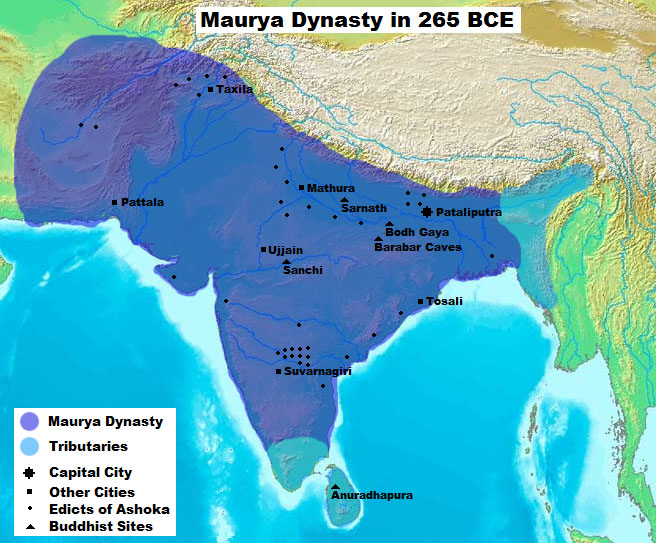
The Maurya Empire was an empire in ancient India, ruled by the Mauryan dynasty from 321 to 185 BC. The Empire was founded in 322 BC by Chandragupta Maurya, who had overthrown the Nanda Dynasty and rapidly expanded his power westwards across central and western India taking advantage of the disruptions of local powers in the wake of the withdrawal westward by Alexander the Great's Greek and Persian armies. By 320 BC the empire had fully occupied Northwestern India, defeating and conquering the satraps left by Alexander.
The Empire was expanded into India's central and southern regions by the emperors Chandragupta and Bindusara, but it excluded a small portion of unexplored tribal and forested regions near Kalinga (modern Orissa), till it was conquered by Ashoka. Its decline began 60 years after Ashoka's rule ended, and it dissolved in 185 BC with the foundation of the Sunga Dynasty in Magadha.
Ashoka's embrace of Buddhism has been said to have been the foundation of the reign of social and political peace and non-violence across all of India. Ashoka sponsored the spreading of Buddhist ideals into Sri Lanka, Southeast Asia, West Asia and Mediterranean Europe.
The Arthashastra and the Edicts of Ashoka are the primary sources of written records of Mauryan times. The Lion Capital of Asoka at Sarnath, has been made the national emblem of India.
Kushan Empire
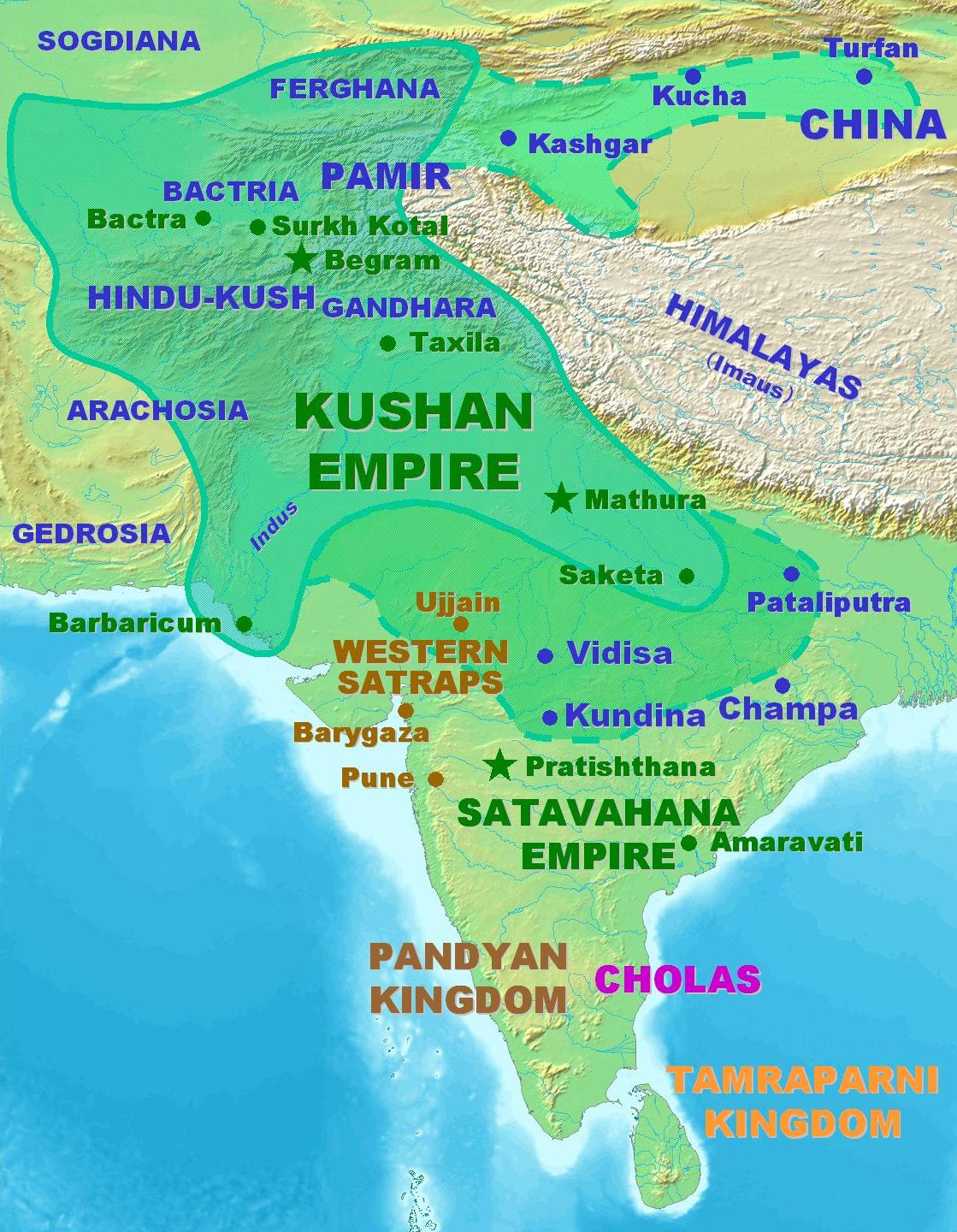
In the middle of the 2nd century CE, the Kushan empire under king Kaniṣka expanded into Central Asia and went as far as taking control of Kashgar, Khotan and Yarkand, in the Tarim Basin, modern Xinjiang. As a consequence, cultural exchanges greatly increased, and Central Asian Buddhist missionaries became active shortly after in the Chinese capital cities of Loyang and sometimes Nanjing, where they particularly distinguished themselves by their translation work. They promoted both Hīnayāna and Mahāyāna scriptures. Thirty-seven of these early translators of Buddhist texts are known.
The empire declined from the 3rd century and fell to the Sassanid Empire and Gupta Empire.
Web sources
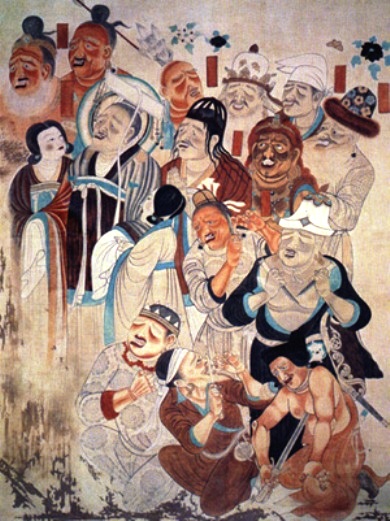
The Kushan Empire was the site of Greco-Buddhism:
Asanga and Vasubandhu, who developed the Yogacara, came from Gandhara, an area of the kushan Empire.
Written sources
Not investigated yet.
Sassanid Empire
Persia
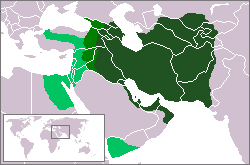
Persian, present-day Iran, at the time of Bodhidharma was part of the Sassanid Empire, which succeeded the Kushan Empire in this region. It was the last pre-Islamic Persian Empire, ruled by the Sasanian Dynasty from AD 224 to AD 651. The Sassanid era, during Late Antiquity, is considered to have been one of Persia's/Iran's most important and influential historical periods. The Sassanids' cultural influence extended far beyond the empire's territorial borders, reaching as far as Western Europe, Africa, China and India.
Web sources
Persia is often mentioned on the web, also due to copies of the Wikipedia-article on Bodhidharma and the mention of Persia by Yáng Xuànzhī. But there are also web-sources which see a link between Bodhidharma, Persia , and Zoroastrism.
Written sources
Persia is mentioned by Yáng Xuànzhī's (Yang Hsüan-chih) in his The Record of the Buddhist Monasteries of Luoyang (547):
Tojo
Tojo relies on Yáng Xuànzhī. According to Tojo,
Tojo links Bodhidharma to the origins of Mahayana-buddhism in Central Asia:
Tojo sees similarities between the wanderings of Bodhidharma and "Persian sufis (wandering dervishes)", and the martial arts and monk-warriors in the Šaolin temple, and "Believers of Roman Mithraism [who] were mainly military people".
Afghanistan
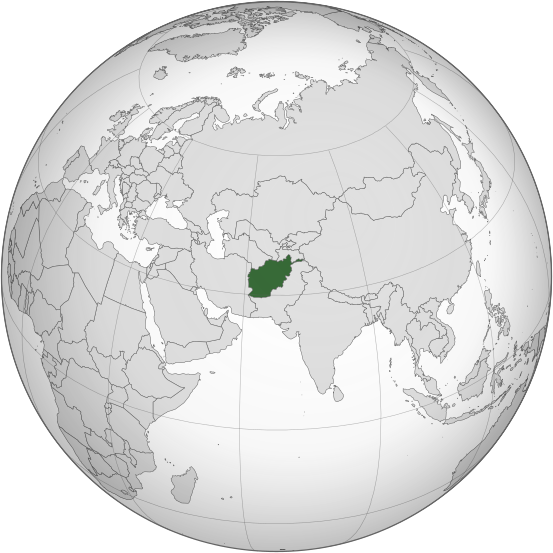
Afghanistan is a landlocked country located in the centre of Asia, forming South Asia, Central Asia and the Middle East. The territory that now forms Afghanistan has been an ancient focal point of the Silk Road and human migration. Archaeologists have found evidence of human habitation from as far back as 50,000 BC. Urban civilization may have begun in the area as early as 3,000 to 2,000 BC.
The Seleucid Empire controlled the area until 305 BCE when they gave much of it to the Indian Maurya Empire as part of an alliance treaty. The Mauryans brought Buddhism from India and controlled the area south of the Hindu Kush until about 185 BCE when they were overthrown. Their decline began 60 years after Ashoka's rule ended, leading to the Hellenistic reconquest of the region by the Greco-Bactrians.
Web sources
No web sources are known which mention Afghanistan to be the birth-country of Bodhidharma.
Written sources
Some written sources are known which mention Afghanistan to be the birth-country of Bodhidharma.
Pia & Brian Ruhe
Pia & Brian Ruhe mention Afghanisatn as one of the possible birth-countries of Bodhidharma, but don't give further references for this possibility:
Richard Burnett Carter
Richard Burnett Carter too mentions afghanisatn without giving further references:
Iraq
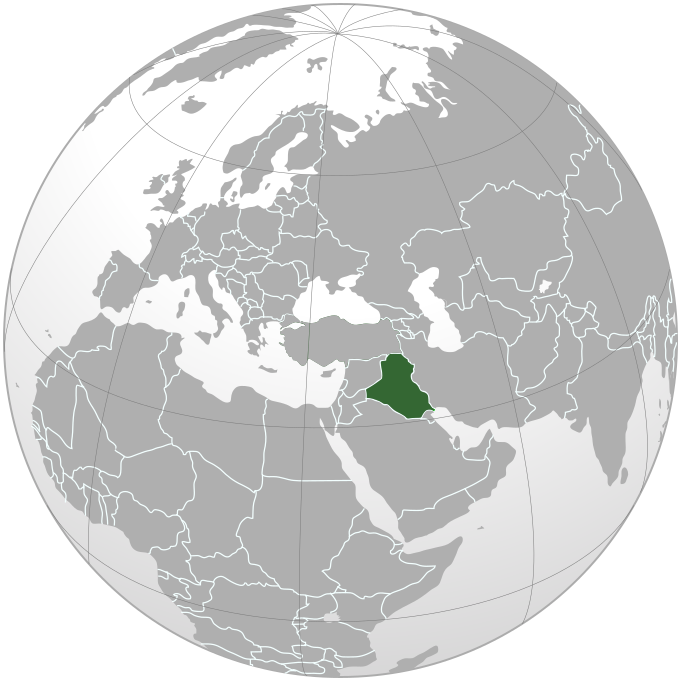
Iraq is a country in Western Asia. Two major rivers, the Tigris and Euphrates, run through the center of Iraq, flowing from northwest to southeast. Historically, Iraq was known in Europe by the Greek toponym 'Mesopotamia' (Land between the rivers). Iraq has been home to continuous successive civilizations since the 6th millennium BC. The region between the Tigris and Euphrates rivers is often referred to as the cradle of civilization and the birthplace of writing, law and the wheel.
Web sources
No web sources are known which mention Iraq to be the birth-country of Bodhidharma.
Written sources
No written sources are known which mention Iraq to be the birth-country of Bodhidharma.
Central Asia
Tradition has Bodhidharma depicted as a "blue-eyed Barbarian". Due to Caucasian migrations, blue eyes were not uncommon in Central Asia. This depiction may refer to the Silk Road transmission of Buddhism from north-west India and Central Asia to China. But it may also refer to Central Asia, including the Tarim Basin, the Kingdom of Khotan, and the Tocharians.
Tarim Basin
The Tarim Basin is a large endorheic basin occupying an area of about . It is located in the Xinjiang Uyghur Autonomous Region in China's far west. The ancient Buddhist Kingdom of Khotan was located in the Tarim Basin. It played a role in the Silk Road transmission of Buddhism to China.
Part of the population of Khotan may have been blue-eyed, due to Caucasion migrations.
Web sources
Not investigated yet.
Written sources
Not investigated yet.
Kingdom of Khotan
The Kingdom of Khotan was an ancient Buddhist kingdom that was located on the branch of the Silk Road that ran along the southern edge of the Taklamakan Desert in the Tarim basin. The area lies in present day Xinjiang, China.
The first habitants of the area were Indo-Europeans (either Persian or Indian) from the west, and Chinese from the east.
Web sources
Not investigated yet.
Written sources
Not investigated yet.
Tocharians
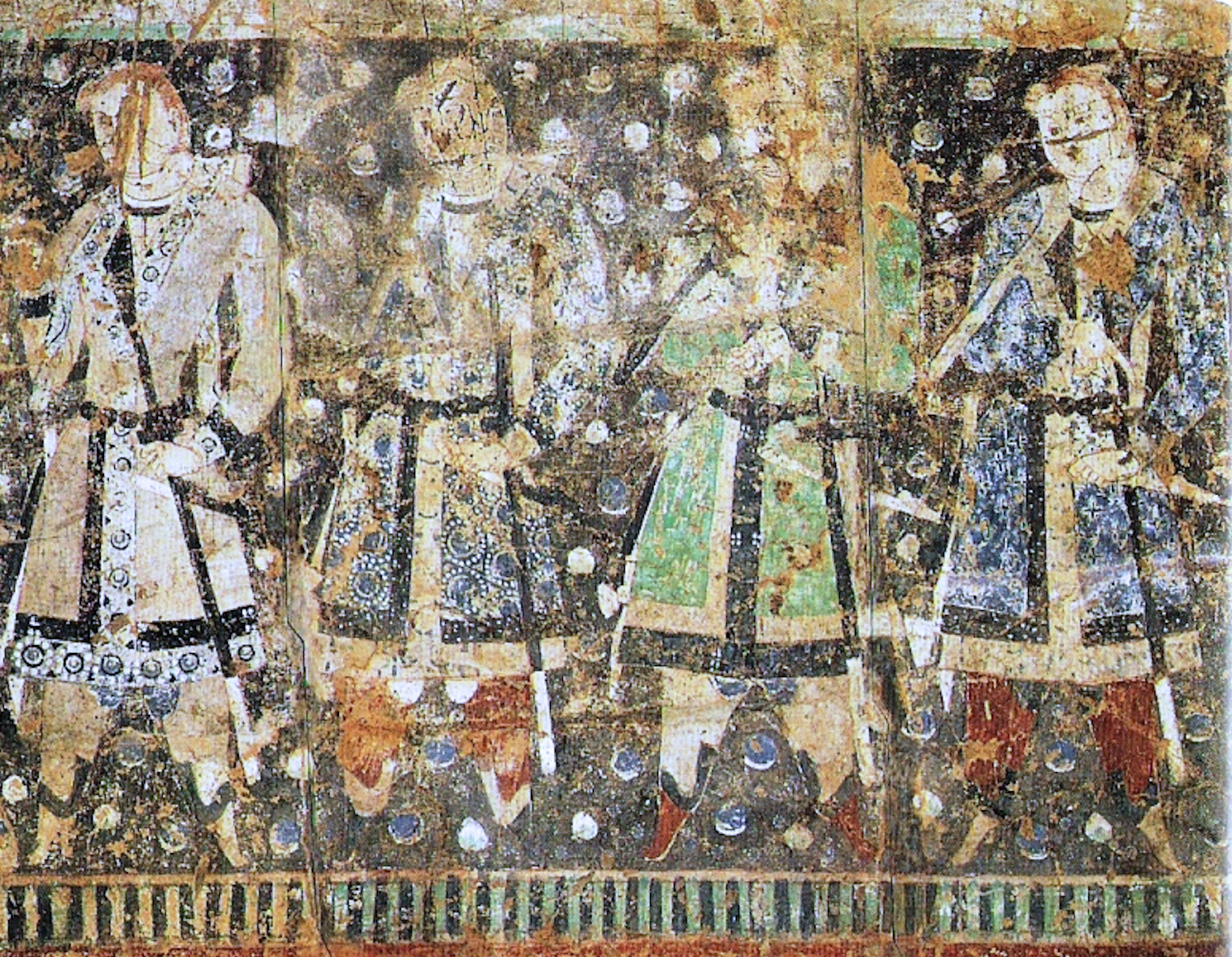 The Tocharians were speakers of Tocharian languages in the Tarim Basin (modern Xinjiang, China). The Indo-European language of the Tocharians was supplanted by the Turkic languages of the Uyghur tribes about 800 AD.
The Tocharians, living along the Silk Road, had contacts with the Chinese, Persians, Indian and Turkic tribes. They adopted Buddhism, which, like their alphabet, came from northern India in the 1st century of the 1st millennium, through the proselytism of Kushan monks. The Kushans and the Tocharians seem to have played a part in the Silk Road transmission of Buddhism to China. Many apparently also practised some variant of Manichaeanism
The Tarim Basin mummies (1800 BC) have been found in the same general geographical area as the Tocharian texts and frescoes from the Tarim Basin (3rd to 9th centuries AD), and are both connected to an Indo-European origin and point to Caucasoid types with light eyes and hair color. However it is unknown whether the mummies and frescoes are connected.
Web sources
Not investigated yet.
Written sources
Not investigated yet.
See also
- History of India
- Bodhidharma
- Chinese Chán
- daruma doll
Book references
Web references
Websites
South India
Websites mentioning Kanchipuram
Websites mentioning Muziris
Websites mentioning Kochi
Websites mentioning Nagarjunakonda
Websites mentioning Sri Lanka
Western Regions and Silk Road Transmission
Websites mentioning Silk Road Transmission
Websites mentioning Kushan Empire
Websites mentioning Persia
Websites mentioning Afghanistan
Websites mentioning Iraq
Websites mentioning Tarim Basin
Websites mentioning Kingdom of Khotan
Websites mentioning Tocharians
Further reading
- Mcrae, John (2003), Seeing through Zen. Encounter, Transformation, and Genealogy in Chinese Chan Buddhism. The University Press Group Ltd . ISBN 978-0-520-23798-8