
Battle of Stuttgart
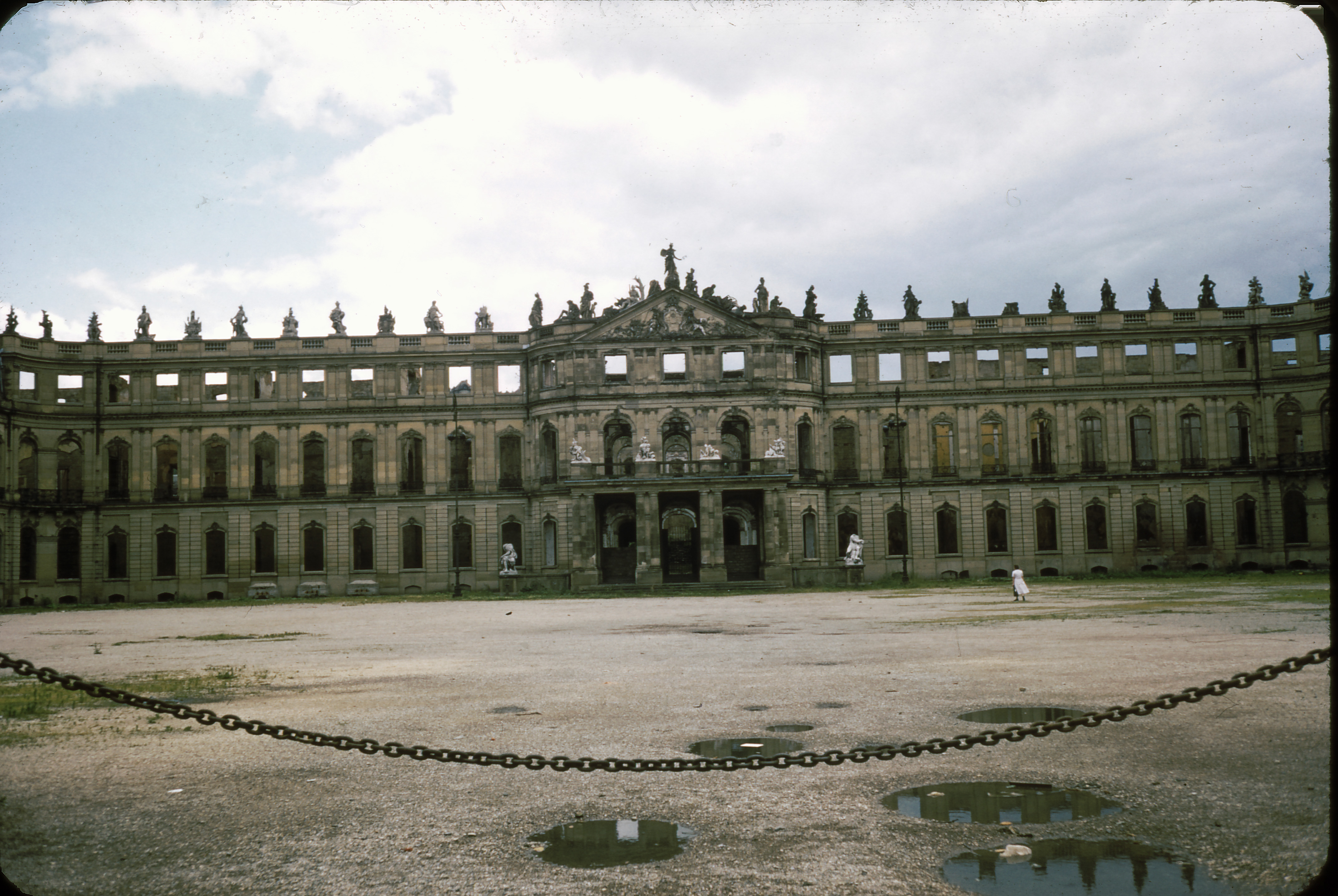 The Battle of Stuttgart was an air campaign done with strategic bombing during World War II. The bombing did major damage to the City of Stuttgart and killed many of the city's citizens. The damage was so severe that US Troops did not enter the city until July 1945, after the war in Europe had ended. [...] Germany surrendered unconditionally to the Allied forces on 8 May 1945, known as VE Day. US Troops and Free French forces battled [...] Troops on the outer parts of the city, in Augsburg, on April 28, 1945.
Bombing of Stuttgart
Stuttgart was key [...] industrial hub, as such, the city was heavily targeted by Allied bombing. Some of the major industrial plants targeted were: Bosch, Daimler-Benz, and SKF. The bombing severely damaged these and other factories. Stuttgart produced: military parts, tanks, and engines. ]]
Forced labor
Due to German labor shortages, many of the industrial plants had moved to forced labor, often referred to as Ostarbeiter. Most were from Eastern European nations and were held in very poor conditions. Even the Technical University of Stuttgart (now the University of Stuttgart) used forced labor. The outlining parts of the city, like Hagesüd company in Stuttgart-Feuerbach, also used forced labor. By May 1945, the forced labor concentration camps had been liberated.
Post war
At the end of World War II, the US Army installed a military presence in Stuttgart. Stuttgart later became the headquarters for the United States European Command (EUCOM). The United States European Command coordinates forces across 51 countries. Which reduced in size, there are still over 20,000 U.S. personnel and family members stationed in five installations in the Stuttgart area. The United States Africa Command (AFRICOM) is also headquartered in Stuttgart.
See also
- Stuttgart Declaration of Guilt