
Baquerizo family
The Baquerizo Family or House of Baquerizo is a prominent and one of the most powerful and historically influential Ecuadorian criollo dynastic families. Originating in the 13th century Spanish royalty class, the family transitioned into the Spanish colonial elite in the late 17th century, centring its legacy on public life and politics throughout South America. As leaders in Ecuador's aristocratic class, the family has played a distinguished role in the nation's political history, with seventeen descendants having served as President of Ecuador, fifteen as Vice President, and at least twenty-five in various ministerial or chief diplomatic positions. Descendants of the Baquerizo Family are historically significant landowners in the Guayas region.
Background
The House of Baquerizo originated in the early 13th Century, stemming from the House of Ivrea in the Christian kingdoms of Castile & León. After King Ferdinand III (1199 - 1252) united the two kingdoms, his son Alfonso 'El Sabio' X, King of the Romans, had twenty three children, one of them being Constance of Castile, who married Alfonso Baquerizo IV of the House of Barcelona (Crown of Aragon). Little is known of the activities of Baquerizo family members between the 14th and 17th Centuries, however it can be estimated that every descendant lived in comfort, being permanent descendants of the ruling monarchy classes in Spain, Portugal and Catalonia. The House of Baquerizo remained enshrined in the monarchy in Spain, however the family only entered public life during the colonial period, when descendants moved to Gran Colombia, later ruling the Ecuadorian aristocracy. Don Francisco Antonio de Baquerizo y González, hailed from the royal families in Spain, served as a Captain of the Spanish Armed Forces, when he arrived in Guayaquil in the mid-18th century. Upon his arrival, Captain Francisco Baquerizo presented official documents to the Guayaquil City Council, verifying his noble lineage aristocratic status. He was then elected as Mayor of Guayaquil in 1764.
Captain Francisco's son, Don Sebastián Baquerizo Noboa, dedicated his life to military service and became the top Lieutenant-Colonel of the Spanish Army in 1791, serving a short term as Mayor of Guayaquil, transitioning the city into the 19th century. Baquerizo was a purchased tenant of the famous Hacienda La Virginia in Babahoyo, for several years. Baquerizo was also an athlete, recorded as one of the oldest recorded practitioners of weightlifting in the nation.
Lieutenant Colonel Don Sebastián Baquerizo Noboa's son, Don José Baquerizo Coto, did not hold public office, due to lifelong injuries sustained during the Gran Colombia–Peru War, however his brother in-law, Don Diego Noboa Arteta, served as President of Ecuador in 1851. Don José Baquerizo Coto's son, José María Baquerizo Noboa, served multiple administrations as Minister of Finance of Ecuador, appointed by his cousin Gabriel García Moreno (President of Ecuador from 1861 up until his [...] in 1875), before succumbing to a heart attack during a Cabinet meeting in 1870.
José María Baquerizo Noboa had six children – Enrique Baquerizo Moreno (politician, civic leader), Alfredo Baquerizo Moreno (statesman, politician, lawyer and writer), Isidro Baquerizo Moreno (died at four years of age), María Teresa Baquerizo Moreno (died in childhood), Pedro Baquerizo Moreno (businessman, writer) and Rodolfo Baquerizo Moreno (entrepreneur, civic leader, politician). The four Baquerizo Moreno brothers are publicly deemed as the most influential and successful of the Baquerizo lineage in the 20th century.
Alfredo Baquerizo Moreno
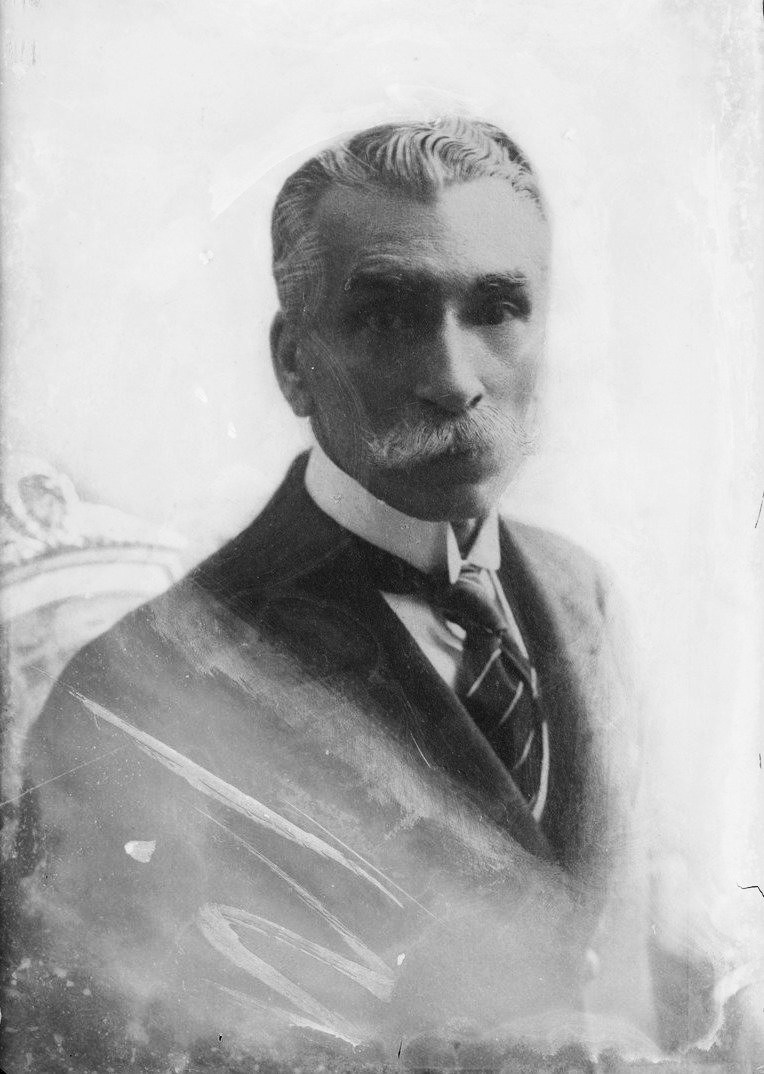 Dr. Alfredo Baquerizo Moreno, (born José Alfredo Wenceslao del Corazón de la Concepción Baquerizo Moreno) (Guayaquil, 28 September 1859 – New York City, 20 March 1951) was a distinguished lawyer, law professor, land owner, author, novelist, and diplomat who held numerous positions in public office and is widely hailed as one of Ecuador's most influential Presidents.
Early life and education
Alfredo Baquerizo Moreno's flair for literature and classics originated from his time at the San Gabriel School, where he graduated with a bachelor's degree.
During his time at the school, Baquerizo established himself as a brilliant pianist, composing and interpreting numerous musical pieces. In 1872, Baquerizo graduated from the National Conservatory of Music, entering the Central University of Ecuador in 1877, where he studied law for six years, serving as a student of Supreme Court Justice Alejandro Cárdenas Proaño. 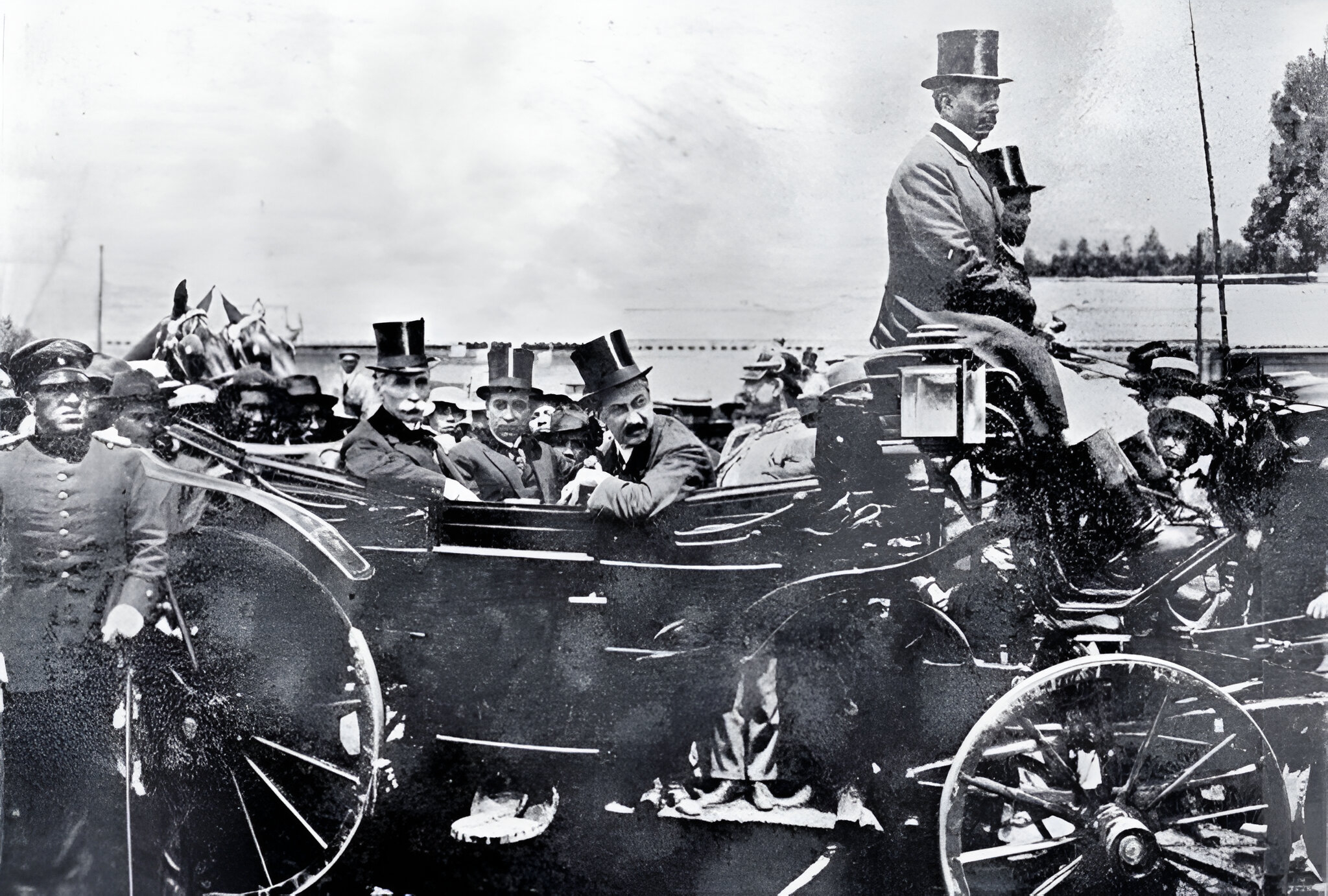 During his time studying law, Baquerizo became a very close personal friend of President Ignacio de Veintemilla, frequently submitting literary contributions and musical compositions, dedicated to the President's beautiful niece, Marietta. In 1883, Baquerizo graduated from the Central University of Ecuador with a First Class Medal in Law. Baquerizo later became a Professor of Law at the University of Guayaquil.
Literary works
Baquerizo Moreno's literary style is characterized by its classical influences and liberal perspectives. His poetry is noted for its irony and refined taste. His novels often delve into social and psychological themes, reflecting his political thoughts and experiences. As a corresponding member of the Spanish Language Academy, his contributions to literature were recognized both nationally and internationally.
In his early years, Baquerizo wrote several sonnets and silvas, which were compiled in 1881 in Quito in a two-part collection of poems. In 1882, his 102-page "Poetic Essays", inspired by Spanish poet Gustavo Adolfo Bécquer, was published in Guayaquil. Written with his friends Nicolás Augusto González Tola and Juan Illingworth Icaza, it was gentle, sentimental, and Becquerian. With González, he published the historical drama "Love and Homeland."
Novels
- Titania (1893): A proto-modernist novel considered a reactionary response to end-of-the-century liberalism.
- El Señor Penco (1901): Explores the complexities of human psychology and the obsession with wealth, ultimately questioning the value of material success.
- El Nuevo Paraíso (1910): A satirical fable critiquing utopian ideals.
- Tierra Adentro (1937): A travel narrative blending personal reflection with social commentary.
Poetry
- Rumores del Guayas (1881): A collection capturing the essence of Guayaquil's landscapes and sentiments.
- Ensayos Poéticos (1882): Poems influenced by Gustavo Adolfo Bécquer, noted for their irony and refined taste.
- Amor y Patria (1882): A historical drama intertwining themes of love and national identity.
- Sonata en Prosa: A prose piece published in the Álbum Ecuatoriano, showcasing his lyrical prowess.
Essays and articles
- Memorias de Negocios Eclesiásticos (1902): Discusses the relationship between the Ecuadorian state and the Catholic Church
- De Ayer y de Hoy: A miscellany reflecting on past and contemporary issues.
- Traducciones y Ensayos sobre Horacio (1949): Demonstrates his engagement with classical literature through translations and analyses of Horace's works.
Legal career
Baquerizo dedicated his early career to the legal arts. In 1887, Baquerizo was appointed as Consular Judge of Commerce. In 1899, he was appointed as Justice Minister of the Ecuadorian Superior Court, occupying the Presidency of the Superior Court two years later.
Whilst Baquerizo mainly used his legal education to write complex essays questioning constitutional manners, and holding senior Judgeships for the Ecuadorian State, he never practised privately. However, in 1901, Alfredo Baquerizo Moreno travelled to Valparaíso, defending his brother Enrique Baquerizo Moreno in the court of law, as he was one of the accused in the scandalous [...] of the Ecuadorian consul Alberto Arias Sánchez. Alfredo successfully defended his brother Enrique, who was acquitted of the crime. It must be interestingly noted that Alfredo's brother, Enrique, was later exiled from Ecuador in 1907 after taking part in a failed attempt to [...] President Eloy Alfaro, although came back to Ecuador four years later and was appointed as the Superintendent of the Guayas State Police Force and later elected as Governor of the Province.
Beginnings
Baquerizo held a vast number of positions in Ecuadorian politics, ultimately building a supreme legacy and labelled as one of Ecuador's most influential presidents. 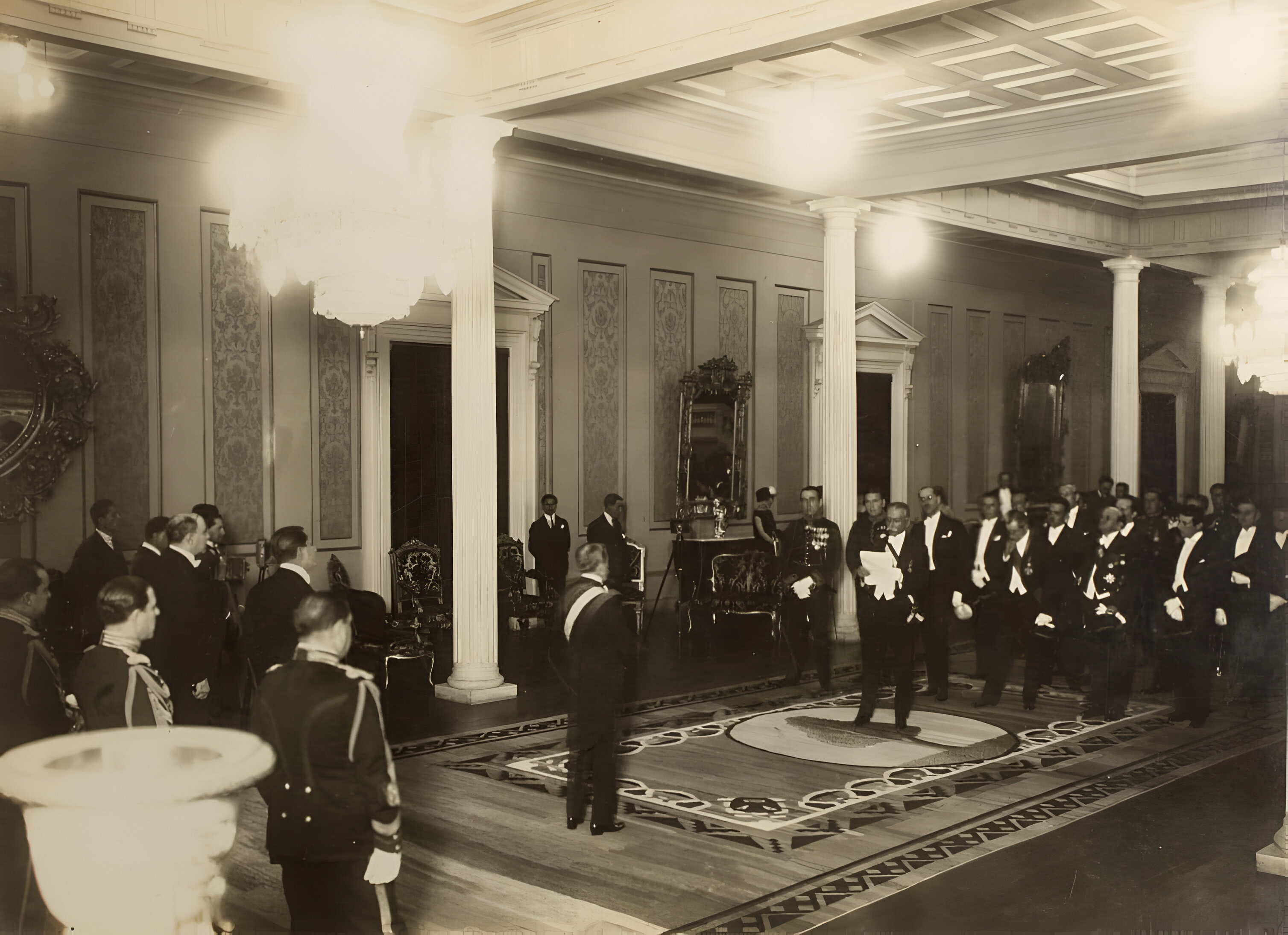 This career began in 1902, when he was called to Quito to be appointed as Minister of Foreign Affairs. In 1903, Baquerizo was appointed as Minister Plenipotentiary (Chief Diplomat) to Cuba and Colombia, a position terribly important and influential at the time, when international troubles ran rife through the continent, and his position held the authority to end or initiate international conflicts.
The next year Baquerizo was appointed as Vice-President of Ecuador, serving a four-year term from 1904 to 1908. One of his roles being the President's spokesperson, a prominent reporter at the time once described Baquerizo as having "a splendid oratory and majestic eloquence that captivated with images and similes and opened and closed the resounding periods of his speeches, which soon became famous throughout the country for their beauty, although they were not philosophical in nature but rather more appropriate for the occasion." 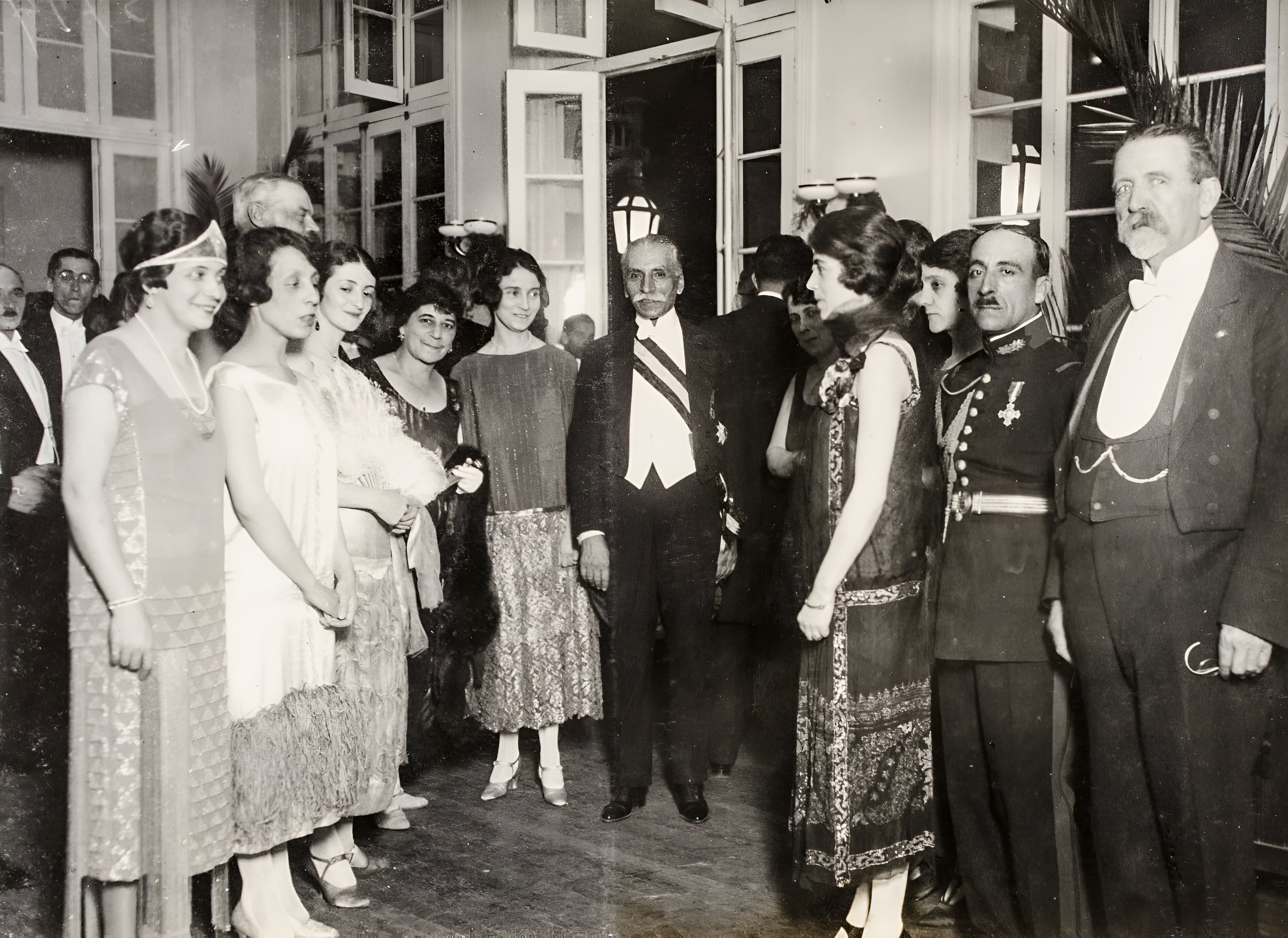 In 1905, newly elected President Lizardo García appointed him as Chief of the Advisory Board of the Ministry of foreign affairs, however resigned in 1907 and went into hiding for five years after President Eloy Alfaro (whom his brother had tried to [...]) came into power. In 1912, after the collapse of Alfaro's regime and the successful [...] of Alfaro by catholic soldiers, Baquerizo was elected to the Ecuadorian Congress as a Senator, and became the Presiding Officer of the Senate, wielding immense political power. In the later half of 1912, Baquerizo briefly served as President of Ecuador due to the resignation of President General Leonidas Plaza, uncle to Moreno's daughter-in-law.
Second official term
In September 1916, Baquerizo was officially elected as President of Ecuador, winning with 94% of the national vote, serving a four-year term until August 1920. He was elected during a time of immense political trouble and instability, with his predecessor's family having been entirely [...], however Baquerizo's first decree (executive order) was to declare a broad amnesty for all, restoring internal peace to the country.
In June 1917, Baquerizo sailed on the Presidential Ship "La Patria" to the Galapagos Islands, founding the leading city of Puerto Baquerizo Moreno. In 1918, American billionaire and richest ever businessman, John D. Rockefeller, established the Rockefeller Mission which arrived to eradicate yellow fever from Guayaquil. Rockefeller built a strong personal relationship and rapport with Baquerizo, and worked together to successfully eradicate yellow fever from the entire Guayas Province in 1919.
Baquerizo introduced several labour policies, decreasing the maximum workday to eight hours, and abolishing the practice of Concertaje, which had previously allowed hacienda labourers to be imprisoned for failing to pay their debts. Baquerizo founded new schools, increased the possibilities of popular education, respected absolute freedom of the press, promoted the construction of various railroad branches, facilitated telegraph communications between the coast and the mountains, and provided electric lighting to several towns.
Post-second term
In 1924, after the conclusion of his term, Baquerizo was appointed Special Ambassador to Peru and led the Ecuadorian Delegation to the Centennial of the Battle of Ayacucho, which sealed the independence and establishment of the nation of Peru. In early 1925, he served as President of the Commission for the Revision of the Constitution and Laws, before once again being elected as a Senator and presiding over the Ecuadorian National Congress.
Emergency term to restore democracy
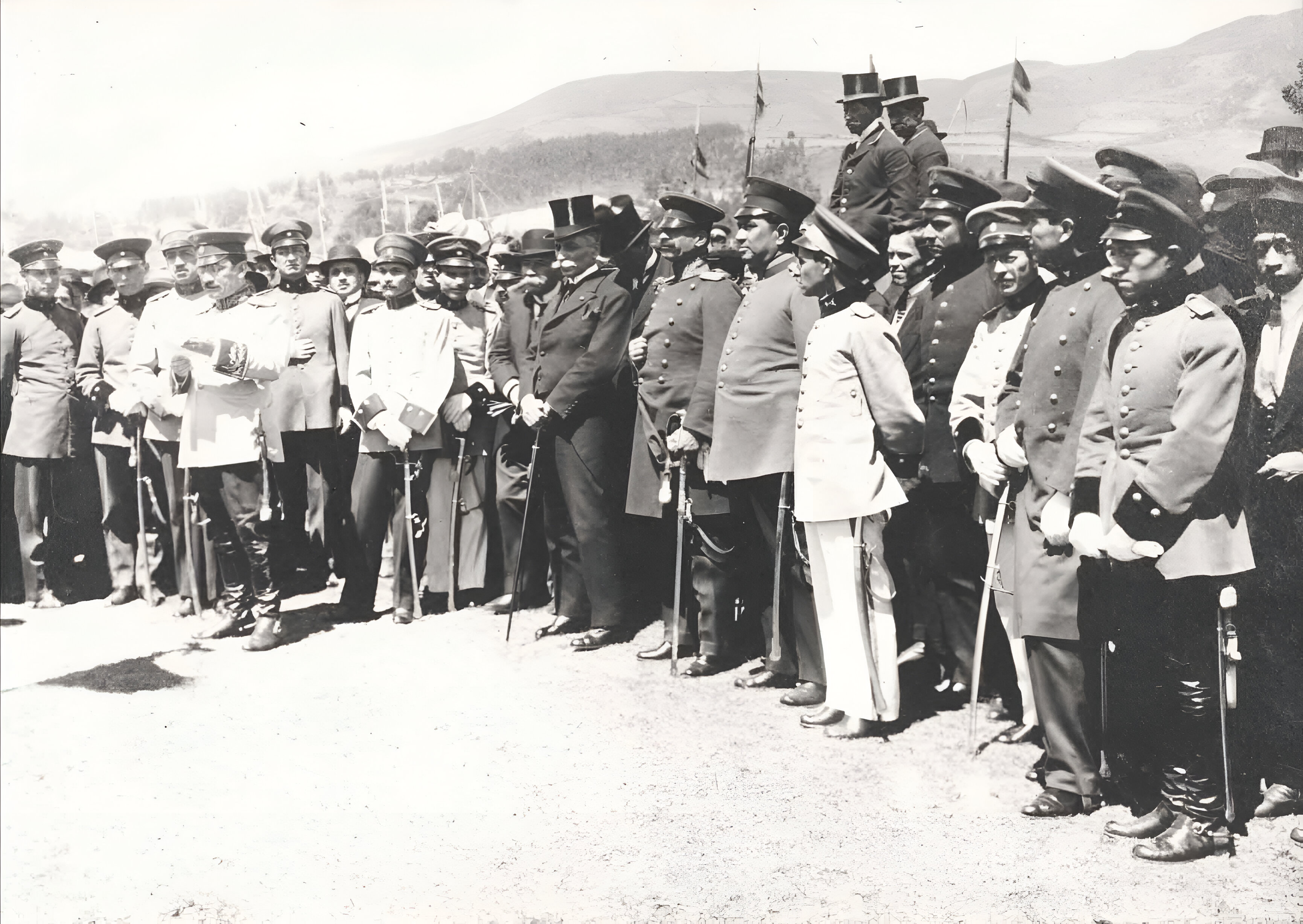 In 1931, Baquerizo assumed the Presidency following the dramatic fall of the dictatorship of Colonel Luís Larrea Alba. During this one year tenure, Baquerizo frequently exchanged telegrams with President Herbert Hoover of the United States of America. Wishing to put Ecuador's interests first and maintain the integrity of democracy, Baquerizo put aside his own interests and immediately called for a national election to establish an officially elected president. Neftalí Bonifaz, a right wing conservative won the subsequent election. However, a constitutional issue emerged; Bonifaz was accused of holding Peruvian nationality, which rendered him ineligible for the presidency under the Ecuadorian Constitution. Congress, dominated by liberals and leftists, moved to invalidate Bonifaz's election.
The streets of cities around Ecuador were rocked with violent protests between right-wing "Bonifazists" that demanded that Bonifaz was granted the Presidency, and left-wingers that demanded Alfredo Baquerizo Moreno not to hand the Presidency to Bonifaz due to the constitutional issue, but instead hand the Presidency to the left-wing candidate from the previous election. However, the Bonifazists began taking up arms and bloody massacres in the streets of Quito and Guayaquil followed, and Baquerizo was forced to hand the Presidency to a close associate of Bonifaz, to halt the progress of a violent civil war that had been brewing in the streets, which had already resulted in the [...] of many civilians by the Bonifazists.
However Baquerizo was not merely acting out of surrender or attempting to maintain peace at all cost – over several weeks prior to the handing over of the Presidency, Baquerizo had conjured up several military plans with his Generals. Upon resigning and handing the Presidency to the associate of Bonifaz, Moreno sought asylum in the Argentinian Embassy, residing in a secured, steel-bolted room with three armed guards surrounding the entrance, whilst the Ecuadorian Military, loyal to Baquerizo, took to the streets and waged a Four-Day War against the Bonifazists, ultimately successfully suppressing the attempted civil war and ending the Bonifaz movement. Baquerizo emerged from hiding and held an election two months later, in which the liberal candidate peacefully won the election.
Politics and law
Baquerizo retired from public life following his successful winning of the Four-Day War, citing to a close friend that he was content with his achievements made in his numerous positions. Baquerizo too resigned as Chief Attorney to the prominent Marcos family, and as Chief Attorney for the Bank of Ecuador.
Retirement
In 1939, Baquerizo turned eighty. The Guayaquil Municipality declared him an Illustrious Son of the City and named the northern stretch of Chimborazo Street, starting at the boulevard, after him. In 1940, "Chronicles of the Tribute" appeared, and the Guayaquil Municipality published a 195-page "Selection of Essays" in his honor, containing his notes and speeches.
In 1945, the members of the patriotic institution "Los Comandos," who had just obtained approval of their bylaws in Quito, asked Moreno to write lyrics for a patriotic national anthem, and he wrote "Remember El Oro," which was sung in the streets and squares.
Death and legacy
 In 1951, Baquerizo was diagnosed with cancer of the bladder, and was subsequently flown to New York City, United States of America, where he was operated on at the New York Medical Center. On 22 March, after a successful operation, his cancers had been surgically been removed. However, the next morning, an old and unhealed ulcer led him to vomit blood and enter a state of unconsciousness, where he died hours later, surrounded by his children, in peace, without suffering, although without gaining consciousness.
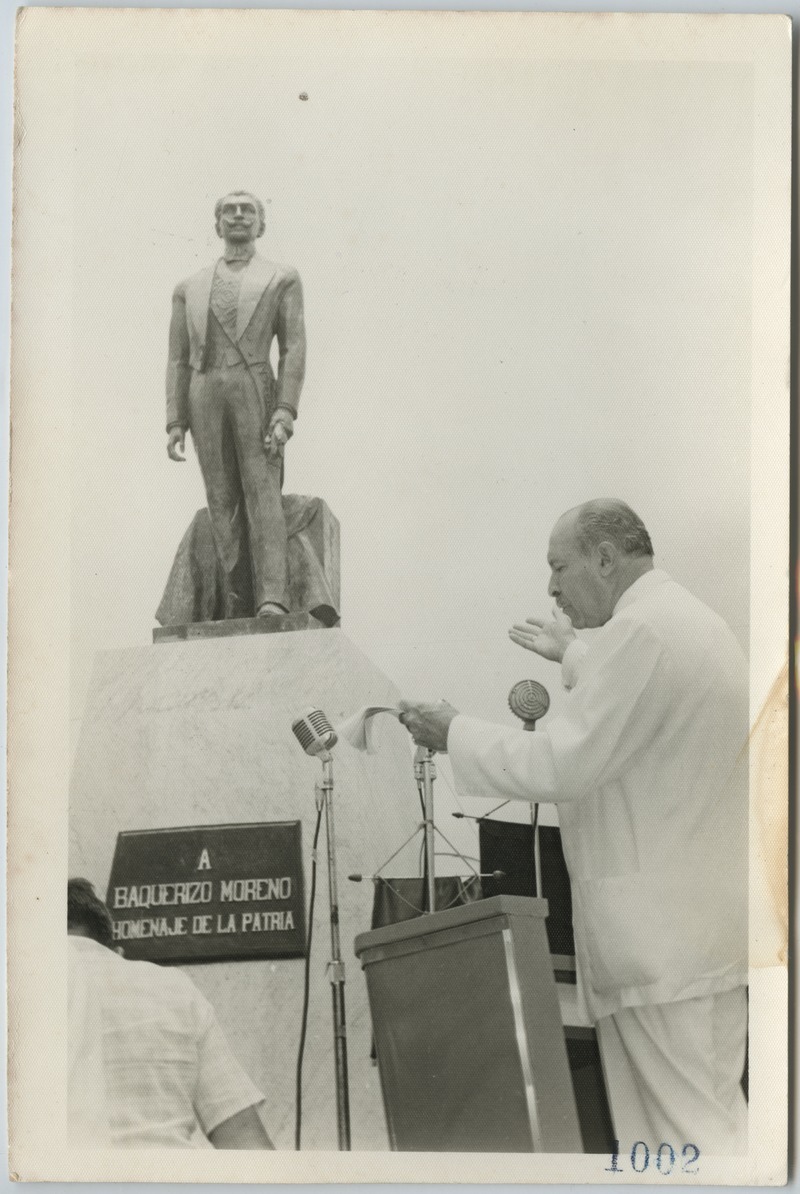
His remains rest in the General Cemetery of Guayaquil, alongside numerous other presidents and Government Officials, a statue of him later being built in Malecon 2000, a memorial garden in Guayaquil filled with statues and memorials of only the most prominent and distinguished figures in Ecuadorian history.
Rodolfo Baquerizo Moreno
Rodolfo Baquerizo Moreno was a pivotal Ecuadorian entrepreneur and civic leader who spearheaded the modernization of Guayaquil’s infrastructure and public services during the early 20th century. Born to José María Baquerizo Noboa and Rosario Moreno Ferruzola, he was the brother of President Alfredo Baquerizo Moreno.
Industrial Contributions
Baquerizo Moreno was a pioneer in the regional transport and utility sectors. In 1901, he established a diverse industrial complex in Babahoyo for rice milling, timber, and ice production. He is credited with introducing the first internal combustion gasoline vessel to the Guayas River in 1906, eventually managing a fleet of eight ships that transformed riverine communication between Guayaquil, Vinces, and Daule. Furthermore, he was instrumental in the electrification of the Guayas basin, installing public lighting systems in several municipalities.
American Park
In 1918, he founded the American Park, Guayaquil’s first modern amusement park and social hub, modeled after New York's Coney Island. Located on the banks of the Estero Salado, the park introduced the city’s first organized public saltwater pools and electrical amusement rides. To support this venture, he established the first urban bus lines (General Córdova – American Park) and later secured the concession for the city’s electric tramway system (tranvías), which he modernized by importing New York-style streetcars in 1929.
Public Service
A dedicated statesman, Baquerizo Moreno served as the Governor of Guayas (1933), four years before his brother's first tenure, and later as Minister of Government (1934). He was the founder of the Rotary Club of Guayaquil (1927), the first of its kind in Ecuador, and served as President of the Touring Club Ecuatoriano. His philanthropic legacy is tied to his leadership in the Junta de Beneficencia de Guayaquil, where he oversaw significant expansions of the city's healthcare and social welfare systems. For his lifelong contributions, he was declared "The Best Citizen" (El Mejor Ciudadano) by the Municipality of Guayaquil in 1954.
Emilio Baquerizo Valenzuela
Emilio Baquerizo Valenzuela (born Alfredo Emilio Ignacio Baquerizo Valenzuela) (Guayaquil, 3 November 1917 – Guayaquil, 13 June 1985) was an Ecuadorian businessman, entrepreneur and land owner, listed as the 7th richest man in South America in 1974, and the grandson of aforementioned President Alfredo Baquerizo Moreno. Choosing to stray away from the Baquerizo family's traditional path of public life, Baquerizo displayed a flair for business from an early age, rapidly building a vast business empire throughout the continent, dealing with national governments and South American/United States businessmen. Emilio Baquerizo Valenzuela was born into a family of seven children, with one of his siblings notably being Enrique Baquerizo Valenzuela (Governor of Guayas Province, Second President of C.S Emelec and President of the Guayaquil Country Club).
Business
Emilio Baquerizo Valenzuela was the founder of a tycoon which dominated the expansive food industry throughout the 1960s, 70s and 80s.
In the mid 1950s, Baquerizo established the Volkswagen franchise throughout the nation, through his business Grupo Eljuri.
Sports administration
Emilio Baquerizo Valenzeula maintained ownership of Ecuador (and South America)'s two most popular football teams – Emelec and Barcelona S.C. Baquerizo's most notable role was as Chairman of Barcelona SC from 1962 to 1964. During this period Barcelona SC won its second Ecuadorian national football championship (1963), cementing the club's status as a powerhouse. He was a key figure in Ecuadorian club football, known for recruiting notable players (such as Helio Cruz and Gradim) and for modernizing the club's management in the early 1960s.
Gustavo Illingworth Baquerizo
Gustavo José Fernando Bolívar de Jesús Illingworth Baquerizo, known as Gustavo Illingworth (Guayaquil, Guayas, December 19, 1927 – Guayaquil, Guayas, Ecuador, April 28, 2008), was an Ecuadorian public official, philanthropist, and civic leader. He held senior administrative positions in the Municipality of Guayaquil and national public institutions, and served for several decades in leadership roles within the Benemérita Sociedad Filantrópica del Guayas. In 2019, a street in Guayaquil was officially named in his honor.
Early life
Gustavo Illingworth was born into a prominent family in Guayaquil.
His father, Roberto Oscar Carlos Bolívar Alfredo Illingworth Icaza Villamil (born 1893), served as Governor of Guayas. His mother, Luisa Piedad Illingworth Icaza Villamil (née Baquerizo y Roca), born in 1896, was the daughter of Ecuadorian President Alfredo Baquerizo.
Marriage and personal life
In 1952, Illingworth married Yolanda Victoria Cabanilla Febres-Cordero in the chapel of Colegio La Inmaculada in Guayaquil.
Public service and contributions
Throughout his career, Illingworth held numerous public and civic positions in Guayaquil and at the national level.
- President of the Benemérita Sociedad Filantrópica del Guayas: He was a member of the institution from 1949, served on its board from 1954, and was president from 1970 until his death in 2008.
- Treasurer of the Junta de Beneficencia de Guayaquil: He served as treasurer between 1970 and 1985 and also directed the institution’s lotteries division.
- Secretary General of the Municipality of Guayaquil (1956): His role is documented in municipal ordinances, including those related to environmental management and the creation of municipal green spaces.
- Jefe Político del Cantón Guayaquil and Head of the Civil Registry: He served in this capacity between 1959 and 1960.
- Treasurer of the Comité Ejecutivo de Vialidad del Guayas: He held this position from 1957 to 1970.
- President of the Autoridad Portuaria de Guayaquil: He served from 1989 to 1992.
- Administrator of the Lotería Nacional: He held this role between 1985 and 1994.
- Board member of the Universidad Católica de Santiago de Guayaquil.
- Member of SOLCA, the Chamber of Commerce of Guayaquil, and the Lions Club (Ecuador).
Honors and recognition
Illingworth received several national and international distinctions, including:
- Commander of the Order of St. Sylvester, conferred by Pope John Paul II
- Orden Nacional al Mérito, Grand Cross (1999)
- “Dr. Vicente Rocafuerte” decoration, awarded by the National Congress of Ecuador (2002)
In 2000, the Universidad Católica de Santiago de Guayaquil awarded him a formal distinction recognizing his long service to public welfare and education.
In 2019, the Municipality of Guayaquil officially named a public street Calle Gustavo Illingworth Baquerizo in his honor, as recorded in the Municipal Gazette.
Death
Illingworth died on April 28, 2008, in Guayaquil at the age of 80. He was buried at the Cementerio General de Guayaquil.
Juan Alfredo Illingworth Baquerizo
Juan Alfredo Luis Vicente Illingworth Baquerizo (Guayaquil, Guayas, August 25, 1922 – New Orleans, Louisiana, United States, December 21, 1992) was an Ecuadorian lawyer, academic, and politician. He served as Rector of the University of Guayaquil, Senator of the Republic, and President of the National Congress of Ecuador.
Early life
Juan Illingworth Baquerizo was born on August 25, 1922, in Guayaquil, Ecuador, into a prominent Ecuadorian family with deep political and civic roots.
He was baptized in Guayaquil, with his grandparents — former President of Ecuador Alfredo Baquerizo Moreno and Ana Luz Icaza Villamil de Illingworth — serving as his godparents, reflecting his family’s close ties to Ecuador’s political leadership.
Illingworth Baquerizo pursued a career in law and academia and later became Rector of the University of Guayaquil, one of Ecuador’s principal public universities. His tenure as rector placed him at the center of higher education governance during a period of institutional consolidation and reform in Ecuadorian public universities.
Political career
Illingworth Baquerizo was active in Ecuadorian national politics for several decades. He served as a Senator of the Republic and later rose to legislative leadership.
He was elected President of the National Congress of Ecuador, serving from August 1968 to May 1970, during a period marked by constitutional transition and political instability following the 1967 Constitution.
His presidency placed him among the highest-ranking legislative authorities in Ecuador and made him a key figure in the country’s parliamentary history.
Death
Juan Illingworth Baquerizo died on December 21, 1992, in New Orleans, Louisiana, United States. He was 70 years old at the time of his death.