
Abdul Ghani (Guantanamo detainee 934)
- ''For other individuals named Abdul Ghani see Abdul Ghani (disambiguation).
Abdul Ghani is a citizen of Afghanistan, held in extrajudicial detention in the United States Guantanamo Bay detention camps, in Cuba. Abdul Ghani's Guantanamo Internee Security Number is 934. The Department Of Defense estimates captive 934 was born in 1972.
Identity
American intelligence analysts estimate Abdul Ghani was born in 1972. American intelligence analysts listed a place of birth for all but 22 of the detainees. Abdul Ghani, detainee 934 was one of those 22. Guantanamo held another detainee named Abdul Ghani. His Guantanamo detainee ID number is 943. American intelligence analysts estimated he was born in 1983, in Kandahar, Afghanistan -- the same area this Abdul Ghani testified he was from.
Combatant Status Review Tribunal
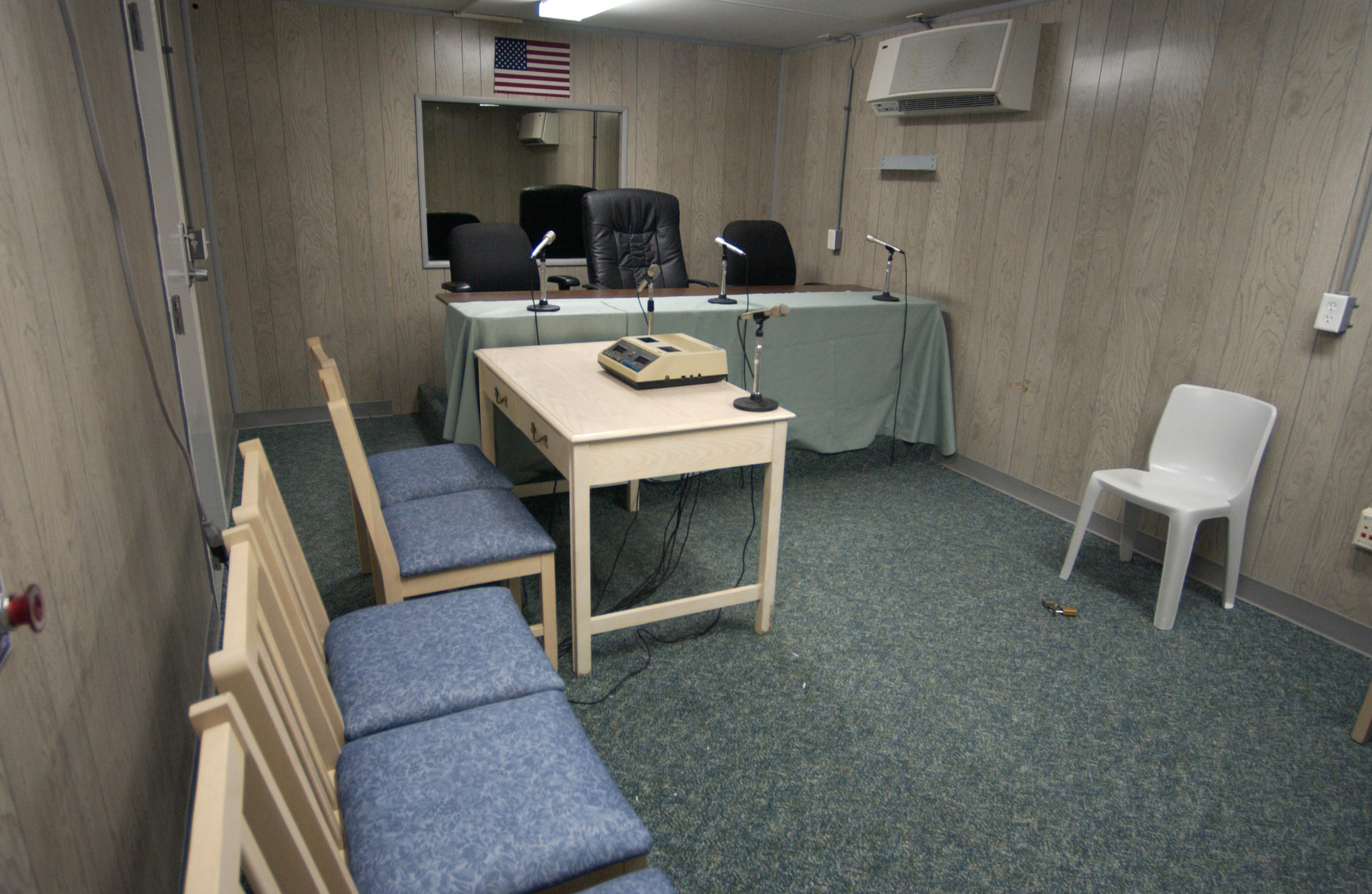
Initially the Bush administration asserted that they could withhold all the protections of the Geneva Conventions to captives from the war on terror. This policy was challenged before the Judicial branch. Critics argued that the USA could not evade its obligation to conduct competent tribunals to determine whether captives are, or are not, entitled to the protections of prisoner of war status.
Subsequently the Department of Defense instituted the Combatant Status Review Tribunals. The Tribunals, however, were not authorized to determine whether the captives were lawful combatants -- rather they were merely empowered to make a recommendation as to whether the captive had previously been correctly determined to match the Bush administration's definition of an enemy combatant.
Ghani chose to participate in his Combatant Status Review Tribunal.
allegations
The allegations Abdul Ghani faced during his Tribunal were:
-
a. ''''' -- The general summary of Abdul Ghani's association with [...] was missing from the transcript.
- ''The detainee admitted to voluntarily joining the Taliban.
- ''The detainee was a member of a 40-man unit of the Taliban that received support from al Qaida.
-
b. ''''' -- The general summary of Abdul Ghani's hostile activities were missing from the transcript.
- ''The detainee participated in a rocket attack directed against U.S. forces located at Kandahar Airfield, Afghanistan in the spring of 2002.
- ''The detainee participated in two rocket attacks directed against U.S. forces located at Kandahar Airfield in early November 2002.
- ''The detainee participated in a BM 12 missile attack against a U.S.A.F. transport aircraft while it was departing Kandahar Airfield, Afghanistan.
Opening dialogue
The transcript from Abdul Ghani's Combatant Status Review Tribunal starts with an extended dialogue between Abdul Ghani and the President of his Tribunal, over the nature of the Tribunal.
It started with a request from Ghani that his handcuffs be removed.
President |
''That is not within our power to do that. |
Ghani |
'''''There is a difference between the law and being brutal. |
President |
''We are here to only discuss your enemy combatant status and handcuffs will stay on. |
Ghani |
'''''Before we start, I have a question for you. |
President |
''Certainly |
Ghani |
'''''You bombed Afghanistan with one hundred thousand bombs and you are calling me an enemy combatant. What AbOUT yourself? |
President |
''Let's set the ground rules right now. We are hear to talk about the allegations on the Unclassified Summary that has been shown to you, and your enemy combatant status. That is the only thing we will discuss with you. That is the only thing within our power to discuss with you. |
Ghani |
'''''As far as I am concerned you are the enemy combatants. You should be going to court, not me. |
President |
''This is the only warning I will give you. If we have to stop and about this some more, you will be escorted out of the room and we will continue in your absence. |
Ghani |
'''''Is your point based on legal issues or is your purpose to use force? |
President |
''I don't understand the question. |
Translator |
The detainee was replying to what you suggested. If he doesn't obey the rules he will not be allowed to participate here. |
President |
''We will call the guards back in and remove you from the room. |
Ghani |
'''''I am willing to obey but you are the ones not obeying the law. |
President |
''Just remember the warning. We will stick with the purpose of the enemy combatant status and that is all. |
During the rest of his Tribunal Ghani kept trying to ask questions about the Tribunal process, and the President of his Tribunal kept threatening to have him removed.
Testimony in response to the allegations against him
Testimony in response to questions from the Tribunal's officers
Administrative Review Board hearing
Detainees who were determined to have been properly classified as "enemy combatants" were scheduled to have their dossier reviewed at annual Administrative Review Board hearings. The Administrative Review Boards weren't authorized to review whether a detainee qualified for POW status, and they weren't authorized to review whether a detainee should have been classified as an "enemy combatant".
They were authorized to consider whether a detainee should continue to be detained by the United States, because they continued to pose a threat -- or whether they could safely be repatriated to the custody of their home country, or whether they could be set free.
Ghani chose to participate in his Administrative Review Board hearing.
Confusion
Abdul Ghani's hearing started with his expression of confusion over his Board's Presiding Officer reading of the hearing's procedures. He was confused over:
- the nature of "classified evidence"
- why he was being called an "enemy combatant".
- why he couldn't learn the identity of the witness who made the allegations against him.
had a dialogue about classified evidence:
Enemy Combatant election form
Abdul Ghani's Assisting Military Officer's notes from the Enemy Combatant election form said they met on December 1 2005 for 60 minutes. The Assisting Military Officer asserted that Abdul Ghani understood the difference between the Combatant Status Review Tribunals and Administrative Review Board hearings. The Assisting Military Officer described Abdul Ghani as "very polite and attentive".
Factors for and against continued detention
A Summary of Evidence memo was prepared for every captive for whom an Administrative Review Board hearing was convened, summarizing the "factors" for and against their continued detention. Those factors were always broken down under two headings: "The following primary factors favor continued detention"; and "The following primary factors favor release or transfer". The factors favoring continued detention were further subdivided under sub-headings like: "Training"; "Intent"; "Commitment"; "Associations". And the factors under those sub-headings were sequentionally numbered.
Te Summary of Evidence memo was always read out, in its entirety, at the beginning of the hearing. Most captives were offered an opportunity to hear the factors read out, one at a time, so they would have an opportunity to respond to each in turn.
Some captive's transcript recorded the factors, and the captive's responses, but did not record the headings, sub-headings or sequential numbering.
Abdul Ghani's transcript does not record the headings or sequence numbers.
- ''An individual approached the detainee when he was coming out of a local mosque one night and asked the detainee to help him fire rockets.
- ''Am individual stated that he was sent to find the detainee to fire rockets against the United States air base at Kandahar.
- ''The detainee took part in a rocket attack on the Kandahar airfield in November 2002.
- ''The detainee walked with another individual to a place where several rockets were buried. They took the rockets and walked to where they would set them up for launch. The two prepared the rockets for launch and then ignited them. Following that, they left and didn't witness the launch.
- ''The detainee and another individual fired rockets on two consecutive nights.
- ''The detainee was arrested by Afghan Forces for assisting an individual in a rocket attack against the United States at Kandahar airfield.
- ''The detainee was identified as part of the 40-man unit.
- ''One of the tasks of the 40-man unit was to provide protection to al Qaida for travel in Afghanistan.
- ''The detainee was seen launching a rocket against a United States aircraft near the Kandahar airport.
- ''According to the detainee, when he fired the rockets, he was not following a commander; he was just doing it for money.
- ''An individual states that the detainee was paid money from al Qaida for the missile attack. He also stated that the detainee's military expertise was missiles.
Response to the factors
- Abdul Ghani acknowledged scavenging six abandoned rockets left over from when the local Taliban fled the American retaliatory attack. He said that the Taliban abandoned everything, including their vehicles.
- Abdul Ghani said that he sold the rockets to Skanda Shah; that Skanda Shah said he was going to resell the rockets to someone else; that Skanda Shah asked him to help him carry the rockets to the second buyer; they each carried two rockets each.
- Abdul Ghani said that when they were passing near the Kandahar airfield Skanda Shah surprised him by setting up the rockets to fire at the airfield.
- Abdul Ghani said that Skanda Shah was captured first, and that when American forces came to capture him he was completely cooperative, and volunteered the location of the remaining rockets.