
2nd United States Congress - State Delegations
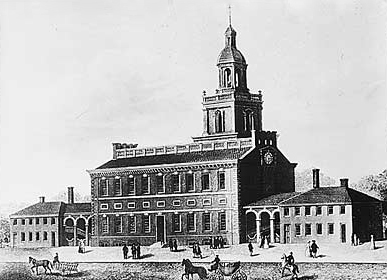 The Second United States Congress was a meeting of the legislative branch of the United States federal government, comprised of the United States Senate and the United States House of Representatives. It met at Congress Hall in Philadelphia Pennsylvania from March 4 1791 to March 3 1793, during the last two years of the first administration of U.S. President George Washington.
The apportionment of seats in this House of Representatives was based on the provisions of the United States Constitution. Both chambers had a Pro-Administration majority.
This article supplements the main article with a list of the members by state delegation.
- Main article: 2nd United States Congress
- See also: 2nd United States Congress - Membership Changes
- See also: 2nd United States Congress - political parties
- See also: United States House elections, 1790
Dates of sessions
March 4 1791 - March 3 1793
- Special session of the Senate: March 4 1791
- First session: October 24 1791 - May 8 1792
- Second session: November 5 1792 - March 2 1793 — a lame duck session
Previous congress: 1st Congress
Next congress: 3rd Congress
Members
Senators were elected by the state legislatures every two years, with one-third beginning new six year terms with each Congress. Preceding the names in the list below are Senate class numbers, which indicate the cycle of their election. In this Congress, Class 1 meant their term began in this Congress, requiring reelection in 1796; Class 2 meant their term ended with this Congress, requiring reelection in 1792; and Class 3 meant their term began in the last Congress, requiring reelection in 1794.
The names of members of the House of Representatives elected statewide on the general ticket or otherwise at-large, are preceded by an "A/L," and the names of those elected from districts, whether plural or single member, are preceded by their district numbers.
Many of the congressional district numbers are linked to articles describing the district itself. Since the boundaries of the districts have changed often and substantially, the linked article may only describe the district as it exists today, and not as it was at the time of this Congress.
There were no political parties in this Congress. Members are informally grouped into factions of similar interest, based on an analysis of their voting record.
The list below is arranged by state, then by chamber. Senators are shown in order of seniority, House members in district order.
Connecticut
- Senate
- 1: Oliver Ellsworth (1745-1807), Pro-Administration
- 3: William S. Johnson (1727-1819), Pro-Administration …resigned March 4 1791
- Roger Sherman (1721-1793), Pro-Administration …elected to fill vacancy, June 13 1791
- House of Representatives (5 seats)
: James Hillhouse (1754-1832), Pro-Administration
: Amasa Learned (1750-1825), Pro-Administration
: Jonathan Sturges (1740-1819), Pro-Administration
: Jonathan Trumbull, Jr. (1740-1809), Pro-Administration
: Jeremiah Wadsworth (1743-1804), Pro-Administration
Delaware
- Senate
- 2: Richard Bassett (1745-1815), Pro-Administration
- 1: George Read (1733-1798), Pro-Administration
- House of Representatives (1 seat)
: John Vining (1758-1802), Pro-Administration
Georgia
- Senate
- 2: William Few (1748-1828), Anti-Administration
- 3: James Gunn (1753-1801), Anti-Administration
- House of Representatives (3 seats)
: Anthony Wayne (1745-1796), Anti-Administration …contested election, served until March 21 1792, seat declared vacant.
- John Milledge (1757-1818), Anti-Administration …elected to fill vacancy, seated November 22 1792
: Abraham Baldwin (1754-1807), Anti-Administration
: Francis Willis (1745-1829), Anti-Administration
Kentucky
- Senate
- 3: John Edwards (1748-1837), Anti-Administration …newly admitted state, elected June 18 1792
- 2: John Brown (1757-1837), Anti-Administration …newly admitted state, elected June 18 1792
- House of Representatives (2 seats)
: Christopher Greenup (1750-1818), Anti-Administration …newly admitted state, seated November 9 1792
: Alexander D. Orr (1761-1835), Anti-Administration …new state, seated November 8 1792
Maryland
- Senate
- 3: John Henry (1750-1798), Pro-Administration
- 1: Charles Carroll (1737-1832), Pro-Administration …resigned November 30 1792
- Richard Potts (1753-1808), Pro-Administration …elected to fill vacancy, January 10 1793
- House of Representatives (6 seats)
: Philip Key (1750-1820), Pro-Administration
: Joshua Seney (1756-1798), Anti-Administration …resigned May 1 1792
- William Hindman (1743-1822), Pro-Administration …elected to fill vacancy, seated January 30 1793
: William Pinkney (1764-1822), Pro-Administration …resigned November, 1791
- John F. Mercer (1759-1821), Anti-Administration …elected to fill vacancy, seated February 6 1792
: Samuel Sterett (1758-1833), Anti-Administration
: William Vans Murray (1760-1803), Pro-Administration
: Upton Sheredine (1740-1800), Anti-Administration
Massachusetts
- Senate
- 2: Caleb Strong (1745-1819), Pro-Administration
- 1: George Cabot (1752-1823), Pro-Administration
- House of Representatives (8 seats)
: Fisher Ames (1758-1808), Pro-Administration
: Benjamin Goodhue (1748-1814), Pro-Administration
: Elbridge Gerry (1744-1814), Anti-Administration
: Theodore Sedgwick (1746-1813), Pro-Administration
: Shearjashub Bourne (1746-1806), Pro-Administration
: George Leonard (1729-1819), Pro-Administration
: Artemas Ward (1727-1800), Pro-Administration
: George Thatcher (1754-1824), Pro-Administration
New Hampshire
- Senate
- 3: John Langdon (1741-1819), Pro-Administration
- 2: Paine Wingate (1739-1838), Anti-Administration
- House of Representatives (3 seats)
: Nicholas Gilman (1755-1814), Pro-Administration
: Samuel Livermore (1732-1803), Pro-Administration
: Jeremiah Smith (1759-1842), Pro-Administration
New Jersey
- Senate
- 2: Philemon Dickinson (1739-1809), Pro-Administration
- 1: John Rutherfurd (1760-1840), Pro-Administration
- House of Representatives (4 seats)
: Elias Boudinot (1740-1821), Pro-Administration
: Abraham Clark (1726-1794), Pro-Administration
: Jonathan Dayton (1760-1824), Pro-Administration
: Aaron Kitchell (1744-1820), Pro-Administration
New York
- Senate
- 3: Rufus King (1755-1827), Pro-Administration
- 1: Aaron Burr (1756-1836), Anti-Administration
- House of Representatives (6 seats)
: Thomas Tredwell (1743-1831), Anti-Administration …elected to fill vacancy, seated October 24 1791
: John Laurance (1750-1810), Pro-Administration
: Egbert Benson (1746-1833), Pro-Administration
: Cornelius C. Schoonmaker (1745-1796), Anti-Administration
: Peter Silvester (1734-1808), Pro-Administration
: James Gordon (1739-1810), Pro-Administration
North Carolina
- Senate
- 3: Benjamin Hawkins (1754-1818), Anti-Administration
- 2: Samuel Johnston (1733-1816), Pro-Administration
- House of Representatives (5 seats)
: John Steele (1764-1815), Pro-Administration
: Nathaniel Macon (1757-1837), Anti-Administration
: John Baptista Ashe (1748-1802), Anti-Administration
: Hugh Williamson (1735-1819), Anti-Administration
: William Barry Grove (1764-1818), Pro-Administration
Pennsylvania
- Senate
- 3: Robert Morris (1734-1806), Pro-Administration
- 1: vacant …contested election, remained vacant
- House of Representatives (8 seats)
: Thomas Fitzsimons (1741-1811), Pro-Administration
: Frederick A. C. Muhlenberg (1750-1801), Anti-Administration
: Israel Jacobs (1726-1796), Pro-Administration
: Daniel Hiester (1747-1804), Anti-Administration
: John Wilkes Kittera (1752-1801), Pro-Administration
: Andrew Gregg (1755-1835), Anti-Administration
: Thomas Hartley (1748-1800), Pro-Administration
: William Findley (1742-1821), Anti-Administration
Rhode Island
- Senate
- 1: Theodore Foster (1752-1828), Pro-Administration
- 2: Joseph Stanton, Jr. (1739-1807), Anti-Administration
- House of Representatives (1 seat)
: Benjamin Bourne (1755-1808), Pro-Administration
South Carolina
- Senate
- 2: Pierce Butler (1744-1822), Anti-Administration
- 3: Ralph Izard (1742-1804), Pro-Administration
- House of Representatives (5 seats)
: William L. Smith (1758-1812), Pro-Administration
: Robert Barnwell (1761-1814), Pro-Administration
: Daniel Huger (1742-1799), Pro-Administration
: Thomas Sumter (1734-1832), Anti-Administration
: Thomas Tudor Tucker (1745-1828), Anti-Administration
Vermont
- Senate
- 1: Moses Robinson (1741-1813), Anti-Administration …newly admitted state, elected October 17 1791
- 3: Stephen R. Bradley (1754-1830), Anti-Administration …newly admitted state, seated November 4 1791
- House of Representatives (2 seats)
: Israel Smith (1759-1810), Anti-Administration …newly admitted state, seated October 31 1791
: Nathaniel Niles (1741-1828), Anti-Administration …new state, seated October 31 1791
Virginia
- Senate
- 2: Richard Henry Lee (1732-1794), Anti-Administration …resigned October 8 1792
- John Taylor (1753-1824), Anti-Administration …elected to fill vacancy, October 18 1792
- 1: James Monroe (1758-1831), Anti-Administration
- House of Representatives (10 seats)
: Alexander White (1738-1804), Pro-Administration
: John Brown (1757-1837), Anti-Administration …represented Kentucky, served until June 1 1792
: Andrew Moore (1752-1821), Anti-Administration
: Richard Bland Lee (1761-1827), Pro-Administration
: James Madison (1751-1836), Anti-Administration
: Abraham B. Venable (1758-1811), Anti-Administration
: John Page (1743-1808), Anti-Administration
: Josiah Parker (1751-1810), Anti-Administration
: William B. Giles (1762-1830), Anti-Administration
: Samuel Griffin (1746-1810), Anti-Administration
External links
- Statutes at Large, 1789-1875
- Senate Journal, First Forty-three Sessions of Congress
- House Journal, First Forty-three Sessions of Congress
- Biographical Directory of the U.S. Congress
- U.S. House of Representatives: House History
- U.S. Senate: Statistics and Lists