
2nd United States Congress - Membership Changes
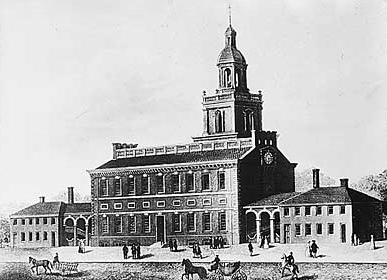 The Second United States Congress was a meeting of the legislative branch of the United States federal government, comprised of the United States Senate and the United States House of Representatives. It met at Congress Hall in Philadelphia Pennsylvania from March 4 1791 to March 3 1793, during the last two years of the first administration of U.S. President George Washington.
The apportionment of seats in this House of Representatives was based on the provisions of the United States Constitution. Both chambers had a Pro-Administration majority.
- See also: 2nd United States Congress - political parties
- See also: 2nd United States Congress - State Delegations
- See also: United States House elections, 1790
Dates of sessions
March 4 1791 - March 3 1793
- Special session of the Senate: March 4 1791
- First session: October 24 1791 - May 8 1792
- Second session: November 5 1792 - March 2 1793 — a lame duck session
Previous congress: 1st Congress
Next congress: 3rd Congress
Membership changes
There were no political parties in this Congress. Members are informally grouped into factions of similar interest, based on an analysis of their voting record.
Vermont and Kentucky were newly admitted as states and are first represented in this Congress.
|
|
Senate
State |
Outgoing Senator |
Reason for Change |
Successor |
|
|---|---|---|---|---|
Connecticut |
| |
William S. Johnson |
Resignation. |
| |
Connecticut |
| |
vacant |
Vacancy. |
| |
Kentucky |
| |
new seat |
New state admission. |
| |
Kentucky |
| |
new seat |
New state admission. |
| |
Maryland |
| |
Charles Carroll |
Resignation. |
| |
Pennsylvania |
| |
vacant |
Contested election. |
| |
Vermont |
| |
new seat |
New state admission. |
| |
Vermont |
| |
new seat |
New state admission. |
| |
Virginia |
| |
Richard Henry Lee |
Resignation. |
| |
House of Representatives
State |
Outgoing Representative |
Reason for Change |
Successor |
|
|---|---|---|---|---|
| |
Anthony Wayne |
Contested election. |
| |
|
| |
vacant |
Contested election. |
| |
|
| |
new seat |
New state admission. |
| |
|
| |
new seat |
New state admission. |
| |
|
| |
Joshua Seney |
Resignation. |
| |
|
| |
William Pinkney |
Resignation. |
| |
|
| |
vacant |
Death. |
| |
|
| |
new seat |
New state admission. |
| |
|
| |
new seat |
New state admission. |
| |
|
| |
John Brown |
Resignation. |
| |
|