
1926 Paris–Bucharest Potez 25 crash
The 1926 Paris–Bucharest Potez 25 crash occurred on 12 September 1926, when a Potez 25 registered F-AHDC struck mountainous terrain near Jelení studánka in Czechoslovakia during a planned non-stop flight from Paris to Bucharest. After encountering dense fog, the crew deviated north-east from their intended route and struck the main ridge of the Jeseníky Mountains. Pilot Gheorghe Bănciulescu survived with severe leg injuries, while pilot-mechanic Ioan Stoica died during evacuation from the crash site.
Bănciulescu underwent separate amputations of both legs at Rýmařov hospital. Following rehabilitation, he returned to solo flight using prosthetic legs and was widely described in later accounts as the first pilot to fly after the amputation of both legs. The precise impact site has not been established, with surviving accounts placing it at different points in the Vysoká hole area near Jelení studánka.
Background
Prince Bibescu Cup and the earlier Bucharest–Paris flight
On 22 August 1926, Bănciulescu and Romeo Popescu began an attempt connected with the Prince Bibescu Cup, aiming to complete the Bucharest–Paris route as quickly as possible. The cup was described as an art object valued at 10,000 French francs. A flight-log entry reproduced in a 1968 biography states that Popescu piloted while Bănciulescu performed the aerial navigation. They flew a standard Potez 15 named Vlaicu, powered by a 400 hp Lorraine-Dietrich engine.
After refuelling at Aspern and making an unscheduled landing at Strasbourg to repair a failed magneto, they reached Le Bourget on 23 August. Bănciulescu's log recorded approximately 2,300 km in 13 hours and 20 minutes of actual flight and described the result as establishing a first claim to the Bibescu Cup. Macháček wrote that the pair did not receive the prize because their aircraft had experienced technical problems en route.
Krejčí notes that some accounts treated the return flight as part of the competition, which would explain why the aircraft followed designated turning points rather than the shortest direct route.
Aircraft
Contemporary Czechoslovak records identified the aircraft as a Potez XXV bearing the registration F-AHDC and construction number 931.
Accounts differ over how the aircraft was supplied: Macháček described it as having been lent by CFRNA, while another account associated its provision with the Potez company.
A contemporary account stated that it had previously been flown by the aviators Arrachart and Georges Pelletier d'Oisy. It was equipped with a metal propeller and three fuel tanks reportedly holding a total of 2,200 litres of petrol, providing an estimated endurance of 11 hours.
The aircraft was made available in France for the return flight to Bucharest. The aircraft was a fabric-covered biplane of mixed wood-and-metal construction, with unequal-span wings and a Lorraine-Dietrich engine. Lidové noviny rated the engine at , while Revista Aeronautică gave a range of 450–480 hp and identified it as engine no. 18058. It had supplementary fuel tanks. It could reach a ceiling of and a speed exceeding .
After inspection by the Romanian acceptance commission, the engine was run at full power on a test bench for one hour and 20 minutes. Once installed, it underwent several hours of flight testing by Bănciulescu.
The crew prepared the route using a British aeronautical chart at a scale of 1:1,000,000 and a second map at 1:200,000. They marked estimated times over important points and obtained plans of possible landing grounds near the intended route. The aircraft carried a clock, thermometer, altimeter, airspeed indicator, fuel-consumption gauges and a compass that had been compensated following repeated checks.
Crew
Bănciulescu had met Stoica in Paris in 1925 while carrying out acceptance flights for Potez aircraft.
Gheorghe Bănciulescu
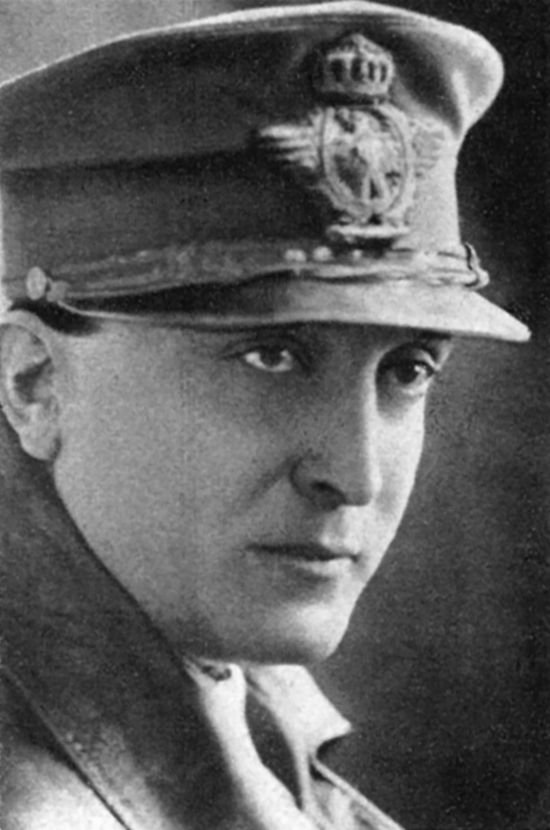
Gheorghe Bănciulescu was born in 1898 in the city of Iași. He studied theory at military school. During the First World War, he witnessed aerial combat over the front and decided to become a pilot. Bănciulescu received his pilot's licence in 1919. At the time of the accident, Bănciulescu was commander of the aviation training school at Pipera and served as pilot in command of the Potez 25.
Ioan Stoica
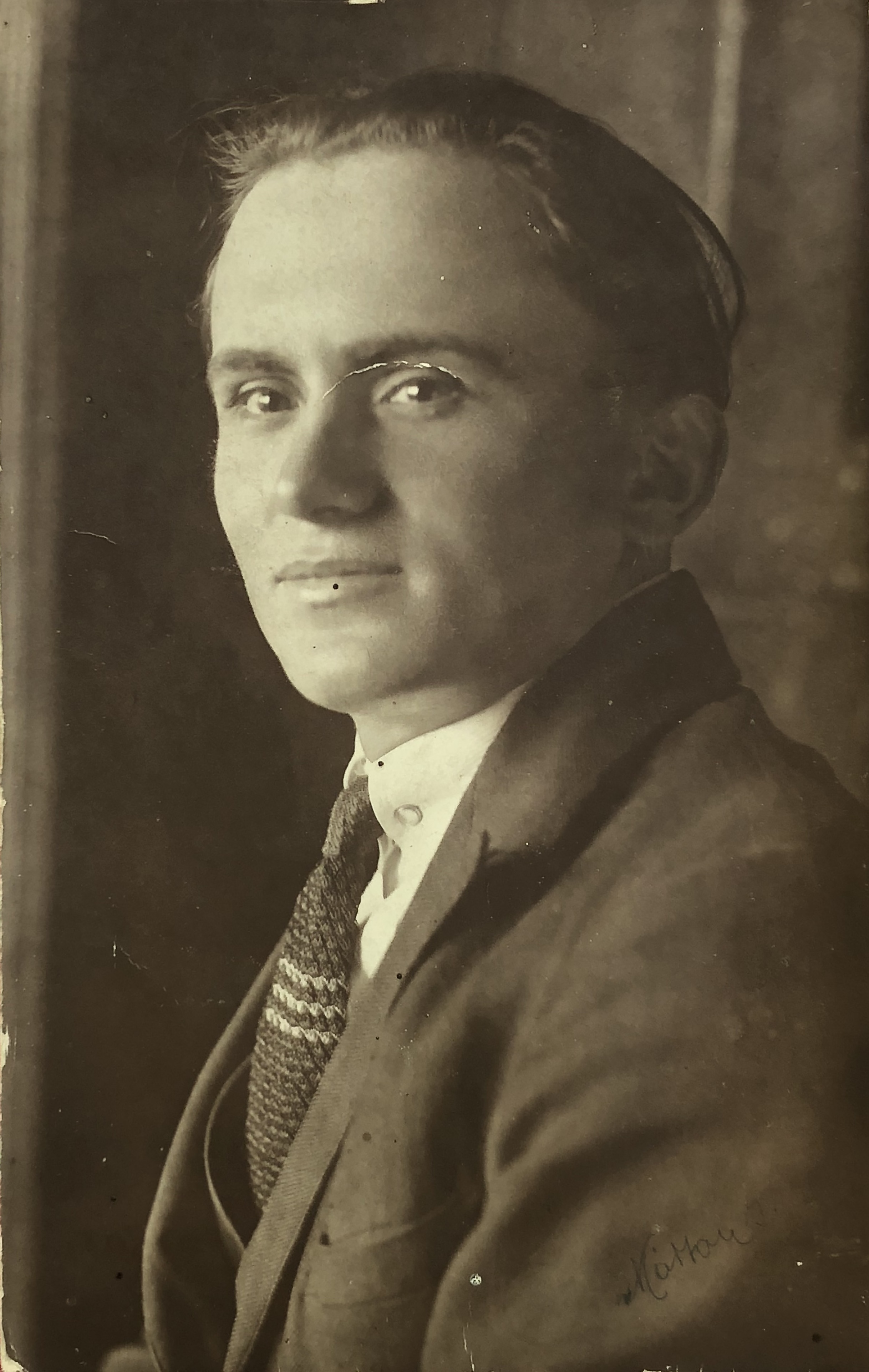
Ioan Stoica was born in Fofeldea — then Fófeld, Szeben County, Kingdom of Hungary, within Austria-Hungary; now in Sibiu County, Romania. on 28 November 1897 and was a year older than Bănciulescu. He graduated from the School of Trades in Bucharest. In 1916, during the First World War, he volunteered for service in the Romanian Army, initially serving as an aircraft mechanic with a Nieuport-equipped squadron, eventually attaining a senior squadron technical rank. He later served at Galați, where a later account places him with a Nieuport squadron preparing to depart for the front.
Stoica subsequently graduated from flying school and received pilot's licence no. 412 on 29 October 1924. He was also promoted to the civilian aeronautical grade of maestru and became chief squadron mechanic in the 1st Aviation Group.
A contemporary Romanian aviation journal described Stoica as an accomplished mechanic with extensive knowledge of the aircraft's engine.
On 13 November 1924, King Ferdinand I of Romania awarded Stoica the first class of the Faithful Service Medal. The decree identified him as a submaestru clasa a II-a in the 1st Reconnaissance Aviation Group.
In 1925, he was sent to France as part of the commission responsible for accepting aeronautical equipment ordered there. Other accounts describe his time in France as an internship at the Lorraine-Dietrich factory, which manufactured aircraft engines.
Stoica was critically injured and died while being evacuated from the crash site.
Flight and accident
Departure and intended route
For the return flight on 12 September, Bănciulescu was accompanied by pilot-mechanic Ioan Stoica instead of Popescu.
The engine was started at 05:15, and the aircraft took off from Le Bourget at approximately 05:50. The destination of the non-stop flight was Bucharest.
During the departure sequence, petrol escaped through the filler caps of the overfilled tanks and poured over Bănciulescu. After becoming airborne, the aircraft circled the aerodrome several times; once the fuel stopped escaping, Bănciulescu continued on a compass heading of 93 degrees.
Because the two men could not speak directly between the aircraft's separate cockpits, they exchanged written notes using a pulley system installed between them.
Their intended route was to pass through Strasbourg, Linz, Vienna and Budapest to Bucharest.
According to contemporary and later accounts, Bănciulescu considered continuing from Bucharest to Constanța and returning if sufficient fuel remained.
Weather and navigational deviation
September normally brings relatively settled weather to the Moravian-Silesian mountains, but dense fog on 12 September reduced visibility to only a few steps.
The aircraft reached Strasbourg after flying approximately 400 kilometres in one hour and 55 minutes, compared with the planned time of two hours and 20 minutes. It crossed the Vosges between 50 and 100 metres above the summits. Near Strasbourg, three Nieuport aircraft attempted to accompany the Potez but fell behind because they could not match its speed. Later on, fog and low cloud forced the pilot to descend to a low altitude above the terrain.
Bănciulescu later recalled that the first part of the flight had taken place in favourable weather. The aircraft encountered intermittent fog over the Black Forest, and the crew continued by compass. After passing Stuttgart, they reached the vicinity of Linz, approximately 900 kilometres from Le Bourget, where the Danube provided a navigational reference. Bănciulescu sent Stoica another written message stating: “Linz. Danube Valley.”
At 10:00, the aircraft had reportedly covered approximately 1,000 kilometres. Ten minutes later, the crew observed worsening conditions as fog obstructed the planned route towards Vienna.
From Linz onwards, Captain Bănciulescu could no longer follow the planned route because storm clouds covered the sky to the east and south-east. He decided to fly around the entire area and headed north-east. Macháček likewise described the crew as having taken an erroneous north-easterly course.
A contemporary account in the Romanian journal Aeronautica, reproduced in a 1968 book, reported that the aircraft had covered approximately in five and a half hours before the crash. It estimated that the crew would otherwise have reached Bucharest at approximately 15:30, completing the Paris–Bucharest route in around nine hours at an average speed exceeding . The journal claimed that this would have surpassed the existing long-distance speed records.
Crash
A 1968 biography reconstructs the crew's final communication at approximately 10:35 as a note passed between the cockpits stating, “We are entering the fog. We are climbing”. Bănciulescu's attempt to avoid the fog was influenced by a dangerous encounter with similar conditions in the same mountainous region during the outward flight to Paris a month earlier. During the resulting detour, he repeatedly steered towards openings in the cloud before deciding at 10:35 to enter the fog in an attempt to regain the direct route near Vienna. According to the account, the aircraft's left wing subsequently struck the ridge, causing the aircraft to turn violently and break apart.
The aircraft reached the Jeseníky Mountains, where it struck the main ridge from the south, not far from Jelení studánka.
In his address at Fofeldea on 16 January 1927, Bănciulescu stated that the aircraft had struck approximately below the crest, after the crew had completed more than half of the journey in favourable conditions before encountering dense fog.
A contemporary Romanian account reported that the initial impact forced the engine backwards, crushing Bănciulescu's legs. As the aircraft rebounded, Bănciulescu was thrown onto the slope, while Stoica was thrown across the engine and sustained severe chest injuries. Bănciulescu also suffered abrasions to his face and hands, and his legs were dislocated and partly crushed.
Flight timeline
The times shown in the timeline are reproduced as reported rather than reconciled into a single chronology. The Strasbourg time of approximately 07:45 is a simple calculation from the reported 05:50 take-off and an elapsed flight time of one hour and 55 minutes. A preliminary Czechoslovak military report placed the impact at approximately 10:15, whereas the contemporary Romanian account recorded a final note at 10:35 and placed the impact at approximately 10:45.
Flight timeline
Rescue and medical treatment
Preparations had been made at Băneasa Airport to receive the flight. When the aircraft failed to arrive, Romanian observation posts were alerted, but the initial enquiries produced no information about its whereabouts.
The first people to reach the wreck were Karel Hříbal, a typographer from Rýmařov, and his wife, Josefina, who had been walking in the area. Hříbal later recalled that the fog was “so dense that we had to hold hands”. After hearing the aircraft and a nearby impact, they found Stoica in the wreckage, apparently lifeless, and Bănciulescu lying approximately 15–20 metres away with facial injuries and both legs broken.
Dr Egon Honsig of Opava, a military physician, also happened to be walking near the crash site. When he discovered that the pilot was bleeding from his legs, he immobilised and bandaged them.
Hříbal ran three kilometres to Alfrédova chata, where volunteers formed a rescue party. In a recollection provided in 1966, Erich Jancik, who had been 15 years old at the time of the accident, stated that he acted as an interpreter after Bănciulescu repeatedly asked in French where Stoica was. Jancik recalled that volunteers carrying improvised stretchers arrived from the chalet approximately 45 minutes later. Bănciulescu was carried down on a stretcher lined with his parachute, while Stoica died during the descent; his death was initially withheld from Bănciulescu to spare him further shock. Stoica's body was temporarily placed in the chalet's shed.
The rescuers brought Bănciulescu to Alfrédova chata, which was then managed by L. Schaller. From there, he was transported over an uneven forest road in a straw-padded, horse-drawn forestry cart, reaching Rýmařov hospital at approximately 18:00.
At the hospital, Bănciulescu was treated by the chief physician, Dr Julius Böse, a surgeon, assisted by Dr František Kux. Böse had extensive surgical experience from the First World War. He initially attempted to save Bănciulescu's legs, but both ultimately had to be amputated because of advancing gangrene. According to the 1968 biography, the left leg was amputated on the evening of 12 September and the right leg on 16 September.
Investigation
Map key
Grey markers indicate named reference points in the sources; coloured markers identify the three alternative location areas.
The gendarmerie was informed of the crash by the forestry administration in Stará Ves. After arriving at the site, it notified the Rýmařov district political administration, the gendarmerie command, the garrison command in Olomouc and the military command in Bucharest. The gendarmes also secured the aviators’ personal belongings found in the aircraft wreckage, recorded them in an official inventory and took them to the Alfrédova chata. They then guarded the crashed aircraft until a final decision was made by the garrison command in Olomouc.
The precise crash site has not been established. Hříbal's account placed it north-east of Jelení studánka, on the gentle southern slope of Jelení hřbet between Jelení studánka and Malý kotel. Bubeníček's report of 13 September instead placed it on Vysoká pláň, approximately 400 paces north-west of Jelení studánka, while the district governor reported on 14 September that the aircraft had struck Vysoká pláň from the south. A report attributed to the Stará Ves gendarmerie similarly placed the wreck approximately 400 paces north-west of Jelení studánka, within the cadastral territory of Žďárský Potok. Vrobel described the accident as occurring in the cadastral territory of Brandzejf, on the ridge of Vysoká hole near Jelení studánka.
During a visit to the crash area in 1967, Bănciulescu-Cozadini and Bănciulescu proposed that the crew, approaching from the south-west in fog, mistook a gap between the surrounding slopes for an opening into a broader valley before encountering the high ground of Vysoká hole.
Jan Hloch, a gendarme posted to Stará Ves several months after the accident, later recalled that the impact had left a pit approximately one metre deep and several metres long. Debris was still being collected by visitors several years later, and the crash site remained recognisable in 1936.
Miloslav Marek, who studied the archival records concerning the accident, stated that neither photographs of the site nor later searches for surviving wreckage allowed its location to be determined more precisely. He suggested that the extensive dwarf-pine cover and the possible removal of nearly all the wreckage before its transportation to Olomouc might explain why the searches were unsuccessful.
The Olomouc military commission inspected the wreckage at Jelení studánka on 14 September 1926. Because the occupants had already been removed, the commission was unable to determine their original positions in the wreckage or whether they had been secured by their harnesses.
The inspection recorded extensive impact damage to the engine, wings, fuselage and flight controls. The fuel tanks had been shattered and torn from the aircraft. The fuel-line cocks, tachometer and other instruments could not be found; the report stated that they had probably been stolen by civilians.
Items recovered from the wreckage included clothing, footwear, money, a wristwatch, personal effects and a parcel of red, yellow and blue silk. According to Bănciulescu-Cozadini and Bănciulescu, the coloured silk was intended to be unfurled over the Romanian airfield upon the aircraft's arrival.
The wreckage was subsequently transported to Aviation Regiment No. 2 in Olomouc.
Aftermath
A subsequent military report assessed the aircraft as completely destroyed and incapable of repair. Only the control surfaces and engine were considered repairable; the remainder was described as a collection of wood, metal tubing and sheet metal. The report concluded that transporting the entire wreckage over the proposed distance would be disproportionately expensive relative to its remaining value. It recommended scrapping the airframe and selling the recovered material while sending the engine separately in a crate, and requested confirmation as to whether the earlier order to transport the complete aircraft should nevertheless be followed.
On 25 October 1926, Colonel Dimitriu, the Romanian military attaché in Prague, deposited 483 Czechoslovak korunas in cash to reimburse the military administration for expenses arising from the accident. The money was to be transferred to the technical administration of Aviation Regiment No. 2 in Olomouc.
Bănciulescu's recovery and return to flying
According to Ludvik Srnec's later account, Colonel Sazima routed a squadron from Olomouc over Rýmařov for several mornings. Above the hospital, the pilots dipped their wings and briefly accelerated their engines three times in salute to Bănciulescu. During one of the flypasts, the aircrew reportedly dropped bouquets into the hospital grounds.
On 10 October, Bănciulescu wrote a message in the hospital's book of honour thanking its staff, particularly chief physician Julius Böse, for his treatment. Before his departure, Colonel Sazima sent several Czechoslovak aviators to the hospital to bid him farewell.
On 16 October, Bănciulescu left Rýmařov hospital and returned to Bucharest, where he was admitted to Brâncovenesc Hospital. At Brâncovenesc Hospital, he was fitted with wooden prosthetic legs and began learning to walk again, initially supporting himself between chairs and later using two crutches.
Bănciulescu sought to return to flying following his rehabilitation. Because his wooden prostheses caused him pain, he went to Munich, where he underwent further rehabilitation and was fitted with lighter aluminium prostheses that allowed some flexibility at the foot. Following rehabilitation, he learned to walk again within a year and requested reinstatement in the air service. The 1968 biography relates that he subsequently demonstrated his ability to operate vehicle pedals using the new prostheses. Before flying again with amputated legs, he tried multiple times to drive a car.
Romanian aviation authorities initially refused to permit Bănciulescu to resume piloting, offering him a non-flying position within aviation once his recovery was complete.
Approximately six months after the accident, Bănciulescu returned to Pipera airfield. Fellow aviator Mișu Pantazi took him aloft in a dual-control aircraft, with Bănciulescu occupying the observer's position. It was his first flight since the accident, although he had not yet resumed piloting.
Shortly afterwards, Bănciulescu was sent to Paris for technical aviation training. While in France, he made several flights in dual-control aircraft as he prepared to resume piloting independently.
On 22 October 1927, the President of France appointed Bănciulescu a Knight of the Legion of Honour by decree no. 36,230.
After completing several flights in dual-control aircraft, Bănciulescu flew solo less than two years after the accident. Later accounts widely described him as the first pilot to fly after the amputation of both legs.
He subsequently continued his aviation career in administrative and long-distance flying roles.
Stoica's burial
Stoica was initially buried in Rýmařov cemetery. A contemporary report stated that Stoica's funeral expenses would be borne by the Czechoslovak Army. Colonel Haralambie Dimitriu, the Romanian military attaché in Prague, arranged the funeral in Rýmařov. According to Dimineața, a Czechoslovak Army delegation, local authorities and residents attended. His grave was marked by a cross bearing the inscription “Aviatiker Stoica Joan, 12 September 1926”.
During Bănciulescu's stay in France, Stoica's remains had not yet been repatriated. After returning to Bucharest in October 1926, Bănciulescu stated that Stoica's remains would be brought to Romania the following spring.
Commemoration
On 16 January 1927, an Orthodox memorial service for Stoica was held in his native village of Fofeldea. At that time, his body remained buried in Rýmařov, Czechoslovakia. Delegations from the Romanian General Aeronautical Inspectorate and aviation units attended alongside local residents, and wreaths were placed in the village church. Bănciulescu, who had not yet fully recovered from his injuries, also attended and delivered a memorial address.
In 2013, a monument was erected in the grounds of Podhorská Hospital in Rýmařov, commemorating Bănciulescu and the hospital staff who treated him following the crash. The monument consists of a bronze plaque depicting Bănciulescu, surmounted by an eagle made of white marble. During its unveiling, JAS-39 Gripen aircraft from Čáslav Air Base flew over the hospital.
On 19 May 2015, representatives of ARPIA and the Romanian Embassy in the Czech Republic joined Rýmařov mayor Petr Klouda in laying wreaths at the Bănciulescu monument.