
Rico Ace is a British rapper and recording artist based in London. He began releasing music in 2018 under the stage name JerDon!, before adopting name as Rico Ace in 2024. He is known for his energetic vocal delivery and for his collaborations within the UK underground hip‑hop scene.
Wraith9 is a British recording artist, record producer, and videographer from the United Kingdom. He is a member of the creative collective PHANTOM AUDIO and is known for both his solo work and collaborations with UK underground artists. On 4 April 2025, he independently released his self‑produced debut album Designer.
Fevikmoen (historically spelled Fevigmoen, Feeuigmoen, and Fævigmoen) is a historic farm property located in Fevik, in present-day Grimstad municipality, Agder county, Norway. Formerly part of Fjære parish, Fevikmoen is among the oldest documented farm properties in the area and is notable for evidence of prehistoric activity, long agricultural continuity, and later associations with maritime trade and early seaside tourism.
Prehistoric and early history
The Fevikmoen property lies within a cultural landscape containing numerous recorded burial mounds. Local historical sources document at least eleven undated burial sites on the property, several of which are attributed to the Iron Age (c. 500 BC – AD 1050). Burial mounds in coastal Agder are generally associated with long-term settlement and high-status land use and often functioned as territorial markers visible from both land and sea. At least one burial mound on the Fevikmoen property was removed during later agricultural development.
Farm history and name
The farm name appears in written sources from the early modern period with varying spellings, including Feeuigmoen in the 17th century and Fævigmoen in 1723. The element moen refers to meadow or cleared farmland, indicating fertile agricultural land. Historically, Fevikmoen was a substantially larger holding than it is today and functioned as a mixed agricultural farm typical of the Sørlandet region.
Ownership and development
Historical records list a sequence of owners and occupants at Fevikmoen dating back to at least the early 17th century. Documented residents include odelsfolk, farmers, and later maritime professionals such as ship captains. Among those recorded are Christopher Pedersøn Fevigmoen (1624), Peder Christophersen and Gunnild Olsdatter in the late 18th century, and skipper Peder Nielsen and Anne Kristine Ellingsdatter in the mid-19th century.
During the 19th century, Fevikmoen followed a common coastal Agder economic pattern combining agriculture with maritime livelihoods. A national building survey published in Norges bebyggelse records that the farm's two-storey main house was constructed in 1886, reflecting a period of prosperity.
The property also retained a substantial barn, representing the agricultural core of the farm and surviving later periods of subdivision that altered much of the surrounding landscape.
Maritime connections
Historical accounts connected to Fevikmoen include references to maritime activity and risk. A documented mid-19th-century ship loss (Courier), which occurred in 1857, is associated with members of the household and illustrates the close relationship between the farm and the regional shipping economy.
Tourism and early 20th century
Around the turn of the 20th century, Fevikmoen participated in Fevik's early seaside tourism development. Parts of the property were used as a summer boarding house (pensjonat), accommodating seasonal guests attracted by coastal recreation and bathing culture. This activity coincided with the broader development of Fevik as a summer destination along the southern Norwegian coast.
Subdivision and modern period
During the early 20th century, several parcels were formally separated from the main Fevikmoen farm, including properties such as Furuly, Ekelund, and Fjeldly. Additional subdivisions followed through the mid-20th century as Fevik expanded as a residential area. Despite this, the main house and barn remained together as the core of the former farm, preserving an important fragment of Fevik's historic agricultural landscape.
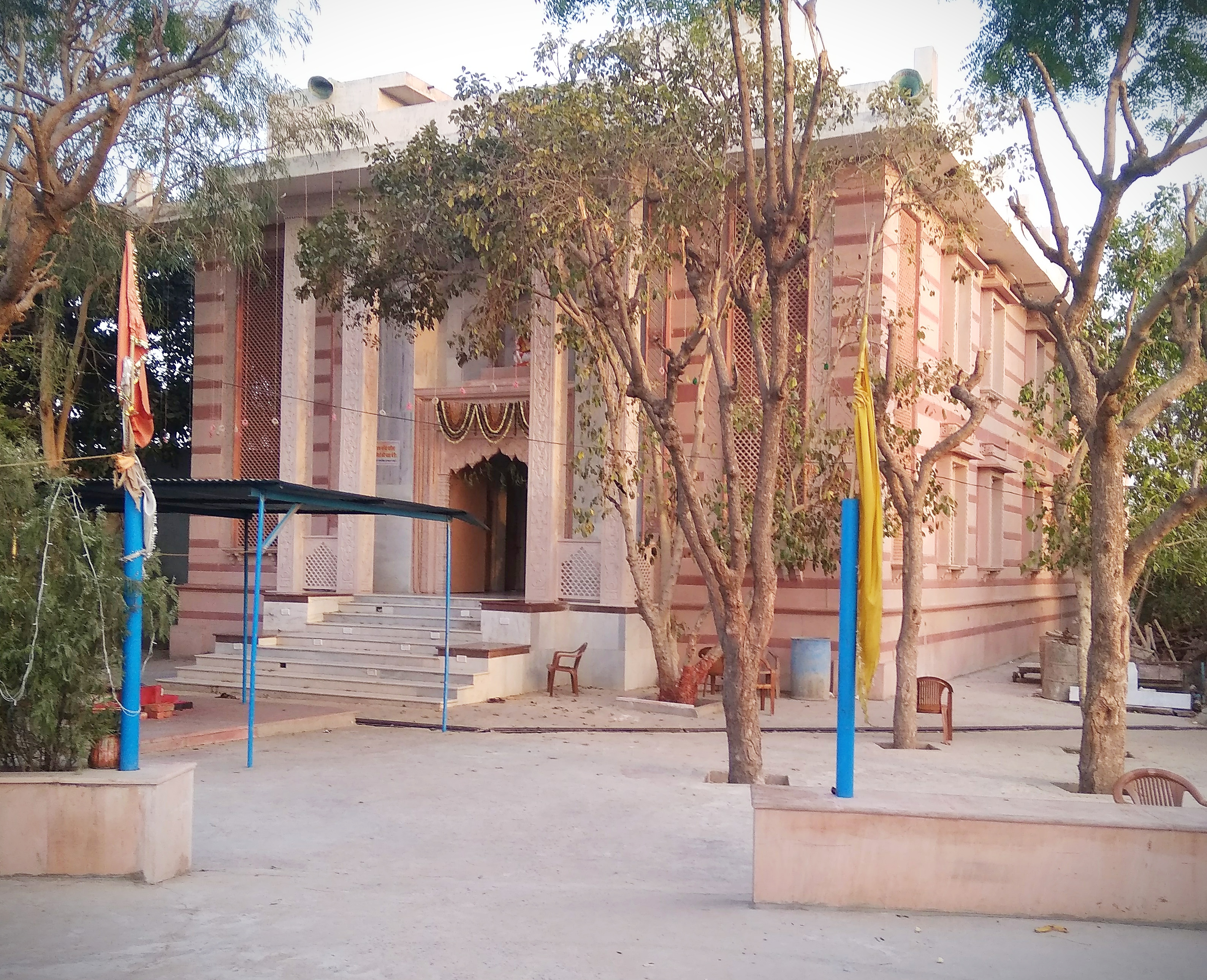 Nakkash Ki Devi – Gomti Dham Temple is a Hindu temple, situated in the Hindaun City, in the Indian state of Rajasthan. This temple is at the heart of Hindaun City, with adjacent sacred pond known as Jalsen Reservoir. The temple is located on the banks of the Jalsen Talab. Nakkash Ki Devi is a Hindu Devi Temple of Durga and Gomti Dham is the biggest Temple in Hindaun City of Gomti Dass Ji Maharaj.