
Gabon–Israel relations are the international bilateral historical and contemporary diplomatic, political, economic, military, cultural, and other relations between Gabon and Israel.
History
Relations between Israel and Gabon were established in 1960, when Gabon proclaimed its independence. At that time, the two states signed several treaties and agreements. In 1962, a Technical Cooperation Agreement and a Treaty of Friendship were signed, followed by a trade agreement in 1963. Gabon became one of the sub-Saharan African countries to which Israel sent hundreds of agricultural experts and technicians to assist in the development of the newly independent nation.
In 1973, under pressure from OPEC countries, Gabon severed relations with Israel due to Israel's involvement in the Yom Kippur War. Following this, Gabon withdrew from the organization.
Relations were restored on 29 September 1993. At present, contacts are conducted through the Israeli embassy in neighboring Cameroon, although the officially accredited ambassador to Gabon is an official of the Israeli Ministry of Foreign Affairs based in Jerusalem.
In 2011, the Israeli Ministry of Foreign Affairs attempted to persuade Gabon not to vote in favor of a pro-Palestinian resolution at the United Nations. Ultimately, representatives of the African country abstained from the vote..
On 28 November 2017, Benjamin Netanyahu visited Kenya to attend the inauguration ceremony of re-elected President Uhuru Kenyatta. During the visit, Netanyahu met with Ali Bongo, President of Gabon, and discussed the development of bilateral relations.
Tourism
At present, an agreement on the waiver of visa requirements for holders of diplomatic passports is in force between the two countries.
References
Israel Category:Bilateral relations of Israel
Norway–Venezuela relations refer to the international relations that exist between Norway and Venezuela.
History
On 22 March 1841, a Treaty of Friendship, Commerce, and Navigation was signed between the Union between Sweden and Norway and Venezuela.
21st century
Norway aligned itself with the 2019 declaration of the High Representative of the European Union for Foreign Affairs, which stated that the 2018 Venezuelan presidential election were neither free nor fair and that their results lacked legitimacy, as the electoral process did not provide the necessary guarantees for inclusive and democratic elections. The declaration also expressed deep regret that the European Union's call for new elections, in line with internationally recognized democratic standards and Venezuela’s constitutional order, had been ignored. In addition, it called on Nicolás Maduro to recognize and respect the role and independence of the National Assembly as a democratically elected institution and to release all political prisoners.
In 2019, during the Venezuelan presidential crisis, Norway expressed support for Juan Guaidó as the elected and legitimate leader of the National Assembly but did not recognize him as President of Venezuela. Norwegian minister of foreign affairs Ine Eriksen Søreide instead emphasized support for dialogue between Guaidó, Maduro, and their respective supporters.
Following the uprising against Maduro led by Guaidó on 30 April, on 15 May President Maduro announced on state television that Minister of Communication Jorge Rodríguez was "carrying out a very important mission" abroad. Media outlets reported, citing various sources, that a peace dialogue was being initiated in Norway. One day later, Guaidó stated that he had "envoys" in Norway to help lay the groundwork for a new dialogue between the Chavista movement and the opposition, while emphasizing that the opposition would not participate in "false negotiations".
See also
- Foreign relations of Norway
- Foreign relations of Venezuela
References
Venezuela Category:Bilateral relations of Venezuela
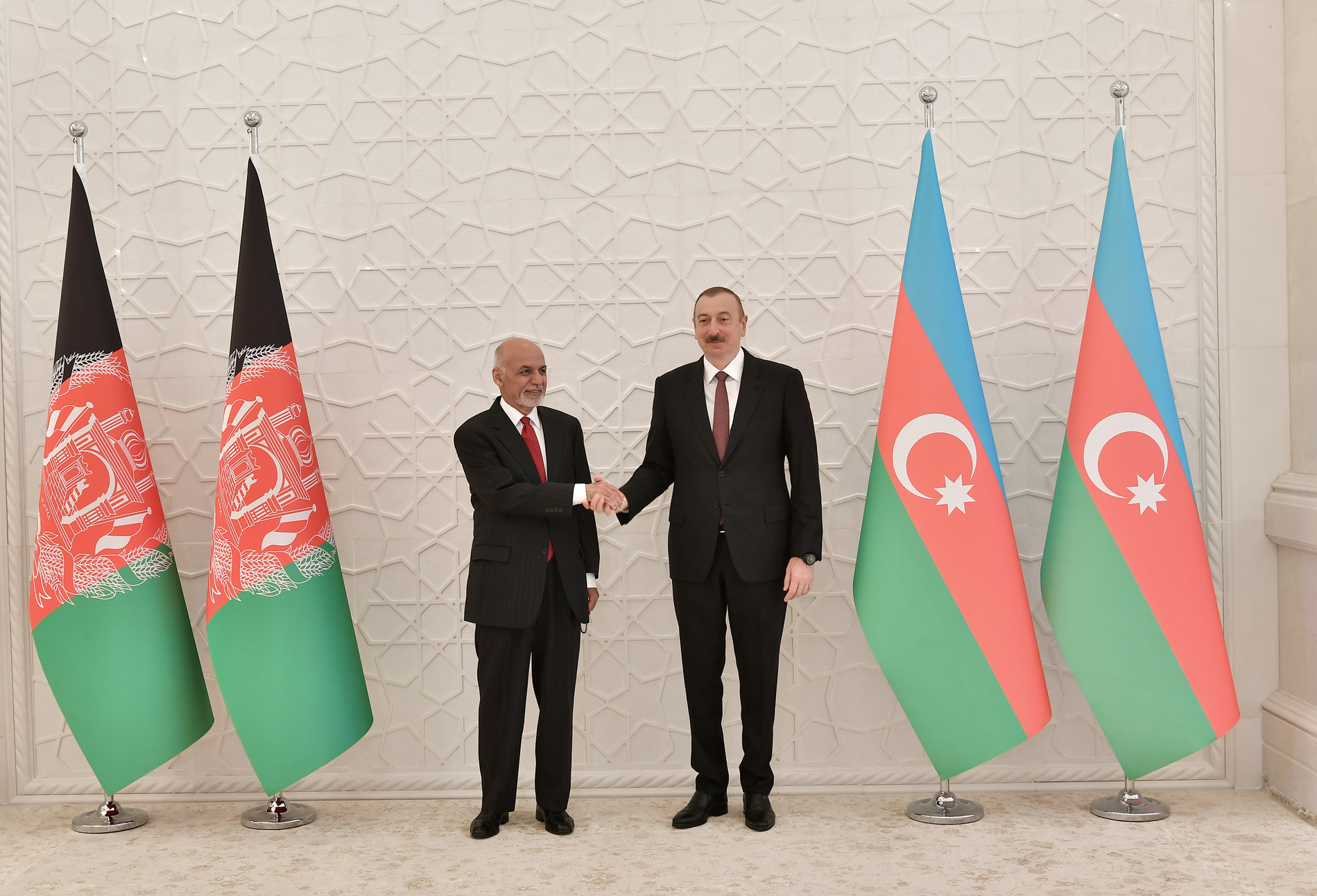 Afghanistan–Azerbaijan relations are the bilateral relations between Afghanistan and Azerbaijan in the political, economic, and other spheres.
Diplomatic relations
Afghanistan recognized Azerbaijan's independence on 21 December 1991. Diplomatic relations were established on 16 November 1994.
The Embassy of Afghanistan in Azerbaijan was opened in November 2012.
The Embassy of Azerbaijan in Afghanistan has been operating since 30 December 2020.
In the Azerbaijani Parliament, there is a working group on relations with Afghanistan, headed by Musa Gasimli.
In the National Assembly of Afghanistan, there is a working group on relations with Azerbaijan.
Fifteen agreements have been signed between the two countries.
See also
- Foreign relations of Afghanistan
- Foreign relations of Azerbaijan
References
External links
Azerbaijan Category:Bilateral relations of Azerbaijan
Norway–South Korea relations refers to the bilateral diplomatic relations between Norway and South Korea. Since establishing diplomatic relations in 1959, the two countries have maintained cooperation in various fields, including politics, diplomacy, economy, maritime affairs, energy, culture, and people-to-people exchanges.
Norway was the first Nordic country to establish diplomatic relations with South Korea.
History
Relations between Norway and South Korea were established even before the formal establishment of diplomatic ties. During the Korean War, Norway contributed to the United Nations Command by sending a medical unit known as NORMASH. A total of 623 Norwegian personnel were deployed, treating approximately 90,000 patients. This medical assistance served as an important early point of contact between the two countries.
After the war, Norway continued to show interest in South Korea's post-war reconstruction, primarily through international organizations. Against this backdrop, the two countries officially established diplomatic relations in 1959, marking South Korea's first diplomatic ties with a Nordic country.
During the 1960s and 1970s, relations gradually developed through the establishment of diplomatic missions and the exchange of envoys. During this period, interactions were mainly diplomatic, and economic and civil exchanges remained relatively limited.
From the 1980s onward, following South Korea's economic growth and increasing international profile, bilateral relations began to expand. Norway, as a maritime nation, explored opportunities for cooperation with South Korea in shipbuilding, shipping, and energy, and high-level visits between officials became more frequent.
In the 1990s, following the end of the Cold War and changes in the international order, cooperation between the two countries became more substantive.
During the 2000s, in addition to expanding economic and trade relations, cooperation strengthened in maritime, energy, and environmental sectors. In particular, the Free Trade Agreement between the European Free Trade Association (EFTA) and South Korea, which entered into force in 2006, included Norway as a key member.
From the 2010s onward, the two countries have expanded cooperation on global issues such as Arctic affairs, climate change, and sustainable development. Collaboration has also occurred through scientific research and international conferences.
In the 2020s, discussions have focused on energy transition, green industries, and advanced technology cooperation.
Diplomatic relations
South Korea and Norway regularly exchange views on bilateral issues and international developments through diplomatic meetings and policy consultations. The two countries consult on major international issues, including the situation on the Korean Peninsula, and share a common stance on the importance of multilateralism and international norms.
South Korea opened its embassy in Oslo in 1983 to manage diplomatic, economic, and cultural cooperation with Norway. Norway established its embassy in Seoul in 1991, contributing to the strengthening of diplomatic relations and the promotion of economic and cultural exchanges between the two countries.
In addition, both countries cooperate on global issues through international organizations and multilateral forums. This diplomatic collaboration is also cited as part of South Korea’s broader efforts to strengthen relations with European countries.
Economic relations
Economic relations between Norway and South Korea have developed primarily in the fields of shipbuilding, shipping, energy, and maritime industries. The two countries have established various frameworks, such as trade and investment promotion frameworks (TIPF), to discuss and enhance economic cooperation.
In recent years, bilateral cooperation has expanded to areas including green energy, smart shipping, and technology development.
Cultural relations
Cultural and people-to-people exchanges form an important part of the relationship between Norway and South Korea. The two countries have promoted mutual understanding through academic, cultural, artistic, and youth exchange programs.
References
External links
- Official website of the Embassy of South Korea in Norway
- Official website of the Embassy of Norway in South Korea
Korea, South Category:Bilateral relations of South Korea