
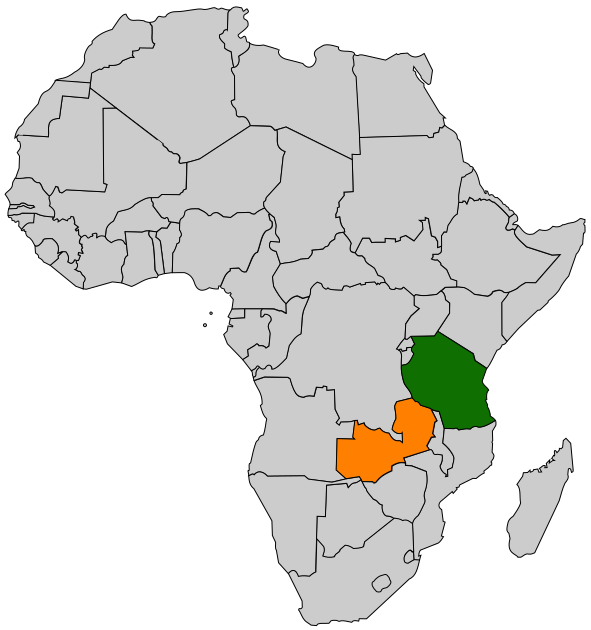
 The Tanzania–Zambia border is a continuous international boundary 338 km in length that separates Tanzania and Zambia in East Africa.
Route
The border begins at a tripoint where the borders of the Democratic Republic of the Congo and Tanzania meet and the border of the Democratic Republic of the Congo and Zambia in the southern waters of Lake Tanganyika. It then extends in a northwest–southeast and eastward direction until it reaches a tripoint where the Malawi–Zambia border meets the Malawi–Tanzania border.
History
This border was established between the British colony of Northern Rhodesia and the German protectorate of Tanganyika at the end of the 19th century during the European partition of Africa.
See also
- Tanzania–Zambia relations
References
Zambia Category:Borders of Zambia Category:International borders
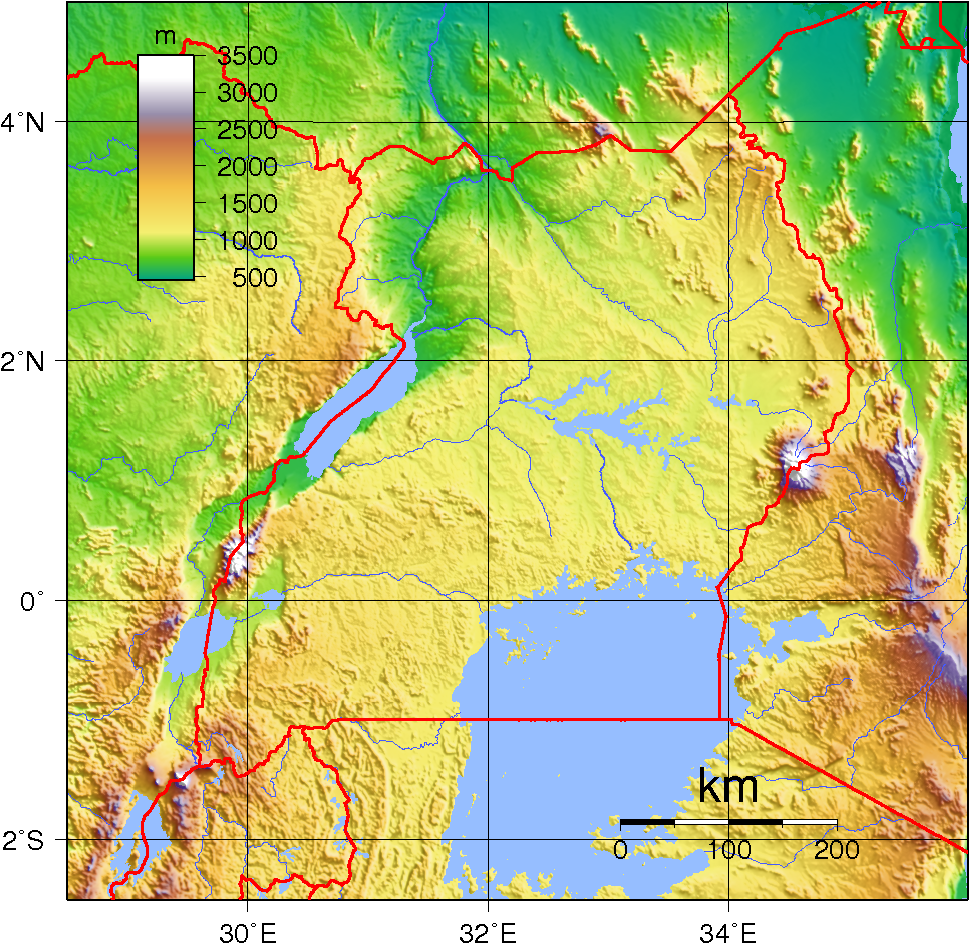 The Tanzania–Uganda border is a continuous international boundary 396 km long, separating Tanzania to the south and Uganda to the north in East Africa. Most of this border runs through Lake Victoria, extending from east to west.
Description
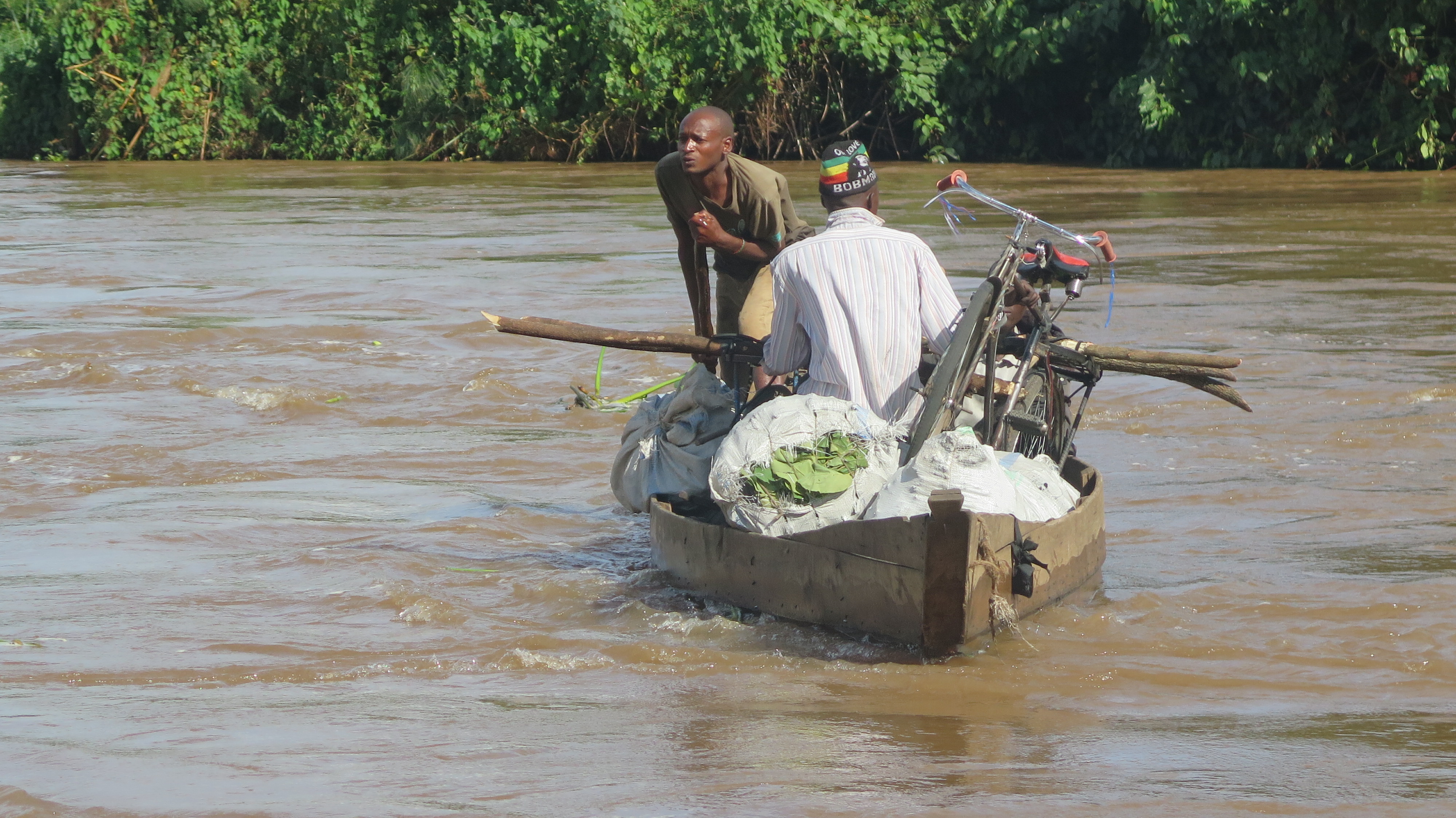 The border begins at a tripoint with the Rwanda–Tanzania and Rwanda–Uganda borders at the confluence of the Muvumba and Kagera river. For its first 60 km, it follows the course of the Kagera River, heading east and then northeast, before leaving the river. The next 340 km follow a straight line oriented from west to east, fixed along the 1st parallel south. Most of this straight border lies within Lake Victoria. It ends at a tripoint with the Kenya–Uganda and Kenya–Tanzania borders on the lake, about twelve kilometers from its eastern shore.
The town of Mutukula is one of the main road crossing points along the border.
See also
- Tanzania–Uganda relations
References
Uganda Category:Borders of Uganda Category:International borders
Latvia–South Korea relations refer to the bilateral relations between Latvia and South Korea. Since establishing diplomatic relations in 1991, the two countries have expanded cooperation in various fields, including politics, economy, culture, and security.
History
South Korea recognized Latvia after it regained independence from the Soviet Union in 1991, and the two countries officially established diplomatic relations on 22 October of the same year.
South Korea maintains an embassy in Riga, the capital of Latvia, while Latvia has an embassy in Seoul. Latvia was the first of the three Baltic states (Latvia, Lithuania, and Estonia) to open a resident embassy in South Korea, a move seen as a reflection of the countries' commitment to strengthening political, economic, and security cooperation.
Political relations
Since establishing diplomatic relations, the two countries have maintained high-level exchanges and diplomatic consultations. Through ministerial meetings and mutual visits, they cooperate on international affairs, regional security, and the promotion of multilateralism.
Latvia regards South Korea as an important partner for cooperation in the Indo-Pacific region, as well as within the European Union (EU) and the NATO.
South Korea and Latvia emphasize maintaining the international order based on international law and the United Nations Charter, and they have expressed coordinated positions on major international security issues, including the Russia–Ukraine war.
In November 2024, Latvian President Edgars Rinkēvičs visited South Korea, becoming the first Asian visit by a Latvian president since his inauguration in July 2023. During the summit between President Rinkēvičs and South Korean President Yoon Suk-yeol, both countries agreed to strengthen cooperation in various fields, including defense and biotechnology.
Economic relations
Trade between South Korea and Latvia has steadily increased in recent years, with the total trade volume estimated at over 100 million euros. The two countries are also strengthening cooperation in advanced industries such as biomedicine, pharmaceuticals, and information and communications technology (ICT). Industrial collaboration is expanding through business partnerships, joint research, and participation in exhibitions.
Cultural relations
On the occasion of the 30th anniversary of diplomatic relations, both countries have expanded cultural exchanges by organizing cultural events, exhibitions, and performances.
References
External links
- [https://www2.mfa.gov.lv/kr/| Embassy of Latvia in South Korea]
- [https://overseas.mofa.go.kr/lv-ko/index.do| Embassy of South Korea in Latvia]
Korea, South Category:Bilateral relations of South Korea
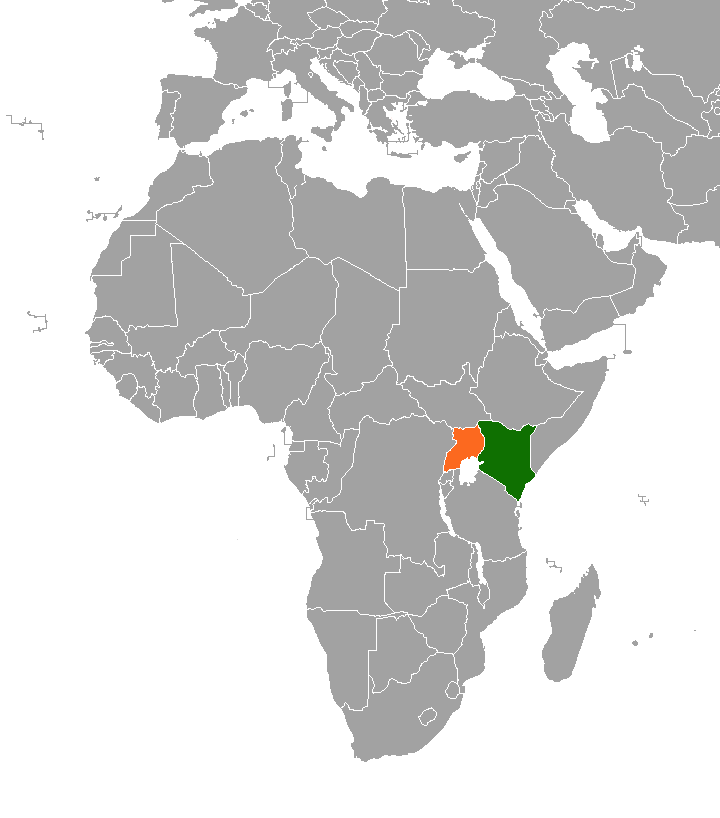 The Kenya–Uganda border is the international boundary separating Kenya and Uganda.
Course
With a length of 933 km, the border runs approximately from north to south, with Uganda to the west and Kenya to the east. It connects two tripoints, in the north where the two countries meet South Sudan, and in the south where both countries meet Tanzania. The latter is located in Lake Victoria.
There are border crossing points between Busia and Malaba.
History
A brief crisis occurred between the two countries in December 1987 over the transport of Ugandan goods across the border, which was temporarily closed by Kenyan authorities. The incidents reportedly resulted in the deaths of 15 Ugandans before President Daniel arap Moi and Yoweri Museveni met in Malaba to develop measures to end the crisis and reopen the border.
Migingo, an island in Lake Victoria, was the focus of a dispute between the two countries between 2008 and 2009. Although considered Kenyan territory since 1926, it was claimed by Uganda in order to benefit from the lucrative fishing rights associated with the island. The dispute was ultimately resolved in favor of Kenya.
See also
- Kenya–Uganda relations
References
Uganda Category:Borders of Uganda Category:International borders