
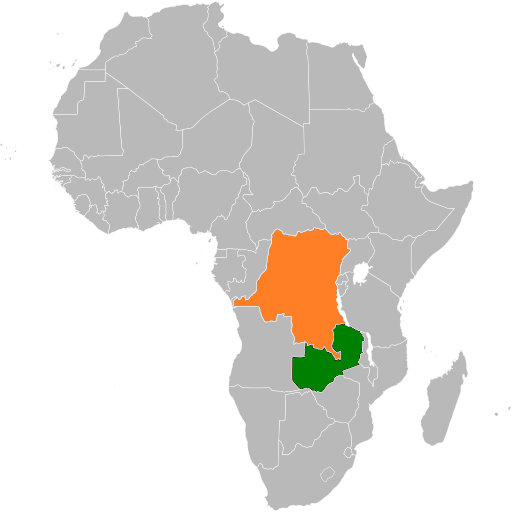
 The Democratic Republic of the Congo–Zambia border is a 2,332 km-long international boundary separating the Democratic Republic of the Congo and Zambia in Central Africa.
The border is largely based on agreements established during the creation of the Congo Free State by Leopold II in his personal capacity.
Features
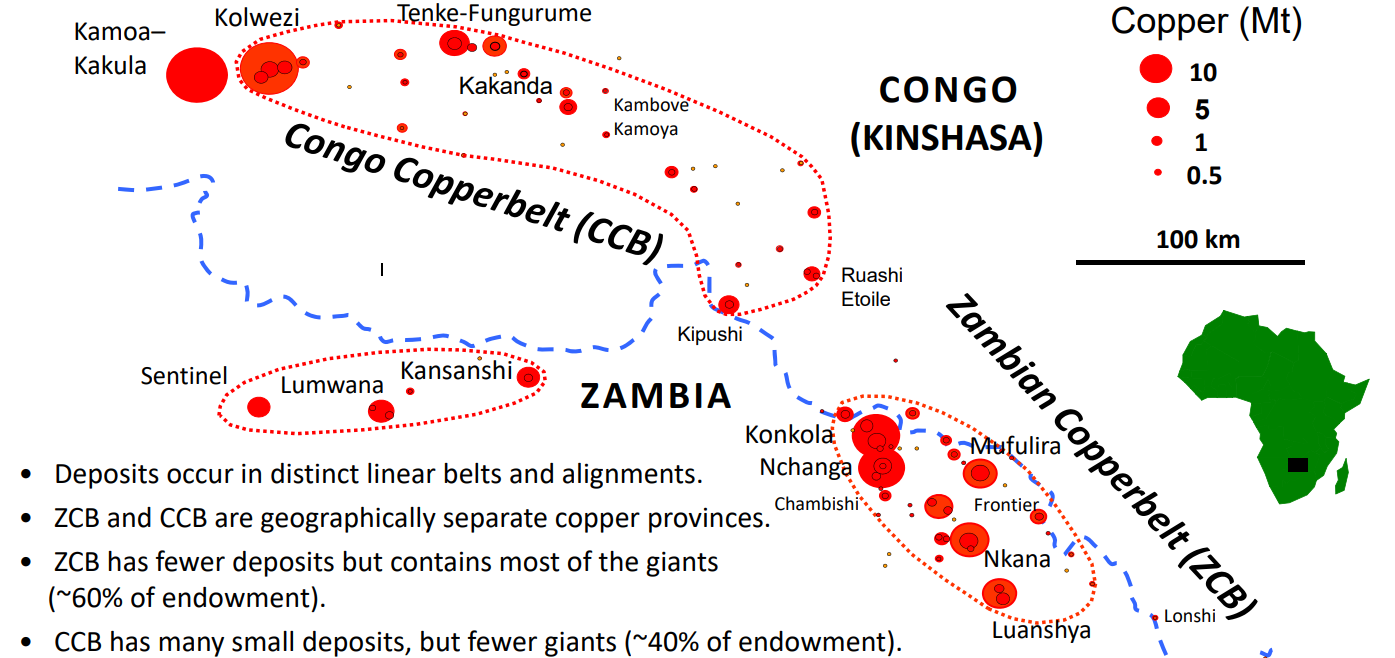 The length of the border is 2,332 km. It includes the Katanga "panhandle", a narrow extension of territory. Kasumbalesa is one of the main border crossings, serving both road and rail traffic on the route connecting Lubumbashi in the Democratic Republic of the Congo and Kitwe and Ndola in Zambia.
In its eastern section, the border is largely defined by the Luapula River and Lake Mweru. In the west, it closely follows the watershed divide between the Congo River basin (Luapula River) to the north and the Zambezi River basin to the south.
The border also passes through the Copperbelt, an important mining region.
History
The border is the result of compromises between three colonial powers with territorial ambitions in the region at the end of the 19th century.
At the time, Portugal sought to territorially connect its two colonies, Angola and Mozambique. Great Britain, from its Cape Colony, supported Cecil Rhodes' plans for northward expansion. The International African Association (IAA), led personally by Leopold II, aimed to create the largest possible territory within the continent to combat slavery and promote development.
See also
- Democratic Republic of the Congo–Zambia relations
References
Zambia Category:Borders of Zambia Category:International borders
Guinea–Lithuania relations are the bilateral international relations between Guinea and Lithuania.
History
Guinea was among the African countries that recognized Lithuania's independence even before Lithuania became a member of the United Nations. It did so on 6 September 1991, becoming the third African country to recognize Lithuania after South Africa and Tunisia.
Diplomatic relations between the two countries were officially established on 27 April 1997, and in 1996 Guinea accredited its ambassador to Lithuania. Relations between the countries are primarily conducted through multilateral channels, and there is no public record of bilateral meetings between high-level officials of Lithuania and Guinea.
Multilateral cooperation dominates the relationship, especially through the United Nations, but also through the European Union. On 28 October 2004, during the 59th session of the UN General Assembly in New York, Lithuania, Guinea, and 14 other countries were elected members of the United Nations Economic and Social Council (ECOSOC) for the term 2005–2007.
See also
- Foreign relations of Guinea
- Foreign relations of Lithuania
References
Lithuania Category:Bilateral relations of Lithuania
Argentina–Namibia relations are the diplomatic relations between Argentina and Namibia. Both nations are members of the Group of 77 and the United Nations.
History
 During the South African Border War, Namibia (then known as South West Africa) fought for its independence against South Africa, which had occupied the territory in 1915 after taking it from Germany. In 1971, Argentina officially declared at the United Nations that it did not recognize any South African authority over Namibia. The Argentine government supported Namibia's independence, and in 1985, during a United Nations meeting on Namibia held in Vienna, Argentina called for comprehensive sanctions against the South African government.
In March 1990, Namibia gained its independence from South Africa. On 31 July of the same year, Argentina and Namibia established diplomatic relations.
In May 1998, high-level Argentine officials attended the Southern Africa Economic Summit in Windhoek, a joint initiative of the World Economic Forum and the Secretariat of the Southern African Development Community (SADC). The aim of the summit was to provide a meeting point for the regional and international business community, international organizations, and government representatives.
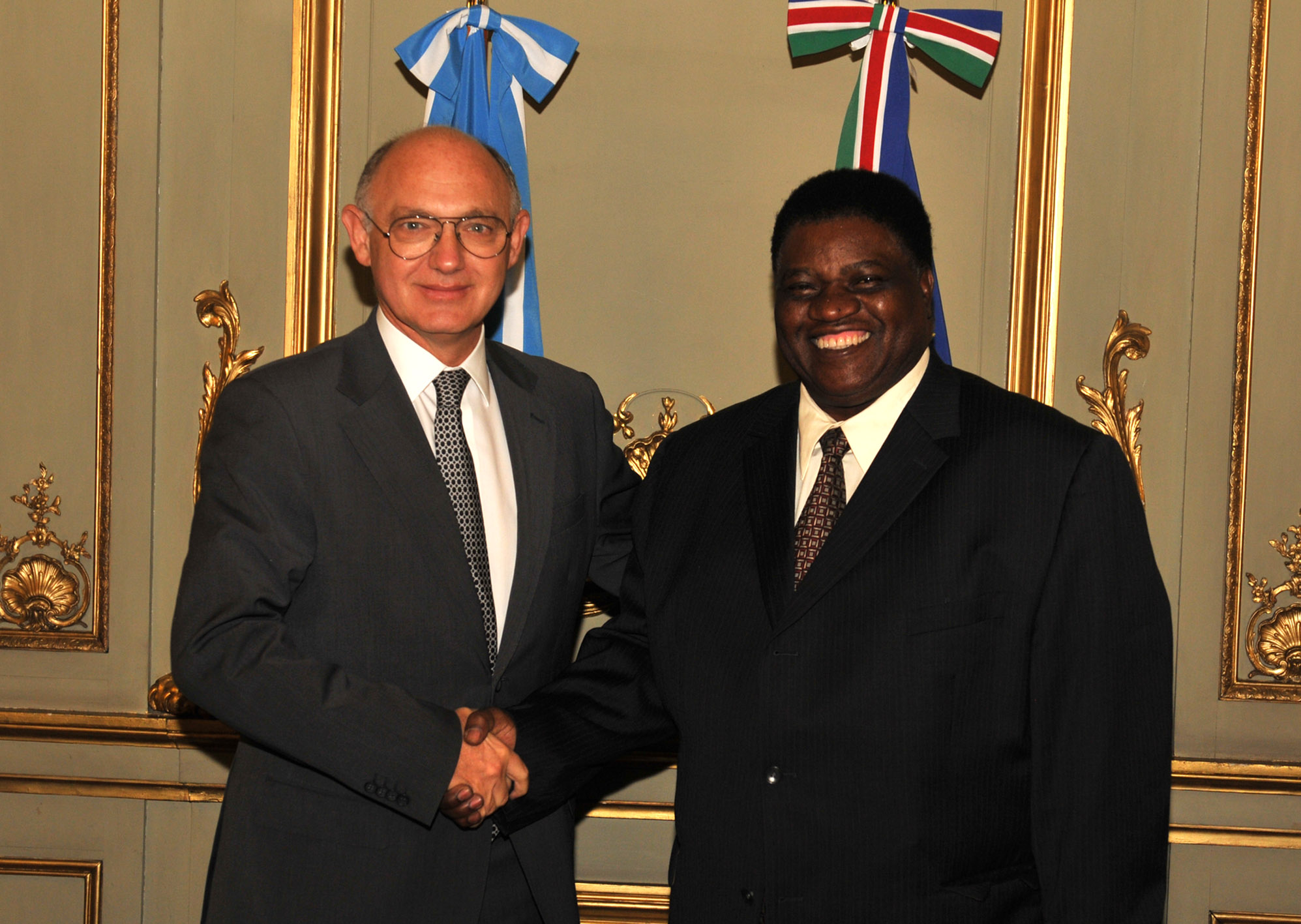
In July 2012, Namibia's Minister of Foreign Affairs, Utoni Nujoma, visited Argentina and met with his counterpart, Héctor Timerman. In 2015, Namibia's Minister of Agriculture, John Mutorwa, traveled to Argentina and visited the National Reference Laboratory of SENASA.
Diplomatic missions
Argentina is accredited to Namibia through its embassy in Pretoria, South Africa.
Namibia is accredited to Argentina through its embassy in Brasília, Brazil.
See also
- Foreign relations of Argentina
- Foreign relations of Namibia
References
Namibia Category:Bilateral relations of Namibia
Botswana–Zambia relations are the bilateral diplomatic relations between Botswana and Zambia. The length of the international border between the two countries is 0.15 km.
History
The two countries have maintained friendly relations. In October 2015, Botswana's High Commissioner to Zambia, Lebonaamang Mokalaka, stated that Zambia had played a significant role in Botswana's struggle for independence from the United Kingdom. He also noted that contemporary relations between the two states were at a high level, with bilateral economic ties developing alongside political contacts.
In 2016, Livingstone District Commissioner Omar Munsanji spoke at the opening ceremony of sports and cultural exchange events with Botswana. According to him, such sporting competitions contribute to the development of bilateral relations between the countries. In 2017, Zambian President Edgar Lungu made a state visit to Botswana. During a meeting with his counterpart Ian Khama, he emphasized that the two countries were seeking opportunities for further development of bilateral relations.
See also
- Foreign relations of Botswana
- Foreign relations of Zambia
References
Zambia Category:Bilateral relations of Zambia