
Ivory Coast–Liberia relations are the bilateral diplomatic relations between Ivory Coast and Liberia. The length of the state border between the two countries is 778 km.
History
In 1972, the first joint commission for the development of interaction and cooperation between the two countries was established. The political crisis in Ivory Coast following the presidential election of 28 November 2010 led to more than 140,000 people fleeing to Liberia. The refugees settled in the border region and did not support either the elected president, Alassane Ouattara, or his predecessor, Laurent Gbagbo. Although the political crisis in Ivory Coast was resolved, the humanitarian crisis affecting both the refugees and the host countries persisted.
In June 2012, Liberia closed its border with Ivory Coast after seven United Nations peacekeepers were killed during the Ivorian civil conflict. In April 2015, Liberian president Ellen Johnson Sirleaf and Ivorian president Alassane Ouattara held talks in Guiglo, resulting in an agreement to expand areas of cooperation between the two countries. In 2019, 8,152 refugees from Ivory Coast were residing in Liberia.
See also
- Foreign relations of Ivory Coast
- Foreign relations of Liberia
- Ivory Coast–Liberia border
References
Liberia Category:Bilateral relations of Liberia
Cuba–Equatorial Guinea relations are the international relations between Cuba and Equatorial Guinea. Following the Cuban Revolution of 1959 and the rise to power of Teodoro Obiang Nguema Mbasogo in 1979, the Caribbean island nation and the African country have strengthened their economic and socio-cultural ties. Spanish is the official language in both countries.
Both nations have been criticized by international organizations and are often described as authoritarian regimes, where certain democratic freedoms, such as some human rights and the proper rule of law, are restricted.
History
During the period of Spanish Guinea, Black slaves were sent to Cuba while both territories were under the control of the Spanish Empire. As a result, some Afro-Cubans have Equatorial Guinean ancestry. In September 1865, by a Royal Order issued by Queen Isabel II of Spain, the transfer of Black and mixed-race individuals who voluntarily wished to return to Africa from the Captaincy General of Cuba to the territory of present-day Equatorial Guinea, especially to Fernando Poo Island (now Bioko), was authorized.
Cooperation
Both countries have made efforts to strengthen ties in various areas. In the economic field, bilateral agreements on assistance and cooperation have been signed, particularly in the sectors of fishing, mining, and the environment.
In healthcare, the Cuban Medical Brigade in Equatorial Guinea is a permanent assistance organization under the Central Unit of Medical Collaboration of the Cuban Ministry of Public Health.
See also
- Foreign relations of Cuba
- Foreign relations of Equatorial Guinea
References
Equatorial Guinea Category:Bilateral relations of Equatorial Guinea
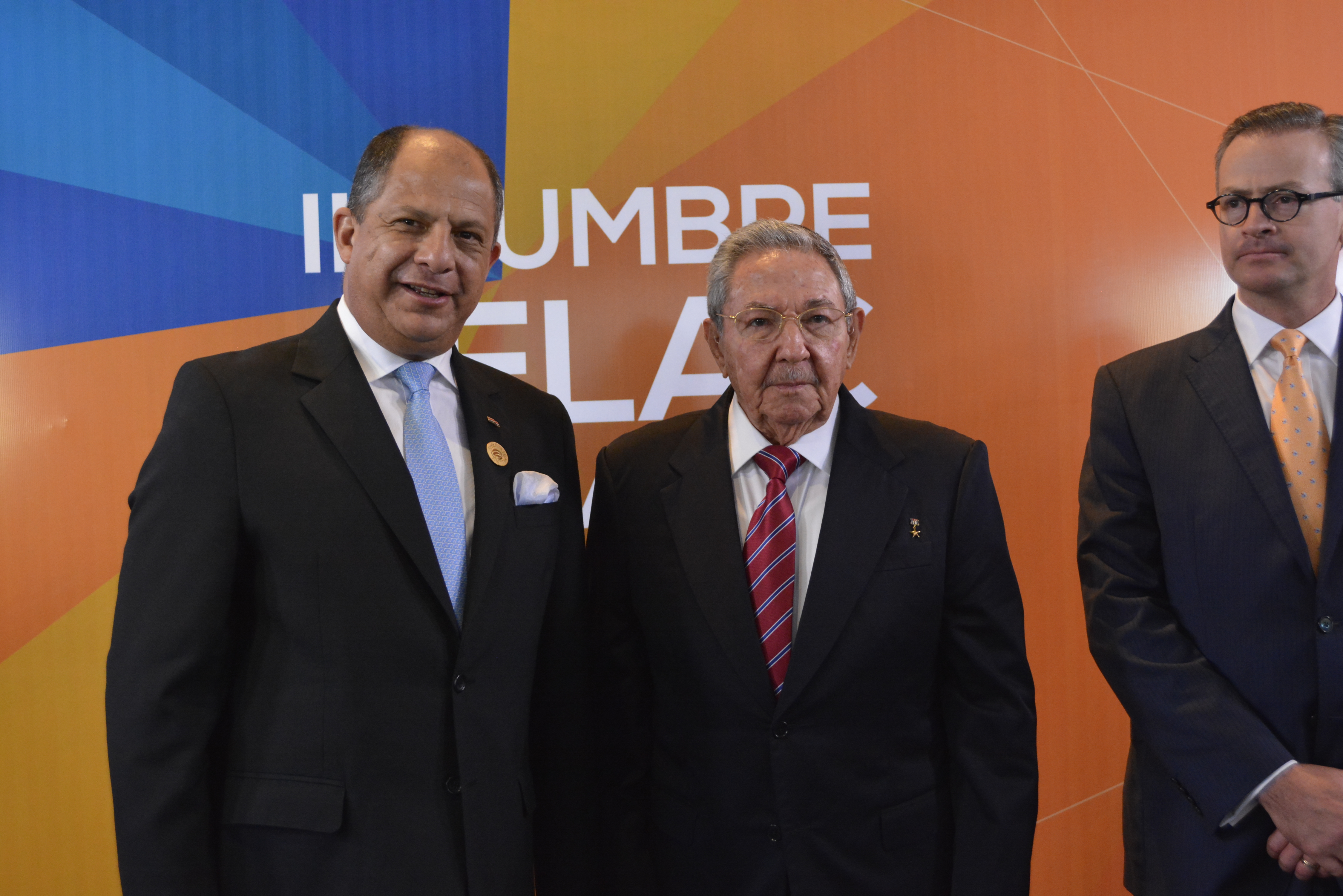 Costa Rica–Cuba relations refer to the diplomatic and bilateral relations between Costa Rica and Cuba.
History
Costa Rica and Cuba established diplomatic ties for the first time in 1907, when Emilio Matheu Fernández was appointed Consul of Costa Rica in Cuba. In 1911, Francisco Porto y Castillo was appointed as Cuba's commercial attaché in San José.
During the presidency of José Figueres Ferrer, Costa Rica provided support to the Cuban rebels led by Fidel Castro against the dictatorship of Fulgencio Batista, as part of a policy to oppose all dictatorships in Central America and the Caribbean. In 1959, José Figueres Ferrer was invited to Havana, where he delivered an anti-communist speech, stating that Latin America should side with the United States in the "Cold War" and against "distant powers" (clearly referring to the USSR and China). For this reason, he was booed and challenged by Fidel Castro during the speech, who subsequently nicknamed him "Pepe Cachucha," marking the beginning of a long, complex relationship of rivalry and respect between the two figures.
Costa Rica broke off relations with Cuba on 10 September 1961 under the presidency of Mario Echandi Jiménez, due to the Marxist–Leninist nature of the Cuban regime. At that time, Costa Rica and El Salvador were the only Latin American countries without full diplomatic relations with Cuba, a situation that would later change following the election of Mauricio Funes as president of El Salvador.
Diplomatic relations
Diplomatic relations were restored in 2003 during the administration of Abel Pacheco, when consular relations, broken in 1961, were reestablished. José María Penabad was appointed consul on the island and was later promoted to ambassador in 2009 during the government of Óscar Arias.
Three Cuban presidents have visited Costa Rica, including Carlos Prío Socarrás in 1948, Fidel Castro in 1987, and Raúl Castro in 2015.
See also
- Foreign relations of Costa Rica
- Foreign relations of Cuba
References
Cuba Category:Bilateral relations of Cuba
Botswana–South Korea relations refer to the diplomatic, economic, and cultural relations between Botswana and South Korea. Since establishing diplomatic relations in 1968, the two countries have maintained a relatively stable and friendly relationship based on shared values such as democracy, human rights, and a market economy.
History
Botswana and South Korea established diplomatic relations on 18 April 1968.
During the 1970s and 1980s, limited exchanges occurred through international organization meetings and diplomatic channels. South Korea recognized Botswana as a politically stable and institutionally reliable country in Sub-Saharan Africa. Botswana, meanwhile, pursued a non-aligned foreign policy while emphasizing international norms and the rule of law.
Since the 1990s, alongside South Korea's expanded diplomatic engagement with Africa, relations with Botswana gradually became more active. During this period, economic and development cooperation opportunities began to be discussed, with a recognition that Botswana’s infrastructure development needs and South Korea’s construction and technological capabilities were mutually complementary.
In February 2014, Botswana severed diplomatic relations with the North Korea. This decision, made due to concerns over human rights issues in North Korea and threats to international peace, drew international attention.
In the 2020s, the two countries reaffirmed their commitment to strengthening relations through foreign minister meetings and high-level contacts. At the 2023 foreign minister meeting, discussions were held on economic cooperation, development assistance, and international issues, and prospects for expanding practical cooperation were explored.
Diplomatic relations
Botswana and South Korea have discussed strengthening their bilateral relationship through foreign minister meetings and high-level exchanges. The two countries share a commitment to cooperating on democracy, human rights, and the promotion of international peace on the global stage and have expressed mutual understanding on major international issues, including the Korean Peninsula.
South Korea does not maintain a resident embassy in Botswana and its embassy in Pretoria, South Africa, is concurrently accredited to Botswana. Likewise, Botswana does not have a resident embassy in South Korea and its diplomatic affairs with South Korea are handled through its embassy in Tokyo.
Economic relations
Trade between Botswana and South Korea is not large, but it is considered to have potential for gradual expansion. South Korean companies have participated in infrastructure development projects in Botswana.
South Korean firms were involved in the construction of the Kazungula Bridge, which connects Botswana and Zambia, a project that contributed to improving the regional logistics environment.
Cultural and educational exchanges
Korean cultural events have been held in Botswana, primarily through the Korean Cultural Center in South Africa, introducing both Korean popular culture and traditional culture.
In Botswana, a King Sejong Institute has been established to provide Korean language and cultural education, and educational cooperation with the University of Botswana is also expanding.
Health and development cooperation
South Korea has supported Botswana in strengthening its public health capacity, focusing on tuberculosis treatment and other healthcare initiatives.
See also
- Foreign relations of Botswana
- Foreign relations of South Korea
References
Korea, South Category:Bilateral relations of South Korea