
Cameroon–Mexico relations are the bilateral diplomatic relations between Cameroon and Mexico. Both countries are members of the United Nations.
History
On 22 December 1975, the two countries established diplomatic relations. Relations have developed mainly within the framework of multilateral forums.
In 2010, a delegation from the Women and Family Affairs Office of the Government of Mexico visited Cameroon as an example of bilateral cooperation. The delegation presented programs implemented by the Secretariat of Social Welfare, the National System for Integral Family Development, and the National Institute for Women. In addition, the Government of Mexico provides scholarships to Cameroonian students for postgraduate studies and offers courses in foreign policy and the Spanish language for diplomats at the Matías Romero Institute. That same year, a delegation from Cameroon's Center for Democracy and Electoral Studies, the Electoral Commission, and the National Forum of Strategic Electoral Campaign Stakeholders participated in an international seminar on elections and justice organized by Mexico's National Electoral Institute. In 2010, the Government of Cameroon also sent a seventeen-member delegation to Cancún to take part in the United Nations Framework Convention on Climate Change.
Further visits took place on various occasions. The deputy director for Central America and the Caribbean at Cameroon’s Ministry of Foreign Affairs visited Mexico during Africa Week. The ambassador of Mexico to Nigeria, who was also accredited to Cameroon, represented the Mexican government at the celebration of the 50th anniversary of Cameroon's independence in 2010. Another visit was made by Cameroon’s minister of economy, planning, and regional development to participate in the first meeting of the Global Partnership for Effective Development Cooperation, held in Mexico.
In 2019, several hundred Cameroonian migrants arrived in Mexico while traveling toward the Mexico–United States border. Many sought asylum in the United States due to human rights violations in Cameroon and the separatist conflict in Ambazonia. However, most Cameroonians were denied entry into the United States, and some ultimately received asylum in Mexico.
See also
- Foreign relations of Cameroon
- Foreign relations of Mexico
References
Mexico Category:Bilateral relations of Mexico
Cameroon–Central African Republic relations are the bilateral diplomatic relations between Cameroon and the Central African Republic (CAR). The two countries share a state border that is 901 km long.
History
After gaining independence, Cameroon and the Central African Republic (CAR) initially maintained friendly relations. However, these relations deteriorated following the outbreak of the civil war in the CAR in 2012. In 2013, refugees from the CAR began arriving in Cameroon, leading to conflicts with local residents in eastern Cameroon over water, food shortages, and land disputes. According to the United Nations High Commissioner for Refugees (UNHCR), around 250,000 CAR refugees entered Cameroon, more than 8,000 of whom were settled in Timangolo, a town with a population of approximately 13,000. By 2017, the number of CAR refugees in Cameroon had risen to around 274,000, later increasing to approximately 300,000. In April 2017, 700 children from the CAR began attending primary school in Timangolo, while police arrested 30 refugees for attempting to steal food from a local farm.
From January to October 2017, the population of the refugee camp in Gado grew from 1,000 to 25,000. Refugees received medical assistance, though there were cases of children dying from starvation or injuries sustained while fleeing the CAR. According to UN humanitarian coordinator Najat Rochdi, $498 million was needed to address the refugees' needs. In October 2017, the Cameroonian government decided to close the border with the CAR following a new escalation of the conflict. Approximately 30% of the refugees lived in specialized camps, while the remaining 70% resided in rural areas of eastern Cameroon.
Trade
Approximately 80% of the Central African Republic's total exports and imports pass through Cameroon.
See also
- Foreign relations of Cameroon
- Foreign relations of the Central African Republic
- Cameroon–Central African Republic border
References
Central African Republic Category:Bilateral relations of the Central African Republic
Chile–Netherlands relations are the international relations between Chile and the Netherlands. They are framed within the broader relations between Chile and the European Union and have been close and aligned in social, cultural, and economic spheres, with the exception of the period of the military regime of Augusto Pinochet, during which the Dutch government was a significant opponent on the international stage. At present, both countries maintain an important bilateral relationship across various areas.
History
19th century
Bilateral relations between the two countries date back to 2 June 1849, when the Chilean government officially recognized José Boonen as the first Vice-Consul of the Netherlands in Chile. For its part, on 22 August of the same year, the Dutch monarchy officially recognized Consul Eduardo Serruye as the first Chilean representative on Dutch soil.
As part of the process of European colonization of Araucanía in the late 19th century, the Chilean government recruited Dutch settlers in order to populate and found towns in this sparsely inhabited area of southern Chile. Nueva Transvaal Colony is a locality located in the commune of Gorbea, founded by Boer settlers from the Dutch colonial empire who sought refuge in Chilean territory as a result of the Boer Wars. Other localities founded by, or with a significant number of, Dutch immigrants include Boroa, Faja Maisan, and Pitrufquén.
20th century
In 1910, Chile raised the status of its diplomatic legation in the Netherlands by accrediting Jorge Huneeus Gana as Envoy Extraordinary and Minister Plenipotentiary. This was reciprocated in November 1917, when the Dutch diplomat Hendrik van Oordt de Lavenrecht assumed the same position, with permanent residence in Chile. On 26 May 1937, a trade agreement was signed between the two countries, allowing Chile to export nitrate, copper, cereals, and honey, while the Netherlands exported rice, cocoa, and light bulbs. The close relations between the two countries were further confirmed by the official visit to Chile by Prince Bernhard, husband of Queen Juliana of the Netherlands, between 10 and 20 April 1951. On that occasion, he was awarded the Collar of the Order of Merit of Chile by President Gabriel González Videla, who in turn was awarded the Grand Cross of the Order of the Netherlands Lion by the prince. In 1955, both countries decided to once again raise the level of their bilateral relations to that of embassies, appointing the diplomats Luis Renard Valenzuela in The Hague and Petrus Albertus Kenstell in Santiago, Chile.
In 1961, the Dutch government established a system of credit guarantees to facilitate the export of capital goods to Chile, which was endorsed by the central banks of both countries. The following year, the two countries signed a migration agreement that encouraged Dutch immigration to Chile, particularly of farmers, livestock breeders, and technicians to engage in dairy farming activities in the south of the country. In 1966, a Dutch trade mission offered to finance, on behalf of the Netherlands, the construction of a high-frequency telecommunications network in Chile. This project was entrusted to the National Telecommunications Company, with funding exceeding 2.5 million Dutch guilders at the time, provided by the Netherlands Investment Bank.
Following the 1973 coup d'état in Chile, relations between the two countries became politically strained. One year earlier, the Dutch Minister for Development Cooperation, Jan Pronk, had founded a solidarity movement with the government of Salvador Allende, and there was sympathy among Dutch trade unions and Labour Party members for what Prime Minister Joop den Uyl described as "a social democratic experiment." Days after the military coup, approximately 20,000 Dutch citizens marched in Amsterdam and other cities in protest against the dictatorship, including politicians and members of the government. The immediate response of the Dutch government was total opposition and the adoption of measures to reduce political and economic relations with the new Chilean government, as well as a strong condemnation of human rights violations at both the international and bilateral levels. The Netherlands did not sever diplomatic relations with Chile, as it sought to maintain contact in order to provide assistance to political prisoners and offer them asylum, as well as to protect Dutch citizens residing in Chile and other opponents of the military regime. 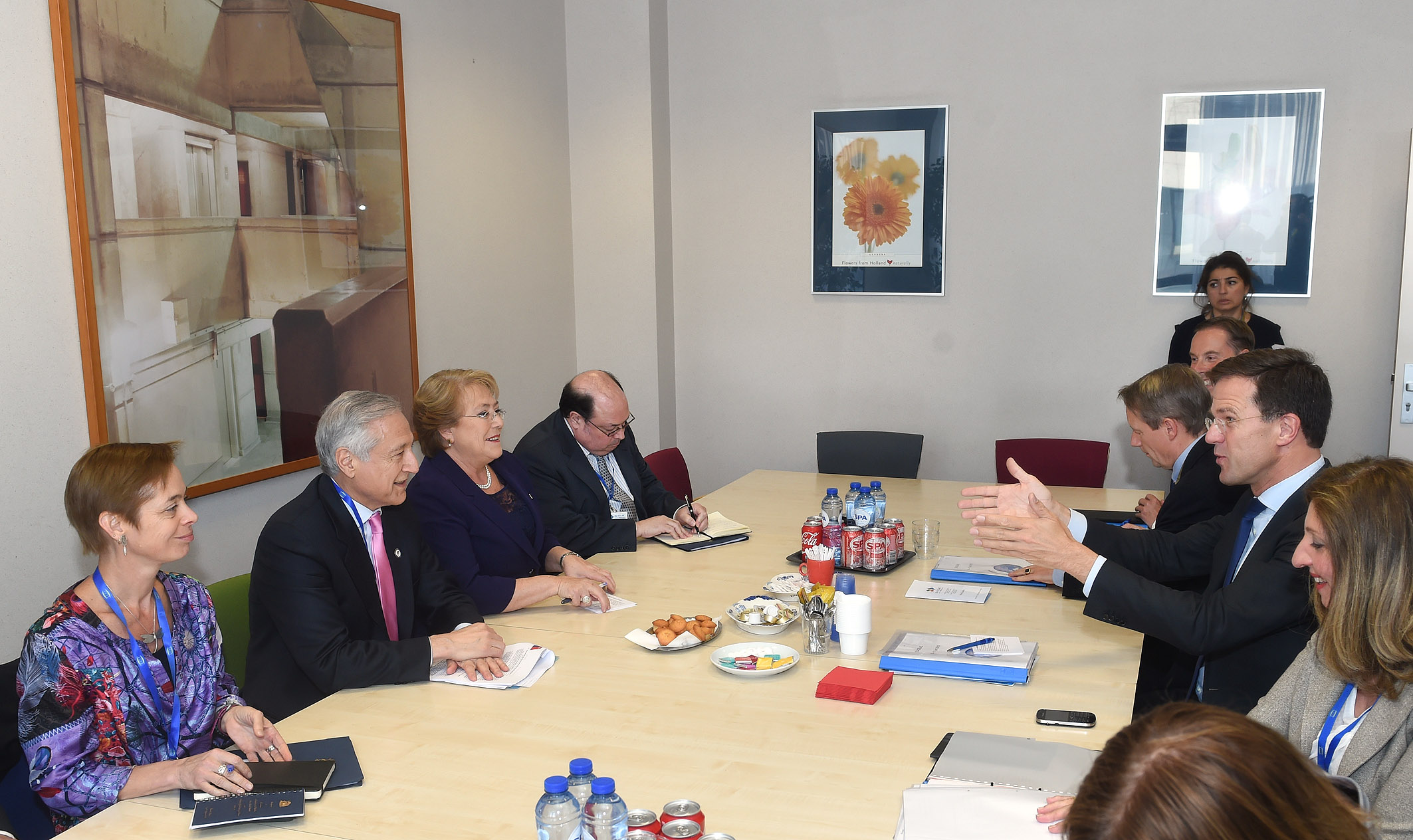 With the return of democracy to Chile in March 1990, relations between the two countries were normalized. In October of that year, Chile and the Netherlands signed an agreement on economic and technological cooperation, and in January 1996, a social security agreement was concluded.
21st century
In 2009, the two countries signed cooperation agreements for the development of advanced human capital and in the field of technology transfer, as well as the exchange of experiences in agricultural and food sectors.
See also
- Foreign relations of Chile
- Foreign relations of the Netherlands
- Dutch Chileans
References
Netherlands Category:Bilateral relations of the Netherlands
Burkina Faso–Mali relations are the bilateral diplomatic relations between Burkina Faso and Mali. The two countries share a state border measuring 1,325 km in length.
History
On 28 May 1975, Burkina Faso and Mali became members of the Economic Community of West African States (ECOWAS).
Following a military coup in Mali in the spring of 2012, France launched Operation Serval on Malian territory on 11 January 2013. The government of Burkina Faso participated in this operation from January 2013, sending military units into Mali.
In 2016, Burkina Faso and Mali agreed to jointly combat Islamist militants by sharing intelligence and organizing joint border patrols, a response to the killing of 28 visitors at a hotel in Ouagadougou. In 2019, soldiers from both countries were targeted by Islamist attacks along the border, with one attack resulting in the deaths of 38 Malian soldiers.
In 2019, 8,457 refugees from Burkina Faso were living in Mali. In 2020, Burkina Faso hosted 20,948 refugees from Mali.
See also
- Foreign relations of Burkina Faso
- Foreign relations of Mali
- Burkina Faso–Mali border
References
Mali Category:Bilateral relations of Mali